Posted in: Disc Reviews by David Annandale on August 21st, 2009
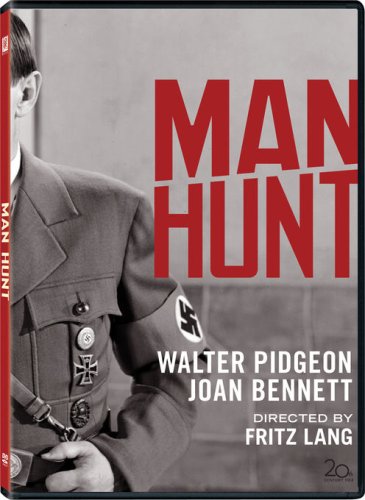
Shortly before World War II, British officer Alan Thorndike (Walter Pidgeon), vacationing in Bavaria, puts his sterling hunting skills to use by framing Adolf Hitler in his gun sights. He pulls the trigger on an empty barrel, not really planning to perform an assassination. Then, after a moment's hesitation, he loads the gun, but is captured before anything history-changing occurs. The Gestapo leader Major Quive-Smith (George Sanders) wants him to confess to being an assassin working for the British government. Thondike refuses. He manages to escape, and Quive-Smith's forces (including the always sinister John Carradine) pursue Thorndike to England, where he falls in with innocent Cockney lass Jerry (Joan Bennett).
Posted in: Disc Reviews by Gino Sassani on August 13th, 2009
Jack Webb invented the modern television police procedural with the creation of Dragnet, first as a radio play and eventually as a successful television series. The series told the tale of a pair of L.A. detectives. There wasn’t any flair or action sequences. No car chases and no gun fights. When Jack Webb turned his attention to the patrol officer, he realized that some of that formula would have to change. But he wouldn’t tweak it very much. There was the occasional gunfire, but it was rare and was never the focus of any given story. Instead Webb concentrated on the actual procedures and duties of the everyday patrol officers, thus the invention of the procedural drama. It was no small step for television audiences and was likely very much responsible for the shape of the young medium and the shows that would follow up to this very day. Now the episodes might seem quite tame by today’s standards, and I don’t doubt that many of you might even get a chuckle at the no nonsense dialog that has become a Jack Webb trademark. Still, you won’t get a truer look behind the curtain than Adam 12. It was a show very much of its time.
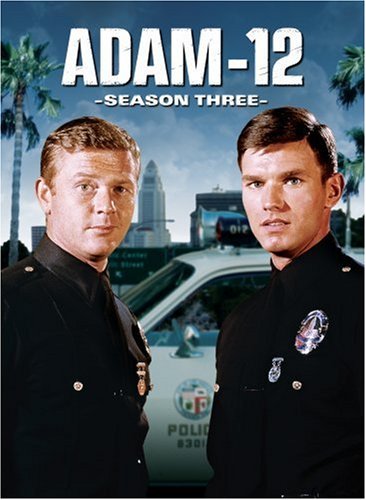
Adam 12 debuted on NBC in 1968 and ran until May of 1975. The show never really changed at all for its 7 seasons. It starred Martin Milner as officer Pete Malloy and science fiction genre veteran Kent McCord as officer Jim Reed. They rolled in the black and white that bore the call letters Adam 12. They were headquarted at L.A.’s Rampart precinct, the same area as Jack Webb’s sister show about firefighters and paramedics, Emergency. The two shows shared a rather odd relationship. They did cross over and appeared to exist in the same universe; however, an episode of Emergency once featured a storyline where the paramedics where trying to watch a nail biter climax on Adam 12 only to be called away at the crucial moment. They spent the rest of the day trying to find out what happened. Yet they would meet the characters as real police officers in their own pilot. The firefighters would also appear on an episode of Adam 12. If that’s all rather a little confusing, blame the complicated world of Jack Webb.
Posted in: Disc Reviews by Michael Durr on August 10th, 2009
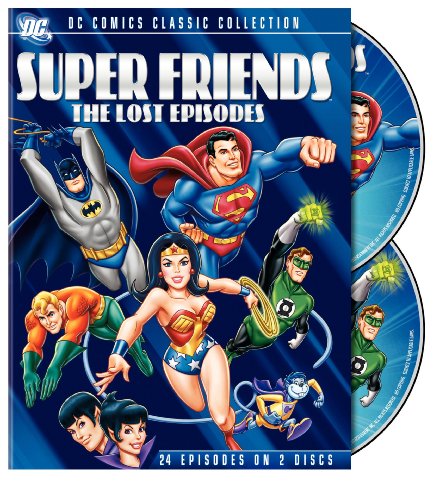
The Super Friends as a cartoon show had a long and sketchy past. It started out in the 1970’s and ran in nearly a dozen different incantations and over a hundred episodes until 1986 when it was put down for the last time. In the 1983-84 season, the series had been cancelled officially for a second time. This was due to the fact that they did not wish to compete with the syndication run of the original episodes that was already on air. Hence, the new episodes were dropped and didn’t appear until many years later. Here, the people at WB have compiled these 8 episodes (24 shorts) into a 2-disc set and dubbed them the “Lost Episodes.”
As mentioned, there are twenty-four shorts for this lost season of Super Friends. They run the gambit of subjects, villains, and heroes. In episodes such as “The Krypton Syndrome”, Superman is thrown into a time warp and has to deal with the impending doom of his home planet: Krypton. However, the decision he makes leads to some rather disturbing consequences.
Posted in: Disc Reviews by David Annandale on August 10th, 2009
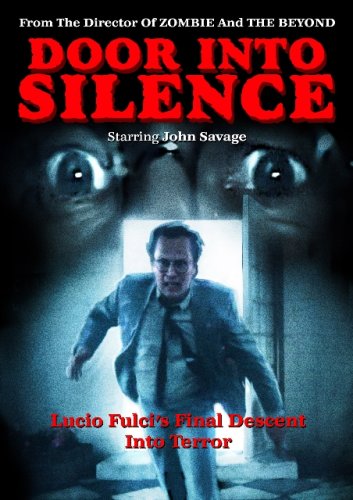
After an opening, fragmentary montage of a traffic accident, we encounter Melvin Devereux (John Savage), standing in front of his father's grave, making a few cynical remarks apparently in the wake of dad's funeral. Then, after a strange conversation with a mysterious woman (Sandi Schultz), Devereux begins to make his way home. But his route is blocked by one obstacle after another, and his journey becomes ever longer and ever more frustrating as he drives down the empty roads of the Louisiana countryside. He is then plagued by a hearse, which will not let him overtake, and that turns up wherever he goes. Soon he becomes obsessed with catching the hearse, after seeing his name on the coffin inside.
Posted in: Disc Reviews by David Annandale on August 9th, 2009
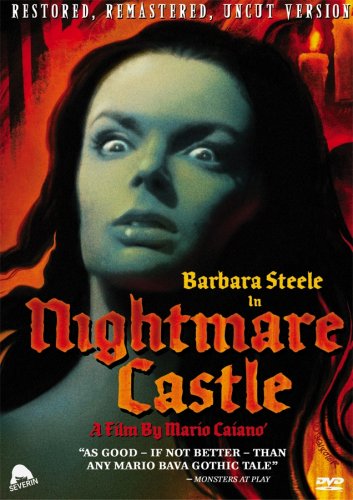
Dr. Stephen Arrowsmith is a haughty scientist who sees himself above such petty concerns as ethics. He has married his wife Muriel (Barbara Steele) for her money, and when he catches her in the arms of one of the servants (Rik Battaglia), he tortures and kills them both, cuts out their hearts, and uses their blood to create an elixir of youth for the maid/co-conspirator Solange (Helga Liné). He then marries the psychologically fragile Jenny (Steele again, now blonde), Muriel's heiress, planning to drive her insane and take control of the his dead wife's fortune. Sure enough, Jenny starts seeing things, but the ghosts she is seeing are real.
Posted in: Disc Reviews by David Annandale on July 28th, 2009
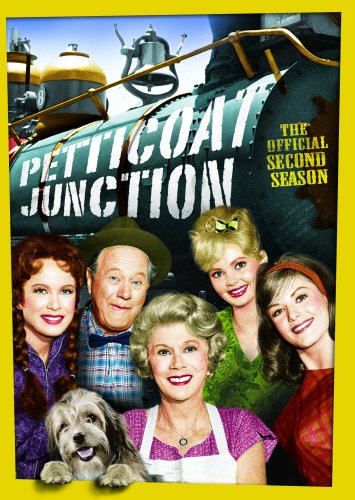
Once upon a time, there was an age of TV where hit shows where women in their 20s played high school students, and an entire episode could revolve around the burning crisis of whether the dog that followed one daughter home could stay. It is from this era that Petticoat Junction hails. This series about a widowed mother and her three daughters tending the Shady Rest Hotel ran for seven years, and begat both Green Acres and The Beverly Hillbillies, in that characters from all three series would interact with each other.
So our principle cast here consists of mother Kate Bradley (Bea Benaderet), daughters Billie Jo (the flirt, played by Jeannine Riley), Bobbie Jo (the bookworm, played by Pat Woodell, who would leave after this season), and Betty Jo (the tomboy, played by Linda Kaye Henning, daughter of series creator Paul Henning). Throwing in his two bits is lazy Uncle Joe (Edgar Buchanan). Joining the cast this season is Higgins the dog, who would subsequently star as Benji, and thus eclipse his human co-stars.
Posted in: Disc Reviews by Gino Sassani on July 22nd, 2009
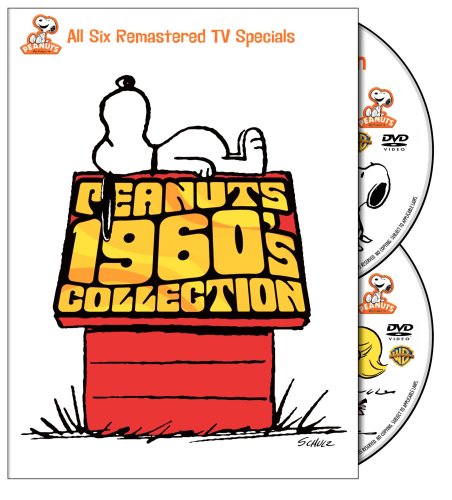
I grew up on the Peanuts creations of Charles M. Schulz. Most of us have, in some way or another. His newspaper comic strip is one of the longest running and most successful strips of all time. The work has been translated into every language currently spoken on the planet. The images of Charlie Brown, Snoopy, Linus, and the rest of the Peanuts gang have appeared on just about any kind of product imaginable. Our pop culture contains too many references to the strip to mention briefly. For me, it was the television specials starting in the mid 1960’s that brought the gang into my life. The classics are running annually, still after nearly 50 years. A Charlie Brown Christmas and It’s The Great Pumpkin, Charlie Brown are the most mentioned and certainly beloved by generations of children and adults. I thought I never missed an airing.
Now Warner Home Video has brought together a special collection of the cartoon specials that started it all. It includes those annual greats and a few that I don’t really remember so much. The two discs include the following Peanuts specials:
Posted in: Disc Reviews by David Annandale on July 22nd, 2009
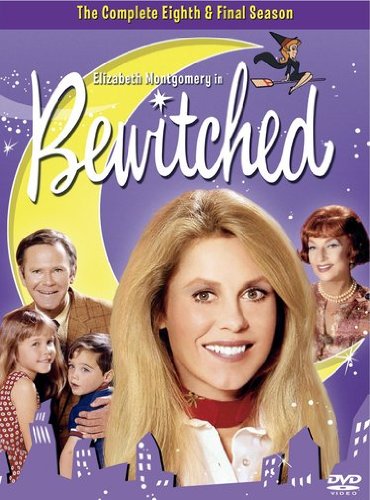
This, the final season of the series, opens with Samantha (Elizabeth Montgomery) and Darrin (Dick Sargent) on a European tour. This means stock shots of various European landmarks before we return to rather unconvincingly dressed-up studio backlots. There are a few two-parters in the mix, including the opening episodes, where Samantha is zapped back to the court of Henry VIII, and a late-season adventure where the time travel goes the other way, and George Washington is brought forward to the present. Special note should be made of Episode 3, where the Loch Ness Monster shows up, in all his googly-eyed, man-in-a-costume glory.
There's a certain brazenness, it seems to me, for any show, even a budget-conscious one in 1972, to limit itself to the special effects technology of 1896. Indeed, there is nary a moment that couldn't have been accomplished by Georges Méliès. As for the humour, well, it's very much of its period – in other words, it creaks very badly, with the laugh track kicking in at every single line. I remember watching this show as a kid, and getting some fun out of it, though preferring the identically themed I Dream of Jeannie (for reasons now that I cannot recall). Basically, this is mildly entertaining for the nostalgic, but not much more.
Posted in: Disc Reviews by David Annandale on July 22nd, 2009
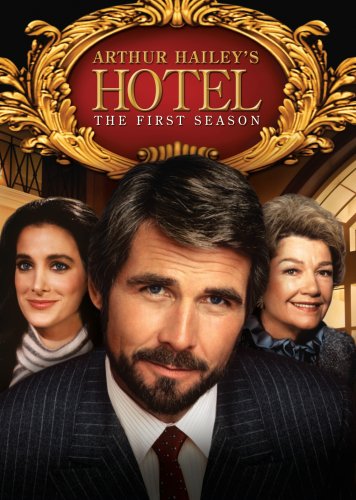
As a Henry Mancini score swells with unapologetic cheese, we are swept into the world of the luxurious St. Gregory Hotel in San Francisco. Owned by aging matriarch Bette Davis (replaced, when she had to pull out due to illness, by Anne Baxter, as her sister-in-law), the Hotel's General Manager is James Brolin, who has lots of time to wander around the lobby greeting the various guest stars. In other words, he's Mr. Roarke to the St. Gregory's Fantasy Island. What follows is pure fromage of the Aaron Spelling variety, with every other guest star a fading Familiar Face, no end of improbable crises, painful comic relief, unintentional comedy gold in the dramatic moments, and much of the feel of a 1970s disaster movie minus, sadly, the disaster itself (but you can always re-watch The Towering Inferno to make yourself feel better).

The colours are strong, and the picture quality is generally what one would expect for a mid-80s television program. The grain is minimal, but the image is a bit soft – features and details tend to bleach out and disappear when in the middle distance. That said, the transfer gets the job done, and looks true to original broadcast quality.
Posted in: Disc Reviews by Gino Sassani on July 6th, 2009
In the 1930’s and 40’s MGM was trying to get in on the lucrative animation game. The field was dominated at the time by Warner Brothers with their Loony Tunes shorts, and of course, the iconic cast of animated characters coming out of the Walt Disney Studio. For years they had failed to find the right property to take advantage of the market. It wasn’t until the team of William Hanna and Joseph Barbera approached the studio with their first project that the times did change, at least a little, for the fledgling animation department at MGM. The project was far from an original one even for the time. It was a very basic cat and mouse adventure featuring a cat named Tom and a mouse named Jerry. There would be almost no dialog on the shorts. It certainly didn’t look like much of a hit to the studio brass, but with no better ideas on the way, they went ahead with the new shorts of Tom And Jerry. There’s a reason why the cat and mouse pair is such a classic. It’s because it works. If you can make your characters entertaining and endearing enough, you can have a hit. MGM finally entered the major leagues, and the team of Hanna and Barbera would become one of the most successful animation teams in history. They would go on to create such cherished characters as The Flintstones, Yogi Bear, The Jetsons, and, of course, Scooby Doo.
These were the days of the Golden Age in Hollywood. These shorts were not being produced for television, which hadn’t been invented when they began; rather they were intended for theater goers. In those days going to the movies was much more of an inclusive experience. You always got a cartoon short along with an adventure serial, the likes of Buck Rogers, Flash Gordon, and The Lone Ranger. These multi-chaptered serials were the forerunners to the modern television series. It kept you coming back to the movies to see what would happen next. Each chapter ended in a cliffhanger. These early serials were the inspiration for such film franchises as Star Wars and Indiana Jones. Finally you got one, sometimes two movies all for the price of a single admission.