DTS HD 2.0 Master Audio (English)

Written by Brian Ludovico

To film fans, the clause “Directed by Alfred Hitchcock” has almost become an adjective in and of itself. It has come to mean suspense created by using the viewer’s imagination and mind as a part of the film, first and foremost. These films didn’t have the freedom of CG, and consequently had to invent ways to achieve visual effects (watch the documentary on Birds or Rear Window for example). Besides the lack of freedom of creation that digital filmmaking now provides, the filmmakers had to tip toe around the Hays code, not only restrictive on sex and sexual undertones, but also on content (as we learn in the featurettes here) and gore. The phrase, and the adjective that bears the director’s name, has grown to include a certain quality of characters and meticulous film crafting in every phase of the production. Rebecca, therefore, can rightfully be called “classic Hitchcock.”

The title of this documentary stems from the quote “In the end, the love you take is equal to the love you make." In this film, said “love” refers to the love and support Paul McCartney, and other major celebrities, give to New York in the immediate wake of 9/11. Starting from early rehearsals and finishing with McCartney's closing performance at the “Concert for New York” benefit, we watch one of the most famous people on the planet demonstrate his uncanny sense of humility and humanity as he proves he is a “man of the people.”

The camera is mostly candid as we witness McCartney not be able to walk a single foot on the streets of New York without getting endlessly mobbed by fans. It is refreshing to see that, whether surrounded by starry-eyed civilians or fellow celebrities, McCartney never loses his playful mien.

When I was in the fifth and sixth grade, I learned how to play a cello. Despite my attempts at learning the instrument, it was a constant struggle to be able to read sheet music and get my hands to cooperate in an appropriate manner. Personally, I think it had something to do with the fact that instrument spent half the time in the shop (school provided) rather than in my hands. Today’s review explores a similar subject, the movie: The Piano. Let’s see how well Holly Hunter does with her instrument.

We hear a voice. But it is not a speaking voice, rather a voice inside a female’s head. That female is Ada McGrath (played by Holly Hunter). She’s been a mute since she was six years old. For a little while now, she’s been without a spouse and unfortunately for her, she’s been promised to a man in New Zealand who has never met her. All of her belongings included her prized possession, a piano and her eleven year old daughter by the name of Flora (played by Anna Paquin) are put on a boat and the crew sets sail for the island.

Jack Lemmon is a rather meek insurance company employee who is slowly working his way up the corporate ladder by lending his apartment to married executives looking for a place to take their girlfriends. Life is rather inconvenient, as he is locked out of his home at all hours, but things become even more complicated when the big boss (Fred McMurray) takes an interest. The good news is that Lemmon gets another promotion. The bad news is that McMurray’s affair is with Shirley MacLaine, the elevator girl for whom Lemmon is carrying a torch.

Billy Wilder’s follow-up to Some Like It Hot certainly has plenty of funny moments, most involving Lemmon’s doctor neighbor (Jack Kuschen). But the film doesn’t shy away from the darker implications of its storyline (up to and including a suicide attempt). The result is a romantic comedy-drama that is sweet without being sentimental, and hard-nosed without being cynical. And the audience’s emotions are thus sincerely earned.

“I'm just crazy about this store.”

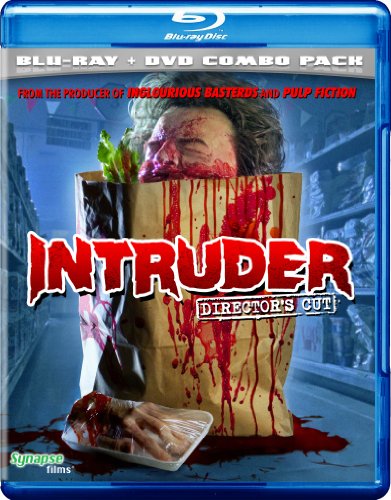
Anyone who has worked the night crew in a grocery store, restocking shelves after the place is closed, knows how creepy it can be walking the aisles in the belly of a half-lit behemoth. Now imagine if you were being stalked while you stocked by a mutilating psychopath. This was obviously the motivation for writer/director Scott Spiegel when he created his Super-8 short film Night Crew with childhood friends Sam Raimi, Ted Raimi and Bruce Campbell. After co-writing Evil Dead 2 with Sam Raimi, Spiegel chanced on an investor’s meager budget to elevate the short into a full-length feature slasher flick. The distributors didn’t care for the original title, and the film was released as Intruder.

A bar owner hires a hitman to assassinate his wife and her lover upon discovering their affair. What proceeds is a neo-noir packed with ample murder, betrayal and suspicions throughout.

This film is the directorial debut of Joel Cohen, thus making it the first in the line of “Coen Bros.” productions (Joel's brother Ethan naturally contributing as co-writer and co-editor). As well, Barry Sonnenfield is the Director of Photography, which helps to explain the outstanding visual composition of this film. With the combined efforts of the Coens and Sonnenfield, Blood Simple takes a modern, Southern US setting (in full colour I should note) and turns the mise-en-scene into something unmistakably of the noir genre. There are a few more hand held jostling than one would be acclimatized to in Coen Brothers films, which sometimes take away from the strictly “noir” style of framing shots, but do keep it from feeling too stifling or striated.

“In a blaze of blood, bones, and body parts, the vivacious young girl was instantly reduced to a tossed human salad... a salad that police are still trying to gather up... a salad that was once named Elizabeth.”

Ah, there is nothing that can bring an exploitation movie alive like the unhinged imagination of Frank Henenlotter. Frankenhooker is another love letter to the seedy side of a New York City from a long-gone era. It is a cult film extraordinaire.

"The punishment's gotta fit the crime."

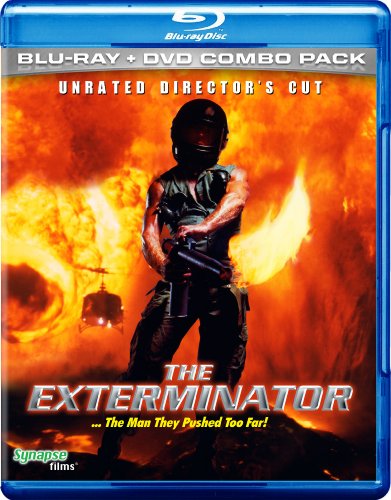
Believe all of the hype and controversy. In the language of the day The Exterminator was one bad mother. And when I say one bad mother, we're not talking Casey Anthony. The Exterminator came at the tail end of the era of grindhouse, exploitation, and revenge films. So, how do you close out a memorable era like that? You do a movie with all three. You put the violence and the grit out there for all to see, and you don't make any apologies about any of it. That's exactly the attitude that writer/director James Glickenhaus plays it, and the result is... well... one bad mother.

For those who do not know, I am not a typical sports fan. I primarily watch three sports, none of which are football. I love me some wrestling, hockey, and the legendary sport of baseball. The Phillies have been my team for over 30 years and even though they took it hard this year in the playoffs, I look forward to more baseball in the years to come. I also appreciate the history of baseball so I was certainly curious to see a couple of great Red Sox teams come to Blu-Ray in this A&E presentation.

The 2004 Boston Red Sox (narrated by Dennis Leary) were expected to do some great things right out of the gate in spring training. But this was the Red Sox we were talking about, they had the curse of the Bambino to contend with for the last eighty-six years. They had failed at every opportunity, even years when it looked like a sure thing that the Red Sox were going to get the big one. But this year was poised to be different from the very start.

Stop me if you've heard any of this before. Peter Jackson directs a horror film that has an expedition going to Skull Island to retrieve a horrific primate. Of course, you might now be expecting a review of Jackson's remake of King Kong. But the primate here is something called a rat monkey, and it only figures into the film's early moments. Long before Jackson achieved household name status by taking us on a journey to Middle Earth, he was a small filmmaker with no less grand designs.

Dead Alive has become one of those cult films that has managed to keep strong legs for many years, long after the director has gone on to far more successful projects. One of the things that has made Peter Jackson as good as he's been even on big-budget films is the fact that he's like a kid in a candy store. He appears to absolutely love making films, and that's certainly evident on the Rings films. But it's also very evident here as well. Jackson demonstrates his love for such greats as Ray Harryhausen with some rather nice stop-motion work here and a few direct nods to the master. The stop-motion effects are quite obvious, but they are also quite fun and entertaining. Dead Alive is a bloody good time...literally.