Drama

One Flew Over The Cuckoo's Nest was the first movie I ever saw on HBO. These were the very early days of the cable network. It was before the dawn of any real home video. It was at my Aunt Shirley's house that several members of the extended family gathered in dining room chairs around a 19-inch television to watch a movie uncut and without commercial interruption for the first time in our lives. A lot has changed since that 1970's afternoon at my aunt's house. Today we have hundreds of such choices on our television dials. I've seen a huge wave of home video technologies since that day that have included CED video discs, VHS/Beta, laserdisc, DVD, and now high-definition Blu-ray and movies on demand. The entire game has changed since that gathering 35 or so years ago. One thing has not changed a bit. One Flew Over The Cuckoo's Nest was a dynamic and compelling film that day. It remains so today.

R.P. McMurphy (Nicholson) is a repeat criminal who has caused more than his share of trouble in the system. He is sent to the Oregon State Hospital to have his sanity evaluated. There the head psychiatrist Dr. Spivey (Brooks) doesn't really think he's crazy. But McMurphy is held over for observation. He's placed inside a general population ward where he comes into contact with the resident "crazies" of the hospital. He takes a particular liking to Billy (Dourif) who is a sexually repressed teenager who stutters and lacks any kind of self-confidence. In a big way, he is the opposite of McMurphy himself, who is quite the extrovert and borders on manic most of the time. There is an Indian man who is about as big as a mountain who the staff and inmates simply call Chief (Sampson). At first Chief is the subject of mockery from McMurphy, but the allegedly deaf and dumb Indian soon earns McMurphy's respect, something we quickly understand is a rarity for McMurphy. Other patients include the childish Cheswick (Lassick), the shy and naive Martini (DeVito), the borderline psychotic Taber (Lloyd), and Harding (Redfield) who was pretty much the crew's unofficial leader before McMurphy came along. In charge of the ward is the indominable Nurse Ratched (Fletcher). A battle of wills soon develops between McMurphy and the cold nurse. What McMurphy doesn't know is that she has the power to keep him even after his original jail sentence has expired.

It's a classic moment in holiday cinema history. Ralphie, Flick, and Swartz are gathered around a flagpole in the dead of winter. Flick is scoffing at the idea that your tongue will stick to a metal surface under these extreme cold conditions. So Swartz commits a small violation of etiquette when he goes right for the triple dog dare. There isn't any way out for our friend Flick. The results are predictable, but nonetheless hilarious. I wish I could say the same for the teen angst film Triple Dog. For me, there truly was no way out. You, my gentle reader, might yet save yourself.

Eve (Fast) is having a birthday sleepover. The guests include her best friend Chapin (Robertson), who is a bit of a loudmouthed troublemaker. She's carrying a pretty dark secret that is causing her to act out and behave in a self-destructive manner. There's also Liz (Taylor-Compton) who is the dark school outcast. She's nicknamed "rat girl" because she carries a pet rat in her backpack. She and Chapin really do not like each other. Liz wasn't really invited, but their mothers are friends and she's pushed into the sleepover party. Cecily (Parish) is the rich girl in the group. Her father owns a local store. She's also the proper class president and academian in the group. Sarah (Tennant) is a strait-laced Catholic girl who is the uptight do-gooder in the group. Finally there is Nina (McKillip), who is the typical dumb blonde girl in the group.

The other day, I was conveying to my better half that she should do an open review about a movie called Secretary that was fairly new to Blu-Ray. She ultimately decided against it because she felt she could not do a PG review for such a risqué movie. It is only fitting that a week or so later, I find Bad Lieutenant, a NC-17 movie in my own review pile and I was faced with the same task. Take an absolutely gritty, dark and disturbing movie and do what you can to make it a wholesome review. I always did like challenges.

Harvey Keitel plays a very bad cop. In fact, he's actually a Lieutenant of a local New York precinct (btw, he's never actually given a name, so we'll call him Lt.). He's had the crazy life that echoed the overzealous nature of the 80's. He has a family complete with a wife and children but the wholesome image stops right there. In his time out on the streets, he boozes, gambles, steals evidence, womanizes and does drugs including a whole lot of cocaine.

Most people who actually know me can say that I do love to sing. Much of my singing is relegated to a combination of karaoke and Xbox 360 games (Lips/Rock Band). But a long time ago, I wasn’t very comfortable with my singing. Had I been comfortable, I might have joined my school’s glee club. Fast forward a few years and we have a show about a high school glee club. Its funny how you can miss an experience you have never had.

William McKinley High School is in need of a new director of their glee club. The last one was a bit too handy and had to be dealt with. Luckily, there is a Spanish teacher named William Schuester (played by Matthew Morrison) who wishes to take over the position. Principal Figgins (played by Iqbal Theba) lets him know they have almost no budget but he still must place them in regionals for them to continue.

A young epileptic girl returns to her home in New York while on spring break. She stays with her mother and her best friend Al, whose room is now being rented out by his parents. While there she loses touch with her college boyfriend and reevaluates how she feels about her friend Al.

I wish I could say that opening paragraph was the launching point for the film's plot, when in fact it is a basically a summary of the entire film. This film is a very understated character study of our female lead and offers little by way of action or complex plot. Writer/Director Bradley Rust Gray's approach to this film is a sort-of casual, fly-on-the-wall approach to shooting the action (or lack thereof). Gray succeeds when using very long, uninterrupted shots, at very odd angles, as if the cameraman were spying on these these 20-somethings mumbling and fumbling through their awkward feelings and the lame parties they attend in order to capture their unadulterated actions. Whenever a typical shot-reverse-shot occurs (for those not up on film school lingo: an example is simply when the camera is watching one person speak, then cuts to a shot of the person they are speaking to and back again) it actually distracts from the moment for its artificiality removes us from the voyeuristic feel of the camera's positioning. The 'captured reality' approach to the presentation makes it so that I cannot tell if I should attribute the mishandling of situations (mainly some really lame and awkward dialogue) to the characters within the film, or to an awkward script. That is to say, I am able to buy into what is happening in such a way that I forget that there is a team of people working on this film that I cannot see and so I place all responsibility onto the characters.

The Plot: The Order, disappointingly, turned out to be not much more than a Heath Ledger vehicle, apparently targeted at Goth teenage girls with vaguely Euro pretensions. Without letting out any spoilers, trust me when I say that you’ll be disappointed if you expect anything like what the trailer portrays. The trailer says implies that the Vatican is “using a killer with supernatural powers to absolute control of an empire” and paints the movie as a fast-paced action/thriller church conspiracy film – which it isn’t. What is it? Part drama, part horror, very “moody,” totally boring.


The movie’s story line is atrocious and disconnected, with little to suggest that one scene even belongs in the same film as another. OK – here’s an example, spoiler warning given: those two little kids. What purpose do they serve, other than to look briefly CGI-scary and then disappear? None. They are hell-spawn, but we’ve got no idea why they’re around, where they came from, why they look like kids, what they want, or anything. Completely pointless and unrelated to everything. Bah.

Written by Diane Tillis

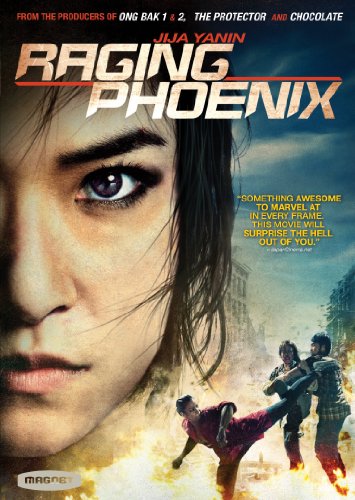
Raging Phoenix is a film of particular tastes and appeal. As someone who has very little experience with martial arts films, I may be the wrong person to comment on the quality of the fighting sequences or how it compares to other martial arts films. I will leave those comments to the people who are devoted fans and love these films. I can comment on the quality of the DVD so that those who are looking for a great addition to their martial arts film collection will know what to expect.

Written by Diane Tillis

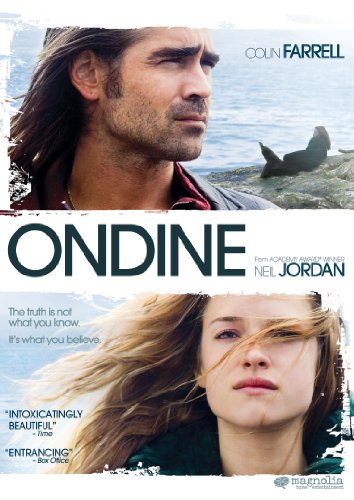
If I had to pick two words to describe Ondine, I would pick hauntingly beautiful. Neil Jordon, the popular Irish director and writer, comes up with an unusual modern fairy tale. Ondine is a film about people from different worlds hoping that dreams really can come true. It is a film about redemption and hope, harsh reality versus fantasy. Ondine is a journey of self discovery to be experienced from the darkness back into the light. It reminds us that enchantment and darkness are a part of every story.

This might be a newsflash to some, but I can’t dance. I can’t groove, shimmy or even lay down some dope moves. As such, a whole generation of movies is probably lost on me. In it, young hip kids move around and perform moves that would have made Fred Astaire jealous. It is a showcase of talent on the most basic level. One such movie appeared on my review plate named Stomp the Yard: Homecoming. Hopefully with some fresh moves, we can get an interesting story to boot.

Atlanta, Georgia. A dance competition goes down in the hood and newcomer Chance Harris (played by Collins Pennie) is doing quite well. However, when the chips go down, the local favorite is deemed the winner in a very questionable decision. Later that night, Chance is introduced to a plethora of fist sandwiches at the hands of Jay (played by David Banner) and his band of merry thugs. Chance pleads with them that he will pay them back, just give him some time.

“There’s always a story. You just have to find it.”

What happens when you’re a popular murder-mystery writer and someone starts to use your stories and ideas to kill people in the real world? At first you become the prime suspect, particularly if you’re found to be completely self-centered and annoyingly arrogant. That’s where a pretty good alibi might come in handy. Is playing poker with the Mayor and the Chief of Police good enough? So, you’re no longer a suspect. Now what do you do? You sign on as a consultant for the special crimes squad of the police department, and you help catch the real killer. Only instead of looking for him O.J. style on golf courses and in steakhouses, you team up with the cops and nab that good-for-nothing plagiarist. The problem with that is you might just find that you like it. Even worse, it might end up curing that writer’s block you got after killing off your lead character and proverbial golden goose, much to the chagrin of your publisher who also happens to be your ex-wife. Follow any of that? If you did, you now have the setup for one of the better premiere series from last season, Castle.