Drama

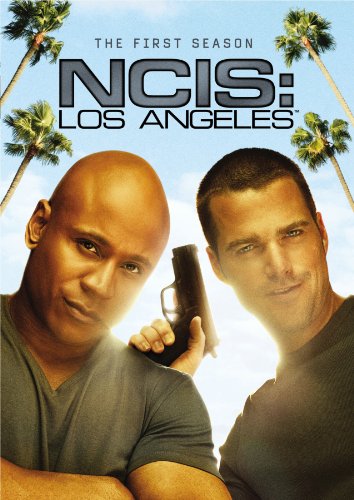
NCIS was a spinoff, of sorts, from the popular military lawyer show JAG. You could say that NCIS is the Order to JAG’s Law. The NCIS is a real government agency that deals with criminal activity inside or involving the US Navy or Marine Corps.  The show has proven even more popular than its parent series. Today that means branching out like the CSI and Law & Order franchises have done so well in the past. The next step in the ladder is NCIS: Los Angeles.

The series was previewed in a two-part episode of NCIS entitled Legend. A dead Marine in Washington led to a terrorist cell in LA, where Gibbs and McGee join the LA branch to bring down the bad guys. Here we meet the new characters and get a chance to get comfortable with them. However, by the time the show aired its first episode, there were some pretty major changes for the show already. It's not uncommon and the Legend episode was really a back-door pilot. The location would be completely scrapped. The show would get new digs in a covert building that appears to be a condemned water plant on the outside. I'm not quite sure why a public agency needed a secret hideout, but there it is. The show retained its high-tech look. They have a Minority Report-style computer system which remained the centerpiece of their operations room.

Ken Olin is truly a great talent that I’ve followed since back when he played the snotty detective Garibaldi on Hill Street Blues. Since then he’s done some wonderful work behind the camera, and Brothers & Sisters certainly shows his influence; however, this is not some of his best work. The show often leans on clichés and gets awfully lazy in moving forward at times. I do see the great family of characters they created here, but fail to find them interesting beyond the life breathed into them by their performers. This is a case of ego getting in the way of great potential. The writers and producers are trying way too hard to do something special. True greatness often requires the least effort. My advice to Olin and company is, play to the strengths of this great cast, and then get out of their way as often as possible.

Sally Field plays Nora Walker. Her husband has just died and left her with a lot of unanswered questions in her life. She soon discovers a twenty-year affair and some even more serious hanky-panky with the books of the company the family owns. Her emotional ups and downs can be about as compelling as television can get. Callista Flockhart plays the best opposite Field as the errant, and of course, conservative, black sheep of the family. The moments they share have given me a greater respect for Flockhart than her previous roles have. It is a little much watching her call someone else skinny. Ron Rifkin steals every scene he’s in as the old fashioned Uncle Saul, proving that Alias was no fluke for this accomplished actor. Rachel Griffiths again hides her English accent to show that if nothing else, she does a good job of crying. The remaining cast of Dave Annable, Balthazar Getty, and Matthew Rys are often just as nice as the three brother siblings on the show.

It's almost impossible not to compare The Square with No Country For Old Men. The themes are very much the same. The talent behind this Australian movie even includes a couple of brothers, but their name doesn't happen to be Cohen; however, one of these brothers is also named Joel. One of the original writers on the film is Joel Edgerton. The idea passed through a couple of other folks along the way to director Nash Edgerton who saw more potential in the film. So, a modest budget and a collection of relatively unknown actors combined to create a movie that does not easily fall into any one category, another trait these brothers share with the more famous pair.

Carla (van der Boom) is having a rather intense affair with Ray (Roberts). They both want out of their own marriages for different reasons but lack the proper funds to make their respective clean breaks. Carla is married to Smithy (Hayes) a small-time crook with a domestic violent streak. Ray is married to Martha (Bell) who he simply doesn't have much passion for. He feels his life has settled into an emotionless rut. Ray is a foreman for a contract business and has been taking kickbacks from his subcontractors in a bid to stash away enough money to run away with Carla. It's a slow business, and Carla is getting impatient, starting to wonder if he really wants to be with her. It all appears hopeless, that is until Carla returns home from a rendezvous with Ray to find Smithy stashing a large bag of cash into their attic crawlspace. It's a ton of money, more than enough to finance her escape with Ray. She tries to convince Ray that they should steal the cash and go. Ray is concerned that such a big score for a normally two-bit crook means others are involved. He suspects they won't take very kindly to having their money taken, and the two lovers would have to live in constant fear of being discovered. So they come up with a plan to steal the money and hire someone to torch the house, making Smithy and his pals think the money was consumed in the fire. Ray's a bit gun-shy about the idea, but Carla can be quite persuasive.

It was hard for me to find any real solid information about The Diplomat. At first I decided that it was because the film was obviously not a movie at all, but a British mini-series. The piece is broken up into two parts that you must play separately, much like a mini-series is often presented when released on home video. That was still not enough to research the title, because it hadn't really been a mini-series at all either. Finally, a stroke of luck led me to the fact that The Diplomat hadn't been its original name either. The release was broadcast on British television as False Witness. Apparently, it had begun as something more ambitious, perhaps a single-season limited-run series. Whatever grandiose plans might have been in store of this title, whichever title you use, it fell pretty flat almost from the start.

Ian Porter (Scott) is a diplomat returning to London from his eastern European post. He is immediately stopped at the airport by Scotland Yard and charged with drug smuggling among other things. A cop was badly burned and nearly killed in a bust related to his arrest, and Chief Inspector Julie Hales (Blake) wants Porter rather badly. Porter's not talking, but the investigation leads to a Russian mobster named Krousov (Hany). Porter's ex-wife Pippa (Forlani) is threatened by the Russian mobsters, and the pair end up in protective custody. They are taken to Australia, where they will supposedly be safe so that Porter can tell his story. But Porter can't really tell his story at all. The crimes he is accused of committing were actually part of a plan to get Porter close to Krousov for MI6. A rogue agent there has started a black ops mission to bring the Russian down. Porter carries a key around his neck, but it's not related to drugs at all. This key sets a suitcase nuclear bomb that the Russians plan to explode in Australia. Wasn't that a lucky break? Some tension exists with his ex-wife. They lost a son, who drowned in their pool. She wants very much to get closer to Ian, but he's focused only on finishing his mission, something he hopes will atone for the guilt he feels over his son.

Supermodel Joy (Claudia Udy) flits from man to man, never satisfied. There's the photographer who loves her, but he, it seems, is too much of a boy. Far more intriguing for her is the older man (Gerard Antoine Huart) she falls for, and keeps returning to, moth to a flame, despite his refusal to give up the other woman in his life. The root of Joy's problem seems to be twofold: she is haunted by the memory of having caught her parents in flagrante as a young child, and she is obsessed with her father, who left her when, again, she was very young.


So yeah, nothing creepy about the older man fixation at all, now is there? At any rate, this is glossy erotica cut very much from the same cloth as Emmanuelle, complete with pointless travelogue footage to show off all the location shots and half-baked philosophical musings about sex (or, more specifically, female sexuality). There is also a minor subplot involving Joy's nude shot as part of a campaign for the liberation of the aforementioned female sexuality, though this gesture towards feminism feels rather dubious, serving only as an excuse to get the heroine naked again. Well-produced though the film is, it lacks the narrative drive of something like The Alcove, meandering gently along to a rather abrupt conclusion. It is an interesting, semi-nostalgic reminder of the lost days of theatrical soft-core, but for sheer entertainment value, a dollop of Joe D'Amato-style sleaze will get you farther.

Miley Cyrus is displaced from New York to spend the summer by the sea in Georgia with estranged father Greg Kinnear. While younger brother Bobby Coleman thinks the set-up is just keen (especially former composer dad's work restoring the stain glass windows of a burned church), Cyrus stomps around in full Resentful Teenage Girl mode, until two things make her begin to open up: the need to protect a nest of sea turtles, and the attentions of the impossibly hunky Liam Hemsworth. Since this is a Nicholas Sparks story, true love and happiness will have to run the gauntlet of class snobbery, Disturbing Revelations ™, and the inevitable Third Act Fatal Illness That Brings Out The Best In Everyone (also a registered trademark).

Oh dear, am I waxing cynical? I suppose I am. Fans of Cyrus and Sparks will, of course, see this no matter what, and will probably get what they're hoping for. For everyone else, well, Kinnear does what he can, and should be congratulated for making his scenes as watchable as they are. But otherwise, we have a charmless lead, and a script so hamfisted, so filled with contrivances as predictable as they are overblown, that the film would be hilarious if it weren't so dull.

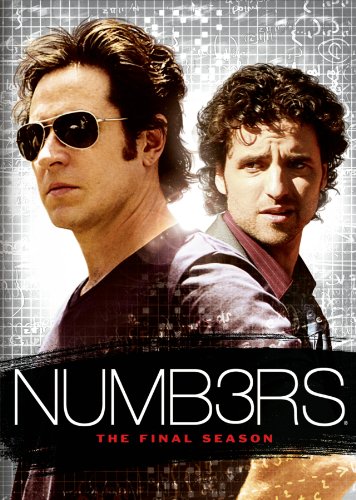
Do you believe that a numbers wizard can predict the most random of human actions with mathematical equations so accurately as to know where and when such a person will be? If so, then I suggest you put down that letter you are writing to Santa, finish eating that egg a bunny left for you, go to your pillow and pull together all of the loot you got from the tooth fairy, and plunk it down on season three of Numb3rs. No, that’s not a typo; apparently they believe that letters aren’t good enough to stand on their own, so they inserted a 3 where the e should be. Aren’t they so clever? Not. In the fairy-tale world of Numb3rs, all you need is an almost obsessive knowledge of math and the crooks don’t stand a chance. It’s almost unfair, isn’t it? Those poor criminals go about their carefully plotted crimes, unaware that everything they do is controlled by math. They live their lives oblivious to the fact they are at the mercy of a diabolical equation which forces their every move. In fact, I suspect some clever attorney somewhere is already preparing the “math made me do it” defense at this very moment. Soon our justice system will be forced to account for this undeniable force on our very destinies. I would go on, but I can’t… must… fight… numbers

Don Eppes (Morrow) is a decorated FBI officer in charge of a unit of the local field office of the FBI. His brother, Charlie (Krumholtz) is a math professor at CalSci. His brilliant mathematical mind is called upon to help the Feds track killers and rapists. No matter how complicated the trail gets, when the going gets rough these guys call on Charlie. Agent David Sinclair (Ballard), the smart tough guy, and Agent Colby Granger (Bruno) the young upcoming agent. Charlie has professor Larry Fleinhardt (MacNicol) to guide him through his struggles. Both of the geeks are socially inept, and we are “treated” to their constant struggles to relate to others, particularly women. Why can’t they write an equation to fix that? Navi Rawat is Amita, a student of Charlie’s who remains to take a job at CalSci, possibly to remain near Charlie. Judd Hirsch is the father to the Eppes brothers. A new agent is added to the mix in the 5th year in Nikki Betancourt, played by Sophina Brown. The show is produced by brothers Ridley and Tony Scott, who have had far better luck on the big screen.

For most of you who read my reviews, I can be rather harsh when reviewing movies of a Christian nature. One needs to look no further than my scathing review of Fireproof. More than often they tend to be too preachy with messages and heavy themes that suggest a way of life too strict for many people’s tastes. Naturally, I was a little skeptical when I received To Save a Life. But as the movie teaches us: one should not be judged on appearances alone.

Today is the funeral of Roger Dawson (played by Robert Bailey Jr) who committed suicide at the tender age of seventeen. We see many people in attendance including one other fellow high school student named Jake Taylor (played by Randy Wayne). As it turns out, we are treated to a flashback that shows Jake and Roger as best friends growing up.

Johnny Handsome is based on a rather obscure and dated novel called The Three Worlds Of Johnny Handsome. Walter Hill must have found something in the dated material that attracted him to the project. Unfortunately, there wasn't much to attract audiences. The film made a very paltry $7 million at the box and has been little heard from since. In spite of a solid cast and a script that does tend to move along at a nice clip, the film has never really found an audience and is somewhat of a surprise to be found on Blu-ray.

Johnny (Rourke) is a high-level hood who goes by the name Johnny Handsome in reference to extreme deformities in his face. He looks almost like tElephant Man. His deformity even affects his speech. He's almost indecipherable when he talks. He's involved in a big takedown of a coin shop that has some valuable pieces in its collection. He and his crew take down the store, but something goes very wrong. Rafe Garrett (Henriksen) and his girl Sunny (Barkin) betray the rest of the team. They end up running off with the loot and leave the rest of the crew dead. All except for Johnny, who managed to dodge the gunfire. All of his friends are dead, and Johnny's left behind to take the fall...and the prison sentence. Still, Johnny won't rat on the two that betrayed him and got away. But Rafe's not taking any chances. He has Johnny stabbed in prison. Once again Johnny's luck holds up, and he manages to survive Rafe's wrath. In the prison hospital ward, Johnny meets Dr. Fisher (Whitaker), who has an experimental facial reconstruction procedure he'd like to try out on Johnny. It requires having his entire skull reconstructed. In return, Johnny will get a new identity to go with that new face.

Extraordinary Measures is a moving story about family and a father’s perseverance to find a cure for his children.  John Crowley (Brendan Fraser) seeks out the help of an irritable medical researcher (Harrison Ford) whose theory cannot be fully developed without extensive funding. As the time ticks away, so does the probability of finding a cure.  This film requires an emotional investment and audiences will be surprised at how invested they become. 

Coming from emotionally charged source material, the filmmaker (Tom Vaughn) was given the difficult task of conveying personal emotion to a mass audience. Too often stories similar to this are made into low budget made for TV films which are downtrodden for their ineptitude. It is difficult for audiences to shed that stigma from the marketing of this film. However, on a positive note, Extraordinary Measures is executed quite well.  The momentum of the film is driven from the story and less on aesthetics.  The shot selection, editing and score of the film are all pedestrian at best.  However, there is something to be said for a film that has an arbitrary execution and still manages to maintain the audience’s attention.