Posted in: Disc Reviews by Gino Sassani on May 4th, 2010
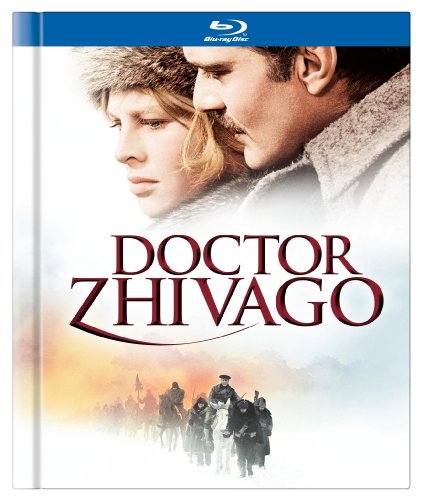
In many ways the epic story and film Doctor Zhivago echoes the real-life story of Boris Pasternak, who penned the original novel. Pasternak was a firsthand witness to the events that led to and became the Russian Revolution. He collected 50 years of memories that began with the early days before the revolution and ended with his own confrontations with the USSR government. Like Zhivago in the story, Pasternak's work was banned in his own country. The manuscript had to be smuggled out of Russia and found its way first to Italy, where it was finally published for the first time. But it didn't stop there. The book quickly found its way to countries all over the globe. It was translated into several languages in a very short time. In 1957 Pasternak was honored with the Nobel Peace Prize for literature. Alas, that was not meant to be. He was confronted with the Party Government and warned he would not be permitted to return home should he go to Sweden to accept the prestigious award. And while that might not have appeared to have been much of a threat when you consider Pasternak's harsh observations, this was his homeland, and he did have family there who would have most assuredly paid a price for his actions. He declined the award, begging the committee to not "judge him too harshly". It would be Pasternak's last stand. He would never see the complete success of the novel or the impact it made on the world stage. He died just three years after turning down the award. He was never to see David Lean's epic interpretation of his work. He never saw the film Doctor Zhivago.
I must confess that I too had never seen the movie. I had certainly seen many clips of the film. It was impossible to follow films, in general and not be aware of the film and its impact. Of course, I had heard much of the music. The Love Theme, also called Lara's Theme, has become one of the most recognizable movie themes in the history of the industry. The movie was quite popular, but circumstances just never presented themselves for me to have the opportunity to see this movie, at least in a manner worthy of its reputation. Certainly, there were television showings, but I could never bring myself to experience such an iconic film in a cut-up fashion with likely an inferior print. Even DVD kept me at a distance. Did I really want to watch this movie with a 3-4 mbps bit rate? Certainly not. I suspect there is perhaps an entire generation of film fans out there that found themselves in the same situation. We've been asking ourselves: will there ever be any chance of seeing the movie in a format that preserves its splendor? I guess I was holding out for a nostalgic screening at a local at house theatre. And then came Blu-ray, with its limitless possibilities, and finally a copy of Doctor Zhivago would arrive on my doorstop. My dog barked ceaselessly at the UPS man who delivers these goodies on an almost daily basis. This time there was an extra snarl in that growl, I was sure of it. Could she have known that this particular delivery was going to find me and my wife locked away for nearly 4 hours (in my case more like 6) in our, closed to dogs, little theater? She knew. She knew.
Posted in: Disc Reviews by Gino Sassani on May 4th, 2010
These last couple of years have seen a resurgence of a particular kind of character study. For me I think it started with The Wrestler. For Mickey Rourke, it was a powerful comeback and led to an example of grand theft at that year's Oscar celebration. Now, I wouldn't exactly say that Jeff Bridges was in any particular need of a comeback. He's had some pretty steady work over the years. Still, you just can't watch Crazy Heart and not be reminded of The Wrestler. These characters could not be more different in a lot of ways. But they are also cut from the same cloth. Both have already seen their glory days behind them. They've each indulged in some pretty self-destructive behavior. In The Wrestler, it could be argued that the abuse he put on his body was a necessary part of the life he chose. With Crazy Heart, we're talking alcoholism, pure and simple. Still, any of those old cowboys might make the argument that booze is as much a part of the life they choose as the drugs and physical punishment are for a wrestler. It's a pretty good point. Both characters are looking for some kind of redemption with a past child. In this case it's a son. Both are attempting to find healthy relationships, perhaps for the first time in their lives, with single moms who have had some bad luck in the romance department. Finally, both characters are looking for a comeback. Here is where the stories truly diverge. For Mickey Rourke's Ram, he returns because it's the only thing he knows. His job defined him. His comeback will likely mean the end of his life. For Bad Blake, the new career in music could well be his salvation and a chance at a longer life. Whatever the comparisons, both are strong character-driven pieces.
Bad Blake (Bridges) was once on the top of the country charts. But that was a long time ago. Today, he's driving around in his Suburban from gig to gig with about 10 bucks to his name. He's gone from great arenas to bowling allies and small-town dives. He still has a small core group of fans that make even this life possible. The trouble is that Bad chain smokes and drinks his health away. He can barely stand for one gig. His old guitar player Tommy Sweet (Farrell) has offered him the chance to open for his act. More important, Sweet wants him to write some new songs for him, and is willing to pay well for them.
Posted in: Disc Reviews by William O'Donnell on May 2nd, 2010
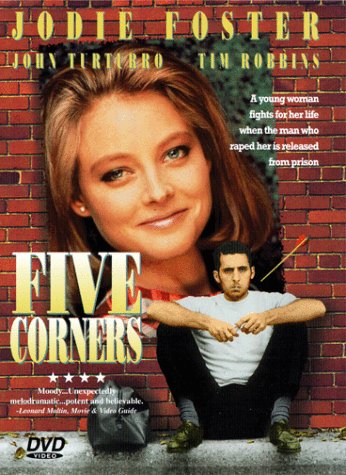
It's the Bronx in the early 60s and a psychotic man named Heinz (John Turturro) is released from jail and immediately starts stalking the girl he tried to rape (Jodie Foster), which landed him in prison in the first place. Upon hearing about his release, the son of a cop turned pacifist/activist is enlisted as protection despite his hesitancy and desire to move to Mississippi to support the Black communities' struggles there.
Posted in: Disc Reviews by Archive Authors on April 30th, 2010
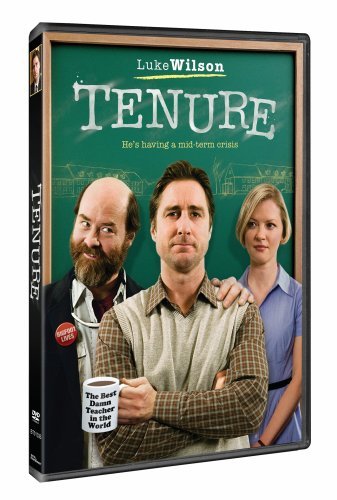
Tenure revolves around Charlie Thurber (Luke Wilson) an insecure college professor who is up for a tenure position in his English department. Charlie has an ongoing problem getting his work published and to add a further complication, the university decides to hire another applicant, Elaine Grasso (Gretchen Mol) for the position. Through the competing for the job, Charlie begins to have feelings for Elaine. As their relationship emerges, Charlie needs to make a decision about what his passions are.
The film blends comedy and drama fairly efficiently. The comedy is hammered home with Charlie’s friend Jay (David Koechner). Whether its herbal enhancements or a fruitless pursuit of Bigfoot, no comedic stone is left unturned. The drama is left for the dark and charming Charlie Thurber. Luke Wilson’s performance is bland. He doesn’t showcase much of a range. Even after his deciding moment in the film, audiences are left feeling shortchanged. However, his comedic moments in the film are timed well and his chemistry with Koechner is undeniable.
Posted in: Disc Reviews by William O'Donnell on April 27th, 2010
An extremely talented young break-dancer from New York, who goes by “Angel,” and her best friend are attacked in an alley. Both are stabbed and only Angel survives. She moves with her mother to Los Angeles and begins a quest to return to Brooklyn on her own. In the meantime, she is rehabilitating from her stabbing injury and is prompted to rekindle her love of dance. Before long she finds a crew and is set to find a new life in LA and display her talents once more.
Posted in: Disc Reviews by Gino Sassani on April 26th, 2010
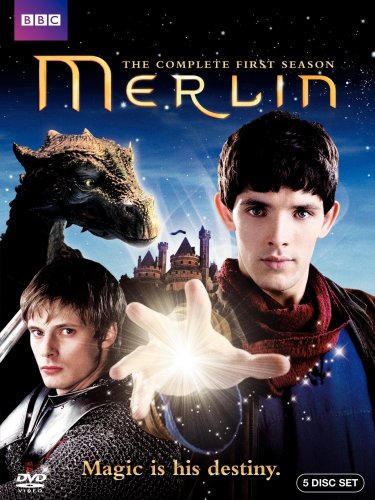
"No young man, no matter how great, can know his destiny. He cannot glimpse his part in the great story that is about to unfold. Like everyone, he must live and learn. And so it will be for the young warlock arriving at the gates of Camelot. A boy that will, in time, father a legend. His name ... Merlin."
Merlin. You know the name. It conjures up images of a white-haired old man with a long gray beard and a long pointed hat. His story is indeed legend. In the myths of Arthur and his Knights of the Round Table, he is destined to be the mentor to the King of Camelot. We've all heard the stories of the Sword in the Stone and the Age of Chivalry. Perhaps it is totally appropriate that this telling of Merlin come from British television. England is, after all, the origin of the fanciful legends.
Posted in: Disc Reviews by David Annandale on April 25th, 2010
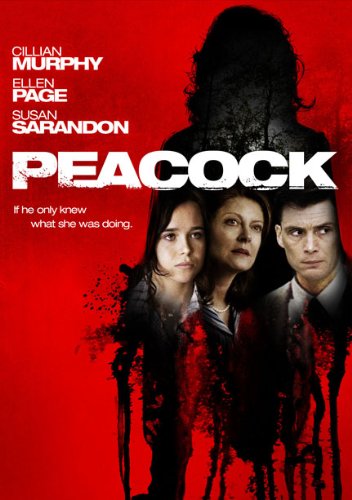
John Skillpa (Cillian Murphy) has been hopelessly damaged by the monstrous abuse his mother inflicted on him. As a result, he now has two separate personalities: John and Emma. John is a terminally shy bank clerk who exists as of 8:15 in the morning and for the duration of the work day. Emma takes care of the domestic chores and leave notes and meals for John. But one day, while Emma is doing the laundry, a derailed caboose blasts through the fence, revealing her existence to the town of Peacock. Everyone assumes she is John's wife. Coaxed out of her shell by Susan Sarandon, Emma gradually blossoms, much to the distress of John. When Ellen Page shows up with a young child and a dark revelation from John's past, the two personalities find themselves moving closer and closer towards a violent confrontation.
It is a testament to the work of director/co-writer Michael Lander and of Cillian Murphy (not for the first time making effective use of his androgynous looks) that one finds oneself increasingly viewing Skillpa as two entirely separate people as, bit by by, drop by drop, the suspense builds. Sympathy shifts back and forth between Emma and John, and by the end one can no more imagine Skillpa as a unified whole than one can decide which of the two halves is the “real” person. Touching and tense, this is a bizarre cross between Psycho and Our Town, and it somehow works very well indeed.
Posted in: Disc Reviews by Gino Sassani on April 24th, 2010
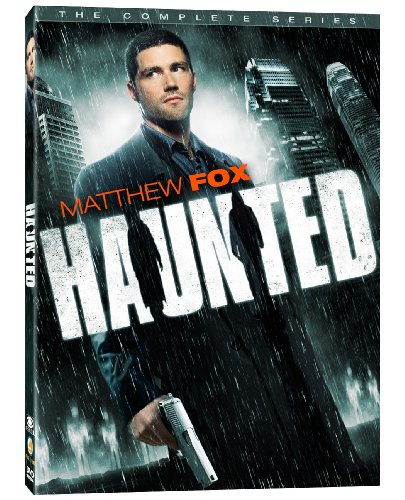
"Two years ago my son was taken from me. Since then I've lost everything: my job, my marriage, even my life. But I came back, and the dead came with me."
Posted in: Disc Reviews by Gino Sassani on April 21st, 2010
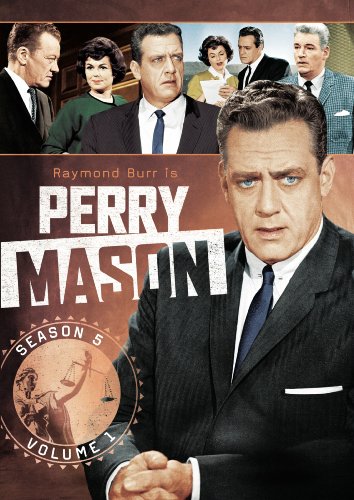
Erle Stanley Gardner wrote crime fiction, and while many of his 100 or so works are unknown to most of us, he created a character that has become as identified with criminal lawyers as any other in fiction. It was in these crime novels that Perry Mason first faced a courtroom. He developed a style where he would investigate these terrible crimes his clients were on trial for. He would find the real killer, and in what has become a Hollywood cliché, reveal his findings in a crucial moment during the trial. While we may not remember the novels, we all remember the man in the persona of Raymond Burr. Burr had a commanding presence on our screens and enjoyed a well deserved 11-year run as the clever lawyer. What makes this run so amazing is that the show followed pretty much the same pattern the entire time. We always know what’s going to happen, but we wait eagerly for that gotcha moment when Perry faces the witness on the stand. We know when he’s got the guy squarely in his sights, and we can’t sit still waiting for him to pull the trigger. OK, so maybe that’s a little over the top, but so was Perry Mason. From the moment you heard that distinctive theme, the stage was set. To say that Perry Mason defined the lawyer show for decades would be an understatement. Folks like Matlock and shows like The Practice are strikingly similar to Perry Mason. If you haven’t checked this show out, this is your chance. See where it all began.
At this rate, it’s going to be quite some time before you complete your collection. I’m not even sure that DVD will still be a viable format before the end of the series on DVD. It’s another half season, and the episodes continue to fly at us at a snail’s pace. But slow and steady wins the race, and as long as the quality episodes continue to deliver that classic Mason charm and style, I guess folks like us will continue to come back for more.
Posted in: Disc Reviews by Gino Sassani on April 20th, 2010
Flight Of The Intruder is one of those films that appears and disappears off of the film world radar about as quickly as a stealth bomber. It has had its share of accolades but often passes swiftly into that entertainment night of obscurity. While it is at its core a Vietnam War film, the movie never really appears to be about the war at all. It attempts to capture some of the sartorial wit of Catch 22 while still trying to pass itself off as a serious enough movie. Make no mistake. This film leaves no war cliché unused, particularly in the stilted, sometimes gung-ho dialog of its characters.
Jake "Cool Hand" (Johnson) is a bomber pilot during the Vietnam War. He's stationed on an aircraft carrier. He's growing a bit bored with the missions he's being ordered to fly. Instead of taking out the important military installations he's assigned to, the locations end up being just empty jungle, or worse. Some of them are simply civilian farms and villages. His morale is already pretty rock-bottom when one of these useless missions catches his plane some serious fire and kills his navigator. Now Jake wants to do something worthwhile, not to mention get a little payback on the enemy. Commander Camparelli (Glover) is growing concerned with the emotional state of his pilot. He tries to keep him reined in as best he can. Enter Jake's new navigator Lieutenant Commander Cole (Dafoe). This guy loves combat. He's just volunteered for his third tour of duty. Like Jake, he wants to make some kind of a real difference. Jake convinces him that they should fly an unauthorized mission straight to downtown Hanoi where it is believed there is a stockpile of SAMs (Surface to Air Missiles) that are responsible for bringing down a lot of American planes. They know it's likely a suicide mission and that even if they should survive, a court martial is about the best they can hope for from the service.