Posted in: Disc Reviews by David Annandale on June 12th, 2010
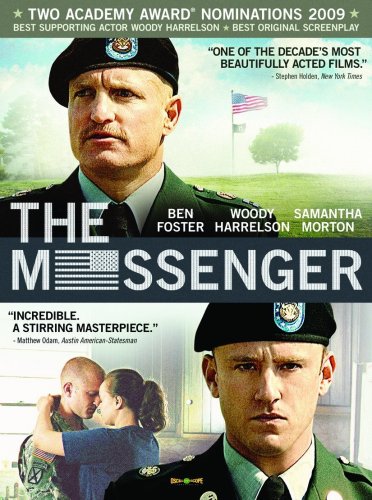
Staff Sergeant Will Montgomery (Ben Foster), a decorated solider just back from Iraq and having difficulty re-adjusting to life on the home front, is understandably less than thrilled with his new assignment: working with Captain Tony Stone (Woody Harrelson) in the Casualty Notification Service. These two have what must surely be one of the worst jobs in the history of history: knocking on doors and informing people that their loved ones have been killed. It is important that they deliver the news and leave, and have no further involvement with the bereaved. If only life were that simple...
Posted in: Disc Reviews by Gino Sassani on June 1st, 2010
“William Banks has saved 257 people from addiction to drugs, sex, and gambling. He’s not a cop. He’s not a superhero. He’s just a man with a calling. This is his story.”
What he is, is Benjamin Bratt, returning from the thespian dead as William Banks, better known to the show’s fans as The Cleaner. Bratt hasn’t been seen much since he left the gig at Law & Order. I almost didn’t recognize him here. But he’s returned in style. The Cleaner has all the characteristics of a police procedural series with a lot more excitement. His methods are often harsh. He’s your worst nightmare of an intervention. When Banks is called in, you haven’t hit rock bottom. Rock bottom has just hit you. The character is a recovering addict himself and does this as a way of making amends. Of course he doesn’t work alone. He’s assembled a kind of Impossible Mission Force-style team that helps with each case. Together they form a private company that a family member can call when they tire of a friend or family member’s addiction. The series was based on the real life story of Warren Boyd, who also acts as one of the show’s producers.
Posted in: Disc Reviews by Michael Durr on May 26th, 2010
In this line of work, you have a tendency to see a lot of copycat television shows. These shows emulate a popular type or specific series and are usually content with mediocre ratings. However, out of the fire of the various copycat shows, we sometimes get a diamond in the rough. This is a diamond that people will shrug off and proclaim as anything but worthwhile television viewing. But once they actually sit down and watch a few episodes, they’ll be hooked for good.
When we left season one of Flashpoint, the Strategic Response Unit wasn’t one hundred percent. Jules (played by Amy Jo Johnson) had been shot and her secret boyfriend, Sam Braddock (played by David Paetkau) realizes that Jules might break up with him. The reason for this is that she thinks the relationship is putting a strain on the team which she has put first.
Posted in: Disc Reviews by Gino Sassani on May 25th, 2010
"On Robben Island, in Pollsmoor Prison, all of my jailers were Afrikaners. For 27 years I studied them. I learned their language. Read their books, their poetry. I had to know my enemy before I could prevail against them. And we did prevail, did we not?"
Leave it to Clint Eastwood to make even rugby look interesting. Of course, Eastwood himself would correct me and observe that Invictus isn't really about rugby. As the words of Nelson Mandela above suggest, this movie wasn't really about rugby at all.
Posted in: Disc Reviews by Gino Sassani on May 20th, 2010
"We're all put to the test. But, it never comes in the form, or at the point, we would prefer, does it?"
When The Edge made its debut in September of 1997, you would have thought it had a lot going for it. The idea of putting Alec Baldwin and Anthony Hopkins together in a winter wilderness sounds like a pretty good idea. Audiences didn't seem to think so. The film was gone after just 5 weeks and less than $30 million box office receipts. It lost nearly half of its screens in just 2 weeks. So, what went wrong with this movie? The answer is nothing, and everything.
Posted in: Disc Reviews by Gino Sassani on May 17th, 2010
For most of this last decade Mel Gibson might as well have vanished from the face of the planet. The once extremely popular actor had charmed the world. Women found his childish grin to be irresistibly sexy, and men bought into the “kick ass and crack a joke” style that made the Lethal Weapon films such a romp of fun. But lately, you expect him to be the subject of a “Where Are They Now” segment from a late show on television. It's no secret why Gibson climbed so quickly out of the public eye. I'm sure everyone still remembers the drunk-driving arrest where Gibson compounded his already serious case of bad judgment with even worse judgment. He tussles with the police officers who stop him and lets loose one of the worst anti-Jewish rants since Pharaoh unloaded on Moses. He apologized, of course, but some things just can never be put back into the box. There's an old Latin phrase that roughly translates to "In wine there is truth". The idea is that Gibson's true feelings were revealed by the reduced inhibitions of alcohol. Whatever his real feelings might be, none of us will ever know, and I don't really have an opinion, or care for that matter, except for the fact that it has removed Mel Gibson from the front of the camera pretty much ever since. His only projects have been as director, producer, and even writer. Even those efforts have been controversial. It's hard to watch The Passion Of The Christ without a visceral reaction to what you've seen. It's been a rough decade for Mel Gibson.
For those who have seen the British mini-series, and I reviewed it in these pages some time ago, you'll find that while the story doesn't really change, the dynamics of the story certainly change, and for the better. This wasn't a good story to drag out over six hours. The British version went into some fantasy elements that this version absolutely avoids. While Craven still appears to be seeing the "ghost" of his dead daughter, it appears to be more in his mind and a product of the grief. In the British series it got rather silly with her teaching him how to do laundry. It was quite absurd, after a time. The basic story elements do remain:
Posted in: Disc Reviews by Gino Sassani on May 17th, 2010
I've seen quite a bit from Steven Seagal of late. There was his reality series from his deputy job, and many of his numerous catalog titles are finding their way to Blu-ray. All in all, it's a pretty good time to be a Steven Seagal fan. The latest of these earlier films to reach high definition is the 1990 entry Marked For Death. It pretty much follows the established Seagal formula here, combing martial arts with the vendetta theme, that he has come to personify for so long. It has a little of what the fans are looking for, including the social messages that are a huge part of Seagal's films. I'll give him a lot of credit here. He does appear to have a huge heart, particularly for kids, and tends to press issues of importance to them in many of his films. He also manages to accomplish this without getting too preachy.
John Hatcher (Seagal) works for the DEA. He's in the middle of an undercover operation in Mexico that goes sideways. That means that people are going to get killed, and you can bet your bottom peso that one of those people is going to be someone that Hatcher cares very much about. Playing a family member or partner in a Steven Seagal movie is like putting on a red uniform and beaming down to a hostile planet with Kirk, Spock, and Bones. You'd be safer with a three-pack-a-day smoking habit topped off with a 5th of Scotch and a heroin chaser. No one's going to be selling you any life insurance. So naturally, since we don't see any family members running about, Hatcher's partner is not long for this script. When his partner does die, Hatcher rethinks his job and decides to quit.
Posted in: Disc Reviews by Gino Sassani on May 15th, 2010
"In the West there lives an animal that runs wild and free. Its strength and courage symbolize our pioneering spirit. That magnificent animal is the wild mustang."
In 1943 a very young Roddy McDowall played a young boy in the perennial classic My Friend Flicka. The film was about a rebellious boy who is given a colt to teach him responsibility. He eventually bonds with the horse and learns the necessary lessons. The film was followed by a 1956 television series that followed the adventures of Gus and Flicka and lasted but one year. In 2006, the story was revived in a remake filmed under the same name but shortened to Flicka before it was released. While the character’s last name was retained, the film went the route of a young girl instead of a boy. It was probably a natural choice. My wife stands as a perfect example of how much every little girl appears to like horses. When I was that age I was more interested in the tough-as-nails cowboys who rode them. The film didn't manage to excite a very large audience and pulled in the small sum of $21 million. You might have expected the story to end there. It hasn't. 20th Century Fox has brought back the friendly spirited mustang in a direct to video release, Flicka 2.
Posted in: Disc Reviews by Gino Sassani on May 11th, 2010
"When I was young, about eight or so, I tried making friends with God by inviting Him to my house to watch the World Series. He never showed."
Jim Carroll was a promising young high school athlete. He was seduced into the dark nature of New York City's underbelly of drugs and violence. During his youth he was also an aspiring poet, who kept a poetic journal of his thoughts before, during, and after his slide into addiction. When he finally did manage to climb out of the hole and gain his sobriety, the entries became a popular piece of literature. Carroll ended up going on reading tours and doing various things to try and help others who might have fallen into the same trap. Director Scott Kalvert attempts to bring these "Basketball Diaries" to life with Leonardo DiCaprio in the role of Jim Carroll.
Posted in: Disc Reviews by Gino Sassani on May 11th, 2010
Perry Mason did it for lawyers. Marcus Welby did it for doctors. From 1969 to 1976 and beyond Robert Young was the face of the television doctor. The actor was so identified with his part that he dealt with fans and their medical questions his entire life following his portrayal of Marcus Welby. In those days there wasn't a medical doctor on the planet, real or fictional, who was more recognizable than Welby. The show pretty much wrote the book on the television medical drama. It doesn't matter if your a fan of House, ER, Grey's Anatomy, or any of a hundred other medical dramas that have come and gone since that time, each of those shows owes more than a little of it's existence to Marcus Welby, MD.
In the 1950's Robert Young was that model parent in Father Knows Best. It's likely that audiences first fell in love with his wise and caring style. There was something about both the character and in the man himself that just caused America to trust him. It was no surprise that when the Marcus Welby creators were looking for a doctor that could, above all, exhibit those same qualities that Robert Young would get the call. And it didn't matter that Young considered himself retired from show business for the last 6 years. But Marcus Welby was a role he just couldn't turn down. It was another gentle character with wisdom and common sense beyond his years. The Doc was a general practitioner in California. To him his patients were people. He would treat the individual as well as whatever ailment was proving to be the problem. He took the tough cases, often seeing some slight symptom that others would miss. That's because he paid attention to his patients, and they couldn't help but trust him with their lives. More times than not, that trust was rewarded with a full recovery. But, even when Welby couldn't beat a disease or injury, he always added something to the patient’s life. It might be helping them to come to terms with their own mortality. He might heal a family rift. Sometimes he just offered a kind word at just the right time.