Drama

It seems like yesterday, but about a year ago; my cat of 14 years had died. Her name was Burns. She had survived through my college years and the worst period in my life during my 20’s. Sarah had come into my life at that point and I guess my cat finally realized she could let go. Burns was always a loyal companion and there to bring me up when I needed it. I never had a better pet than her, and I probably never will. Hachi, A Dog’s Tale is another story about a faithful animal, adapted from a Japanese true story.

It’s hero day at a local school. One student named Ronnie (played by Kevin DeCoste) starts to spin the tale about his hero: Hachi. Hachi is a dog that was actually owned by his grandfather, Parker (played by Richard Gere). We then start to flash back to a Japanese man shipping an Akita dog that travels cross county and ends up in Rhode Island.

"There's two kinds of people in this world when you boil it all down. You've got your talkers and you've got your doers. Most people are just talkers. All they got is talk. But, when all is said and done, it's the doers who change the world. And, when they do that, they change us. And, that's why we never forget them."

And while The Boondock Saints never did bring in box office gold (heck, it didn't even bring in Box Office aluminum) like the characters in the film, they were not forgotten. There were conventions and local film festival showings that brought out untold thousands to share the movie experience. It became what we commonly call today a cult hit. But that's a term of endearment used by critics and fans to describe this kind of grass roots fan base. Unfortunately, it's a dirty word in Hollywood. No one in the studio highchairs wants to produce a cult film. Well, no one except maybe Troy Duffy.

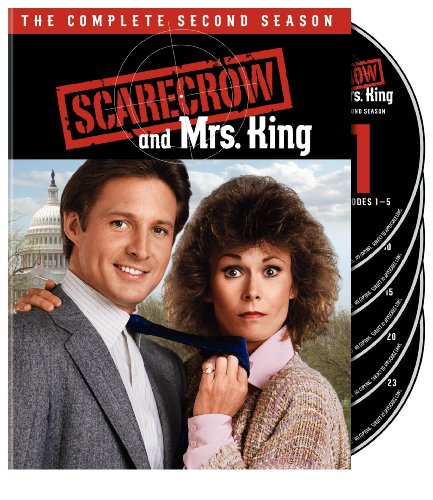
While Scarecrow And Mrs. King first aired in 1983, this show is really one of the last of the 1970's crime dramas. It was an early attempt to bring in more of the female audiences that seemed reluctant to join the popular detective shows of the era. While not really a "detective" show (they were spies), it employed a lot of the 1970's conventions. Even the film footage has that distinct style from those days and type of shows. The idea worked, and the series did bring in a sizeable female audience, but it never really caught on with the guy crowd who found it a bit too relationship-heavy. The two leads were chosen less for their character appeal than for their apparent "easy on the eyes" look. Again more fodder for the chick crowd. The show was always rather lighthearted, even if the material was somewhat serious cold war espionage. The two shared a banter that revealed a kind of love/hate relationship and the expected sexual tension that would eventually lead to the two getting hitched. And while the series only lasted four seasons, the formula would end up being tweaked to bring us the more successful Moonlighting with Bruce Willis and Cybill Shepherd, which took the idea more into the 80's with slicker production values but still a mainly female appeal.

Amanda King (Jackson) was a recent divorcée with two sons and a nosy mother (Garland) who lived with her. She has a boyfriend named Dean who works as a meteorologist at a local Washington DC television station, whom you never actually get to see. While at the train station, she suddenly finds herself embroiled in an espionage plot when a package is handed to her on the platform. Then she meets government agent Lee Stetson (Boxleitner) who works under the codename: Scarecrow. She's intrigued by Scarecrow and agrees to help him in his current case. Of course, she ends up in a more permanent role with "The Agency", taking a job at their cover corporation The International Federal Film Company. Every week we find Amanda trying to balance her new role as a spy with trying to raise her kids, have a normal dating relationship, and keep her cover safe from her particularly prying mother. The results are often quite funny. There is also Scarecrow's partner, Francine (Smith) who is somewhat jealous of Amanda and Lee.

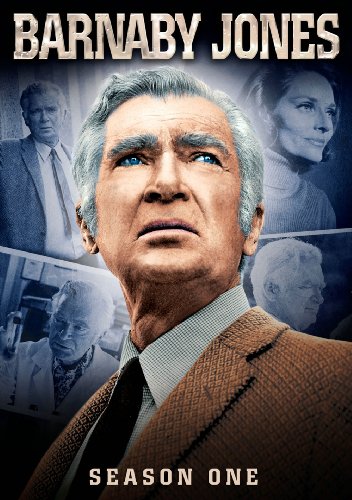
In many ways Barnaby Jones was seen as the Matlock of private Detectives. The title character's age alone gave him a similar, elderly fan-base that sustained the program for eight seasons. As a spin-off from Cannon, producer Quinn Martin offered us yet another protagonist who is designed to be perpetually underestimated (Cannon because of his obesity, and Jones for his age). Buddy Ebsen (who most know best as Jed Clampett from the original Beverly Hillbillies) is Barnaby Jones, who is always accepting a cold glass of milk over a hard drink, and always asking “a lot of questions” to catch the bad guy.

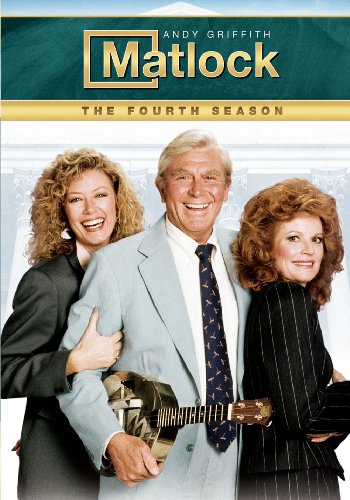
The fourth season of Matlock brought more of the same. If you’re a fan, that’s very good news indeed. What is that, you ask? Imagine Sheriff Andy Taylor older and now an attorney, and you pretty much have the setup for Matlock. Forget for a second that both characters were played by Andy Griffith. That’s not all they have in common. Matlock is every bit the “southern gentleman” that Taylor was. He might be a little smarter, but he walks and talks like Andy Taylor.

Matlock began life as a television movie from Dean Hargrove, who brought us Columbo. Hargrove would later work the same magic with Dick Van Dyke in Diagnosis Murder. In fact, the two shows could easily have been companion pieces. Both featured sit-com stars from the 1950’s and 60’s that had become somewhat iconic characters. Both would don the role of professionals. Both shows would subscribe to the “formula” mode of storytelling. Diary Of A Perfect Murder would set up the Matlock formula. It’s simple, really. Matlock was a lawyer in Atlanta. Some wronged defendant, usually charged with murder, would show up asking for Matlock’s help. Matlock and his team would investigate the crime with an eye toward, as OJ Simpson is fond of saying, finding the real killer.  His team consisted of his daughter Charlene, herself a competent lawyer, and Tyler Hudson (Holliday), his private investigator. In the pilot the Matlock character was less Andy Taylor and a little more slick at first. I’m sure that while it was intended to show Matlock’s prowess as a high priced attorney, somewhere along the line it became obvious that the show’s finest asset was Griffith himself and that southern charm he was already famous for. Whatever the reason, you can see the character soften significantly during the early episodes of the season. And that decision was a smart one, as Matlock would continue for nearly a decade.

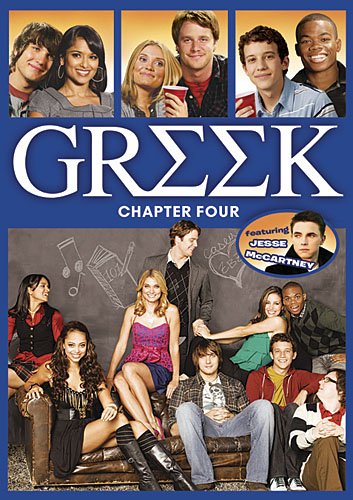
The concept would appear to be slightly misplaced on ABC’s Family Network. The prerequisite underage drinking and promiscuous sexual lives don’t appear to be the best “family” entertainment. We don’t get even halfway through the pilot episode before we’re already charting those waters. To be sure, Greek is no Animal House, and the atmosphere is toned down considerably, but the issues remain, and this is not a show for the kiddies. The story is very much like a soap opera. Casey (Grammer) is a sorority sister for Zeta Beta Zeta, and after two years is a woman on the rise. She’s dating the rich and handsome Evan (McDorman) and is in line to be the next House president. Her life is about to change when her nerdy brother, Rusty (Zachar) arrives at college. In his hope to experience college life and shed some of his geek reputation, he decides to rush a fraternity and enter Casey’s perfect world. Casey’s other problem is Zeta Beta Zeta’s own new pledge in the form of Rebecca Logan (Vadsaria), the spoiled daughter of a US Senator and rival for Evan’s affections as well as the future House leadership. To further complicate matters, Rusty has pledged Omega Chi Delta, which is led by Casey’s former boyfriend, Cappie (Foster). Most of the episodes deal with the crossover of these various worlds, and there’s a ton of competition not only between the houses but the characters. The show is all about the parties and the rivalries. There’s an interesting enough group of supporting characters, all well cast, which make this series a little more interesting than it really should be.

I think it started with the writers’ strike and somehow got out of control on this series. None of these sets represent actual seasons, which is why the releases are called chapters. The first two chapters represent the times before and after the strike from the show’s first year. I kind of understand how that might work out. What I don’t quite get is why it is now continuing. This chapter begins with the 11th episode of the second season and stops with the 22nd, even though the season actually included 22 episodes, all of them aired before the release of the DVDs. There doesn’t appear to be any reason to spread out these releases except to capture a couple of extra bucks from the fans. At least we are at a season end. With this logic "Chapter 5" will begin with the start of season 3. Let's see if we get to keep an entire season next time.

So here we go with yet another heaping helping of public domain offerings from Infinity. I last looked at their Abbott & Costello package, which concentrated on TV shows and only featured a couple of movies. This Mickey Rooney set is heavily oriented towards the movies. Here's what you get:

Disc 1:

In the 2006 hit The Devil Wears Prada there was a single line that summed up Meryl Streep’s pitch-perfect portrayal of icy fashion editor Miranda Priestly: “That’s all.” The real-life inspiration behind the character, Vogue editor-in-chief Anna Wintour, has such a commanding presence that even those few words are hardly necessary. Her disapproval is apparent with a single glare.

The September Issue follows Wintour and her loyal band of editors as they prepare for the most important month of the year in fashion. As one employee says, September in fashion is like January for most people: it’s a fresh start. Throughout the 90-minute documentary director R.J. Cutler captures an intimate, surprisingly compelling look behind the scenes of an institution that is synonymous with fashion.

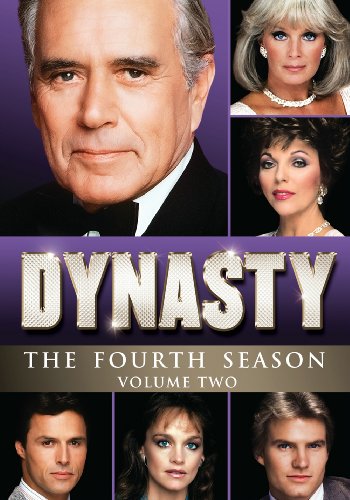
Oh how the rich can get into mischief. This DVD set is smack dab in the middle of Dynasty's successful nine season run. The mud slinging, both literal and figurative, was at its height in this fourth season, and no $200 haircut or $1000 outfit was left unruffled by the various scandals and plots set into the web of these wealthy Denver residents. In fact, this season was the one and only time this series won a Golden Globe for best TV Drama.

William Conrad was no stranger to audiences when Cannon joined the Quinn Martin stable of television dramas. In fact, most folks knew his voice before they got to know his trademark girth. Conrad was the original Matt Dillon when Gunsmoke was a radio drama. When the drama entered the visual medium of television, even Conrad admitted later that the audience, who thought of him as tall and handsome, would have been disappointed. His voice lent authority to any role he played, and on radio his size was never an issue. He was famous as the voice of the stern narrator in the Rocky and Bullwinkle cartoons who often crossed the laws of the trade and interacted with the title characters. He was also the voice that narrated the struggles of Dr. Richard Kimble on The Fugitive, another Quinn Martin production. He continued to narrate series intros even after his own success. He gave us the informative opening dialog in Buck Rogers In The 25th Century. As a voice, Conrad was one of the best, but when CBS approached Quinn Martin asking for a television vehicle for Conrad, it was a huge gamble. The gamble, of course, paid off… well… huge, and Cannon became an iconic figure in television. Cannon was so popular he was showing up on other shows as well. He appeared on the pilot for Barnaby Jones. The show ran 5 seasons and returned with appropriately enough The Return Of Frank Cannon tele-film in 1980. It is also interesting to note that Conrad, while greatly overweight, lived to be 74.

Frank Cannon was unlike any detective we’d ever seen on television before, or since. He was known as a high priced PI with a taste for the finer things in life, particularly fine food. His appearance was counter to all of the rules about rock-jawed handsome detectives who ran around shooting it out and beating up the bad guys. Cannon was a big man and wasn’t about to do much running and fighting. He wasn’t totally different, however. Cannon had a lead foot and could run a car chase with the best of them. He was smart and often a bit flashy in his technique, if not in his appearance. It was also rare for a series to have a lone regular to carry the … um… weight. Conrad was up to the task and made the show and the character a permanent part of our pop culture.