Posted in: Disc Reviews by David Annandale on February 22nd, 2010
Eddie Sutton (Russell Hornsby) is an idealistic police officer, dreaming of making a real difference. His family (nurse wife and three kids) is currently living in a too-small apartment. The chance to kill two birds with one stone comes up with a program that encourages officers to buy homes in depressed neighbourhoods, and so Eddie moves his family into a spacious former crack house in the titular LA district. Things, as one might expect, are not easy. Eddie discovers (to his unaccountable surprise) that his new neighbours are suspicious of the police. His son is bullied in school. The girls have their own problems fitting in. And crime keeps rearing its ugly head. But as the series progresses, Eddie and his family make of their new house, and its neighbourhood, a real home.
Back in 2007, Variety reviewed this series, and compared it unfavorably to The Wire. Given that show's status as one of the best series EVER to grace American television, just about anything would look back in comparison. But Lincoln Heights doesn't do itself any favours by yoking together (with violence) gritty urban drama and Hallmark-style sentimentality. The latter makes the former hollow, while the former shows up the latter for the lie that it is. The show has stars in its eyes, and its heart may perhaps be in the right place, but that does, unfortunately, make it good, despite the best efforts of its able cast. The characters remain familiar mainstream TV types, and so when Eddie warns that their new neighbourhood “isn't Disneyland,” he is, in fact, wrong. He simply moves his family from one area of the amusement park to the other, from Cosbyland to Gangstaland, and there is no more authenticity than at Disneyland. I won't even get started on the action scenes, which feature the most gratuitous use of splitscreen this side of CSI: Miami.
Posted in: Disc Reviews by David Annandale on February 17th, 2010
Brian Clough (Michael Sheen) is the manager for the Leeds United soccer team, brought in to replace Don Revie (Colm Meaney), who is off to manage the England team. Clough is young, charismatic, brash, arrogant and opinionated, and has some pretty unflattering (and publicly aired) views about his predecessor and the thuggish style of play he fostered. So begin his 44 catastrophic days in 1974 as the unwelcome manager of United, and the film flashes back to the meteoric rise that brought him to this crucial pass.
This must surely be one of the best sports-related movies I have ever seen. Every conceivable sports movie cliché goes out the window. There are no extended sequences showing the games, just some quick, impressionistic shots that tell you all you need to know. This is not the inevitable story of the Underdog Making Good. It is the reverse: a rising star who takes over the most successful team in the country and becomes a legendary disaster. And yet the film is oddly triumphant. It is very much about Clough's relationships with two men: his obsessive rivalry with Revie, who isn't even aware of him, and his deep friendship with partner Peter Taylor (Timothy Spall), a friendship that might save him from himself, did he but realize it. The performances are superb, with Meaney looking uncannily like Revie (seen in footage at the end of the film), and Sheen astounding yet again, in the wake of his performances as Tony Blair and David Frost, cementing his position as one of the great actors of this generation.
Posted in: Disc Reviews by David Annandale on February 17th, 2010
Director Robert Altman here adapts David Rabe's play about a small group of recruits on the verge of being shipped off to Vietnam. The action takes place entirely in the barracks, and here we get to know African-American Roger (David Alan Grier), fitting in as best he can in a white man's army; sensitive and gay Richie (Mitchell Lichtenstein); and possibly-closeted Billy (Matthew Modine). They talk about and dance around their various fears and anxieties, and then into the mix comes the explosive Carlyle (Michael Wright), whose life on the streets and experience with racism have turned him into someone who talks and acts long before he thinks...
Moving from stage to screen is always a tricky business. Some plays open up to the cinematic world quite easily, while others remain stubbornly stagebound. Altman's decision to restrict the film to a single set is a risky one, but it is testament to his skill as a filmmaker that it works. He preserves the claustrophobic, hothouse environment of the play, but keeps his camera and editing so active that the work remains visually interesting and properly cinematic. That said, there is no disguising the fact that Streamers is designed for the stage. The script, with its long, anecdotal monologues, could only be that of a play. What would no doubt be incredibly powerful on stage becomes, well, stagey on the screen, and though it is impossible to remain unmoved by the events in the plot, neither can one ever forget the artificiality of the enterprise, and the suspension of disbelief that would come naturally while watching a liver performance is much more difficult here. The result, then, is ultimately more interesting than powerful.
Posted in: Disc Reviews by Gino Sassani on February 16th, 2010
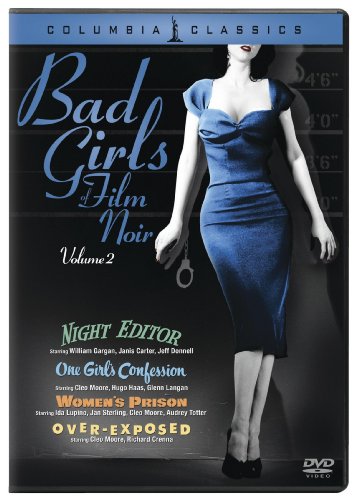
“In the 1940’s and 1950's the juiciest roles for actresses in Hollywood were often in B pictures that explored the dark side of life, staring roles as cool, calculating girls who could stick a knife in a man's back and make him like it."
And so Sony collects 8 of these films as part of what looks like is going to be an ongoing series. But what exactly is Film Noir? You hear the term used from time to time, but what does it mean?
Posted in: Disc Reviews by Gino Sassani on February 15th, 2010
I have absolutely no doubt that Hilary Swank meant well, but we all know what wise men say about good intentions. It is likely that Amelia Earhart has been a hero and inspiration to the young actress as I know she's been to women of all professions throughout the years. There's no question that she is an influential historical figure and deserving of attention. Of course, she's had plenty over the years. There have actually been quite a few films and television shows dedicated to the heroine since her disappearance so many years ago. Like any subject, there have been some great efforts and some forgettable ones. Recently the character showed up in a much more frivolous and fictional way in the latest Night At The Museum film. From Star Trek to A&E documentaries, there is little danger that she will be forgotten in the world of entertainment. I suspect, from what I've seen from news reels, that she was a passionate and spirited woman full of life and heart. Unfortunately Amelia, the film, has none of that.
From the film's promotional campaign one is left with the definite idea that this is less about the aviatrix and more about the love story between Earhart and George Putnam, played by Richard Gere. At least that's the film I was most prepared to see. I suppose one piece of good news, at least for me, was that this love affair is played quite flatly. Who could have expected that from a Gere romantic film? If that really was the focus, someone forgot to tell the leads that they were in love. The portrayals are so matter-of-fact and dispassionate that you could debate whether there was indeed any love there at all. Perhaps that was the way the relationship was in reality. If that's true, it's a poor choice for a romantic film.
Posted in: Disc Reviews by William O'Donnell on February 15th, 2010
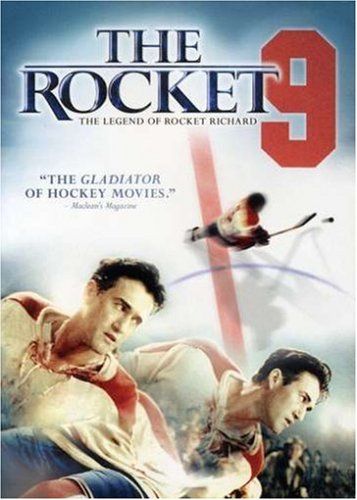
This film chronicles the career of Maurice “The Rocket” Richard, an NHL player for the Montreal Canadians, from his childhood days in a Junior hockey league, to the season in 1955 where his suspension from playing for the remainder of that season led to violent riots in Montreal. This film is more than just an examination of Richard as a French-Canadian citizen and legendary hockey player (many still argue as the greatest ever to play) but also a look at his impact as an icon and living legend to the people of Quebec.
Posted in: Disc Reviews by Michael Durr on February 11th, 2010
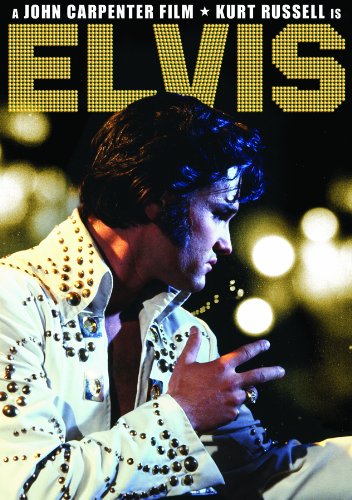
Most people who call themselves friends of mine know that I absolutely adore the combination of John Carpenter and Kurt Russell. Escape from New York is my favorite movie of all time and I even liked Escape from L.A. as well. Now that my credibility is probably ruined, I was delighted to receive Elvis, a mini-series produced in the seventies that brought together this amazing duo for the first time. Kurt Russell is the King of Rock n Roll and I can’t help to enjoy watching.
The year is 1969. Elvis Aaron Presley (played by Kurt Russell) sits in a hotel room in Las Vegas with his friend and roadie Red West (played by Robert Gray). He is about to make one of the biggest comebacks of all time. However, there is a news report on the television about him that questions whether or not he can make the comeback. Elvis doesn’t quite like that. He reaches into his pocket and pulls out a pistol and aims it directly at the television.
Posted in: Disc Reviews by Gino Sassani on February 9th, 2010
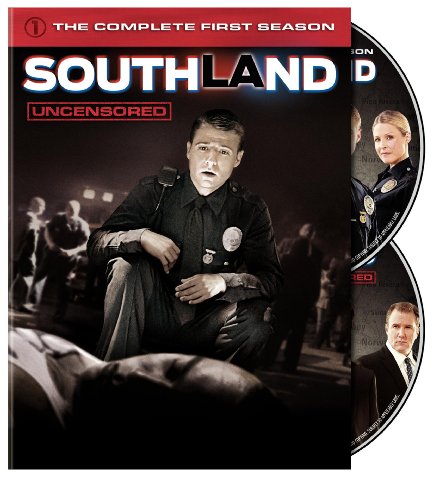
"Look sharp, act sharp, be sharp. These guys coming out of prison? They're buff, been on drugs. You do what they teach you in the academy, you will die. Knucklehead wants to take your gun. So if it's you or some 300-pound naked guy on PCP, you take his ass down any way you can. You ride with me, you back your badge."
There probably isn't a group of people who have been profiled more than the men and women serving in the LAPD. It doesn't take a rocket scientist to figure out why. It's a large city with an incredibly diverse population. Oh, and it doesn't hurt any that Hollywood's a part of this particular asphalt jungle. So we get to see a lot of L.A. or New York cops on television. Even long before Jack Webb was asking for the facts and only the facts, the cops of L.A. have had more than their fair share of screen time in film and television. With that in mind, it is awfully difficult to do anything new with the LAPD.

Posted in: Disc Reviews by Gino Sassani on February 9th, 2010
What if you took the Desperate Housewives and placed them on an Army base? If that thought has been keeping you awake at night, sleep tight, gentle reader. You can find out simply by picking up a copy of Army Wives on DVD. I’m not exaggerating about this at all. Army Wives has the very same soap opera plotting and tone as the ABC hit does. You gotta really be into that sort of thing if you have any hope at all of keeping up with the antics of these four friends, or of having any desire to. I’m afraid I have to confess that I am not in that group and so found the 19 episodes to be very trying indeed.
The series follows the trials and tribulations of four wives of enlisted Army personnel. They call themselves “The Tribe”. Claudia Joy (Delaney) is the unofficial head of the group. The other women are Denise Sherwood (Bell), Pamela Moran (Brannaugh), and Roxy LaBlanc (Pressman). The show often focuses on their rather emotional situations and makes a center for itself in the idea that these women are there for each other. In this second season the Army life aspect of the show was intentionally held back somewhat, and the stories dealt more intimately with the wives. Likely a good move for the target audience that would have very little interest in the military aspects of the setting.
Posted in: Disc Reviews by Gino Sassani on February 9th, 2010
Just as JAG closes out its 10th and final year I really think the show was peaking. Most regular readers to the site will remember I was not much of a fan when I started with the 5th season set. I thought the stories failed to work on the action or courtroom levels. As the show evolved, or I did, I was drawn in with the clever and unique types of stories the series began to explore. By the time it ended here I was ready for more, but no more will be forthcoming. Of course, it lives on in the two NCIS spin-off shows currently on the air.
Most of each episode is dedicated to the investigation of the particular case. For action junkies, this often means flying some sweet high tech aircraft. The show’s primary character, Commander Harmon “Harm” Rabb (Elliott) does a lot of the high flying investigations. He was once an ace pilot who developed night blindness, which essentially grounded him.