Drama

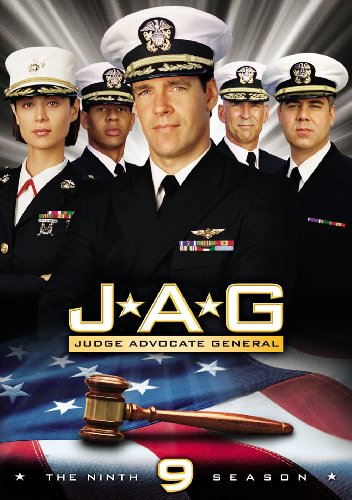
Finally, this show has really gotten to me. I don’t know what it is about this 8th season, but I was far more interested in the show than I had ever been. Maybe I’ve spent so long with these characters that they started to come alive for me. Maybe I was resistant to a slightly different way of telling stories. Maybe it was that the stories became less about who was with who that I was finally able to enjoy the great courtroom drama and investigation elements of the series. Whatever it was, I am finally a fan.

Most of each episode is dedicated to the investigation of the particular case. For action junkies, this often means flying some sweet high tech aircraft. The show’s primary character, Commander Harmon “Harm” Rabb (Elliott) does a lot of the high flying investigations. He was once an ace pilot who developed night blindness, which essentially grounded him.

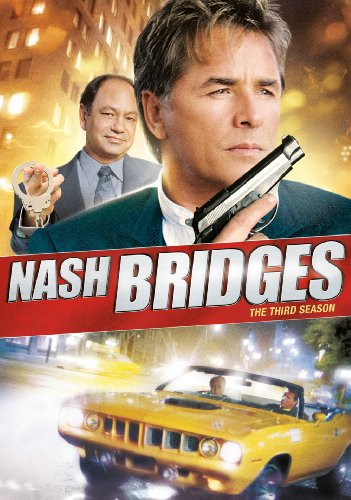
It’s been some years since I had seen an episode of Nash Bridges. I had almost forgotten everything about the show except for two things. I remembered how great Johnson and Marin were together and, of course, that ugly-colored Cuda. I watched these episodes and found that my perspective hadn’t changed. Who cares what the story is about? Who remembers any of the cases? I remember the characters and the car, and 10 years later it feels exactly the same way. In many ways Nash Bridges was the last of its kind. The cycle of buddy cop and car chases was pretty much over. What started with James Rockford and Starsky and Hutch was now evolving into Law & Order and CSI. We still had procedurals, but they had changed their procedures. If you have to say goodbye to a beloved era, what better way than with Nash Bridges?

When Miami Vice finally left the air in 1989, Don Johnson was a very hot commodity indeed. He decided to try and parlay that success into a film career that never really brought him the breakout roles and fortunes he envisioned. Not too proud to return to his roots, he signed a deal with CBS that gave him pretty much a blank check to star in whatever kind of television series he wanted. It was a rare deal that forced CBS to air, or at least pay for, whatever Johnson came up with. Many of us were expecting pretty much a Miami Vice clone when it was announced he would once again be playing a cop. It was all sounding pretty familiar. Bridges was a super cool cop, this time from San Francisco with a rather tattered personal life. He was going to be teamed up with a partner, who wasn’t going to be a cop, but an investigator whose cases would cross paths with Bridges’. It was rumored that the partner might not survive the pilot, thereby killing the buddy cop routine that was beginning to sound very much like Johnson’s previous show. It appeared doomed to failure, and even CBS was at first looking to back out of the deal. They tried to buy Johnson off, but he was by now very excited about the new show and insisted he get his episodes. But how could this new show not be compared to the old? How could anyone have the kind of chemistry with Johnson that John Diehl had? On March 29, 1996 everyone held their collective breaths as Nash Bridges appeared on the scene. Cheech Marin ended up with tons more chemistry with Johnson, helped by the fact the two had been friends for over 25 years. In short order Nash Bridges had arrived, and television audiences everywhere found themselves saying: “Miami Who?”

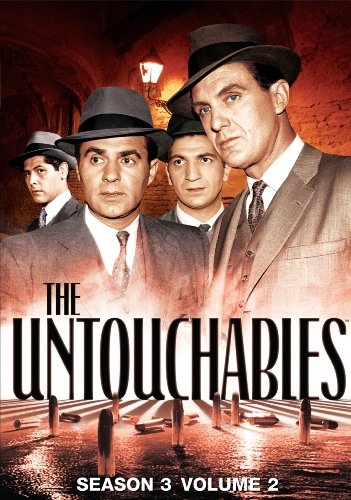
I was entirely too young to remember even the syndicated run that my mother was watching in the late 1960’s. Under more normal circumstances that would not matter as I could introduce myself to this world with the DVD release. That was before 1987, and the release of Brian De Palma’s classic film. Honestly, I simply can’t watch these episodes without thinking of that movie. For an entire generation that film has defined these characters and that time. It’s unfortunate, really, because this 1960 series had a lot going for it, particularly when you look at what else was on television at that time. Never before had such brutal violence in such a starkly real world graced the black and white sets of America. When I read articles about the controversy surrounding these depictions, I am forced to smile a little. By today’s standards these shows are quite tame. Still, the flurry of protests the show spawned were quite real. Italians were also vocal in their belief that the show went too far in portraying nearly every bad guy as being of Italian descent. I have to admit some of these accents make Father Sarducci sound good. Complaints went as far as the US Attorney General. My, have things changed. I am also of Italian heritage and gladly sit down to an hour of Tony Soprano, eating it up about as fast as a bowl of tortellini and gravy. While there are still those of us who feel racially exploited, most of us embrace the mob mythology of The Godfather and Goodfellas. We can accept the difference between reality and fantasy. And so I watch these episodes as if I were some remote viewer, not only from a different time but a different place.

The Untouchables took on a perhaps too convincing appearance of reality. Remember that the audience was made up of folks who grew up getting their news from newsreels at the local theater. It was a stroke of genius to have real life news reporter Walter Winchell narrate the series. Everything from that narration to the gritty dark photography carried a documentary style feel to every minute of the action. You can only imagine why too many Americans thought it was too violent. The show wasn’t too violent. It looked and felt too realistic. Robert Stack literally becomes the persona of Elliot Ness. The show was also based on a book that was co-written by Ness himself but was highly fictionalized by the time it reached millions of homes each week. In truth Ness’s team didn’t exist long after bringing down Capone for tax evasion. In the series the team becomes a strike force of sorts against an entire mug book of criminals real and imagined.

This new version of The Taking Of Pelham 123 falls under the category of unnecessary remakes, reimaginings, reboots, or retellings. That’s not to say that it’s a bad movie. In fact, it’s a pretty good movie. I guess my big problem is that this latest trend to redo so many things that have come before suggests a lack of originality in today’s artists. I don’t believe there is a lack of creativity in this generation. I do, however, think there is a laziness that pervades almost every aspect of our society, and this endless chain of copies is a symptom of that disease. Don’t get me wrong here. I’m not one of these critics who believes that films and television shows can’t or should not occasionally be redone. There’s a lot to be said for reintroducing current generations to the ideas of the past in new and exciting ways. I just think it shouldn’t be the most common form of expression in Hollywood, but lately it is just that. Lecture over.

The story first appeared as a novel by John Godey. It was made into a film many of us consider a classic in 1974. The leads in that effort were the unlikely pair of Walter Matthau and Robert Shaw. In this film they are replaced by Denzel Washington and John Travolta. Both are exceptional actors and deserve credit for delivering solid performances here. In both films the overall plot was the same.

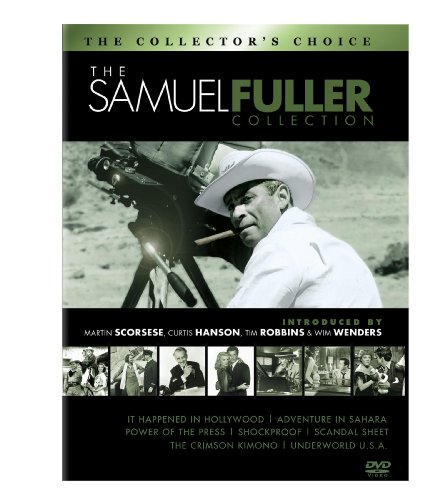
Sam Fuller lived quite a life before he ever even thought about working in the film industry. He was a crime beat reporter at 17 years old. He served in the infantry in World War II, turning down a cushy press corps assignment. Both of these experiences would shape the man, writer, and filmmaker he was to become. His newspaper experience gave him access to a lifetime of stories, an understanding of the newspaper business, and a honed writing skill. That ability would serve him most. Fuller was a writer more than a filmmaker, and it was with his typewriter that he most excelled. The war would emotionally scar him. He may have entered with the typical young ideas of glory in the battlefield, but he left with visions of death and gore that he could never forget. It hardened the man. Instead of turning bitter, he found a way to exorcise those demons and ultimately made a heck of a living in the process.

His films are, if nothing else, quite unique. He wasn’t raised in the same studio environment as most filmmakers, and there was always a kind of docudrama feel to almost everything he wrote or created. He was excessively patriotic in his younger years, but at the end of his life he became disillusioned and moved to Europe. His films were almost always steeped in the film noir of the early 30’s and 40’s, even his later works. Everything from the characters to the words they spoke had a decidedly Fuller reality to it. Known mostly for smaller budget films, Fuller was prolific and could work quickly.

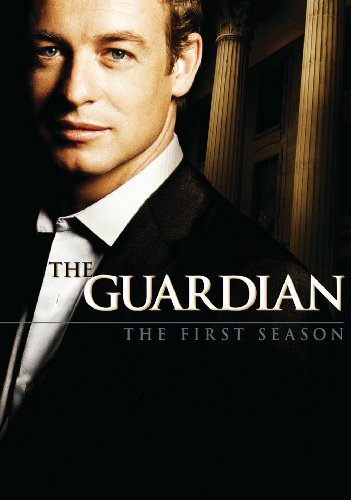
Simon Baker is riding high these days. Last year his new series, The Mentalist, was the highest ranked new drama of the year. That accomplishment got the show paired with CSI in that enviable Thursday night time slot. I’m amazed when I hear folks tell me how the actor appeared to come out of nowhere. A few film roles and he’s Mr. Television. Well, count me in with the small group that isn’t so surprised and saw him coming as far away as 2001 with a sleeper CBS series called The Guardian.

Baker played Nick Fallin, a talented young lawyer who just got busted for cocaine. Nick won’t see the inside of prison, however. His father, Burton (Coleman) is the senior partner at one of Pittsburgh’s most influential corporate law firms. Instead of jail, Nick is given 5 years probation and ordered to serve 1500 hours of community service. His court ordered assignment is Legal Services Of Pittsburgh, formally Children’s Legal Services. He’s placed under the charge of Alvin Masterson (Rosenberg), an idealist who set up the law clinic originally to speak for children who have no one else to do so. He’s resentful of Nick’s pampered lifestyle and at first wants to make the gig hard enough on him that he might ask to be assigned elsewhere. Eventually they warm to each other as Nick becomes more vested in the job than he thought he would be. Much of the show’s conflict is derived from Nick juggling these two worlds. He still has a duty as a shark attorney for his father’s firm, yet must find time to help these indigents and children that have come to the clinic for help.

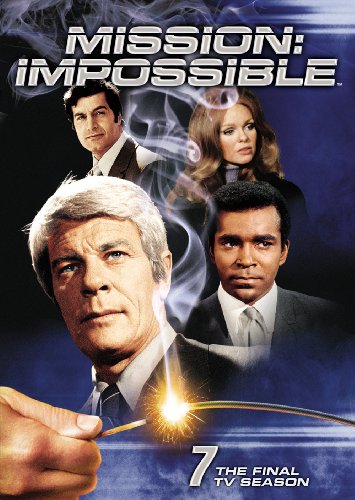
With so many cast changes, it didn’t really come as too much of a surprise to fans that the series was winding down. Only one more season would follow, and this year never clicked in quite the same way previous seasons had. By now the team was so significantly different that there was little of the cast chemistry that made this one such a winner. With its glory years behind and only one more struggling year to come, we reach the end of our journey with the IM Force.

Jim Phelps (Graves) led his team in a sixth season of Mission Impossible starting in 1971. The show continued its trademark traditions. Jim would receive a mission from the “self destructing” tape and would gather his IMF (Impossible Mission Force) team. The team was necessarily eclectic in nature, and it changed significantly in the sixth season. Gone were Leonard Nimoy, Leslie Ann Warren, and Sam Elliott in his signature role of Dr. Robert. Still in the team we had Barney Collier, the gadget man, played by Greg Morris. The muscle was still supplied by Willy Armitage, played by brute Peter Lupus. Together they took on missions that the government could not be officially a part of. They were always admonished that should they be caught “the secretary would disavow any knowledge” of them. Usually they were sent somewhere to put some evil mastermind out of business. Their tactics ranged from scams to outright theft. Sometimes they were a rescue team, while other times they would infiltrate a group of bad guys. There were certainly cold war elements to the whole thing. Each week the team concocted some convoluted con to play on their mark, walking away at the end of each episode often without getting any credit or congratulations.

John Krasinski and Maya Rudolph are a pair of 30-somethings who are expecting their first child. They have been counting on Krasinski's parents to step in and help, but when these two suddenly announce that they're moving to Belgium, our “heroic” couple embarks on a road trip to find the perfect place to settle down and have their baby. Numerous encounters with eccentric characters is the order of the day.

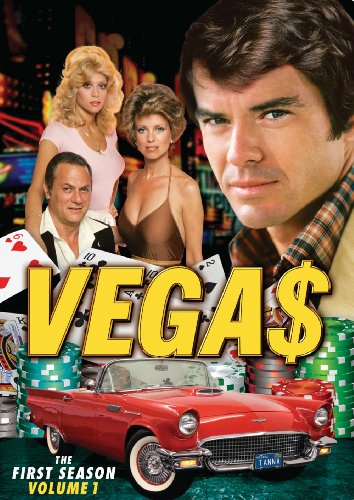
By 1978 the television detective model had been nearly complete and possibly already a cliché. Dan Tanna might have well been the complete model as far as the formula goes. It was almost as if you could go down a checklist and, like Dr. Frankenstein creating a monster, you would check off the necessary elements. The scripts could then almost write themselves, and you let the show fly on autopilot for three seasons or so until someone decides to look behind the curtain.

So let’s go down that checklist, shall we?

It sounds like nothing new. Hard boiled detective uses computers and other forms of technology to solve cases. It isn’t anything new, except the detective in question is Joe Mannix, and the series started in 1967. The computer that Mannix used took up an entire room and was queried using cardboard punch cards. This wasn’t science fiction. We’re not talking some newly discovered Irwin Allen series. Mannix didn’t go after aliens or robots. This was a down to earth gritty detective show. Mike Connors played the tough as nails detective. He was perfect for the part and blended into the role seamlessly for 8 years.

The show was created by the team of Link and Levinson, who later gave us the detective in the rumpled raincoat, Columbo. It was groundbreaking in so many areas. While it might not be remembered today as one of the top detective shows, there can be no argument about the impact Mannix had on the genre. A decade later one of my favorite television detectives, Jim Rockford, would borrow rather heavily from Mannix. Like Rockford, Mannix was getting beat up a lot. They both had the same sense of style, wearing rather ugly sport jackets. Neither was afraid to bend the rules, or the law, when necessary. Again like Rockford, Mannix often falls for the wrong girl at the wrong time. Mannix was good with a gun and equally adept with his fists. The show received a ton of controversy from the start for the amount of violence it employed. Tame by today’s standards, Mannix was quite aggressive for its time. The joke was that the show’s producers mandated a fight or car chase every 15 minutes whether it was needed or not. I’m sure that wasn’t true, but nonetheless the show opened the floodgates for the detective shows that followed. In this first season, Mannix worked for the enigmatic detective agency, Intertect. They supplied him with the latest in modern technology and with his cases. His main company contact was Lou Wickersham, played by Joseph Campanella. Now Mannix is on his own and begins to resemble more and more these detectives that would eventually follow in his tire tracks.