Drama

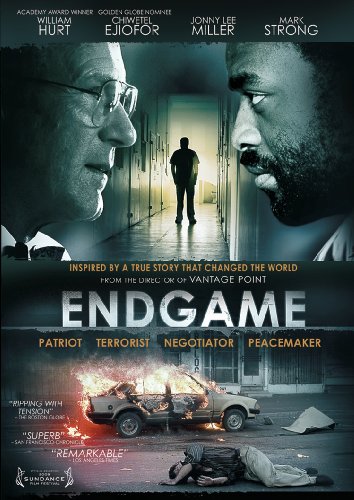
On February 11th, 1990, Nelson Mandela was released from the Victor Verster Prison is often seen as the symbolic end of apartheid in the country of South Africa. However, the apartheid was not fully removed until the elections of 1994. Furthermore, the story was way more complex than the African National Congress leader’s freedom. The story that was more focused on Willie Esterhuyse, Thabo Mbeki and Michael Young. These names might seem foreign to most of us, but they are perhaps three of the most important names to the recent history of South Africa.

Michael Young (played by Jonny Lee Miller) is a British businessman who is secretly working for Consolidated Goldfields, a firm who has particular interest in the affairs of South Africa. The film starts with him visiting a poverty stricken part of South Africa where he is trying to help with funding for the education of their youths. Unfortunately for Michael, talking with the locals puts him in danger of his life. After one particular incident, he decides to aim in a less direct but more ambitious approach.

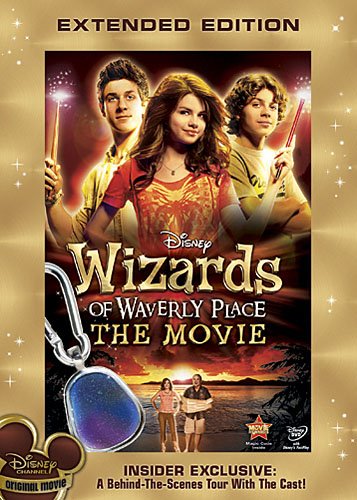
Disney has a knack for turning television shows into profitable movie franchises-- Lizzy McGuire, Hannah Montana, and now The Wizards of Waverly Place. Since the formula hasn’t deferred much, it should come as no surprise that its latest show has caught on like wildfire. In the wake of a Harry Potter-crazed nation of tweens, Disney’s latest show follows the Russos—former wizard father Jerry (David DeLuise), non-magical mother Theresea (Maria Canals-Barrera) and their three wizards-in-training. Unlike previous Disney Channel shows, Wizards offers a refreshing cultural spin on the situational comedy with the Italian-Mexican heritage of its starring family.

The show focuses on the three children: Alex, Justin and Max. Alex (Selena Gomez) is a modern day archetypical Disney lead—a fresh-faced girl with an appetite for disobedience and a sharp tongue. She retaliates with rolled eyes and a snarky remark for nearly every parental request. Justin (David Henrie) is the Golden Child—an attractive young man who’s not above ratting out his younger sister to save his own skin. The youngest child, Max, is played by Jake T. Austin, and he essentially provides the comic relief. He’s goofy, annoying as many younger siblings are, and more confident than any pre-teen kid I’ve met lately. None of these characters are seemingly likable, but that hasn’t stopped the show from being one of the most-watched cable programs ever since its premiere on October 12, 2007. So, naturally, a movie was in Wizards’ midst. And what an impression it made. 11.4 million viewers tuned in to watch the August 28 premiere, making it Disney Channel’s second highest rated film.

Eight-year-old Buddy (T. J. Lowther) likes living in the Alabama countryside with cousing Sook (Julie Harris in a tiny role), but circumstances dictate that he go to New Orleans for Christmas, there to stay with the father he has never seen (Henry Winkler). Old dad is, it turns out, a con artist with an inflated sense of self-importance, currently wooing Swoozie Kurtz, whose mother (Katharine Hepburn) recognizes Winkler for what he is. This being a Christmas movie, hard lessons and redemption will be called for.

At this festive season of the year, studios rummage through their vaults for those films that no one would want to watch at any other time of the year, but will happily do so when even the merest hint of sentiment and the word “Christmas” will apparently be enough to fill us with the warm glow of nostalgia and good cheer. In the movie's defense, it has a more interesting base than most such bargain releases – a Truman Capote story – but it is still a blandly executed made-for-TV pic with some good-looking production and costume design. Lowther, meanwhile, is simply too cold a fish to warm up to as Buddy, and Winkler's performance is both mannered and flat. You're going to have to be pretty undemanding to make it through this one.

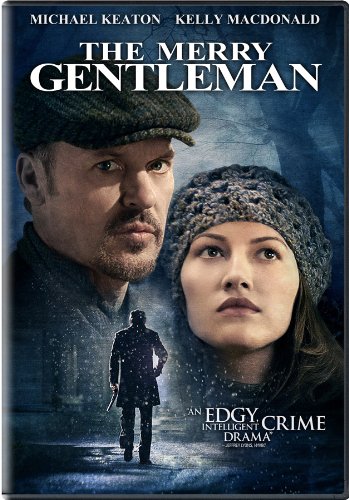
Kate Frazier (Kelly Macdonald) has fled her abusive husband and begun a new, solitary life for herself in Chicago, where she fends off the romantic interest of a number of men, and the curiosity of a great many people who all want to know how she received her black eye. One night, leaving the office, she sees a man about to jump from a building roof, and her scream startles him, breaking his suicidal trance. The man is Frank Logan (Michael Keaton), a contract killer. No longer interested in killing himself, he tracks down Kate, initially intending to kill her, since (though she doesn't realize this), she saw him moments after a hit. He collapses with pneumonia before he can carry out his plan, and she helps him to the hospital, whereupon a most unlikely relationship begins to bloom between two wounded people.


Since a bit chunk of this film takes place around Christmas, why don't we count it among the Christmas films I'm reviewing just now (the other two being A Christmas Proposal and One Christmas, since nothing says Christmas quite like a suicidal hit man. The thing is, this is far and away the best of the three movies in question. Keaton is compelling as a man who finds great difficulty in expressing emotions, and yet the strength of the those emotions are visible in every movement of his eyes, every micro-tremor of his face. In shaping the performance, he is enormously helped by the director, who is none other than Keaton himself, making his directorial debut. He and DP Chris Seager have crafted a film that is strikingly beautiful without being showy, understated yet very powerful. Here's hoping Keaton does more work behind the camera very soon.

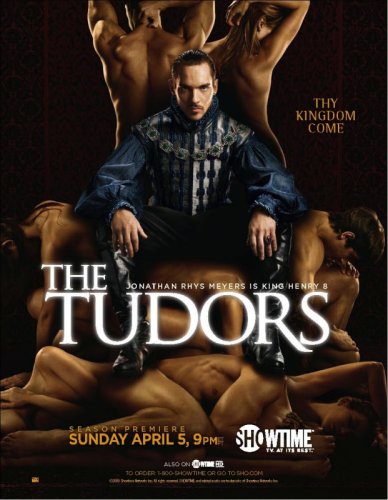
The Tudors returns for a rather triumphant third season. The series attempts to modernize the story more than a little. Henry’s attire is more akin to a rock star than a 16th century ruler. The language is also more updated, often filled with modern colloquialisms and the like. The story of Henry VIII is well known, but this is not the Henry your history teachers told you about. This Henry is a slim, energetic man. There are only hints in regard to his famous lust for food. His appetites for women are not so subtly portrayed. The series follows Henry’s alliances and break-ups with France and his growing disfavor of members of his own court. If the series is to be believed, Anne Boleyn was placed in his path by her scheming father. In any case, by the third episode his growing infatuation with Boleyn takes center stage in the series. Henry grows weary of the Church after he is constantly blocked from divorcing his Queen Catherine to marry Boleyn. This is also the story of his own rise and fall along with the Church’s influence on England’s culture. There is an almost soap opera aspect to the storytelling, which is admitted by the show’s writer, who credits shows like Dallas and Dynasty as well as Rome and The Sopranos as inspiration. Side stories like a gay musician’s coming of age populate the background, but serve merely as distractions. When The Tudors works best is when we are with Henry and his court engaging in matters of global importance.

Let’s talk about the cast. At first I must say I completely hated Jonathan Rhys Meyers as Henry. But that was last year, and by the third episode I absolutely loved his performance. He commands the screen whenever he is on it. James Frain gets a ton of time as Thomas Cromwell, who is advising the king to his own ends. He plays the part with little emotion, but it does fit the role quite effectively. Alan Van Sprang plays the King's assassin and spy, Sir Francis. He is a character that moves in and out during the season, having less screen time than you might imagine, but he makes the most of it. Annabelle Wallis gets the unenviable task of following a strong female lead, now playing Jane Seymour. She's not near as attractive or as good an actress. She's not there all that long, of course, and manages to hold her own. Still the shadow of Natalie Dormer remains throughout.

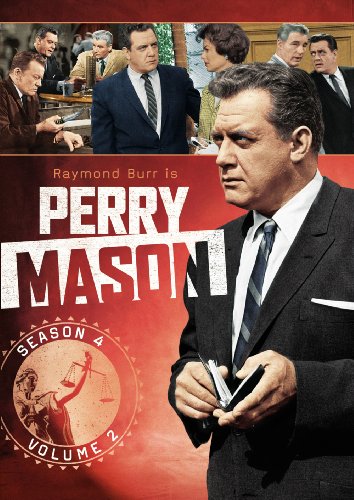
Erle Stanley Gardner wrote crime fiction, and while many of his 100 or so works are unknown to most of us, he created a character that has become as identified with criminal lawyers as any other in fiction. It was in these crime novels that Perry Mason first faced a courtroom. He developed a style where he would investigate these terrible crimes his clients were on trial for. He would find the real killer, and in what has become a Hollywood cliché, reveal his findings in a crucial moment during the trial. While we may not remember the novels, we all remember the man in the persona of Raymond Burr. Burr had a commanding presence on our screens and enjoyed a well deserved 11 year run as the clever lawyer. What makes this run so amazing is that the show followed pretty much the same pattern the entire time. We always know what’s going to happen, but we wait eagerly for that gotcha moment when Perry faces the witness on the stand. We know when he’s got the guy squarely in his sights, and we can’t sit still waiting for him to pull the trigger. OK, so maybe that’s a little over the top, but so was Perry Mason. From the moment you heard that distinctive theme, the stage was set. To say that Perry Mason defined the lawyer show for decades would be an understatement. Folks like Matlock and shows like The Practice are strikingly similar to Perry Mason. If you haven’t checked this show out, this is your chance. See where it all began.

At this rate, it’s going to be quite some time before you complete your collection. I’m not even sure that DVD will still be a viable format before the end of the series on DVD. It’s another half season, and the episodes continue to fly at us at a snail’s pace. But slow and steady wins the race, and as long as the quality episodes continue to deliver that classic Mason charm and style, I guess folks like us will continue to come back for more.

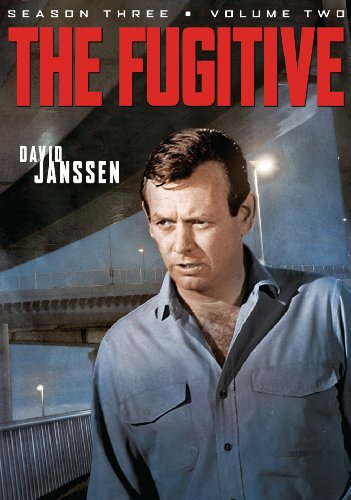
“The man is Richard Kimble and, not surprisingly, the man is tired. Tired of looking over his shoulder, the ready lie of the buses and freight trains. Richard Kimble is tired of running…”

The elusive “one armed man” is one of the best known television icons of all time. The plight of Dr. Richard Kimball has been the subject of numerous imitations and even a feature film staring Harrison Ford as Kimball and Tommy Lee Jones as his pursuer. Tim Daly left the ranks of comedy to fill the shoes of Kimball in a very short lived revival series. While some of these efforts managed to capture the essence of The Fugitive, none can truly compare to the real thing.

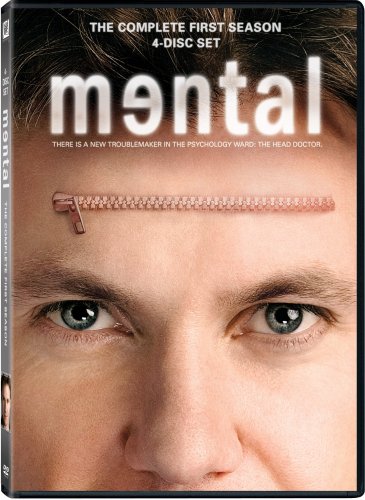
Things are tough all over. It seems that even the television networks aren't immune to the growing trend of cutting back. Fox decided that the answer was Bogota, Colombia. No, they didn't turn to the cocaine market. They all tried that in the 70's and we ended up with Joannie Loves Chachi. This time Bogota is an option for producing new television shows. The idea is that you can take an American cast, with a token Brit in this case, and ship them off to Columbia to do the show on the cheap. The good news is that you can hire crew for six bucks a day. The bad news is that the show ends up looking like it cost about six bucks to shoot. I suspect that the hombre who came up with this wonderful idea for Mental had a better understanding of mental illness than the average bear.

Dr. Jack Gallagher (Vance) has been hired by his ex-lover Nora Skoff (Sciorra) to run the mental health department at Wharton Memorial Hospital, where she is the hospital administrator. Gallagher might be bright, but he has some rather unorthodox methodology. He tends to put himself in the place of the patient. To see what they see. Attempt to feel what they feel. It's the kind of practice that ends up having him introduce himself to his new staff by stripping buck naked when an intake patient is seeing alien reptiles and has stripped down himself to prove he is human. The tactic might have calmed the patient and defused a volatile situation, but it didn't endear himself to his new colleagues.

Believe it or not, Robert Langdon did not make his debut in the Da Vinci Code novel. He was actually introduced in an earlier, but far less known novel, Angels & Demons. When Hollywood came a knockin’ they weren’t interested in that earlier work. The Da Vinci Code was tearing up the literary world, and Hollywood wanted a piece of that overstuffed pie. That meant a strange series of circumstances for Dan Brown and Robert Langdon. In print, The Da Vinci Code is the sequel to Angels & Demons, but in the cinema Angels & Demons is now the sequel to The Da Vinci Code. You might consider it a trivial point, but it’s not. If you’ve read The Da Vinci Code, you know that this isn’t Langdon’s first dance with a murder mystery. He’s much more comfortable around the cops and corpses than the film version appears, by necessity. This first film requires him to be quite the novice and led around the ins and outs by the other characters. That creates an almost new character for fans of the novel. Add that to the incredibly complicated world the novel explores, and you are bound to disappoint fans of the original work. And disappoint fans, the film did. But, the film was still a financial success, breaking the necessary $200 million mark. So, even amid some harsh criticism, Howard and the gang now tackle the actual first novel in Brown’s Langdon series.

Robert Langdon (Hanks) has been called in by the Vatican to help solve a crisis. The Pope has died, and the Cardinal College is about to enter Conclave to select the next Holy Father. A radical group using the name of the ancient Illuminati has kidnapped the top four cardinals in line for the job. They have also stolen a canister of antimatter from the CERN collider labs. They plan to use the antimatter to fulfill an ancient threat against the Vatican to destroy it in light. With little time before the kidnapped cardinals are scheduled to be killed one every hour, Langdon must locate the churches where they are to be executed using clues from the Vatican Archives and the taped threat by the radical group. All the while the Vatican is trying to select a leader. If Langdon can’t solve the clues in time, the entire Vatican City will be destroyed in the largest blast the world has yet seen.

My One And Only is based on a George Hamilton autobiographical story. It’s probably a tale that his fans know well. It wasn’t one I was at all aware of. The screenplay was written by Charlie Peters. Hamilton himself is a producer on the film, so we can assume that the story unfolds in much the same way he intended. Like most autobiographical pieces, it has a limited audience. Fans of the subject are certainly going to be quite interested. Others who consider the subject of some note might also have an interest in the material. Unfortunately, it’s like watching vacation or baby slides. After some time you can get lost and bored watching the high or low points in someone else’s life. This is just that kind of experience.

Anne (Zellweger) comes back early from a trip to find her husband, big band leader Dan (Bacon) in bed with another woman. She immediately decides to leave him and take their sons George (Lerman) and Robbie (Rendall) on the road to find herself a new husband. Anne is the typical southern aristocrat and believes she needs to find someone to give her the good life she has become accustomed to. Their first stop is Boston where she runs into old flame Wallace (Weber) who just wants to borrow money because his business is failing. Next she gets engaged to military man Harlan (Noth) who just wants a family so that he can be a “top dog”. Next it’s on to Pittsburg, and it’s Oliver and Charlie. Next stop St. Louis and a paint store magnate who’s crazy as a loon. Finally, it’s California to give Robbie a chance to be an actor. Along the way the family learns about themselves and the man they left behind. They finally settle in California where it’s George who ends up with the acting career.