Drama

Based on the true story, Coach Carter follows the tale of a high school coach who was once an All-American athlete himself. He is brought in to coach basketball at his old school where he still holds a few records. He accepts a challenge to turn around a program that has become mired in a tradition of defeat. He takes a no nonsense approach to the players from the moment he meets them He insists on being called sir and insists that they demand the same respect from him. He puts them through workout drills that seem almost impossible, exhausting the entire squad. A few leave, unwilling to meet the high standards. In addition to the physical shape he is whipping them into, he has brought about a higher level of team spirit. That spirit is evidenced when one of the walkouts asks to return. Carter requires him to complete an impossible number of tasks. When the player comes up short as the deadline approaches, the team offers to take some of the load and do it on their own time. Lesson learned. Carter requires them to sign detailed contracts that outline his expectations which include a 2.3 GPA, .3 above the state requirement. The method pays off as the school goes on an incredible winning streak. But when Carter discovers that several of the team members are failing in their academic responsibilities, he makes a controversial call to lock the gym, canceling all practices and games until the GPA is met by everyone on the team. The community becomes outraged, but Carter holds steady, willing to be fired rather than relent. To his surprise, the team stands behind him, and they help each other reach the goal in time to make a run at the championship.

Coach Carter is really two films in one. It is certainly a sports film with many of the clichés that entails. You’re going to get a good dose of sportsmanship and plenty of basketball action. There is a second film here that makes this one rise above the many chumps to champions type movie you know you’ve seen a hundred times, if you’ve seen it once. Carter, as played by Samuel L. Jackson, is a dynamic character. In a way Jackson takes something away from the accomplishments of the real Ken Carter, because he’s so powerful that for us, it’s no wonder these kids were willing to follow him into Hell and back. I’m sure the real Ken Carter had a much tougher fight, simply because he’s no Samuel F’n Jackson. The second film here deals with the neighborhood the school is in. These kids deal with drugs and violence on a daily basis. Their lives outside of the school are likely more trying than anything they’ve encountered in school or basketball. This “second” film really begins after the first hour when the lockout begins.

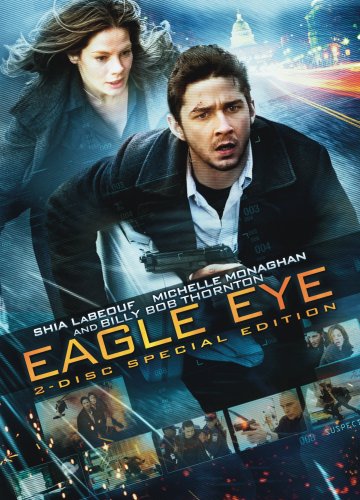
Shia LaBeouf and Michelle Monaghan are on the run from a series of carefully orchestrated catastrophes. All are ominously foretold by a rather humorless young lady that may or may not be a robot in the new thriller Eagle Eye, a film that purports to be “from Stephen Spielberg.” Spielberg-lovers, don’t get your hopes up. Authorial rights belong more to director D.J. Caruso and a smorgasbord of writers that include John Glenn, Travis Adam Wright, Hillary Seitz, and Dan McDermott. Oh yeah, and a dozen other tent-pole blockbuster action films. Sound like a hodgepodge Hollywood mess? It is.

Caruso’s direction does its best impersonation of Michael Bay’s, whooshing about from one impossible set-piece to another. His snarky heroes immediately hate each other, even before they have a clear-cut reason. We know this from the snippy dialogue peppered throughout, and their forced reluctance to accept the other’s story. The concept, while not altogether weak, feels like a worn-out retread of Enemy of the State. Sure, the technology is better, and much more precise; but it doesn’t feel as innovative, cutting-edge, or thought-provoking as it did in that first effort.

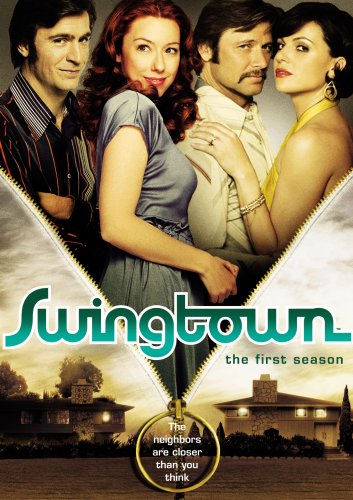
Let me begin by saying that I was a child of the 1970’s, which tends to make me approach these era shows with some caution. After such shows as That 70’s Show, to name the likely most popular, I find myself not recognizing the setting as the same 70’s I remember living. Granted I was pretty young, so the subject of swingers and sexual revolution were not exactly part of my everyday culture. So, I might be a little more forgiving if Swingtown doesn’t exactly hit on all of my memory circuits. I was 15 in 1976, living near Philadelphia, where we were all pretty much obsessed with that whole Bicentennial thing. The last thing on my mind was whether the neighbors, or, God forbid, my parents, were doing the bump and tickle with rotating partners. I’m pretty sure I’ll leave that question unanswered. Even with all of that said, about the only solid piece of nostalgia I got from Swingtown was the often sweet 70’s soundtrack. To the credit of whoever picked the music, all aspects of the 70’s music scene are represented. You get a good dose of folk, rock, summer pop, and even disco, which any self respecting child of the 70’s considers the death of what was otherwise a fine decade of music. Props to the music guy for not falling into the disco all of the time trap that these shows so often do. One minor complaint, however. Fleetwood Mac didn’t release their famous Rumors LP until Feb of 1977…Ooops. Outside of the music, it really could have been any time, any place.

It’s July 4th weekend, 1976 and Bruce Miller (Davenport) and his family are movin’ on up. Money’s been good at his options trading job, so he’s packing up his wife Susan (Parker), teen daughter Laurie (Collins) and young son BJ (Howles) and moving a few blocks over to a bigger house in a better neighborhood. For Susan, it’s a bittersweet time because she’s leaving her friend of 10 years, Janet (Shor) and her husband Roger (Hopkins) and their son for a new neighborhood. Friends, it turns out, won’t be a problem. The first night they are introduced to new neighbors Trina (Parrilla) and Tom Decker (Snow). They’re invited to a party that turns out to be a swinger’s event. The two end up swapping spouses for the night. It’s an exciting, somewhat dangerous thrill for the Millers. From then on they try to balance their new lives and friends with their old. Janet is good for most of the laughs as this super conservative girl is exposed to her old friend’s new friends. As if that wasn’t enough, Laurie Miller is in love with her 24 year old high school teacher, and BJ’s hung up on a cute little girl with a drugged out lush for a single mom. Every week’s episode features a new party. You’ll get everything from a surprise birthday party for Janet, to a night out at the Playboy Club. There’s even a Tupperware party. I do remember my Mom had those. Before it’s done everybody’s spouse is falling for somebody else, and you never know who’s going to end up with who. It all ends in a cliffhanger that is not likely to ever be resolved. The jury’s still out on next summer, but ratings are marginal, so I wouldn’t hold my breath for a second Summer Of Love.

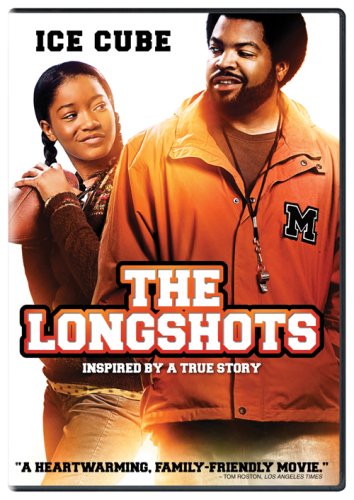
The Longshots is one of those sports films that in many ways you see coming from miles away. It certainly feeds upon that against all odds sports cliché that you’ve likely seen a hundred times if you’ve seen it once. But in so many other ways, this is a story with more than a champion’s heart and courage. In many ways it’s about family and redemption. While the film is based loosely on the story of Jasmine Plummer, it is just as much the story of her uncle Curtis, who was saving himself as he was trying to help his niece. I’m not a huge Ice Cube fan. Honestly, I find most of his characters to be an extension of the punk attitude he garnered as a rapper. But this role is significantly better than anything I’ve seen him do before. The part doesn’t necessarily call for a lot of chops to play, but Ice Cube does add a certain amount of sincerity to the role, without having to extend himself all that far. It almost looks effortless, like he’s sleepwalking through the part, but it leads to rather inspirational results when taken as a whole.


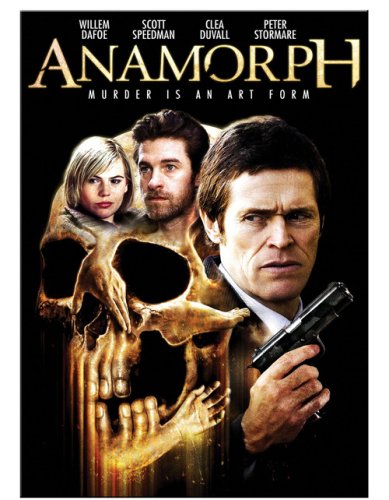
<>An-a-mor-pho-sis n. pl. An image distorted so that it can only be viewed without distortion from a certain angle or using specific instrumentation. 

In the case of this direct to video thriller, our serial killer is using the aforementioned technique in his murders. He dismembers bodies and reassembles them so that they appear differently depending on how you view them. Obviously the killer considers himself a kind or artist. He justifies killing by remarking that the sacrifice of a single human life to bring such a work of art to humanity is a reasonable trade-off In this case, however, our killer is targeting an audience of one.

For 4 years now, Lost has taken us through mystery after mystery. I’m beginning to think that the show’s title is more a mission statement for where they want to take the viewers. Each time Abrams appears to answer a question and move on, closer examination proves that nothing has actually been revealed. The series has become the poster child for misdirection and script sleight of hand. When I examine the 13 episodes from season 4 I’m left with the inescapable, pun intended, feeling that nothing significant has really happened here at all. But at the same time it’s the most significant event of the series. All the while I find myself compelled to watch episode after episode. Abrams would have been a great drug dealer if that producing gig hadn’t worked out for him. The show started out with enough directions and plot devices to put our brains into overload. From that point on he’s been cutting each dose a little bit so that we find ourselves drawn to each hour fix chasing the high we got in the beginning. Of course, we already know we’re never going to feel that way again, but we’ll keep coming back for more as long as he continues to make us believe that we will. I’m not saying the show has declined at all. I’m saying that it doesn’t really ever go anywhere. Abrams continues to introduce major plot lines such as the hatch, the others, and now the freighter with promises of linking it all together into some kind of epiphany, and for a short time he actually does. But hindsight leaves us scratching our heads, because once we come down we can’t really explain what the high was all about. And so, we’ll continue to tune in or buy the DVD’s to see where it’s all headed, even if we already know that we’re doomed to remain lost no matter how it all ends.


What do you get when you mix three juvenile delinquents, an enterprising police captain, and a load of social commentary mixed into the confines of an hour-long police drama? Why, TV’s “The Mod Squad,” of course; or, for the purpose of this review, The Mod Squad – Season 2, Volume 1. Yes, aggravating as it is, Paramount is still pushing their half-seasons on the public, but for a show like “The Mod Squad,” fans better eat it up. This is likely the best release the show will ever get. If you believe the packaging, “The Mod Squad” was a groundbreaking series that tackled major social issues from a predominantly youthful perspective, shooting for straight drama, and succeeding to the nines.

 

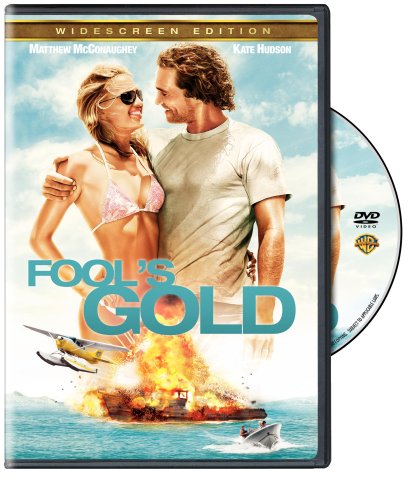
Most women would consider Matthew McConaughey a hot guy. Hubba, hubba, the whole nine yards. Typically when he stars in a new motion picture, women flock to see the show for him to walk around for ninety minutes preferably with his shirt taken off and speaking romantic to some leading lady. For those ninety minutes, those women wish that they were in his arms, they were in his touch. But what if Matthew was portraying an out of work treasure hunter, broken down on his luck and owing some guy named Bigg Bunny a whole lot of money? I think this will all depend on whether his shirt is coming off or not.

On July 24th, 1715 in celebration of the marriage of King Phillip of Spain, the largest treasure fleet in maritime history set sail from Havana, Cuba. The 500 million dollars worth of gold, silver and jewels came to be known as the Queen's Dowry. Unfortunately, in his eagerness to consummate the marriage, King Philip ordered the fleet to sail at the worst time of the year. And so, the great galleons, heavy with their sparkling cargo, sailed straight into a massive hurricane and were never seen again.

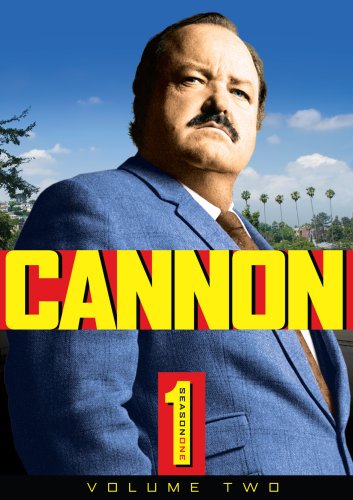
Frank Cannon was unlike any detective we’d ever seen on television before, or since. He was known as a high priced PI with a taste for the finer things in life, particularly fine food. His appearance was counter to all of the rules about rock-jawed handsome detectives who ran around shooting it out and beating up the bad guys. Cannon was a big man and wasn’t about to do much running and fighting. He wasn’t totally different, however. Cannon had a lead foot and could run a car chase with the best of them. He was smart and often a bit flashy in his technique if not in his appearance. It was also rare for a series to have a lone regular to carry the … um… weight. Conrad was up to the task and made the show and the character a permanent part of our pop culture.


This is another one of Paramount’s half season releases. I’m told the decision is driven by retailers wanting lower price point product, but I don’t find the argument credible. There are plenty of full season releases, and consumer surveys consistently show that’s how the public wants their television shows. Retailers will carry these shows in full seasons just like they do all of the others. When Paramount released the various Star Trek shows on DVD, there was obviously no consideration to price point, as these shows hit the shelves often double or more what other comparable shows have listed for. It’s greed, pure and simple.