Drama

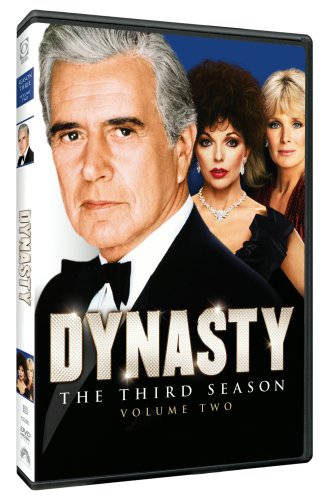
High art it isn’t, but one thing’s for sure: Dynasty is ass-in-seat television. Launched in 1981, the John Forsythe-Linda Evans-Joan Collins starring vehicle crossed lines and took chances few of its contemporaries were willing to take. For several years Dynasty defied conservative conventions with sordid tales of extramarital affairs, catfights, and the hot-button issue of homosexual parenting. It’s this last issue that is featured so prominently in Dynasty – The Third Season, Volume Two.

Those of you who are uninitiated to the Dynasty saga have nothing to fear, as each script is weighted heavily with expository dialogue sure to catch you up in no time. (“If Blake loves you, Krystle, then why did he humiliate you by castigating you that day we fought in the lily pond” – Alexis Colby) Of course, the show’s quality suffers as a result, offering ridiculous conversations involving participants who should damn well know exactly what just happened to them, especially considering the weight of their experiences, without the need of another character explaining things. In fact, about 40-50% of every conversation is retread from a previous episode. Incidentally, the acting is terrible, but one must wonder if the actors could have done any better with the material they were given. While exposition can certainly be a necessity, especially in an hour-long ongoing series, the convention is best used in very small doses at the beginning of a story, not throughout every segment between the commercial breaks.

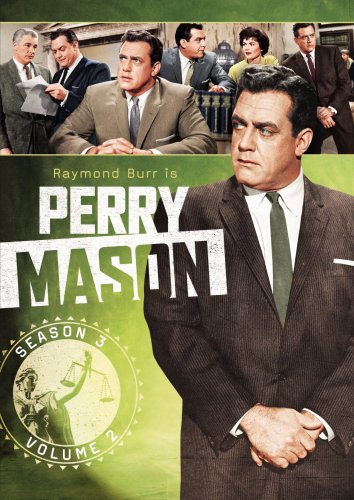
Erle Stanley Gardner wrote crime fiction, and while many of his 100 or so works are unknown to most of us, he created a character that has become as identified with criminal lawyers as any other in fiction. It was in these crime novels that Perry Mason first faced a courtroom. He developed a style where he would investigate these terrible crimes his clients were on trial for. He would find the real killer, and in what has become a Hollywood cliché, reveal his findings in a crucial moment during the trial. While we may not remember the novels, we all remember the man in the persona of Raymond Burr. Burr had a commanding presence on our screens and enjoyed a well deserved 11 year run as the clever lawyer. What makes this run so amazing is that the show followed pretty much the same pattern the entire time. We always know what’s going to happen, but we wait eagerly for that gotcha moment when Perry faces the witness on the stand. We know when he’s got the guy squarely in his sights, and we can’t sit still waiting for him to pull the trigger. OK, so maybe that’s a little over the top, but so was Perry Mason. From the moment you heard that distinctive theme, the stage was set. To say that Perry Mason defined the lawyer show for decades would be an understatement. Folks like Matlock and shows like The Practice are strikingly similar to Perry Mason. If you haven’t checked this show out, this is your chance. See where it all began.

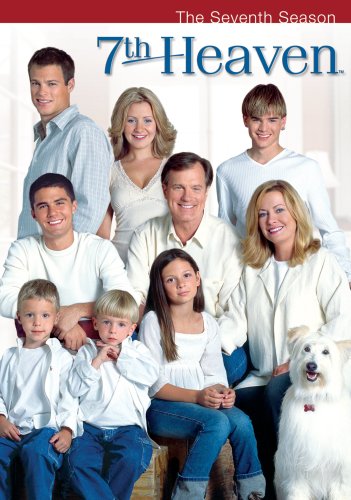
One of the hardest parts of reviewing DVD’s for this site is getting dropped in to the middle of a show I neither followed nor cared to follow and being told to judge fairly and objectively. Getting one’s bearings can be the toughest part of such a task, but this I will attempt to do with Seventh Heaven – The Seventh Season. As if playing catch-up with only one season to go on isn’t enough, the series hurls character after character at the unsuspecting viewer at a furious pace. It’s the type of show one should really get in on at the ground floor to get the most out of it, and I am keeping this in mind as I say most of these characters are profoundly obnoxious.


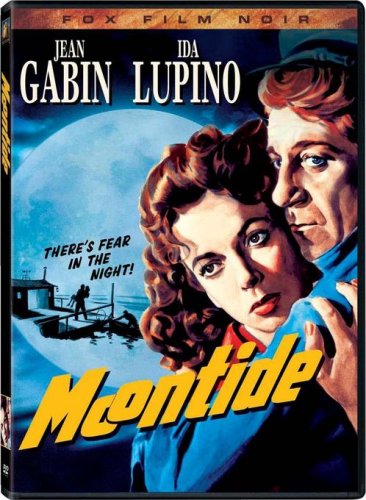
Jean Gabin, in his American debut, plays Bobo, a French sailor who has been knocking around the States for quite some time in the company of Tiny (Thomas Mitchell). Their wandering comes to a stop when, the day after a night of drunken excess that he cannot remember, Bobo sees Anna (Ida Lupino) wading into the waves to commit suicide. He rescues her, and before long the two are living together on the bait barge where he is working, and fall in love. Dark clouds are on the horizon, however. A local man was murdered, and Tiny, resentful that his meal ticket has been taken from him, darkly hints to Anna that Bobo might be responsible, even though he doesn't know it himself.


Moontide was originally a Fritz Lang project, and as the accompanying documentary demonstrates, his influence is still felt in the finished project, notably during the climactic stalking sequence. Gabin, though a masterful presence, nonetheless seems almost as much a fish out of water as his character, and it doesn't really come as a surprise that neither he nor Hollywood wound up caring much for the other, and he would return to the greener pastures of France. Claude Rains is on hand as a wisdom-dispensing night watchman – hardly a stretch for him, but it's always a pleasure to hear his mellifluous tones. The real stretch, and indeed revelation here, is Thomas Mitchell – the man whose speciality was the cuddly, avuncular Irishman here becomes a twisted monster of childish, violent rage, giving us a real nail-biter of a denouement.

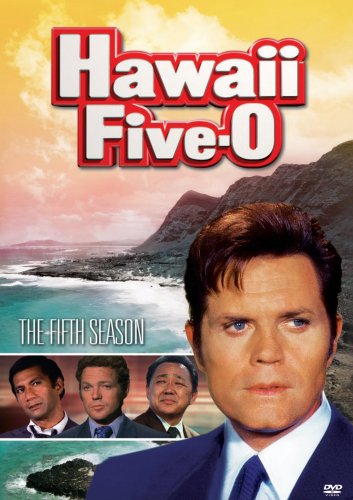
Working in Hawaii on one of televisions hottest shows in the 1970’s was too good a job for most of the cast and crew of Hawaii Five-0. This meant that there was very little cast turnover for the series in general, and none going into the fourth year. Jack Lord saw his star rise considerably, and while he began to see some serious pay hikes, even he wasn’t about to kill the golden goose. With this kind of consistency, fans were never disappointed or turned off by drastic changes in the cast or formula. With this cop show it was all about tropical locations and formula. The fifth season was no exception to the rule.


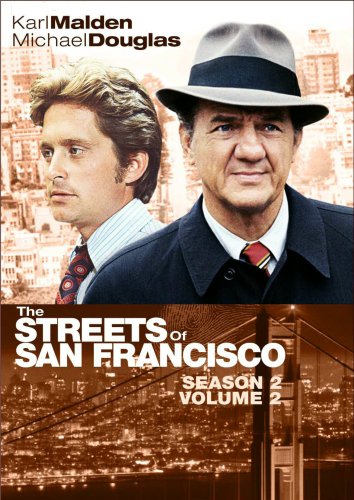
If you weren’t around in the 1970’s, you might be surprised to find out that film superstar Michael Douglas was once in a television cop show. It was this influential crime drama that allowed Douglas to show off the acting chops that would earn him a spot in the Hollywood elite for decades to come. It didn’t hurt any that he was able to team up with Karl Malden, an undervalued talent in his own right. The two of them literally bring the show to life.  The series was run by Quinn Martin, himself no stranger to groundbreaking television. Martin was the same talent who created the crime drama with The Untouchables. His uncanny ability to come up with a clever premise was responsible for such milestones in television history as The Invaders and The Fugitive. Later he would continue to shape the look of television with shows like Tales Of The Unexpected, The FBI, and Most Wanted. He was the Steven Bochco of his time. Long before NYPD Blue, Martin was able to make San Francisco, the city itself, an iatrical character for Malden and Douglas to interact with. The show had tremendous style, even if the cases were purely formula. Certainly you won’t find anything in these plots you haven’t seen a hundred times before. What you will find is a unique presentation that somehow makes even the most mundane story appear quite compelling. If you enjoy the Bochco and Wolf dramas or fall in with such classics as Starsky and Hutch or Miami Vice, you owe a tremendous debt to Martin for setting the table for all of those fantastic meals that would follow.


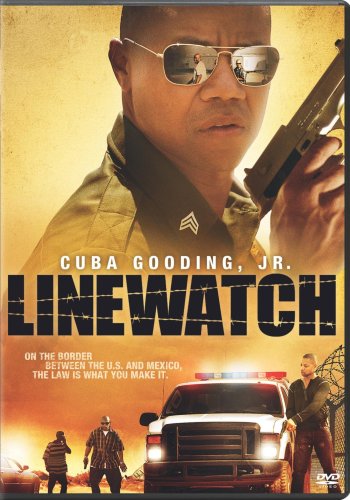
On the surface it would seem that Linewatch is going to tackle the controversial illegal immigration debate that is going on in the United States these days. At first it seems that’s exactly what’s going on. We meet border patrol officer “Mad Dog” Dixon (Gooding, Jr.) doing patrol in the hotbed of illegal immigration the Southwest. He comes across a group of illegals dead and has a run in with a citizen patrol which acts much like the Minutemen in the media today. The way the film is set up you are expected to believe that this gung ho group of patriots is perhaps responsible for the carnage. It turns out they’re on the war path for the coyote who did kill the group. So, before long we’ve got the makings of a nice relevant story on our hands. Then something goes horribly wrong, both for Mad Dog and for us, the viewers. It turns out that Dixon was once a member of a Los Angeles street gang called The High Noon Gang, or HNG for short. Now the old gang pops up at his home. It appears that Dixon has killed their drug runner, and now their stash is on the wrong side of the border. The gang threatens to kill Dixon’s wife and young daughter if he doesn’t help get the stuff across. Now we no longer have a border story but a typical, done before a million times, gang banger tale. All of the Minutemen setup is used as gunfight fodder, and the issues are explored no further.


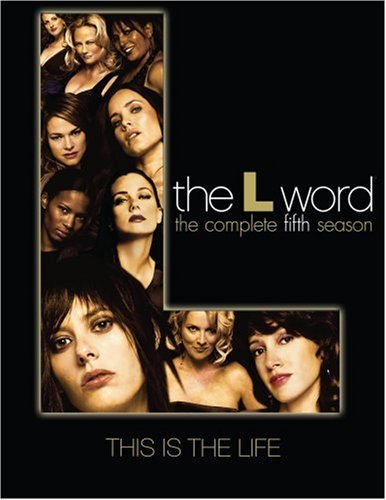
What can I say about Showtime’s huge hit, The L Word? If you don’t already know what this show is about, and I was surprised at the number of people I talked to who didn’t, then I’m pretty sure this isn’t the show for you. Remember the old days when you used to watch Sesame Street and each day the show would be brought to you by a letter and number of the day? Today this review is brought to you by the letter L and the number 5. L stands for lesbians, and 5 is how many seasons so far this show has been on the cable network. Unlike that adorable count, I won’t be able to take you through the count, as I have never seen the show before and so only own one season release. If you’re a fan and have collected the previous years, this is the portion of the review where you can go to your DVD shelf and count the sets. When you’re done, you may return to the review.


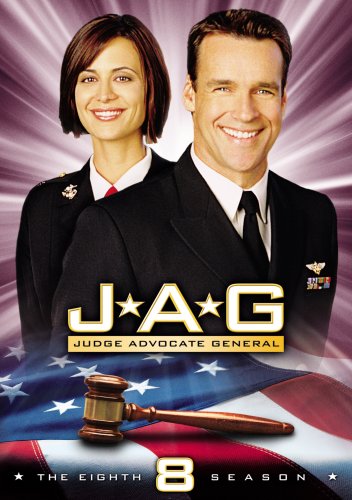
After 7 years JAG had pretty much settled in. It’s usually at this time that a show has to shake things up a bit or become somewhat stagnant. I think that JAG took the latter course. I have to believe that much of the creative talent was already working on the NCIS spin-off that was now 2 years away. The characters don’t appear to be taking any risks, and there is a little more of a return to the soap opera elements that began to fade away, making it a better show for some time.


A combination of controversial subject matter and the physical transformation of Jared Leto garnered this film considerable attention (positive and negative). Leto here morphs into an uncannily accurate physical recreation of Mark David Chapman. The film follows Chapman on his fateful trip to New York City. Over the course of three days, he hangs around outside John Lennon's home, becomes friendly with fellow fan Lindsay Lohan, and endlessly ruminates about how the events in his life are paralleling The Catcher in the Rye, and (rather less explicitly) why he's going to kill Lennon.

Leto is unrecognizable, and disappears completely into the role. But is the film a good one? It is somewhat limited by the fact that nothing much happened during Chapman's stay in NYC prior to the murder, and so nothing much happens here, either, beyond Chapman acting so obviously insane it's a wonder no one had him locked up within minutes of arrival. Does the film give us some insight into the mind of the killer? Only a little. It hints at motivation, but those hints are only really clear if you're already pretty familiar with the case. In other words, the picture doesn't bring anything new to the table. It's a striking work, but not an altogether successful one.