Drama

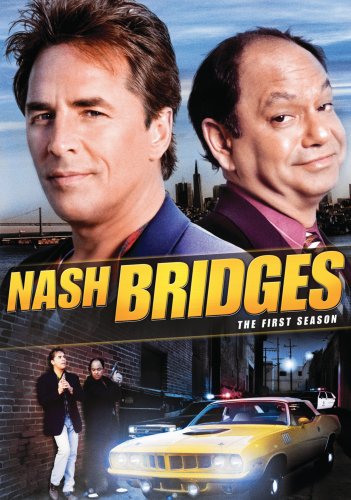
When Miami Vice finally left the air in 1989, Don Johnson was a very hot commodity indeed. He decided to try and parlay that success into a film career that never really brought him the breakout roles and fortunes he envisioned. Not too proud to return to his roots, he signed a deal with CBS that gave him pretty much a blank check to star in whatever kind of television series he wanted. It was a rare deal that forced CBS to air, or at least pay for, whatever Johnson came up with. Many of us were expecting pretty much a Miami Vice clone when it was announced he would once again be playing a cop. It was all sounding pretty familiar. Bridges was a super cool cop, this time from San Francisco with a rather tattered personal life. He was going to be teamed up with a partner, who wasn’t going to be a cop, but an investigator whose cases would cross paths with Bridges’. It was rumored that the partner might not survive the pilot, thereby killing the buddy cop routine that was beginning to sound very much like Johnson’s previous show. It appeared doomed to failure, and even CBS was at first looking to back out of the deal. They tried to buy Johnson off, but he was by now very excited about the new show and insisted he get his episodes. But how could this new show not be compared to the old? How could anyone have the kind of chemistry with Johnson that John Diehl had? On March 29, 1996 everyone held their collective breaths as Nash Bridges appeared on the scene. Cheech Marin ended up with tons more chemistry with Johnson, helped by the fact the two had been friends for over 25 years previous. In short order Nash Bridges had arrived, and television audiences everywhere found themselves saying: “Miami Who?”


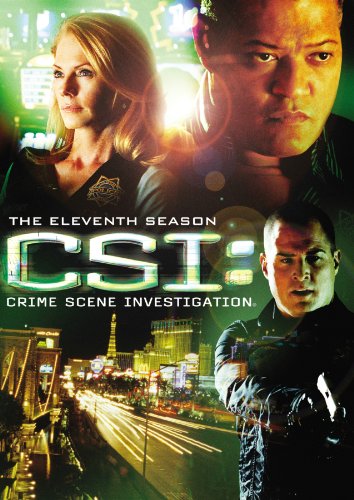
You would think that after 8 years, CSI would begin to show a little wear and tear around the edges. When you factor in the dilution of the two other versions of the franchise with a combined 11 years of episodes, you end up with nearly 300 total episodes of CSI. Certainly even the best of shows with the most imaginative writers can’t stay fresh for that long. Still, somehow, the gang at CSI continues to crank out compelling drama, rarely repeating itself. Every year I go into a new season of CSI expecting to find it starting to show its age a bit, and every year I continue to be amazed. The fact is that season 7 just might be the best year of CSI to date. Each episode begins with The Who asking the question: Who are you? I have to say that after seven years the answer is, still a fan.


Hagar Shipley (Ellen Burstyn) is in her twilight years, and her son (Dylan Baker) is trying to get her into a home. Fiercely independent, possessed of a will that has been both a strength and a weakness (making life miserable for herself and all around her), Hagar fights back. She also looks back on her life, and in the flashbacks (where the young Hagar is played by Christine Horne) we see the tragic relationships that have brought us to the fractious family we see now.

I’m not sure if one can split the world into Stone Angel people and Diviners people, but when it comes to Margaret Laurence novels, I’ve always been of the latter, finding Hagar too hard a character to warm up to. Nor did I find it much easier in the film, though Burstyn does turn in a compelling performance. She is working, unfortunately, with a script heavy on the voice-over (which does Laurence’s prose no favours – much of it simply sounds awkward transposed off the page in this way). There’s a bit too much of the portentous, and a bit too much of a cast enunciating in an overly precise way for my liking.

I think it’s safe to say that HBO changed the face of television with the arrival of The Sopranos back in 1999. The show raised the bar for television across the board. Before we knew it, many of the cable networks were scrambling to offer up the next show that would generate the same praise from critics and audiences alike. To this day that show has generated more subscribers to a pay network than any other. So, we really can’t blame the network’s rival Showtime for trying to have their own Sopranos. And that’s exactly what The Brotherhood is.


Very much in the tradition of such other overheated Mexican emotional dramas as Amores Perros and Y Tu Mamá También, Drama/Mex gives us two intertwining plot strands, each dealing with relationships as tormented as they are sexual. In one, upper-class Fernanda’s bad boy ex-lover Chino resurfaces, takes her violently, but she doesn’t exactly hate it, and this has, as one might imagine, some awkward consequences for her relationship with current boyfriend Gonzalo. Meanwhile, a middle-aged man, guilt-ridden over what he has done to his daughter (take a guess), is contemplating suicide when he runs into a precocious teenage hustler. In other words, basically enough material to give Sarah Palin a fatal coronary.


Audio

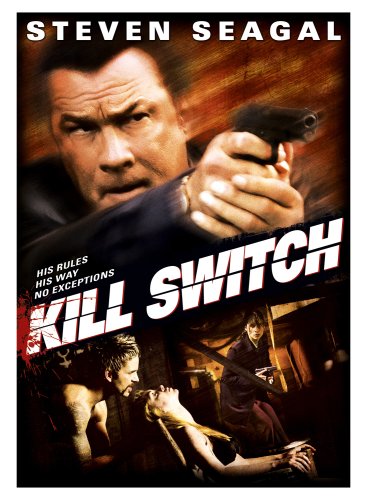
Kill Switch is a direct to video release marking Steven Seagal’s departure from Sony, where most of his low budget, and larger budget, films were made. This one is released by the much smaller First Look Studios. Unfortunately everything about this film is a considerable downgrade from even the silliest of Seagal’s recent film fare. Seagal writes this one, which likely accounts for the convoluted mess the script is. There are far too many plot points and characters to keep track of, and ultimately little development is made of any of them. The acting is more laughable than usual, with Seagal attempting a horrid Memphis drawl. Even the trademark fights are not near what you expect from one of these films. Seagal is employing a laughably obvious stunt double who looks nothing like him, from his hair down to his weight. Forget any of the martial arts or well choreographed displays you have become accustomed to. They mostly involve crashing heads into walls and furniture with an almost Batman camp. Instead of the Pow and Wham cartoon balloons, the soundtrack offers over the top crunch and squish sounds. Finally, the fights are poorly photographed. The lighting is usually entirely too dark, likely to hide the ridiculous stand-in, and the cuts are often too stylish. There are painful quick cuts providing a jerky Asian horror film movement totally inappropriate to this kind of action. The truth is that only the completest Seagal fans will find anything redeemable about this film at all. Most fans will be greatly disappointed.


Do you believe that a numbers wizard can predict the most random of human actions with mathematical equations so accurately as to know where and when such a person will be? If so, then I suggest you put down that letter you are writing to Santa, finish eating that egg a bunny left for you, go to your pillow and pull together all of the loot you got from the tooth fairy, and plunk it down on season three of Numb3rs. No, that’s not a typo, apparently they believe that letters aren’t good enough to stand on their own, so they inserted a 3 where the e should be. Aren’t they so clever? Not. In the fairy tale world of Numb3rs, all you need is an almost obsessive knowledge of math and the crooks don’t stand a chance. It’s almost unfair, isn’t it? Those poor criminals go about their carefully plotted crimes, unaware that everything they do is controlled by math. They live their lives oblivious to the fact they are at the mercy of a diabolical equation which forces their every move. In fact, I suspect some clever attorney somewhere is already preparing the “math made me do it” defense at this very moment. Soon our justice system will be forced to account for this undeniable force on our very destinies. I would go on but I can’t… must… fight… numbers

Jim Phelps (Graves) led his team in a fourth season of Mission Impossible starting in 1969. The show continued its trademark traditions. Jim would receive a mission from the “self destructing” tape and would gather his IMF (Impossible Mission Force) team. The team was necessarily eclectic in nature, and it changed significantly in the fourth season. Still in the team we had Barney Collier, the gadget man, played by Greg Morris. The muscle was still supplied by Willy Armitage, played by brute Peter Lupus. Leonard Nimoy joined the team in season four as Paris, who also had a skill for disguise. He was a magician, so his sleight of hand skills came in … well, handy. Together they took on missions that the government could not be officially a part of. They were always admonished that should they be caught “the secretary would disavow any knowledge” of them.  Usually they were sent somewhere to put some evil mastermind out of business. Their tactics ranged from scams to outright theft. Sometimes they were a rescue team, while other times they would infiltrate a group of bad guys. There were certainly cold war elements to the whole thing. Each week the team concocted some convoluted con to play on their mark, walking away at the end of each episode often without getting any credit or congratulations.


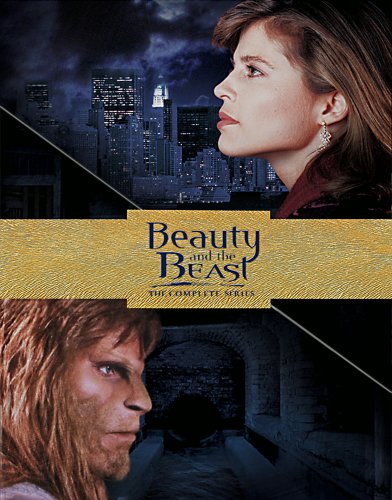
I can remember when Beauty And The Beast first arrived on television. It was fall of 1987. I watched a couple episodes of this rather odd drama. Instantly I was drawn to the show’s world but was almost as quickly pushed away by the material. If I can be forgiven for saying so, I always considered this a “chick” show. That’s not intended as an insult at all. The truth is there likely isn’t nearly enough programming out there that is targeted for the female audience. This was without a doubt a series that was very much aimed at the young women viewers. They were rewarded with two very solid leads in Ron Perlman and Linda Hamilton. The show provided some very interesting sets and locations, most notably the underground world where Vincent and Father lived. The production values were high for the time. The makeup work on Perlman was incredible and full of detail that the actor used expertly. His ability to convey emotions was the key to one of television’s best performances. I also thought that the writing was clever and original. Still, I’m a guy, and the overt romantic arc to the story was too much of a turnoff, and I stopped watching. Now having the chance to see the show again in a complete season release I find my opinion hasn’t changed very much. I might appreciate what it was trying to do more now, but the fact remains that this is a romance story first and a crime drama second.


The CSI phenomenon has been going strong for many years now, and CBS has ridden that wave to become the top network these past couple of years. It all started with the original CSI: Crime Scene Investigator. This Las Vegas show became an instant hit, and three years later we found ourselves in Miami for a spin-off. Two years after basking in the Florida sunshine, Jerry Bruckheimer caught lightning a third time; this time out New York would serve as the setting. While there are ties that bind the three shows to the CSI franchise, each show has a unique style. The cases also serve to distinguish the shows from one another. The leads for the three shows likely give the most character to the series. Gary Sinise as Detective Mac Taylor brings a strength that establishes this show’s credibility from episode one. Taylor is ex-military who lost his wife in the 9/11 attacks. He’s incredibly driven and passionate about bringing down the bad guys, but won’t allow his integrity or that of his lab to be compromised. Also, the New York show differs from the original in that the CSI personnel are full fledged cops and not just lab rats working for them. I find I like this version far better than the Miami setting, even though I can relate more to the Florida locations essentially in my own back yard.