Drama

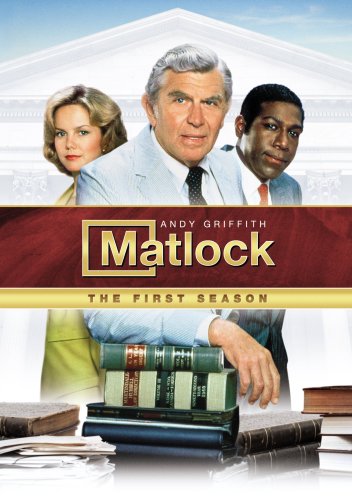
Imagine Sheriff Andy Taylor older and now an attorney, and you pretty much have the set up for Matlock. Forget for a second that both characters were played by Andy Griffith. That’s not all they have in common. Matlock is every bit the “southern gentleman” that Taylor was. He might be a little smarter, but he walks and talks like Andy Taylor.


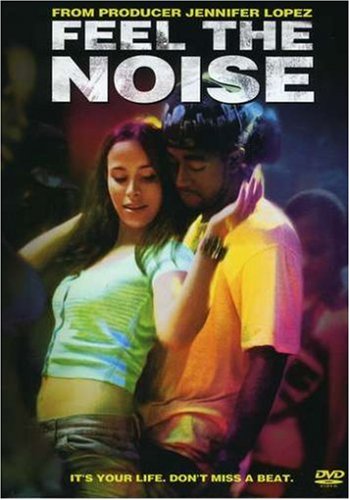
Dance movies can be interesting especially when it involves hot sweaty bodies and bodacious moves along a club floor. Did I just say bodacious? "Pauly Shore is on line one, please pick up the white courtesy phone". I'll ignore that for now. Dirty Dancing or Footloose are great examples. Some should be drag into the street and shot. I knew that Feel the Noise looked bad the minute I looked at the cover. What was that clue on the cover you might ask? Produced by Jennifer Lopez would be a very good start.

Rob Vega (played by Omarion Grandberry)is a straight up hip-hop rapper who gets shot at one night while he's trying to perform. His mother decides to send him off to Puerto Rico to live with his father Roberto (played by Giancarlo Espositio)and his family. There he meets his half brother Javi (played by Victor Rasuk) and is introduced to Reggaeton, music that blends Reggae and Hip-Hop. The two team up for a single and eventual album as Rob tries to peace back a normal life which eventually leads him back to his home in New York where he has to face his demons.

I couldn’t find her name anywhere on the credits, but I simply cannot believe that Rosie O’Donnell didn’t have anything at all to do with the film Conspiracy. The film is a thinly veiled pot shot at the current administration, or at least Dick Cheney. Gary Cole plays a guy named Rhodes, who is really intended to represent Cheney. Rhodes controls a multibillion dollar corporation that has managed to set itself up in Iraq making millions from the war thanks to corrupt government officials. His company, Halicorp, is obviously intended to be Haliburton. Rhodes has also taken control of a small Arizona border town. Here his vigilante friends patrol the border, turning back, and even killing, Mexicans attempting to enter the United States. He justifies his deeds in the name of counterterrorism, but the truth his he holds the entire town in fear. Enter MacPherson (Val Kilmer) who recently lost his leg in the Marines in Iraq. When he returns home he comes to Rhodes’s town looking for a Mexican comrade in arms. He finds that there’s no trace of his friend, and his questions have drawn all the wrong kind of attention. After some rather silly plot developments, MacPherson becomes a one man army to challenge Rhodes’s control. Apparently someone has watched Clint Eastwood’s Pale Rider one too many times here. Now Kilmer has grown old and rather obese in recent years, so the film needs to take that into account with his fighting style. After all, no one’s going to believe he’s got any real fight in that couch potato body. He wins his fights mostly by being able to duck really well. And returning a bowl of chili he recently ate on someone’s shoes. Figuring that Eastwood scowl was already done, Kilmer appears to be half asleep during each fight. I know I was. He does pack a mean nail gun, and you should just see what he can do with some rolled up paper. When they finally do put some real fire power in his hands, the rest just gets too comical.


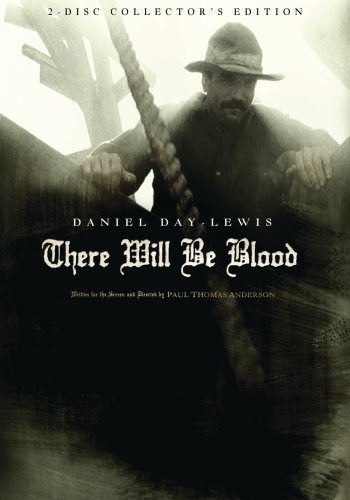
He might not have been “shootin’ at some food” but for Daniel Plainville it’s all about that “bubblin’ crude. Oil that is. Black Gold. Texas Tea”. Our story begins in 1898 before the world would really become so completely addicted to oil. Plainville is a miner looking for silver when an accident that nearly kills him leads to an even more valuable discovery. The film actually begins quite slowly, which doesn’t exactly bode well for a film over two and a half hours long. It will be 10 minutes and 4 years in film time before we witness the significance of Plainville’s chance discovery. It will be over 14 minutes before the first words of dialog are heard, a sales pitch by Plainville that serves as a near perfect prologue for the events to come.

So what did we all learn with the Joel and Ethan Coen’s latest opus, an adaptation of the Cormac McCarthy novel No Country For Old Men? Well, suffice to say, along with the creative resurgence of the brothers, we get a film that’s part modern-day Western, part action, part comedy and even perhaps part-horror, but in the adoration and adulation, to want to pin the film down as something is to forget that above all else, the film is a tale about changing times, told by someone who’s seen better days and is nostalgic for them. It’s that story that seems to be ignored to a certain degree by people, which oddly enough is ironic considering the title of the film.

The story that’s pushed along by the film surrounds a drug deal where all the concerned parties were killed in cold blood. The bodies were found by Llewelyn Moss (Josh Brolin, Planet Terror), who also managed to find several million dollars in the vicinity. But as is the case in both movies and real life, that kind of money is not going to not be missed for long. So enter Anton Chigurh (Javier Bardem, Before Night Falls), a man with a mysterious past. But there are a few certainties we know about him: first, he’s hired by someone to recover the money. By whom is immaterial, though through other recollections, he’s made out to be an killer with ice-cold veins, and we find this out within the film’s first several minutes, when he kills a police deputy in a gruesome fashion at a police station. So Chigurh is after the money and, inevitably, after Moss. The crimes occur in a sleepy west Texas town whose sheriff is Ed Tom Bell (Tommy Lee Jones, The Fugitive), and all three men find themselves near the border in 1980, on the cusp of a serious influx of drugs to the U.S..

In 1973 Elton John had his best selling album to that time in the double release Goodbye Yellow Brick Road. From that album came one of the most radio-played non-singles of all time, Funeral For A Friend/Love Lies Bleeding. What does any of this have to do with the Christian Slater direct to video film? Nothing. It has about as much to do with the film as the title itself does. I think someone must have been a closet Elton fan and pulled the title out of thin air, which is about where most of this screenplay must have come from. If you’ve seen Slater’s far better True Romance, then you’ve seen this film. Substitute cocaine for cash, and the story is very much the same. Of course, Tony Scott did it much better. So why would you spend 20 bucks for a cheap knockoff? Good question.


Three female friends are there for each other’s personal storms. One is a coke-addled sensation addict, one aspires to be an artist (and does her share of powder too) and the third is taking refuge from an unhappy marriage and questioning her sexual identity. Many scenes of heightened emotion are the order of the day.

The title (translated as “On the Edge”) recalls Women on the Verge of a Nervous Breakdown, but Teresa Suarez isn’t quite in Pedro Almodovar’s league. The film has some fine comic moments (I’m thinking of one dream sequence in particular), and plenty of energy, but some of that is second-hand: a coke-frenzied drive early in the film more than slightly recalls Ray Liotta’s paranoid excursion in GoodFellas. Further, despite the universally vile male characters in the film, many of the protagonists’ problems are so obviously of their own making that they are hard to care for.

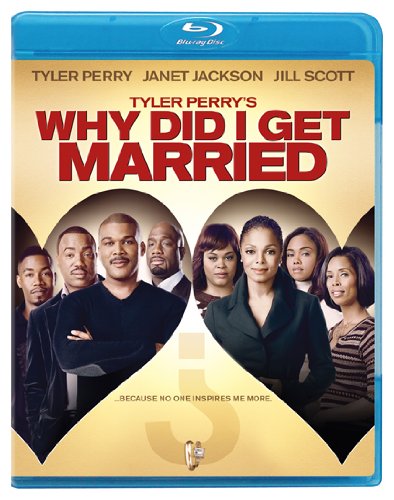
Tyler Perry burst on the scene in 2005 with Diary of a Mad Black Woman. It was one of the worst reviewed movies of the year, but when it raked in over $50 million dollars at the box office, Tyler Perry silenced critics and became a force to be reckoned with in Hollywood.

Before his movie-making career, Perry was already a huge success in the African-American community, having written several Christian and family oriented plays upon which many of his movies are based.

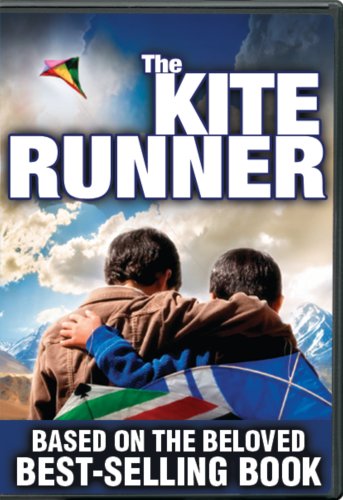
The Kite Runner is one of those films that is extremely hard to pin down. On the surface it’s a moving story about friendship and redemption, but I have to wonder if that is really the collection of themes intended by either the original novel’s writer Khaled Hosseini or the film’s director, Marc Foster. The story begins with two young Afghan children who appear to be friends, but they are from different worlds. Hassan (Mahmoodzada) is the son of household servants. Amir (Ebrahimi) is the son of the household’s masters. Yet they appear to share a common bond and fondness for one another. We quickly learn that the friendship is one sided. Hassan pledges that he would do anything for Amir. He vows he would eat dirt if Amir asked, but adds the belief that Amir would never ask him to. Even a look at Amir’s guilt tells us that’s certainly not true. Soon Hassan is approached by bullies and asked to give up a kite he captured and promised to Amir. Rather than break his promise to his friend, he is savagely beaten and sexually molested by the bullies. We are shocked to see that Amir is witness to the entire event and does nothing. To make his sin worse, he decides he can no longer be friends with Hassan because to see him reminds him of his shame, so he accuses the boy of theft. To complete his unconditional loyalty Hassan admits to the fictional theft to allow Amir to save face. Amir eventually flees Afghanistan as the Soviets invade. In America he becomes a successful writer and has nearly put his past behind him until he learns a startling secret about Hassan, now dead at the hands of the Taliban. In an effort to redeem himself, he decides to rescue Hassan’s son from the Taliban.


It has always been odd to me that for as popular as Bollywood films are in India, they really haven't made much of an impact here in the States. Films from other countries find their place here, but Indian works are pretty widely overlooked here. Maybe it has to do with the wide cultural differences. Maybe it is because so many Bollywood films rely heavily on the traditions of the American musical. Whatever the reason, no Indian films have really caught on here, and the same can be said of the beautiful and talented Indian actors and actresses.

The Namesake is a film that may finally have opened this part of the world up to Americans. Ironically, it has been done through the salesmanship of Kumar Patel himself, Kal Penn. Previews sold this film as a Kal Penn vehicle, wherein he confronted his painfully uncool parents and learned that they might not be so uncool after all. I was shocked when I discovered that this is not at all what the film is about.