Posted in: Disc Reviews by Archive Authors on March 22nd, 2007
The Last King of Scotland generated quite a bit of buzz at this year�s Oscars, most notably the performance by Forest Whitaker. Based upon the book of the same name, which was in turn based upon the Ugandan dictator between 1970 and 1979; Idi Amin. Although the movie involves a completely fictional protagonist it apparently shadows the life of Idi Amin quite well, which offers a nice mix of fiction and reality.
Nicholas Garrigan (James McAvoy) recently graduated from medical school and decides to lead his expertise to a small countryside hospital in Uganda. Just upon arriving, a new dictator has stepped into office by force, Idi Amin (Forest Whitaker) who is greatly admired by the people. One day while in the area, Amin is involved in a small car accident and Garrigan begins treating him. A nearby cow injured from the accident is suffering and his noises begin distracting Garrigan who very boldly grabs Amin�s pistol and kills the cow. Amin appears to be offended, but when he hears that Garrigan is from Scotland, a country he respects and Amin begins to admire Garrigan. Initially Amin seems like a great guy out to improve his country; Garrigan even becomes his personal physician and his most trusted advisor. But as the story proceeds we learn more and more of Amin�s corruption and brutal ways, causing alarm for even the always-loyal Garrigan.
Posted in: Disc Reviews by David Annandale on March 22nd, 2007
Zac is the fourth of five sons in a Montreal family, growing up in the 60s and 70s. He’s sensitive, and rather more in touch with his feminine qualities than his father (very macho, though a huge fan of Patsy Cline) would like. The film then tracks Zac’s struggle to accept the direction his sexuality takes, to accept himself, and to once again find his father’s acceptance.
Lord knows that rock music is more than the soundtrack of our teenage years; it’s the narration. And so it is here for Zac, with the Rolling Stones (“Sympathy for the Devil”), David Bowie (“Space Oddity”) and Pink Floyd (“Shine On You Crazy Diamond”) taking pride of place, setting up a dialogue with Zac’s father’s own life soundtrack (Patsy Cline and Charles Aznavour). By turns moving and funny, but always ringing true, this is a quietly remarkable film.
Posted in: Disc Reviews by David Annandale on March 18th, 2007
The Pursuit of Happyness is inspired by the true story of Chris Gardner, who wrote a biography of the same name, from which the movie is based. Will Smith plays Gardner who is a salesman of medical equipment, who actually only manages to sell the odd unit. Because of his poor sales, his family is struggling making it from bill to bill, until finally his wife becomes so fed up she packs up and leaves for New York. Gardner is now left by his request, with his five-year-old son Christopher. With the untimely loss...of their apartment, Chris has to make a hard decision; pursue the career path of a stock broker which requires six months training with no pay and no employment guarantee, or continue the life as a salesman in hope of earning enough to put food on the table. After a short time of deliberation Chris chooses to go after the internship, but endures some real hardships along the way including going hungry and homelessness.
This film is really inspirational, it proves that no matter where you’re from and no matter the circumstances that you face if you want something you can have it. The acting was impressive by Will Smith, but I was more impressed with the ability of young Jaden Smith who will obliviously be following in his father’s footsteps. Aside from the great cast and intense realism of the life on the streets this movie provides a good plot, and sends out a good message. This movie ultimately has a positive vibe to it and it beings such a touching story I have a hard time saying this, but it wasn’t awfully engaging. I felt for the characters, but the story dragged on a bit and didn’t always keep me interested, it’s the sort of movie that is going to be hit and miss. Some people will love it and call it inspirational, will others will simply shrug and say it was like any other underdog movie. For me personally I thought it was better than I anticipated, but wasn’t a perfect movie, but definitely worth checking out.
Posted in: Disc Reviews by David Annandale on March 17th, 2007
James Caan is a sailor whose stopover in Seattle becomes much longer than he expects, as first he has to wait for new orders when a medical exam forces him to miss shipping out with his crewmates, and then his records disappear. During this time, he meets Marsha Mason, a prostitute with an 11-year-old son. Caan falls for both of them, and a finely developed sense of responsibility sees him moving heaven and earth to make life good for all three. His task won’t be an easy one.
On the one hand, the film has the quality common in films of this era (it’s from 1973) to take its time and soak the audience in a convincingly quirky ambiance. Screenwriter Darryl Ponicsan (adapting his own novel) and director Mark Rydell have fun bouncing the various characters off each other, and we have fun as they do so. But the further into the film we go, the more predictable everything becomes, until there is a generalized collapse into hackneyed melodrama. Ponicsan also wrote the book that The Last Detail was based on, and here, as there, he seems incapable of conceiving of female characters who are not prostitutes (that is, when they are not needy, self-absorbed, neurotic, self-destructive prostitutes). The film has fine performances, is crafted well, but is also badly flawed at its core.
Posted in: Disc Reviews by David Annandale on March 15th, 2007
Long the bad boy of French novelists, Jean Genet directed this 25-minute short in 1950. Borderline pornographic, it is a silent portrayal of (literally) imprisoned desire. Two prisoners convey their longing for one another through the prison walls, while a voyeuristic guard watches, becoming aroused and frustrated to the point of violence. Poetic, fetishistic, and intensely personal, it is a startling and historic piece of underground cinema.Audio
Consider the rating a place-holder, because we don't have a star equivalent for "Not Applicable." This is a completely silent film. Not even a score. As for the extras, they are clear enough.
Posted in: Disc Reviews by Archive Authors on March 15th, 2007
At one point or another you�ve either seen Ghost, or have seen some of its memorable scenes parodied. Paramount is now releasing a new special collector�s edition of the 1990 Academy Award winning picture. Since then, star Patrick Swayze hasn�t really been up to much besides a Ja Rule video and a small role in Donnie Darko. Whether Demi Moore has seen success since this film is debatable, but for a while there in 1990 these two were the talk of the town. At the time I was too young to have any interest in the film, so prior to this review all I knew were the memorable clips I�d seen. I looked forward to finally viewing the entire film.
Sam Wheat (Patrick Swayze) and Molly Jensen (Demi Moore) are just your average happy couple living out their lives in New York City. Sam appears to have a problem expressing his feelings for Molly, only saying �ditto� when she tells him �I love you.� Apart from this obvious minor hindrance on the relationship, the two seem genuinely happy. That is until one night while walking back from the theatre the couple is mugged, Sam puts up a fight and is shot and killed. His soul doesn�t realize this and chases down the thief. When he returns to the scene, he realizes what has transpired but he doesn�t accept it and refuses to be taken by the light, leaving him on earth as a ghost. Sam follows the thief home and eventually finds out that none other than Sam�s best friend and co-worker Carl Bruner in fact planned his murder. Frustrated and feeling helpless, Sam enlists the help of the fraudulent medium Oda Mae Brown (Whoopi Goldberg), who appears to be the only one who can hear him. Through her, Sam contacts Molly and tries to remedy the situation, but things get out of control and quick.
Posted in: Disc Reviews by Archive Authors on March 15th, 2007
No matter where you grew up or what books you�ve read, you have undoubtedly come across the workings of William Shakespeare, and especially his Romeo and Juliet. This film takes the dialogue from the original play pretty much word for word but depicts it in a more modern time, with, of course, then-teen heart throbs Leonardo DiCaprio and Claire Danes as our star-crossed lovers.
Instead of swords and castles, there are guns and skyscrapers. The famous opening argument with Benvolio, Tybalt and Mercuteo is a public firefight that kicks off the film. For the few of you who are unfamiliar with Romeo and Juliet, it�s a love story about two young people who are forbidden to love each other because of their families. For as long as anyone can remember, the Capulets and Montagues have shared a mutual hatred for one another. Romeo, a Montague, and Juliet, a Capulet, meet and share a passionate love for one another but are forever bound to secrecy as no one in either family could accept this love connection � the hate runs too deep. The story deals with the tribulations of love in the midst of hate, and the couple�s eventual decline.

Posted in: Disc Reviews by Archive Authors on March 14th, 2007
Based on a true story Conversations With God tells the story of Neale Donald Walsch, an average guy who loses his job, gets into an automobile accident and breaks his neck, and finally loses his family to a divorce. It wasn't long after this tragic chain of events, with his hospital bills rising and nobody wanting to hire a middle-aged man with health problems, that Walsch finally became homeless.
Hitting rock bottom with no prospects for improving his predicament, he begins to audibly question God. Wa...sch claims that God answered him... audibly. While this is a fact that is clearly open to some contention, it certainly makes for compelling storytelling.
Posted in: Disc Reviews by David Annandale on March 11th, 2007
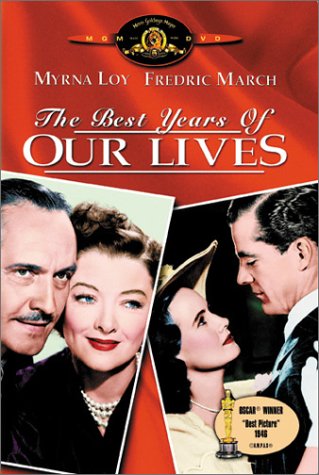
WWII over, three soldiers return to their home town of Boone City. Dana Andrews is the bomber officer unfit for any other kind of work, who foolishly married a party girl just before the war. Fredric March is the banker who is having trouble adjusting to the fact that his children have become adults in his absence. Harold Russell is the sailor who lost both his hands, and can’t bring himself to believe that his girlfriend still truly wants him.
Though clocking in at 168 minutes, this 1946 effort never drags, and does justice to all three characters, but Andrews is ultimately the real focus of the film. Russell himself really was a double amputee, and his scenes could easily have fallen into freak show elements or excessive sentimentality. Both traps are avoided. The film is powerful and moving without ever being sappy, and certainly earned its clutch of Oscars.
Posted in: Disc Reviews by David Annandale on March 10th, 2007
Terminally naive and beautiful Noelle Page (Marie-France Pisier) is abused and conned by every man she meets. In 1939 Paris, penniless and at the end of her tether, she meets American pilot Larry Douglas (John Beck, looking more like a 70s porn star than a 40s air force pilot). A great romance begins, but then duty calls him away. He promises to find her again in three weeks, but he never shows up. Noelle discovers that she is pregnant, and then finds out Larry is a terminal womanizer. She aborts herself with a wire hanger, and then, feeling she has nothing left to lose, slaughters all the young Jedi... I mean, she sleeps her way to movie stardom, hooks up with a Greek tycoon, obsessively tracks Larry’s life, including his marriage to PR executive Catherine Alexander (Susan Sarandon), and plots a dastardly revenge, a reigniting of the romance, and a murder. Busy girl!
As you might have inferred from the above, Noelle’s transformation from abused and abandoned waif to Queen of Darkness is no more convincing than a recent whiny brat’s transmogrification into the Lord of the Sith. In point of fact, NOTHING in this three-hour soap opera is the least bit convincing (right down to careless framing that permits a skyscraper completed in 1972 to be visible over Nazi-occupied Paris). But then, anyone expecting great art to be made from a Sidney Sheldon novel needs to see a therapist, and quickly. What we have here is trash of the absolutely highest order, and hence the four-star rating. Excessive, grotesque and unfailingly hilarious in a way only the 70s could produce, this is the cinematic equivalent of chowing down on a huge bowl of 100% deep fried, trans-fat munchies. Terrible for you, but delicious. And who can fail to love that title. What in the name of all that is holy does it MEAN?