Drama

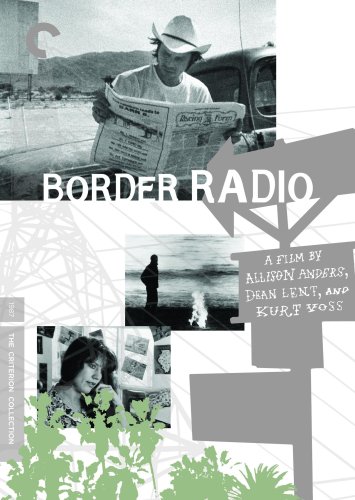
Border Radio is an independent film written and directed by Allison Anders, Kurt Voss and Dean Lent. The film serves as more of a curiosity than a great film on its own merits. Released in 1987, the film fell in amongst the wave of indie filmmakers making an impact at the time, including Quentin Tarantino and Robert Rodriguez. In fact, Anders directed one of the segments in the film Four Rooms, which also featured stories by these two filmmakers, in addition to Alexandre Rockwell. While Tarantino and Ro...riguez have gone on to amazing success, many of their contemporaries never took off on a grand scale. Anders, Voss and Lent fall into this category, with Lent and Voss later directing a string of "B" movies, and Anders turning her efforts toward directing television programs.

Still, this film is an excellent example of the advice that all indie filmmakers give to aspiring filmmakers; "just make your movie!!" The goal of a debut feature is not always to make the next Reservoir Dogs as much as it is a chance to gain experience and show the world that you can handle the strain of a feature-length production. Maybe neither director went on to direct a $30 million blockbuster film, but they created a career for themselves through their work in a self-funded production.

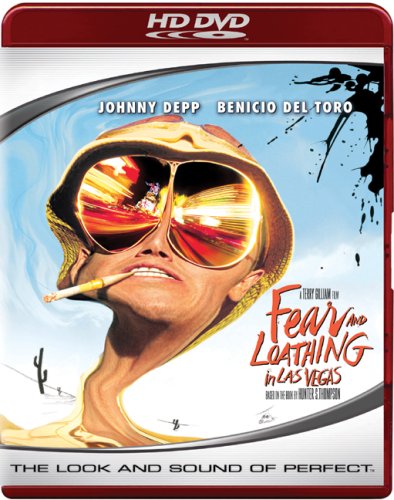
Some of you might know the book Fear and Loathing in Las Vegas: A Savage Journey to the Heart of the American Dream, then others of you might known the movie simply called Fear and Loathing in Las Vegas, but one way or another you know about the crazy days Hunter S. Thompson had in Vegas. Hunter Thompson along with his buddy Oscar Zeta Acosta are the credited creators of Gonzo Journalism (Journalism with indistinct lines between fact and fiction), so the book and movie are partially based on their accounts, except replace Thompson with Raoul Duke (Johnny Depp) and Acosta with Dr. Gonzo (Benicio del Toro). The movie is very similar to the book, and Thompson had a large role in the production of the film, even lending Depp clothes and accessories for authenticity.

Raoul Duke and lawyer buddy Dr. Gonzo are sent to Las Vegas to cover a motorcycle race for a magazine, to prepare for the trip the two have come armed with two bags of grass, seventy-five pellets of mescaline, five sheets of high-powered blotter acid, a saltshaker half-full of cocaine, and a whole multi colored collection of uppers, downers, laughers, screamers... Also, a quart of tequila, a quart of rum, a case of beer, a pint of raw ether, and two dozen amyls. It goes without saying that the rest of the movie consists of these two and there adventures around Las Vegas while taking copious amounts of narcotics, and I can assure there is very minimal journalism done.

For the longest time I avoided Field of Dreams. This is simply because I�ve never really liked Kevin Costner as an actor, and mainly because I figured a film about baseball starring him would be boring. Boy was I wrong on this one. Sure Field of Dreams isn�t the best film ever made, but damn if it�s not a film that one can�t help but enjoy slowly falling for the story, characters and surroundings.

Ray Kinsella (Costner) is a simple man who has a lovely wife named Annie (Amy Madigan). Ray decides to move to Iowa soon buying a farm. One night, while in the crops, Ray beings to hear a calm, subdued voice that repeats, �if you build it, he will come�. Ray begins to think it�s a sound truck or a bunch of kids playing a joke. Soon the chant happens again only this time Ray sees a vision of a baseball field. (Remember the scandal surrounding the 1918 White Sox where 8 of them were suspended over apparently being paid to throw the World Series). Once the field is built, Ray�s young daughter Karin (Gaby Hoffmann) tells her daddy that a strange man is walking in the field. Ray goes out and sees none other than Shoeless Joe Jackson (the always fabulous Ray Liotta). The rest of the film follows Ray receiving more clues that lead him to meeting more players including one particularly important player.

You may have heard this one before. Annabelle (Erin Kelly, channelling Leelee Sobieski) is the hellraising daughter of a US Senator, sent to a Catholic girls’ school to be out of sight and out of trouble. Her rebellious ways continue, however, and she falls in love with her poetry teacher Simone (Diane Gaidry). Much angst, particularly on Simone’s part, ensues, not to mention inevitable walks on the beach and much Lilith Fair-style musical noodlings (our heroines would clearly die of shock if they had a run-in with Maria Beatty), before the consummation and the rather sudden ending of the movie arrive.

Kelly and Gaidry turn in good work, and succinctness of the storytelling keeps the viewer’s interest. There is a larger problem, though, than the movie’s rather overdone storyline and not-terribly-original narrative technique. In the making-of featurette, writer/director Katherine Brooks acknowledges the inspiration provided by Mädchen in Uniform, and how she had wished the student and teacher had gotten together in that film because that would have been “hot.” All right, so that makes this pic something a fantasy. Fair enough. But she also wants a real-world tie-in to all the stories in the news about teachers arrested for having sex with their students, only her take is sympathetic. This leads to some intellectual dishonesty. Having the student actively seduce the teacher is a neat but cheap cop-out from dealing with the unbalanced, predatory power dynamic such a relationship implies. Any truly ethical teacher would have run in a blind panic from a student making the advances Annabelle does, but Simone only utters one line at the end of the film to suggest that her many haunted looks might have been caused by the notion that what she is tempted to do might be wrong. I have this sense of the film trying to have things both ways, and it simply can’t. But even with these knocks against it, it remains a not unengaging romance.

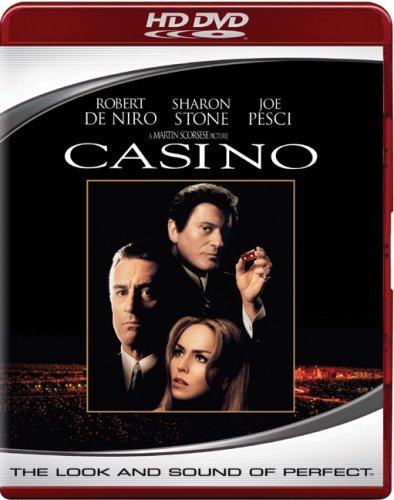
Let�s face it people. Martin Scorsese, for most part, is a god amongst filmmakers. The man can�t do anything wrong in the filmmaking. Film after film he continues to amaze me with his sheer ability to tell a story bundled together with fantastic acting. Even though many don�t name Casino as one of his best works (rightfully so), the film is still excellent as it shows the gritty 1980s Las Vegas mob world.

One cursory glance at the plot of Casino would make the smallest Scorsese fan think that the film should be called Goodfellas 2. Both have to do with the mob world, both star Robert De Niro and Joe Pesci and both are about men who think they�re on top of the world. Sure, this is myself trying to connect the two films, but damn it if this film didn�t feel like a sequel. Don�t get me wrong though that isn�t necessarily a bad thing, just it takes away some (key word some) of the shine that the film had.

Comments on the supplemental material on this edition have been ported over from Ryan Erb's excellent (and recent) review of the HD DVD, which also can be enjoyed on this site.  Now onto this review...

Remember when it was announced that far-left conspiracy theorist (and resident Castro admirer) Oliver Stone would be making a film about the September 11 attacks? Of course you do. In fact, the collective pucker of the nation tightened in horror and trepidation when the notion was first thrown around, and later grew in suspicion as the film's realization became closer and closer.

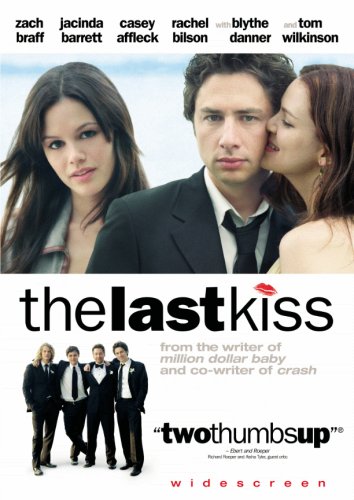
Don't pay any attention to the description on the back of DVD case. Described as "hilarious", this film is anything but. While it may have a few funny moments, we're talking about a serious drama. The Last Kiss is a cautionary tale about temptation. It presents the circumstances and life choices of 30-year-olds in an intense, honest way, which makes the film both completely engrossing as well as difficult to watch.

The story centres around Michael (Zach Braff), a 29-year-old architect, and his girlfriend of three years, Jenna (Jacinda Barrett). Jenna is newly pregnant, and Michael is scared. Michael's best friend, Chris (Casey Affleck), is having a rough time with his own wife and their baby. Another friend has recently split from a long relationship. Jenna's folks, Anna and Stephen (Blythe Danner and Tom Wilkinson), are also on the brink of a breakup.

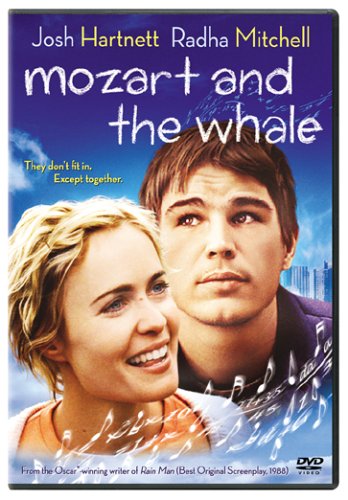
In case Rain Man didn’t give you your fill of films about autistic characters, Ron Bass, writer of Rain Man, has decided to give us an unnecessary sequel. OK, this isn’t really a sequel, but it might as well be. Honestly, this film has everything Rain Man had except for a good scripts, solid performances, and oh yeah, Dustin Hoffman. Still, this romantic nonsense utilizes the same theme. Unfortunately autism here is reduced at times to stereotyping that appears grossly unfair to the millions of people who suffer from the disability and their loved ones. Some of the actors appear to be having a blast with their portrayals. They should be ashamed of the glee they derive from these “crazy” routines. They are neither entertaining nor fair. I’m sure none of this was the intent of the filmmakers, but it is insulting just the same. This is a huge part of the reason this film never has or never will capture the critical acclaim of Rain Man. In fairness, the leads Josh Hartnett and Redhe Mitchell take the roles more seriously than the pathetic supporting cast. There isn’t enough compelling for any of this to work on anything more than an emotional level.

Guts may make a good first impression, but this film has neither guts nor a good impression. The film pretends to have incredible bravado, but the mask of cowardice prevails. Except for the romantic interactions of the leads, we are never allowed too far beneath the surface of any of these complex individuals. Because of this fatal flaw, the romantic quirkiness loses all of its charm. An over-explanation of who these people are is a not so subtle attempt to remind us these folks suffer from autism. Show me, don’t tell me, is what my writing teachers have always said. Bass might benefit from a refresher course. Quirkiness like this is much more interesting the less it is explained. Allow these limitations to be part of the character without so many “remember we have autism” lines. The title is very confusing until you get to a pivotal Halloween party. Life is far too accelerated to be appreciated here. Issues arise from out of nowhere and are just as quickly resolved or simply forgotten. Wherever this tale is going, it missed a connection somewhere up the line. Save your nickels and watch Rain Man again. You’ll thank me for it.

Everyone in the world knows about the September 11 terrorist attacks on the United States. With films hitting the big screen in 2006, I guess the studios thought time enough had gone by to start making movies on the tragedy. World Trade Center is based on the attacks on the World Trade Center, as obvious by its name, but makes mention of the other attacks of the day. I can�t comment on the realism of the movie pertaining to the individuals depicted in the film (John McLoughlin and Will Jimeno) but they were involved with the production of the film, and since film is based on their accounts of the day I could imagine it�s very realistic. There are a few factual inaccuracies regarding some of the events of the day, but nothing major.

World Trade Center opens on the morning of September 11, 2001 when everyone was going about his or her life without any idea of the tragedy that was about to strike. You get a glimpse into the lives of John McLoughlin (Nicolas Cage) and Will Jimeno (Michael Pena) two Port Authority police officers and family men as they leave for work. The two begin their day as usual patrolling Lower Manhattan until there is a loud thump similar to that of an earthquake. The officers rally back at their police station and together head to the site of the World Trade Center to help evacuate people. Along the way they get news of the second tower being hit, and debate whether or not that could have even happened. When they arrive they are asked to volunteer to enter 5 World Trade Center (a building part of the 7 buildings that made up the World Trade Center) and help people escape.

What we have here are three films from Hollywood’s days before the Production Code kicked in, which show just how much the envelope was being pushed when it came to sexual subject matters. The recurring theme here is sex as a commodity, whether the situations beinig dealt with involve outright prostitution or not.

Outright prostitution is very much the issue in Waterloo Bridge (1931), director James Whale’s effort just prior to making Frankenstein. Mae Clarke (who would play Elizabeth in Frankenstein) is an out-of-work chorus girl during WWI, not a prostitute trolling for men on the titular bridge. During an air raid she runs into a young private from a good family (Kent Douglass). He falls in love with her, and she with him, and so she tries to push him away. This is a romance that is anything but glamorous, despite some scenes in the upper class household (with a young Bette Davis as Douglass’ sister), and the resolution is brutally downbeat.