Drama

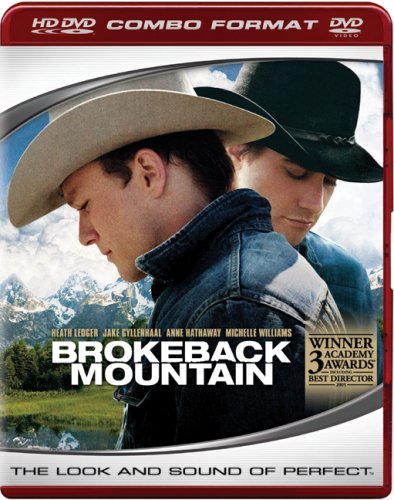
Wow. It�s already been over a year since hearing the endless �I can�t quit you� pander that many labeled Brokeback Mountain with. Sitting down to see this one for the 3rd time, I feared that the initial power the film had over me would be diminished. Such isn�t the case here as Brokeback Mountain is still the same excellent film it was over a year ago.

Brokeback Mountain tells the story of star-crossed lovers Ennis Del Mar (Heath Ledger) and Jack Twist (Kake Gyllenhaal). Both are young men, not even twenty, working in the year of 1963. They meet and fall in love on a sheep-herding job in Signal, Wyoming. The film chronicles the next 20 years of their lives from Ennis marrying Alma Beers (Michelle Williams) to Jack marrying Laureen Newsome (Anne Hathaway). The 20 years that the film takes place over show Ennis and Jack trying to lead a normal life without seeing each other, but shortly before realizing that they both have a deep connection to one another.

For all the talk about a film being "just as relevant now as when it was released", Oh! What a Lovely War seems to fit that bill more than a lot of movies I've seen recently. From a screenplay by Len Deighton and directed by a first-time director (but longtime actor) in Richard Attenborough (Jurassic Park), the film may be a daunting endeavor for some to see, probably because it's a film that's two and a half hours long and contains a lot of songs.

It also contains a lot of dialogue, and both the songs and dialogue were from the period. The world leaders that are involved during this time of crisis include President Poincaire (Ian Holm, Lord of the Rings), Count Leopold von Berchtold (Sir John Gielgud, Arthur), Emperor Franz Josef (Jack Hawkins, Bridge on the River Kwai), to name a few.

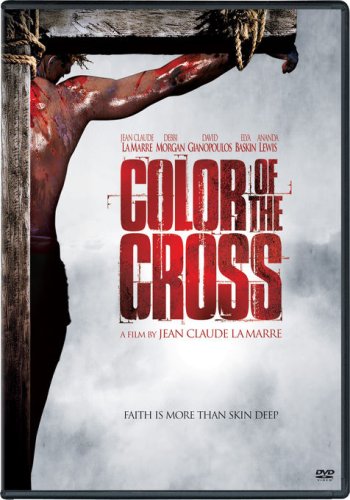
Back in late 2006 there was a minor to-do about a film depicting the last days of Jesus, except that Jesus was played by a black man. Written and directed by Jean-Claude La Marre, Color of the Cross tries to do what it can to tell the tale of this black Jesus, or be-jeezus if you will.

The film, like others covering the last two days of his life, follows Jesus as he performs the Last Supper, gets betrayed by Judas and the other stuff. While in town, many Jews are trying to celebrate Passover without being abused or persecuted by the Romans, so they celebrate in secret. In the meantime, what happens during a lot of other character thoughts is that they wonder about this so-called prophet, and because he's black AND jewish, whether that should diminish the message that he is trying to convey.

Con movies are nothing new to Hollywood. Each has that character who thinks they�re on top of the world behind this bullet proof armor only to eventually realize that they�ve either been played or been watched the entire time. I suppose what makes con films work on the level they do is that these characters (admit it!) are all committing acts we�d love to even THINK about committing. The only problem is that we�re not even that badass of a person to even attempt it. Having never seen this film, I figured I�d get a fairly entertaining film with decent acting and an interesting enough plot. Boy was I mistaken about this one. Oscar awarded 1973 film The Sting has easily become my favorite con film.

Johnny Hooker (Robert Redford) is a small-time con man from Joliet, Illinois. Hooker and his buddies Luther Coleman (Robert Earl Jones) and Joe Erie (Jack Kehoe) steal $11K from a victim without the victim ever knowing. After this huge success, Luther tells Johnny that he wants to retire from this gig of crime so he can move to Kansas City, Missouri. He tells Hooker to seek out his old friend named Henry Gondroff.

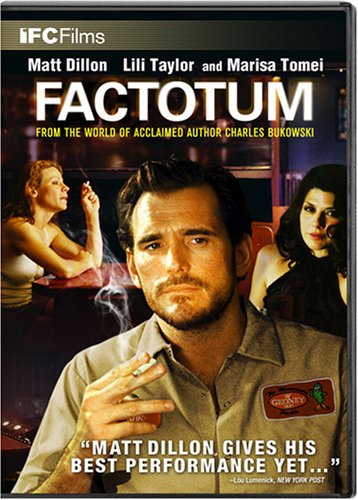
Back in 1979 (that's a whole generation ago, kids!) Matt Dillon was appearing in films that would make the average reader of Tiger Beat swoon. He was in plenty of material like Little Darlings, Rumble Fish and The Outsiders that didn't help that idea too much in the eyes of his female fans (of which there are scores). But since the early '80s, he's gone through a bit of a rediscovery, and in the film Factotum, based on the works of author Charles Bukowski, he may have hit his best stride to date.

In the film, Dillon plays Henry, a guy who takes many jobs and loses all of them rather quickly, but still finds enough time to drink while providing dramatic voiceover on his life as an aspiring writer he's always wanted to be. The stories he periodically sends to publishers to read without success is part of his life too. He meets Jan (Lili Taylor, Say Anything) who helps him in a time where he's lonely, but he leaves her and finds another woman in Laura (Marisa Tomei, My Cousin Vinny). In Laura he thinks he's found love, but as it turns out, Laura is one of several barflys that a wealthy Frenchman houses and beds with great frequency. Of note, one of the women is played by Adrienne Shelly (Sleep With Me) in her last film role before her murder in late 2006. Anyway, side notes aside, Henry and Laura eventually split up, and in a stroke of luck, he manages to bump into Jan again, who helps to get him on his feet.

Let me begin here by saying that I�ve never found any film based on the Vietnam War good. I assume this stems from that everything I�ve ever known or been taught about the War shows that (I apologize in advance for those who get offended) the War was not necessary (this said by my Uncle who fought in the War). Every Vietnam film I�ve tried to enjoy from Born on the Fourth of July to Platoon I just couldn�t as this little reminder always poked in the back of my mind. I should honestly scratch that last sentence as I�ve found the first Vietnam film that I absolutely found excellent.

I suppose the best way to describe a film like Deer Hunter, even though its predominately towered by the power of the events of the Vietnam War, is a film that takes place over three sections. The first section involves a wedding ceremony attended by honest hard-working fellows who want nothing but their great life to continue. Then we are met with the middle section, which is definitely the most powerful section as it takes anything I�ve known about the Vietnam War (intense horror) and basically showcases it on the screen in front of me.

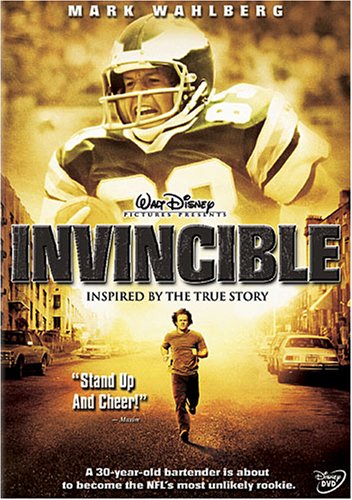
Invincible (2006) marks the latest in a string of sports-underdog films from Disney, following such hits as 2002's The Rookie and 2004's Miracle. This time, we have a film inspired by the real-life Cinderella story of Philadelphia Eagles' alumnus Vince Papale.

Papale's story is so similar to that of fictional Philadelphia son, Rocky Balboa, that calling Invincible a remake of Sylvester Stallone's Rocky isn't much of a stretch. But then, the sports long-shot genre is tried and true, so as far as my enjoyment goes, I have few issues with this film's formulaic plot.

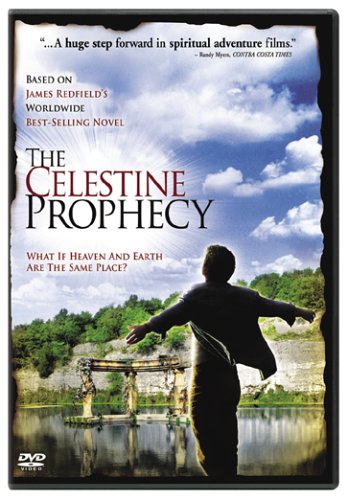
Halfway through The Celestine Prophecy, I was exasperated and ready to turn it off. If I hadn't been watching it for this review, I would have, and would have been better for it.

When this DVD came across my plate, my interest was piqued. I'd never heard of the film, or the worldwide bestselling book it's based on, and the cover quote said, "...a huge leap forward in spiritual adventure films." My first thoughts were, "if it's based on a bestseller, maybe it has a great script" and "hey, I didn't even know there was a spiritual adventure genre".


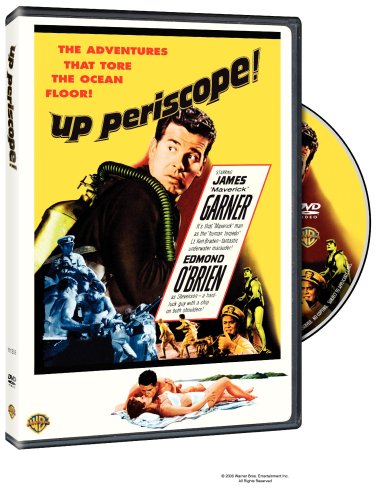
While this is not a film that has specific comedic elements, James Garner seems to be the perfect choice to play this role. Up until this point in his career, almost every role that Garner had fulfilled on the big screen had been that of a soldier. Now, halfway through his TV stint as Maverick, he returns to the silver screen to bank on his new popularity as the star of a unique war film.

When I come across movies like this one, I think of films like Behind Enemy Lines and Spy Games; ente...taining and slightly above average films that will sadly not be remembered as time marches on. The fact is, only the best of the best films stand the test of time, while there are plenty of perfectly entertaining, well made films that just fade away from our collective consciousness.

Certain Christian churches and organizations in North America preach something often called �the prosperity gospel.� In a nutshell, this refers to the idea that God wants us to be rich, physically, emotionally and materially.

It�s a pretty controversial message, but also a very attractive one. After all, what could be better than marrying Christianity to the American dream?