Drama

Dave “The Animal” Bautista has had a fairly interesting life. Most people know him for his wrestling accolades even though his career only lasted about ten years. It is hard to believe that at one time, he was passed on by WCW and said he would never make it in the wrestling business. He would go on to be the six-time World Champion and a four-time Tag Team champion as a part of WWE. However, he departed with the company in 2010 to pursue other avenues including an acting career which made its way to my review door. Let’s explore: House of the Rising Sun.

Ray (played by Dave Bautista) takes a long drag on his cigarette. Sometimes he is not sure how his life got to be like this. He used to be a Vice cop who ended up getting jailed for being on the take. Now, trying to live a normal decent life he takes on a job as head of security for a strip joint called “House of the Rising Sun”. Unfortunately, Ray looks the other way a lot here too since this joint also runs prostitution and illegal gambling.

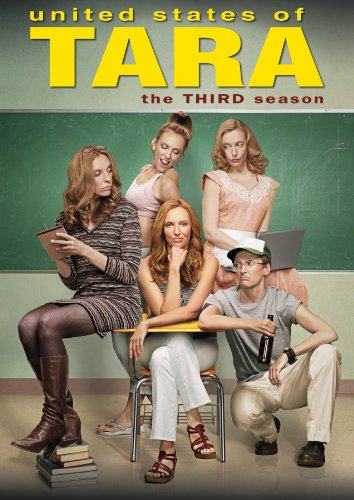
I’ve seen some dysfunctional families on television over the years. Haven’t we all? It’s fun to laugh at someone else’s flaws. Along comes Showtime, and it’s rather hard to classify the series The United States Of Tara. This one takes dysfunction to a whole new level. Tara (Collette) suffers from multiple-personality disorder. Laughing yet? She has managed to control the problem by using medications and attending frequent therapy sessions. But the medication is sapping her creative ability. You see, Tara was once a gifted artist. She painted murals and was somewhat critically acclaimed. The meds put an end to all of that. With the blessings of her family, Tara goes off the meds, and the family grows by the multitude. Yes, there are multiple “alters” as she calls them inside of Tara’s body. Now they are all coming out to play.

The first thing you have to understand about this show is who the alters happen to be. We learn over time that they were constructed by Tara’s mind to protect her from a traumatic moment in her life. Tara can’t remember the event, but from time to time, the alters offer up little clues to what might have taken place. She is totally aware of the alters and their personalities. The family has developed some protection techniques of their own. Husband Max (Corbett) is not allowed to have sex with the alters. They’ve decided that would be cheating. How about just f***ed up? The kids are to treat the alters as they are, not as Mom. I’ll introduce you to the “real” people later. Here are Tara’s alters:

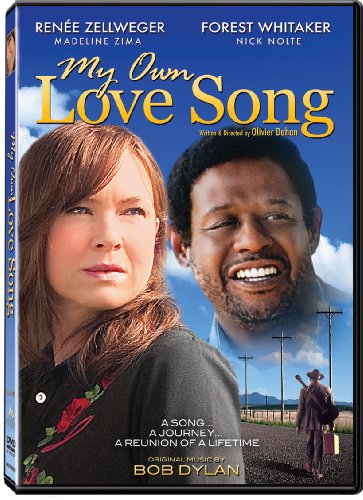
Renée Zellweger is Jane, a former country singer who has lost the will to live since an accident left her in a wheelchair. Forest Whitaker is Joey, who can talk to angels and ghosts since he witnessed the death by fire of his family. These two wounded souls bond and bicker, and when Joey finds a letter from Jane’s son, whom she gave up for adoption years ago, he decides that she must see him. Fortunately, there’s a talk being given in New Orleans by a man who is apparently an expert on communication with angels, so that gives Joey a reason-slash-pretext to drag Jane on a cross-country trip she wouldn’t agree to otherwise.

And so off we go, on yet another road trip discovery of America, this time filtered through the eyes of French writer/director Olivier Dahan (La Vie en Rose). As expected, it’s all very picaresque, with plenty of strange and quirky encounters along the way – Elias Koteas working the sleaze as the man who sells our protagonists an exploding car (and who is emotionally crippled, by his own admission – Symbolism!), Nick Nolte hamming it up as a musical hermit who trots out the old Robert-Johnson-sold-his-soul-for-music chestnut one more time, and so on. Zelwegger’s performance is serious of purpose, but she is done no favours by the voice-over she is saddled with, which babbles poetically on about this and that and is just as pretentious and annoying as Terrence Malick’s excesses in this department. Whitaker, meanwhile, takes his patented sensitive-with-tics shtick to some pretty zany heights. Despite some striking visuals (and sometimes because of the same), this is a pretty silly effort that occasionally rises to entertaining levels of camp, but more often just sets the eyes rolling.

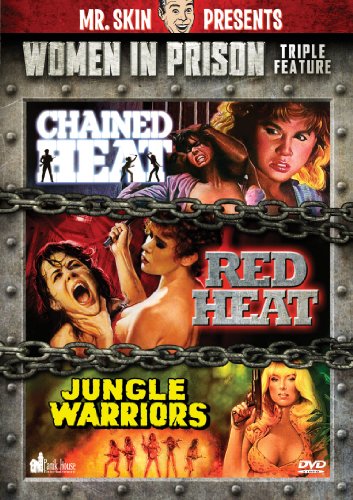
Mr. Skin and Panik House Entertainment have teamed up to provide us with what can only be described as a schlock-o-rama of 1980's exploitation cinema. After the run of blacksploitation and grindhouse films of the 1970's, we found ourselves in a cycle where the subject shifted to women behind bars. You could still find the same level of low-budget movie making here but with the added "bonus" of watching hot chicks, for the most part, used and abused while being usually unfairly incarcerated. This three-pack of movies includes the first uncut release of Chained Heat in North America. Now, I'm not really familiar enough with the movie to tell you what might have been added back into the mix, but I'll bet we can all guess, can't we?

Chained Heat (1983)

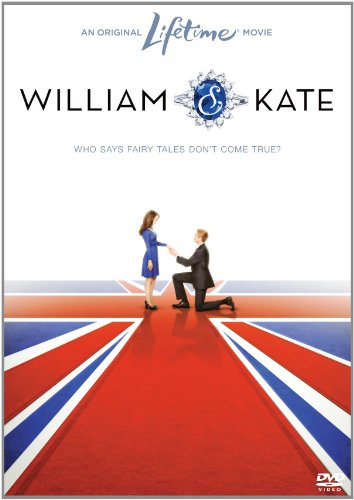
This is a biopic about two very obscure people whose relationship has escaped the attention of all but a select few. All kidding aside, what we have here is a dramatization of how the heir to the British throne (Nico Evers-Swindell) meets Kate Middleton (Camilla Luddington), and how their romance gradually blossoms. He arrives at university, and every blue-blooded young woman has him in her sights, but it is, naturally, the down-to-earth girl who draws him, the turning point being when she shows that she’s sexy as well as smart during a student fashion show. But the course of true love is not an easy one, especially with the pressures of the fishbowl life of royalty make themselves known.

If you’re wondering what on earth is the point of making a movie about something the entire planet has already feasted on (and is still doing so), then let me clear things up: there is no point. This is as bland a romance as was ever committed to film, hitting every tired cliché imaginable. Friends who discover they want to be more? Check. Bitchy Aristocrat Who Threatens to Steal the Heroine’s Man? Check. Third act falling out? Check. Last minute confession of love that saves everything? Check. Snore. The only tiny points of interest are the bits of unintentional comedy. So poor Ben Cross, in grotesque makeup, is stuck playing a Charles who is obviously about two feet shorter than the real thing. And do skip ahead to the final shot, where, after a montage of stock footage of African wildlife, William proposes against a hilariously fake sunset so whose colours are so supersaturated, the shot seems (but can’t possibly, can it?) to be echoing Gone with the Wind.

There has been a trend recently that has seen classic fairy tales being adapted, often with new, modern twists. While this is not a bad idea in itself, it seems that this trend is skipping along, arm in arm, with another trend in not only the movie business, but the entertainment industry as a whole: almost everything is being aimed at 13-year old girls. Beastly is the latest product of that union.

Beastly, as you can probably guess, is a new take on Beauty and the Beast. In this case, we get a modern retelling of the tale, with several plot points that mirror the now classic Disney animated version (though the alternate ending supplied in the Special Features has a moment that, shockingly, pays homage to the even more classic 1946 Jean Cocteau film). However, Beastly not only makes the decision to set its tale in a modern, urban setting, but to attempt to ground it in reality. This is a mistake. Why, you ask? Well, simply because it leads to all kinds of logic-defying moments and paper-thin character motivations which I will address shortly.

“The first rule of Fight Club is: you do not talk about Fight Club. The second rule of Fight Club is: you DO NOT talk about Fight Club!”

Now, let me be the millionth critic to break those rules… Back in 1997, David Fincher received a call from his agent, Josh Donen, who’d just finished Chuck Palahniuk's novel Fight Club and tried to talk Fincher into reading it. Even at a brisk 208 pages, Fincher passed on it, protesting being too busy to read books. So Donen read the Raymond K. Hessel scene over the phone, the one where Tyler puts the gun to the convenience store clerk’s head and tells him, "I know who you are. I know where you live. I'm keeping your license, and I'm going to check on you, Mister Raymond K. Hessel. In three months, and then in six months, and then in a year, and if you aren't in school on your way to being a veterinarian, you will be dead."

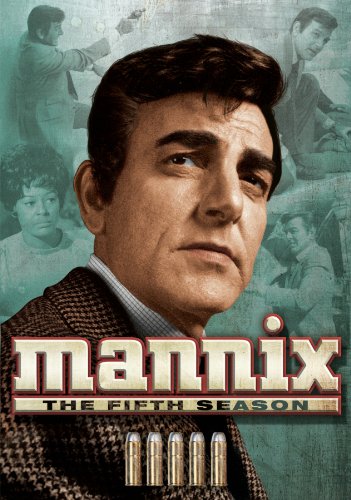
It sounds like nothing new. Hard-boiled detective uses computers and other forms of technology to solve cases. It isn’t anything new, except the detective in question is Joe Mannix, and the series started in 1967. The computer that Mannix used took up an entire room and was queried using cardboard punch cards. This wasn’t science fiction. We’re not talking some newly discovered Irwin Allen series. Mannix didn’t go after aliens or robots. This was a down-to-earth gritty detective show. Mike Connors played the tough-as-nails detective. He was perfect for the part and blended into the role seamlessly for 8 years.

The show was created by the team of Link and Levinson, who later gave us the detective in the rumpled raincoat, Columbo. It was groundbreaking in so many areas. While it might not be remembered today as one of the top detective shows, there can be no argument about the impact Mannix had on the genre. A decade later one of my favorite television detectives, Jim Rockford, would borrow rather heavily from Mannix. Like Rockford, Mannix was getting beat up a lot. They both had the same sense of style, wearing rather ugly sport jackets. Neither was afraid to bend the rules, or the law, when necessary. Again like Rockford, Mannix often falls for the wrong girl at the wrong time. Mannix was good with a gun and equally adept with his fists. The show received a ton of controversy from the start for the amount of violence it employed. Tame by today’s standards, Mannix was quite aggressive for its time. The joke was that the show’s producers mandated a fight or car chase every 15 minutes whether it was needed or not. I’m sure that wasn’t true, but nonetheless the show opened the floodgates for the detective shows that followed. In this first season, Mannix worked for the enigmatic detective agency, Intertect. They supplied him with the latest in modern technology and with his cases. His main company contact was Lou Wickersham, played by Joseph Campanella. Now Mannix is on his own and begins to resemble more and more these detectives that would eventually follow in his tire tracks.

Oh, how the rich can get into mischief. This DVD set is smack dab in the middle of Dynasty’s successful nine season run. The mudslinging, both literal and figurative, was at its height in this fifth season, and no $200 haircut or $1000 outfit was left unruffled by the various scandals and plots set into the web of these wealthy Denver residents. In fact, this season was the one and only time this series won a Golden Globe for best TV drama.

Both my age and lack of interest from the time I was between the ages of 1 to 5, when this show originally aired, betray any memories I may have of this program. Approaching it these days, I can clearly see how it was derivative of Dallas, its CBS rival (Dynasty having aired on ABC). If these wealthy folk are not in each other’s faces, they’re in each other’s beds.

World War II has just ended, and the recently discharged Robert De Niro hits New York on the prowl for sex. He runs up against WAC Liza Minnelli, and the more she resists his advances, the more determined he becomes. There is more: he is a saxophonist, and she (of course) is a singer). So begins a tempestuous relationship between two artists whose enormous talents and equally enormous personalities mean they can neither live with nor without each other.

The idea of Martin Scorsese taking on the form of the classic musical is so bizarre that it had to happen, and here it is. Scorsese’s conceit is ingenious: all the conventions are there (the meet cute, the songs, the artificial sets and colors), but they collide with the naturalism of the performances and the emotions. A perfect case in point: wandering the streets at night, De Niro sees a sailor and his girl perform a dance together. It is a classic musical moment, but the only sound is that of a train passing. It is a scene of extraordinary beauty, grit, and cinematic truth. And it belongs in an extraordinary film.