Drama

On first glance it might seem like a rather odd choice to have the likes of Billy Crystal direct a movie about the 1961 drive to beat Babe Ruth's sacred homerun record by teammates and friends Roger Maris and Mickey Mantle. When the film first aired on HBO,,I recall doing a bit of a double take myself. But, once you've seen the man talk about his memories of the game and the absolute reverence and respect he has for its history you begin to understand why he was the perfect choice to direct 61*

The film begins in more recent times. We are placed in the heat of the 1998 baseball season when Mark McGuire and Sammy Sosa were engaged in an eerily similar race to break Maris's 61 homerun mark. McGuire was the first to do it, coincidentally in a game against Sosa's Chicago team. Of course, at the time we didn't know that McGuire was juicing up and Sosa had a thing for corked bats. The Maris family was there to watch the record be broken, at least his children were. His widow had to watch from a hospital bed after having a health episode that very day. The family was gracious, and of course, it brought back memories of the 1961 season. It is here where the real story begins. The film recounts the friendship between Mantle and Maris, known as the M&M boys, and the film carries us through one of baseball's most tumultuous season.

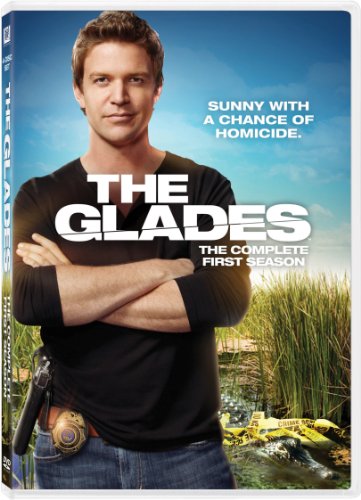
"Some say I don't play well with others. I was a damn good detective in Chicago until a disagreement with my boss encouraged me to pack it up and make a change. So I put The Windy City in my rearview and headed to the Sunshine State. Kick back. Play some golf. Work on my tan. Maybe write the occasional speeding ticket. Yeah... Well... that didn't work out."

"Look sharp, act sharp, be sharp. These guys coming out of prison? They're buff, been on drugs. You do what they teach you in the academy, you will die. Knucklehead wants to take your gun. So if it's you or some 300-pound naked guy on PCP, you take his ass down any way you can. You ride with me, you back your badge."

There probably isn't a group of people who have been profiled more than the men and women serving in the LAPD. It doesn't take a rocket scientist to figure out why. It's a large city with an incredibly diverse population. Oh, and it doesn't hurt any that Hollywood's a part of this particular asphalt jungle. So we get to see a lot of L.A. or New York cops on television. Even long before Jack Webb was asking for the facts and only the facts, the cops of L.A. have had more than their fair share of screen time in film and television. With that in mind, it is awfully difficult to do anything new with the LAPD.

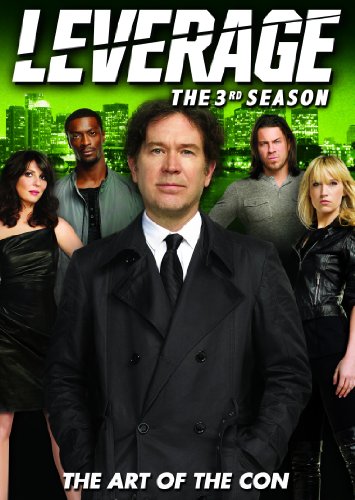
“Corporations… They have all the money. They have all the power, and they use it to make people like you go away. Right now you’re suffering under an enormous weight. We provide the Leverage.”

The series centers on Nathan Ford (Hutton), an ex-insurance investigator. His life was turned around when the very insurance company he recovered millions for turned down his child for treatment to keep her alive. He quits his lucrative job and forms a team to help people who are backed against the wall by large corporations. Cases include: a soldier looking to get medical care, a family ripped off by a mob boss, a company that has allowed dangerous chemicals to harm children, and a real estate mogul trying to take a church away from its congregation.

Jean-Hugues Anglade plays Zorg (yup, that's his name), a handyman living in a beach-front house, scribbling away quietly in his spare time. Not so quiet is his tempestuous affair with Betty (Béatrice Dalle in her debut), whose passions overwhelm both of them. First, she moves in on him with no warning. Then, when she discovers his writing, she decides they must move to Paris so he can have a career as a writer. To make sure Zorg complies, she burns his house to the ground. Once in Paris, her plans for him fall apart, and so, bit by bit, does she.


Writer/director Jean-Jacques Beineix has both audience and characters sweltering from the get-go, setting the tone for another French tale of amour fou. Angalde and Dalle inhabit their characters perfectly (though one might be forgive for wondering what exactly Zorg sees in Betty, beyond the physically obvious). The film is stylish and dramatic, and if, at 185 minutes, it outstays its welcomd, it doesn't do so by much.

Somewhere in my family’s history, I have a couple of odd branches. One of them leads to a former Pope (17th century I believe) and the other is even more curious, the mob. Specifically, it leads to the most popular gangster of them, Al Capone. It is pretty far down the branch, but interesting nevertheless. This leads us to our movie review for today: Kill the Irishman which deals with the real life story of Danny Greene, a man who escaped death countless times and took down the mob.

The period in time is Cleveland, Ohio circa 1975. Danny Greene (played by Ray Stevenson) is driving along and listening to his 8-track player. All of the sudden, his player starts to fizzle and then sparks fly. Danny realizes that the car is about to explode and gets out. He narrowly escapes death. He shouts, “It will take more than a few firecrackers to kill me.” Indeed it would.

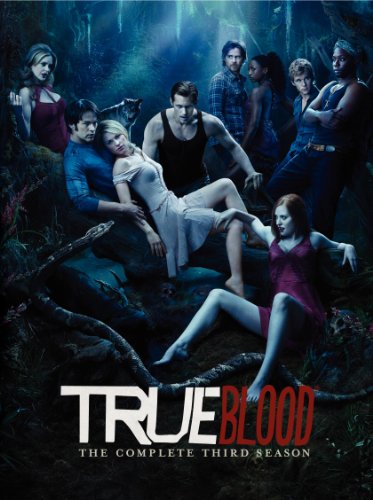
The other day, I was taking a look at my past reviews and I realized that I have been reviewing on this site for over six years. If you have been reading my reviews for that long and you aren’t married to me, bless you for sticking it out that long. Heck, I’ve only known my wife for almost 4 of those years. Anyhow, I have reviewed a plethora of subjects. One of the hardest things to do is to review a dvd season in the middle of its run. It becomes even harder when that show is True Blood

Before we go anywhere with Season 3, we need to take a step back in time and analyze the last couple of episodes of Season 2.

"What I do requires a certain mindset. I do assignments, designated targets. Some jobs need to look like accidents. Others must cast suspicion on someone else. A select few need to send a clear message. Pulling a trigger is easy. The best jobs are the ones nobody even knows you were there."

Arthur Bishop (Stratham) is an accomplished mechanic. But you don't want to bring your Toyota to him, unless you intend to use the car to get rid of a pesky spouse. You see, he's the kind of mechanic that fixes a different kind of problem. He removes unwanted people from your life. That's the basic set-up for this Simon West remake of the 1972 film that starred Charles Bronson as Bishop. That movie is a kind of classic, at least to Bronson fans. It's noted for a rather unique beginning where there is no dialog for the first 15 minutes of the movie. No such effect here. What you will find is an action-packed film to watch with the guys while you send the ladies off to watch the latest romantic comedy.

Imagine that ‘40s tough-guy detective Philip Marlowe tangled with a billionaire mad scientist, along with the usual quota of thugs, strippers and sarcastic cops. Now suppose that writer Erik Jendresen and director Tony Krantz decided – perhaps over a meal of magic mushrooms and moonshine – to hire a fancy-pants cinematographer, rewrite author Raymond Chandler, and offer up what they obviously hoped would make them film-noir Fellinis for the new century. That would be the apparent cultural intent of The Big Bang, a vividly photographed but otherwise inarticulate effort that offers in-jokes and stylistic novelties that might entertain trivia nuts seeking obscure references, but will otherwise addle anyone seeking coherence or consistency.

Let’s start with the obvious nods to author Chandler. The title reminds us of The Big Sleep, a Marlowe favorite. And the plot kicks off with a direct swipe from another Marlowe mystery, Farewell, My Lovely (also made under the title Murder, My Sweet). In each instance, a hulking goon barges in on our unsuspecting hero – played here by Antonio Banderas as a relatively prim gumshoe named Ned Cruz. The lovelorn lug needs to find his long-lost girlfriend, who promised to stay faithful while he was in prison.

I remember when I first heard that Dead Man Walking was coming out. The first news was that it was a death penalty film that involved Tim Robbins, Sean Penn and Susan Sarandon. I was not very keen to see the movie at that time. All three of these actors are known for their over-the-top liberal antics, and I just knew this was going to be nothing but a rant against the death penalty in the United States. But you see, that's why you just have to watch the movie sometimes. I'm not sure why I ended up going to see the film, but I did. I was very surprised to find that while it certainly was anti-death penalty, the movie showed both sides and didn't hit you on the head with its morality.

The film was based on the autobiography of Sister Helen Prejean (Sarandon). She had been asked to provide some conversation and possibly a little comfort to a death row inmate who was reaching out to the church. She went to meet Matthew Poncelet (Penn) and ended up his spiritual advisor during his final days. She helped to organize a legal team headed by Hilton Barber (Prosky) and tried to get him to take responsibility for what he had done so that he could die with some dignity. Along the way she was shaken by encounters with the parents of the couple that was brutally murdered by Poncelet and his partner. Their pain causes conflicts within her, but she continues to fight for the condemned man.