Posted in: Disc Reviews by Gino Sassani on December 1st, 2010
Most people remember the Bee Gees from their disco days and Saturday Night Fever. They sold a lot of records and achieved more fame than at any time in their careers. But the Brothers Gibb had been performing since the 1950's as children. They would headline automobile races and appear on local radio and television shows. They would quickly gain attention for their harmonies and eventually for their own songs. By 1967 they had begun to gain international attention, appearing on the national rock-and-roll shows. The brothers would become known then for their power ballads and love songs. Hits like “Words” and “How Can You Mend A Broken Heart” put their particularly unique voices on the charts around the world. But by the 1970's the sound was already beginning to fade. The Beatles had broken up, and the era of the vocal bands appeared to have died, at least for a time. They saw their stardom plummet almost overnight.
Then came the disco scene and the movie that launched both the Bee Gees and John Travolta into instant superstardom. The album of the film's soundtrack would go on to be the best selling album in history until Michael Jackson's “Thriller” came along. Before anyone knew it the world was in a disco frenzy, and for many of us who grew up in the 1970's, music died for a while.
Posted in: Disc Reviews by Gino Sassani on November 24th, 2010
When Peter Gabriel left the band Genesis to pursue his own solo career, it was the break of a lifetime for the band's drummer, Phil Collins. He took over the front-man duties with style, and before long Genesis was enjoying the most commercial success of their lives. Collins provided the smooth, easy-to-listen-to voice that Gabriel really never had. The tunes were instantly more recognizable and stuck with you for a long time. Of course, that meant that Collins would go out and work on that solo career as well. He didn't quite abandon Genesis and managed to keep both careers on the charts for quite a long time. If anything, the two entities became more and more the same. It's hard to distinguish the band's Invisible Touch from anything Collins released under his own name. No problem, as long as the records were selling. And sell they did.
We haven't heard a ton from Collins in recent years. He's always been there. He's toured under both names a few times in recent years. But the releases became less and less successful. Much of this can be traced to Collins' wish to become a one-man band. The last few CD's were produced in his own home studio with Phil filling in for most of the instruments. The lyrics lost much of their creativity, and it seemed that the British rocker had waded deep into stagnant waters. I guess it was time to try a different approach in the hopes of getting back on top.
Posted in: Disc Reviews by Archive Authors on October 31st, 2010
Classic Albums is a television series that airs on VH1. Each episode is basically a short documentary chronicling the genesis and creation of a, you guessed it, classic album. These stories are told through archival footage, video clips, and interviews with the band members, production people, along with fans and notables in the industry. This episode highlights two seminal albums by Canadian prog-rock legends Rush: 2112 and Moving Pictures.

The first part of the disc covers the early career of the band, going over their initial success and their first few albums. After their concept album Caress of Steel fizzled with critics and fans, Rush was given one last chance by their label, Mercury Records, to create an album that had mass appeal. The band, outraged and defiant, wrote 2112, a treatise on conformity featuring a dystopian world where individuality and music have been smothered out by a fascist religious order. Though the album’s influence and acknowledgement to Ayn Rand’s Anthem was the source of some controversy, its themes of non-conformity and individualism, along with the fact that the music itself had pushed conventional boundaries and was, to put it simply, awesome, ignited fans all over the world. 2112 is described on the disc as the first time the group sounded like Rush. It is the album that defined their sound and truly set up their careers for everything that would come after.
Posted in: Disc Reviews by Gino Sassani on October 28th, 2010
"So come up to the lab and see what's on the slab."
It was 1975. Teamsters President Jimmy Hoffa goes missing. South Vietnam falls. The Superdome opens in New Orleans. Elizabeth Seton becomes the first American saint. Patty Hearst ends her fugitive run. George Carlin hosts the first episode of Saturday Night Live. Phil Collins replaces Peter Gabriel as the lead in Genesis. And The Rocky Horror Picture Show opens to absolutely terrible box office numbers.
Posted in: Disc Reviews by William O'Donnell on October 27th, 2010
This 1972 concert film has been seldom seen since its first release (which was in 1974) and is only now experiencing its first official release onto DVD and Blu Ray (never having been previously released on home video either). Promoting their just released Exile on Main St. album, the setlist is a high energy service to their love of Chuck Berry inspired rock n roll and complete worship of American blues music.
Some bands have become so popular that they have been mythologized in the public eye. The Rolling Stones are no exception, though much of said mythology is less like the mysticism that follows acts like The Beatles, and more lies in the infamous debauchery of its members...be it the drug consumption, partying with Canada's first lady and/or their various (other?) sexual conquests (David Bowie too?). Never the less, it is concert films like this were it is a relief to see such larger than life celebrities churning out some sloppy rock n roll on stage with loads of youthful energy. Granted, they aren't kids at this point, but don't tell that to the stage persona of Mick Jagger as he trollops about in various sparkling, skinny jumpsuits.
Posted in: Disc Reviews by Michael Durr on October 20th, 2010
The album, Holy Diver was released on May 25th, 1983. It was Dio’s best work featuring two singles that would hit the American top 40. It would actually take a full year for the album to hit Gold and almost 6 years to reach Platinum status. However, Dio remains popular today and is still listened to around the world. With that said, it is my pleasure to bring you the last recorded concert of one Ronnie James Dio as he plays the Astoria Theatre in London, England.
October 22nd, 2005. It is the final stop of an 11 date British Tour and Dio has hit the Astoria Theatre in London along Charing Cross Road. However, despite the band playing there a multitude of times, this one was a little different. Earlier in the year, Rock Candy Records had re-released the epic Holy Diver and the band had to figure out a way to best promote the re-release. They came up with the idea of playing the entire album, front to back in order.
Posted in: Disc Reviews by Gino Sassani on September 30th, 2010
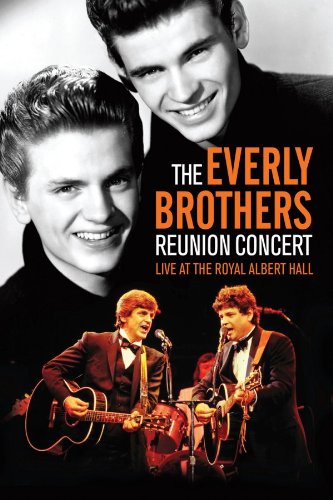
A lot of musical acts have broken up over the decades. Some of those breakups have included public feuds and plenty of hostility between the members. You would be hard-pressed to recall a breakup as public and hostile as when the Everly Brothers called it quits. If you think Glen Fry's "When hell freezes over" remark was pretty definitive, you should have been at the final Everly Brothers concert in 1973. The argument occurred on-stage in front of a live audience. Harsh words were exchanged, and a guitar got smashed. When Phil Everly walked off the stage to leave Don to finish the show alone, it would not only be the last time the brothers would appear on stage together in a decade. They would barely even speak to each other throughout most of that time. Lots of broken bands get back together for reunion tours and shows. But if you had to lay odds, the smart money would have bet against this brotherly duo ever singing together again. But, in 1983, a full ten years after the split, the smart money lost. The Everly Brothers reunited for a special concert at London's Royal Albert Hall in front of a sold-out crowd that included a ton of stars that credit the brothers as their own early inspirations. The cameras were on hand to capture this historic moment. Now you can own it on DVD.
Unlike many groups, the Everly Brothers were more than just a performing and writing duo. They sang together, often sharing the same microphone. Part of the act was the intimacy that the boys displayed in their concerts. It made those harmonies sound just that much tighter. So the question going into this performance was rather obvious. How would the acrimony and the years effect that style of performance? You would be very surprised to find that they didn't appear to miss a beat. This is one of those moments where it appears time stood still for those ten years and the boys managed to pick up at the moment before the famous fight. And it wasn't just a one night wonder. The brothers went forward after that night in London and continued to perform and record for over 20 more years. While they never found themselves back on top again -- the times had, of course changed -- the brothers continued to pack concert halls all over the world.
Posted in: Disc Reviews by Gino Sassani on September 30th, 2010
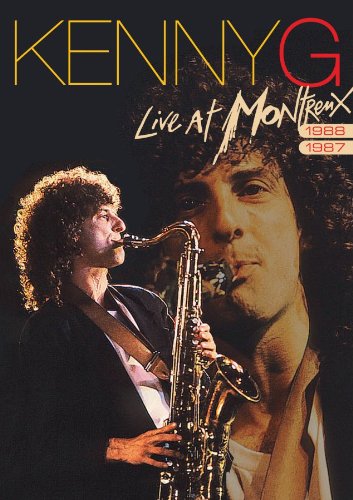
In 1987 Kenny G had released three albums already, but most of the world still didn't know who he was. He was already an accomplished musician who had played as part of Barry White's orchestra. He had dreams of taking his talents a bit further than that. But it's incredibly hard to get on the pop charts with instrumental music. It doesn't happen very often. That's not to say that it's unheard of. There have been a few instrumental pieces and musicians that have found huge success riding the international pop charts. Up until now Kenny G could not be counted as one of them.
All of that changed with the release of Duotones and the single Songbird. Both captivated the mainstream audiences and began to garner serious attention for the sax player. One of the results of that new-found recognition was an introduction to the world famous Montreux Jazz Festival. You had to show something to be invited to that stage. Kenny G appeared there in both 1987 and 1988. This DVD captures both of those performances. Fans won't need much of an inducement to pick up the release. It was an historic moment for the musician and his mostly Seattle-based band. It was the introduction of Kenny G to the world stage.
Posted in: Disc Reviews by William O'Donnell on September 15th, 2010
This Blu Ray is the merging of two previously released concert DVDs. One taking place in Boston comes from their reunion tours of recent years, and the other is an extremely rare acoustic appearance at the Newport Folk Festival. By having these combined into one package makes for a nice compare and contrast for both fans and newcomers of this highly influential, alternative rock band. Both setlists are enormous and ensure that this is a must buy for longtime fans.
The Boston “electric” show is much truer to the Pixies sound, as always orchestrated by frontman Black Francis (aka Frank Black; aka Charles Michael Kittridge Thompson IV). This show demonstrates the band in top form as they ease into the frenetic punk energy they've had since their 1980s debut. Meanwhile the acoustic show makes for an interesting experiment but I have a feeling that only true fans will be able to listen past the new arrangements and strange lead guitar changes to hear what they are meaning to play in all of their “classic” tunes.
Posted in: Disc Reviews by Michael Durr on September 7th, 2010
Black Label Society formed officially in 1998 and released their first album Sonic Brew in late October. At first, the record was only received in Japan but later they found an American label in late spring of the following year. They would go on to produce many albums, tour the world and basically generate rock n roll and mayhem wherever they went. Eagle Vision decided to bring concert footage to Blu-Ray from their European Tour in 2005. It is simply called Doom Troopin Live.
In 2005, Black Label Society produced their sixth studio album entitled Mafia. It was a commercial success and sold over a quarter of a million copies. This would be the only record that the band would release under the label, Artemis Records. As per their usual promotion, they toured to sell the album to their die hard fans. This time they traveled to Europe and did a series of concerts. This disc focuses primarily on the Paris Chapter with a few songs from their infamous stop at the Astoria.