Music / Concert

My taste in music is not exactly all over the place. I like rock, hard rock. Sure, I can listen to a country tune or two or dabble in some Mozart but if the bass is bumping and the guitarists are having seizures on the strings, I'm good to go. So when the owner of this site asked if I would do a few music blu-rays as a change of pace, I was worried and excited at the same time. Music in Blu-ray is an amazing experience but if I didn't like the music, not so much. But I was still eager when I opened the first one: Jane's Addiction: Live Voodoo.

It's Halloween. The night of October 31st, 2009. The place is the Voodoo Experience (also called Voodoo fest) in New Orleans. On the previous night, such acts as the Silversun Pickups and Eminem took the stage. The headline act for tonight is Kiss but there is one other band that needs to take the stage. Their name is Jane's Addiction. The band lineup is a little surprising but the sound is simply electric.

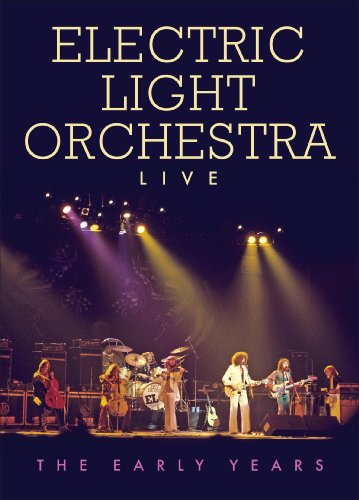
In the late 1960's three musicians came together with an idea. It was a somewhat unconventional idea. Roy Wood and Bev Bevan were part of the band The Move when they met up with Jeff Lynne from The Idle Race. The three hit it off almost instantly. So much so that before long Lynne would also become a member of The Move so that he could work with Wood and Bevan. But that wasn't going to be the ultimate goal. That unconventional idea that the three had involved combining rock and roll with classical music. Of course, other bands had done orchestral arrangements, most notably, The Beatles. But their idea was to fuse the concepts more integrally together. The idea was to have live violins and cellos as part of the actual band itself. Lynne would once describe the concept as picking up where The Beatles had left off. Together they invented a new way to rock "n" roll. That invention was The Electric Light Orchestra, or ELO to the fans.

The band started with a bang. The first album, while not a huge commercial success received more than its share of attention. But band squabbles would almost doom this ambitious project before it got off the ground. Roy Wood left the band to form his own and took some members with him. It looked bleak for the struggling concept. But that might have been the best thing that could have happened. Jeff Lynne would become the controlling force and the band would go on to enjoy commercial success to go along with those critical appreciations. The band's second album was called No Answer, but it wasn't really intended to carry the title. A secretary with the record company was assigned to contact Jeff Lynne to get the correct album title. He wasn't home. Naturally, the secretary made the notation "no answer". The notation was misinterpreted as the album title, and the mistake would be a permanent entry in the band's discology.

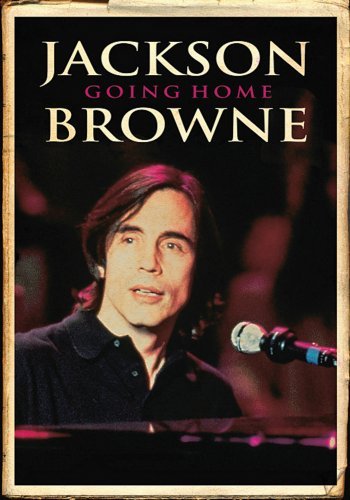
Mention the name Jackson Browne and one thinks less of the performances and more of the music itself. While he never achieved quite the fame of many of his peers, his style and songwriting has had a lasting impact on some of the biggest names in the music industry. He was part of the whole Troubadour scene in the early 1970's where he hung out with the likes of James Taylor, The Eagles, and other notable artists who were about to find their golden tickets to larger stages and the crowds, money, and fame that went along with them. The likes of Crosby, Stills, & Nash have been inspired both by his ability to write and his passion for the causes he believes in. In the 20 years from 1979 to 1999 he organized and performed at over 1000 benefit concerts. It's not so much an accomplishment to be willing to give up your own time for the causes dear to your heart. Brown has a reputation in the business of being someone they can't say no to. His biggest cause has been his stand against nuclear power plants. Agree with him or not, Browne used his fame in a responsible way that today's artists can learn from. He did his preaching at the events and not so much at his paying gigs.

"For more than two decades, Jackson Browne has been one of the most compelling artists in popular music. In August of 1994, The Disney Channel presented Jackson Browne: Going Home, a chronicle of Jackson's remarkable career. Jackson Browne: Going Home contains interviews, performances, and rare footage spanning twenty-five years featuring Don Henley, Bonnie Raitt, David Crosby, Graham Nash, The Eagles, David Lindley, Jennifer Warnes and many more."

Living just a couple of hours from Gainesville, Florida, it really is easy to sit down and get yourself in the mood for some Tom Petty. Look, the boy is never going to win any beauty contests, and his voice sounds like he went to the Bob Dylan school of vocals. But there's no denying that for a few decades Tom Petty, often along with those Heartbreakers, wrote some of the most recognizable American anthem music south of Ashbury Park, New Jersey. But it wasn't always hit songs and world tours for the college town natives. Today they might have never made it in a music business that demands immediate success and gold records. It was the third album that gave this band its break-out hits and fame: Damn The Torpedoes.

While Tom Petty & The Heartbreakers were already generating some momentum in England where they broke sooner than their native United States, Damn The Torpedoes was an unmistakable milestone for the group. The musicians included: Mike Campbell on guitars, Ron Blair on bass, Stan Lynch on drums, and, of course Tom Petty on guitars and vocals. It was produced by Jimmy Iovine, who is generally credited with helping the band develop their signature sound. Released in 1979, the album contained three hit singles, with Refuge and Don't Do Me Like That scoring huge hits in the United States.

The rock gods must have been smiling when Keith Emerson, Greg Lake, and Carl Palmer journeyed from their perspective corners of the music world and combined to form the band Emerson, Lake & Palmer, or merely ELP to the fans. Keith Emerson had made quite a name for himself with his manic organ riffs in working in the band The Nice. Greg Lake was busy with the band King Crimson where he worked with long-time ELP collaborator Peter Sinfield. Carl Palmer was the youngest member of the group and had played for several bands before meeting up with his eventual ELP bandmates. Together they would help to define an entire genre of music. This new progressive rock era would be recognized not by hit singles and AM radio play; instead this music would be enjoyed for its virtuosity and complexity. In all of the years the band enjoyed success, they've released less than a handful of what the industry defines as a single. Yet, anyone who has ever seriously picked up an instrument in the last 40 years knows exactly who they are.

The band formed in 1970, and by the end of that year they were already doing some quite ambitious things. One of the most ambitious and most memorable was their modernization of Mussorky's wonderful Pictures At An Exhibition. The piece was actually originally written by the classical composer as just a piano piece. It was one of the first classical works I had ever fallen in love with. Unfortunately, that original arrangement is rare. I find that most people are unaware of the composer's original intent.  It strikes me as odd that there are people who call themselves purists who have ranted about the reinvention of this music by ELP. It's a bit hypocritical when you consider that the version that they likely enjoy was also tampered with and not what the composer intended for the work. When Emerson Lake & Palmer took on the collection of works, they added a modern spin that included MOOG synthesizer solos and even lyrics written and performed by Greg Lake. The beauty is that these new elements were quite faithful to the subject and fit as if they had always belonged. It's no less sacrilegious than the orchestrated version you've likely heard, which is enjoyed by the elitists.

"Welcome back my friends to the show that never ends. We're so glad you could attend. Come inside. Come inside."

The rock gods must have been smiling when Keith Emerson, Greg Lake, and Carl Palmer journeyed from their perspective corners of the music world and combined to form the band Emerson, Lake & Palmer, or merely ELP to the fans. Keith Emerson had made quite a name for himself with his manic organ riffs while working in the band The Nice. Greg Lake was busy with the band King Crimson where he worked with long-time ELP collaborator Peter Sinfield. Carl Palmer was the youngest member of the group and had played for several bands before meeting up with his eventual ELP bandmates. Together they would help to define an entire genre of music. This new progressive rock era would be recognized not by hit singles and AM radio play. Instead this music would be enjoyed for its virtuosity and complexity. In all of the years the band enjoyed success, they've released less than a handful of what the industry defines as a single. Yet, anyone who has ever seriously picked up an instrument in the last 40 years knows exactly who they are.

"Oh, I've seen fire and I've seen rain. I've seen sunny days that I thought would never end. I've seen lonely times when I could not find a friend. But I always thought that I'd see you again."

After nearly 40 years since they had worked together, James Taylor and Carole King finally see each other again, at least on stage. The two worked together for about two years from 1970 to 1972. They shared each other's songs and played off and on sharing the same musicians as friends and backup band. The era was an important time for each of these artists. It was the time when they were working on what would become their breakout albums and stardom down the road. For Carole King it was her Tapestry album, and for James Taylor it was Sweet Baby James. Part of the memories they created together was a series of gigs at L.A.'s famed Troubadour Club in 1971. This release finds the duo once again back at the Troubadour Club, only 40 years later, 40 years older, and 40 years wealthier. It's a throwback to an earlier time both for these musicians and the fans that drove them to their inevitable stardom.

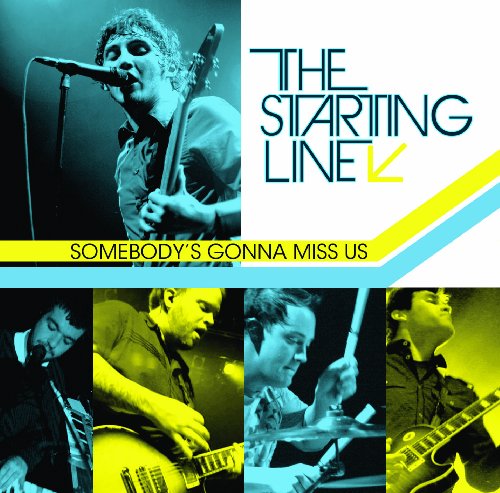
The title, “Somebody`s Gonna Miss Us” is cute but also rings true. This is not a Documentary that details why this band rocked the entire music world, because they did not. This film shows how a Pop Punk outfit from Pennsyvania arrived at the right time with a lot of energy, the willingness to tour endlessly and made some tunes that people genuinely loved.The film bounces back and forth between the boys in the band giving their history in their own words, as well as chunk by chunk (several days at a time) coverage of their final tour. Having this story told entirely by the band is refreshing as it makes for better fanfare. This CD/DVD combo is indeed entirely for the fans, the ones who will “miss them” as it were.

This is like a best-of compilation of the musical acts who were a part of the Secret Policeman's Ball(s) that were put on by famous English comedians and rockstars for the benefit of Amnesty International that plays out like a feature. There is no commentary between the acts, only a fade to black and applause.

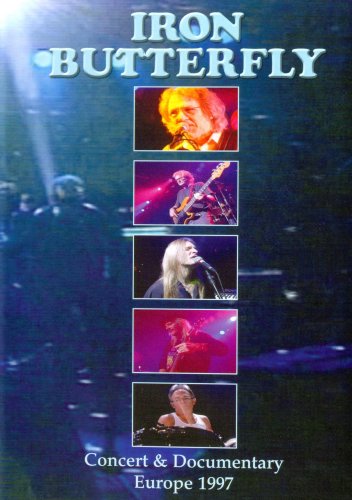
Unless you were around for Iron Butterfly's big boom in 1968, you might remember this band best as the composers of that song the organ player plays for 17 minutes in that episode of The Simpsons in which Bart sells his soul. Yes, this is how I knew them for much of my youth, and I thought of them best then too.

This DVD documents a 1997 concert of Iron Butterfly, and it did little to sway my fond memories of what was a very good Simpsons episode that was. My apologies...I shall leave that Fox program (not to be mentioned again) and focus on the band that is most famous for the 17 minute plus psychedelic adventure that is In A Gadda Da Vida.