Music / Concert

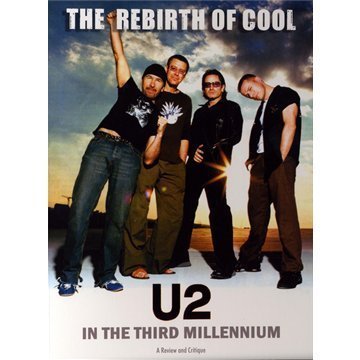
U2 was formed in 1976. Back then they were just teenagers figuring out how to play their instruments. But by the mid-80’s, they were one of the best bands in the world. Currently, they have sold more than 145 million albums worldwide and have won 22 Grammy awards. Rolling Stone has them listed as #22 in the greatest artists of all time. They appear frequently at the head of many human rights causes promoting social justice like Bono’s DATA (Debt, AIDS, Trade in Africa) campaign. The Rebirth of Cool: U2 in the Third Millennium takes a look at the band from the failed release of “Pop” to their reborn commercial success in 2000 with “All That You Can’t Leave Behind” and continued superstar greatness in “How to Dismantle an Atomic Bomb” in 2004.

“Pop” was released in March of 1997. It was an attempt at combining techno, dance and eletronica with U2’s traditional hard rock sound. It was unfortunately a failure in the overall scheme of things. It sold the least among any U2 album (1+ million in the US, 2+ million worldwide) and distanced a lot of fans from the band. U2 knew they had to take a different direction. They quite simply had to reapply for the job of the best band in the world.

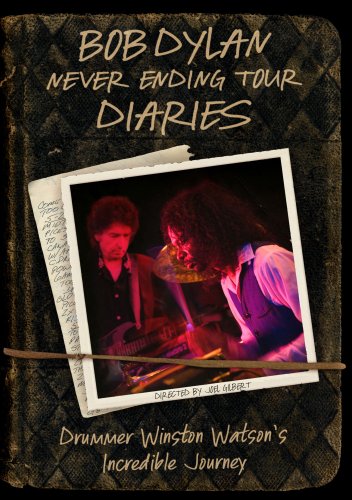
Bob Dylan: Never Ending Tour Diaries outlines the five year journey of tour drummer Winston Watson. The documentary is limited to Watson’s perspective with great super 8 tour footage spliced into his interviews.  Watson toured with Bob Dylan for over 400 shows and helped Dylan launch his “Never Ending Tour” which continues to this day.  Winston Watson’s charisma and originality make him very likeable, which is crucial when chronicling an unheard perspective. This is not a typical rock documentary; there is very little music and no music videos at all.  However, what this film lacks in typical form, it makes up with entertaining stories and great footage.


The Kings: Anatomy of a One-Hit Wonder tells the story of a Canadian rock band's rise to fame. The documentary discusses the creation of their one hit "This Beat Goes On/Switchin' to Glide" as well as donates a significant amount of time to the aging rockers. The original band members all provide interviews throughout the film: David Diamond (lead vocals, bass), Sonny Keyes (keyboards, vocals), Max Styles (drums) and Mister Zero (guitar). This is an example of a rock documentary of a group that had some minor success and whose claim to fame is playing on Dick Clarke's American Bandstand.

The overall documentary is depressing. All of the band members are now entering their sixties and most of the footage is them reliving their glory years of touring. The music video montage of "This Beat Goes On/Switchin' to Glide" at the beginning of the film is well done and captures the essence of the band in five minutes. However, once the reality of the band not having any other credentials sets in, the question arises. Why make a documentary? The public seems to be infatuated with the "where they are now" VH1 style program. Unfortunately, most viewers could care less what the Kings are up to. The documentary runs roughly over 40 minutes in length and audiences ask another question. That's it? This question seems to have plagued the band since its inception in the late 1970's.

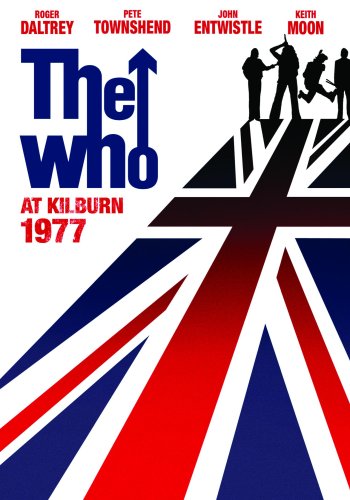
“On 15 December, 1977, after a hiatus of over a year, The Who assembled at Gaumont State Theater in Kilburn, North London, to record a concert for Jeff Stein’s documentary film, The Kids Are Alright. Shot before a select invited audience it would turn out to be Keith Moon’s last, but one live performance. Unusual for live rock at the time, it was shot on 35mm film by six cameras and professionally recorded on a 16 track recorder. Never seen before, the film rested in The Who’s vault for 30 years.”

What young 1970’s pup, learning to play a guitar for the first time, didn’t, at one time or another, attempt to imitate Pete Townsend’s windmill power chord strum? I count myself in that group. While I was not a very dedicated Who fan, I had an appreciation for the musicianship. There were still songs like Pinball Wizard and Behind Blue Eyes that I would embrace as if they were my own anthems in those days. It would be hard to deny that The Who is one of the most successful rock bands in history. Part of the original British Invasion of the 1960’s, there are few such acts that are even still around, let alone able to fill the huge stadiums and halls of Rock’s yesteryears. Their songs have become anthems, and their antics have become legend. The band wrote the soundtrack for an entire generation, and proudly touted the fact in aptly named song, My Generation. Banned from all Holiday Inns at one time for their well publicized trashing of rooms, they weren’t any easier on their own instruments. Smashing their instruments and amps on stage became a staple, for a while, of the whole Who experience. They’ve inspired a legion of superstars, and now after more than 40 years of rocking, they soldier on. Their influence goes beyond just rock music. All three of the CSI franchise shows sport Who songs for their opening credit sequences. They’ve been lampooned on South Park and The Simpsons. They were once referred to as The Band That Wouldn’t Go Away, and that was more than 30 years ago.

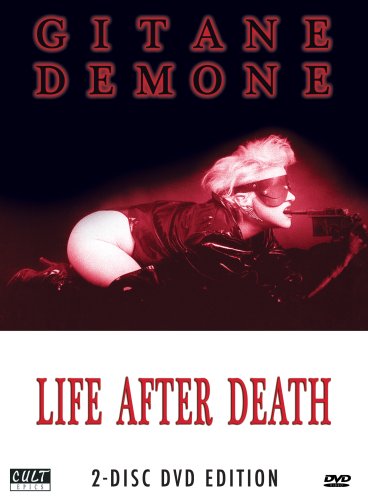
Gitane Demone was one of the lead singers for seminal deathrock band Christian Death before going solo in 1989.  This 2-DVD set is a record of her various solo efforts, tracking various incarnations, most notoriously (and most prominently featured in the release's packaging) being the fetish performances for the likes of the DeMask club and Skin Two magazine. Present here is a mix of television interviews, one video, and a raft of live footage.

Given the necessarily raw, semi-underground nature of the material (more one the picture and sound quality below), this is not really a release for the previously unconverted. The fuzzy picture and muzzy sound is not likely to draw in viewers who don't already have an investment in the subject. That said, the interviews are interesting, with Demone, in most articulate fashion, clearly situating herself within various scenes and phases of her life, and explaining how all this has affected her art. As for those who are fans, this is a very valuable record of a decade of performances.

What ever happened to Shawn Mullins?

I often mull over this question whenever I hear him sing, “Ev-e-ry thing’s gonna be all right… Rockabye! Rockabye!” on the radio. The dude lands in the late nineties with this song that has maybe the most unimaginative chorus in the history of pop music, and then he bolts on us, leaving that small remnant to get stuck in our collective heads for the rest of our humdrum lives.

No, this is not the movie that promised to show us men turned inside out. It is, in fact, a curious mixture of genocide documentary and concert film. The performance is by rockers System of a Down. The lead singer’s grandparents were survivors of the Armenian Genocide, and so that atrocity is the primary focus of the film, which cuts between concert footage, personal interviews, grisly documents and academic talking heads. By extension, the film also takes a stand against all forms of genocide, and is an explicit invitation to the audience to get involved in the fight for justice.

The mixture of elements is unorthodox, to put it mildly, and the effect is a bit bizarre. There are many moving, heartfelt and sharply observed moments, but one is also left with the feeling of having watched well-meaning but overly earnest and slightly naive agit-prop. Then again, it’s hard to resent the important work the film is trying to do.

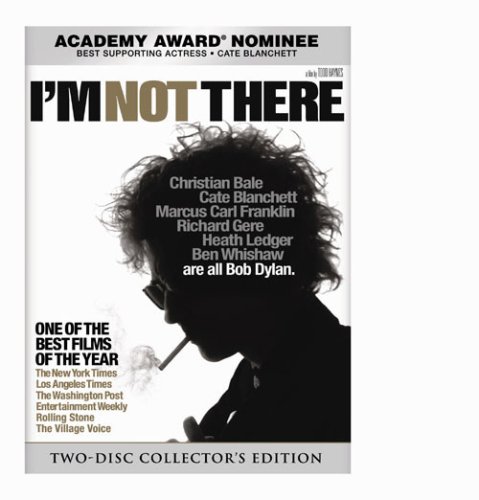
Todd Haynes continues to dazzle and amaze with his body of work. In Velvet Goldmine, he told the story of a fictitious glam-rock band in David Bowie/Ziggy Stardust style. Far From Heaven found him taking the Douglas Sirk films of the ‘50s into a nontraditional turn. In his follow-up film I’m Not There, his first directorial effect in five years, Haynes examines the persona and essence of Bob Dylan without actually really using the name or the words together at all in the film in a film released in 2007, where features like No Country For Old Men and There Will Be Blood earned a slew of awards, I’m Not There was an understated gem, and yet summing it up is a little difficult.

First off, while I’m Not There is a film inspired by the life of Bob Dylan, semantically it’s not a biopic. It examines the more notable images created by Dylan; one of the adolescent who portrayed himself to be the poor white kid who liked the work of Woody Guthrie and who, ironically enough, is named Woody (Marcus Carl Franklin, Be Kind Rewind). Arthur Rimbaud (Ben Whishaw, Layer Cake) is the mid-‘60s Dylan and de facto narrator whose words appear to be lifted from magazine articles of the era; Jack Rollins (Christian Bale, Batman Begins) is the folk hero and later born-again Christian-era Dylan; ironically Rollins is played by Robbie Clark (Heath Ledger, Brokeback Mountain), who watches his marriage deteriorate while he deals with the period of fame he has wrought; and Cate Blanchett (Elizabeth) plays the electric Dylan, touring in England, addicted to pills and alienating his acoustic fans. In his later years, Billy the Kid (Richard Gere, Pretty Woman) plays Dylan as the aging anonymous hero in the west, which in a way Dylan seems to want to do in reality. While none of these interpretations can be claimed to be accurate, they are, as Haynes says, fleeting glimpses of the image that Dylan created for himself. Using surrealistic and style choices influenced by Fellini and Goddard, Haynes helps make the worlds of Dylan all the more emotionally affecting.

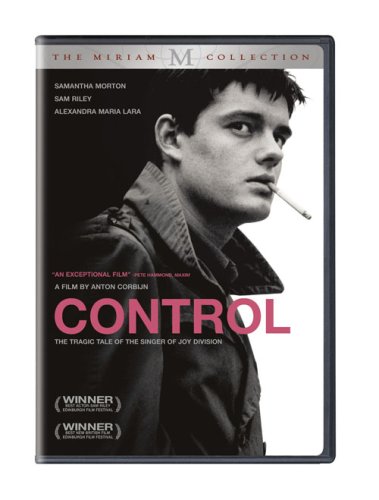
It’s nice when a movie lives up to its expectations and even surpasses them because it rarely seems to happen anymore. Such is the case with Anton Corbijn’s Ian Curtis bio-pic, Control.

I’ve been waiting to see Control for a long time. From the start, the film sounded interesting, since I am a huge fan of post-punk alternative rock music, the genre that Ian Curtis and Joy Division practically invented in the late 1970’s. But when I heard that long-time band collaborator and renowned music video director Anton Corbijn was directing the film, my anticipation rose to even higher levels.

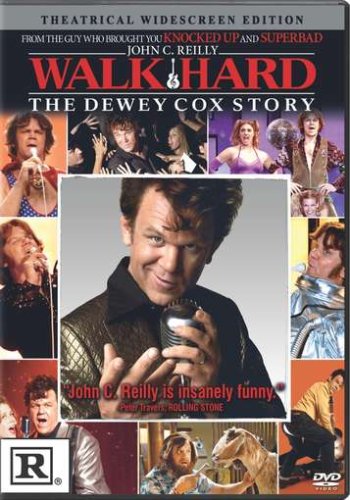
Honestly, I don’t know what the bigger tragedy is, the fact that John C. Reilly has been a funny performer for years, or the fact that it’s taken guys like Judd Apatow and Adam McKay a chance to show off his comedic talent. For those who don’t know, Reilly was in a hilarious ten-minute blooper reel in Boogie Nights which showed that he could improvise with the best of them. The guy also played Bigfoot in an episode of the Tenacious D show that aired on HBO in the mid ‘90s. But sure, put him in Chicago where he was nominated for an Oscar or in ensemble films directed by some of film’s greatest voices. His true love, that which gives him much joy and pleasure, appears to be when he’s goofing around, like he does in Walk Hard: The Dewey Cox Story.

Walk Hard was co-written by Judd Apatow, whom you might have heard of. Any R-rated comedy that has been released in the last 18 months to any sort of popular appeal has had some sort of involvement by the writer-producer-director. Jake Kasdan (Orange County) was the other writer and directed the film, where Reilly plays Dewey. He grew up in the shadow of his brother, who died after a tragic machete incident. Dewey grew up and had a hit early in his life, but then went through the usual period of drugs and substance abuse before his career went through a rebirth of sorts. If it sounds like the usual biopic treatment of a musical icon, that’s what it is, and what Apatow and Kasdan manage to do is stick a thumb in the collective eye of films like Ray and Walk the Line, as those films possess a slight precociousness that deserves lampooning of some sort. Reilly plays Dewey as a fifteen-year-old. The guy is over 40, OK? So yeah, that’s funny. When Dewey’s drummer Sam (Tim Meadows, Semi-Pro) shows him what drugs are like, it’s done with tongue firmly planted in cheek. Dewey’s various relationship issues are shown, starting from his first wife Edith (Kristen Wiig, Saturday Night Live) who seems to be pregnant in every scene as she puts down Dewey, to his second wife Edith (Jenna Fischer, The Office), who is a born-again Christian and hopes to get Dewey the same way. Every girl, boy, rock and stick in between is shown too.