Sci-Fi / Fantasy

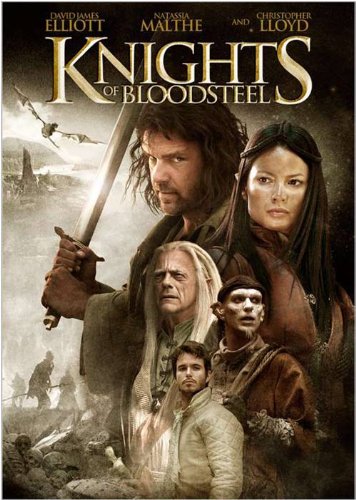
A monstrous emperor sets out his orcs to find an ancient item that would grant him enormous power. Goblins come out of the woodwork as the side of good assembles a small group of humans, elves and other species to seek out this same item and end the evil emperor's quest for domination. Sound familiar? It should, after all, this is the Fellowship of the...err...Knights of Bloodsteel.

Using what must have been the leftovers at the Lord of the Rings yard sale, the effects people have slapped on pointed ears and noises onto as many extras and actors they could find in an attempt to resurrect the enormous majesty of Middle-Earth (of course it goes by some other magical sounding, gibberish name here). Everyone babbles endlessly about elves this and goblins that to make the fantasy realm become more believable, but it becomes terribly inane tiresome by about the 18th time something “fantasy” is brought up in the first 5 minutes.

The idea of a British television series being adapted for American screens is really nothing new. Lately a lot has been written about the phenomenon as if it’s some recent trendy invasion of English telly. We’ve been watching British hits since at least the 1970’s. In those days it was the sit-com that got the most attention from across the pond. Till Death Do Us Part and Steptoe And Son became All In The Family and Sanford And Son, respectively. Both shows became even bigger hits here in the states and are remembered by more folks on both continents than the originals today. The latest hit from England was The Office. Unfortunately, Life On Mars was never destined to join those Anglo/American success stories.

Detective Sam Tyler (O’Mara) is hot in pursuit of a serial killer who has abducted his partner and lover. When he steps out of his SUV he is struck by an oncoming car. On his ipod David Bowie is singing his obscure track, Life On Mars. When Tyler wakes up he can still hear the song in the background. But this time it’s coming from an 8-track deck in a mint vintage 1970’s car. Turns out there’s a reason the car is so cherry. It’s actually brand spankin’ new, and Tyler is no longer in 2008. It’s 1973. Strangely, he still has his identity here. A police officer identifies the car as his. At his 125th Precinct, he’s recognized as the transfer from Hyde. His disorientation earns him a few introductory sucker punches to the gut by his new boss Lt. Gene Hunt (Keitel) who doesn’t like people coming into his station house barking out orders. It turns out he’s joined a special forces kind of team that also includes Detective Ray Carling (Imperioli) who feels passed over by Tyler. He was in line to be the new second in command. Detective Chris Skelton (Murphy) is a green detective who warms us fastest to Tyler. Also working more or less for the team is policewoman Annie Norris (Mol) better known in the squad as “No Nuts Norris”, because she acts more like a man, believing that a woman can be a detective. It seems whatever powers that have planted Tyler here have thought of everything. He has an apartment with a free spirit hippie neighbor named Windy (Ferrin), appropriately named as she kind of breezes her way in and out of his life. Eventually Tyler decides to temporarily accept his situation, hoping to figure out why he’s here and how he can get back home.

“In the future, a computer program called Skynet will declare war on the human race. Machines have traveled back in time taking human form to terminate John Connor, the future leader of the resistance; Sarah Connor, John’s mother, teacher, and protector; Cameron, a terminator reprogrammed to defend them at all costs; Derek Reese, John’s uncle and a commanding officer with the resistance. Together they fight to stop Skynet from ever being created. The battle for our tomorrow starts today.”

Well actually, to be perfectly honest, it started back in October of 1984 with the release of James Cameron’s blockbuster Terminator. It was the story of a future Armageddon and a machine sent back in time to make sure it happens by killing the mother of the unborn leader of a future resistance. No one saw the success coming, but come it did. With just over a $6 million budget the film brought in over $38 million in the domestic take. That’s not a lot by today’s mega tent pole release standards, but it was huge in 1984. Add another $40 million in overseas box office, and you get quite a return on that money. And so as inevitable as the film’s prophesized Doomsday, a sequel was unavoidable. The film also made a star of an Austrian born bodybuilder who had only television and one film to his credit by that time. A star and a huge franchise was born. The man behind the film, James Cameron, was just as unknown, having helmed a cheesy Piranha sequel as pretty much his only calling card. Who knew then that Arnold Schwarzenegger, James Cameron, and the Terminator universe would all go on to become household names. Cameron would go on to bring us Aliens and Titanic. Arnie would become THE action star of the 90’s and end up, of all places, as the Governor of California. Only in America.

“I’m the best there is at what I do and what I do isn’t very nice.”

So what do you do after three successful, if not critically acclaimed, X-Men feature films that brought in over a billion dollars total when you factor in domestic and foreign box office and home video sales? It was getting a bit expensive to bring back such a large and growing in popularity cast. Even if you wanted to spend the money for such an ensemble, it gets awfully difficult to write effectively for so many characters at once. Someone’s going to get the dark end of the spotlight. Hurt feelings aside, you can’t continue to please such a wide diverse group of fans. Bryan Singer did such a great job in the balancing act for the first two that it looked like maybe this could go on forever. But Brett Ratner, who is used to working with teams of two, put a fork in the franchise for many, and it seemed we’d seen the last of our favorite mutants. Honestly, I didn’t think the third film was all that bad, but that’s just me. I was never looking for anything more than an amusement park ride for my theater ticket, and that’s exactly what I got all three times. But these issues remain, as does the question, where do you go from there?

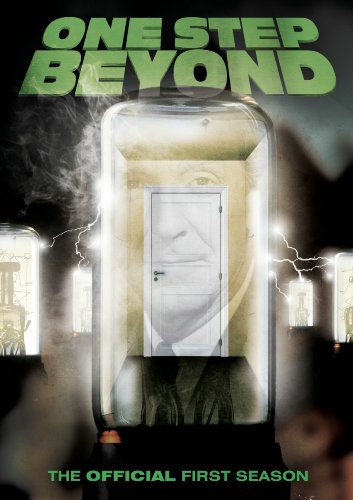
“About this startling new show as a whole, we say this. When ordinary people of our real world encounter the chilling world of the unknown, when normal men and women take that one step beyond, that we think is incomprable drama, all the more memorable and amazing because these strange adventures are true, absolutely true.”

The stories from One Step Beyond were reportedly true, but to paraphrase a rather disingenuous former president, it all depends on what your definition of true is. In interviews many of the writers later admitted that much of the material came from a couple of reference books. The idea was a truly reported one, but the story was pretty much created. The series was directed and hosted by John Newland and ran from 1959 to 1961. The shows were half hour and sponsored by Alcoa. In syndication the series was often called Alcoa Presents: One Step Beyond. In 1978 the original creative team of creator Merwin Gerard and host/director Newland attempted to revise the series calling it The Next Step Beyond. But the show was not picked up.

"Space...The Final Frontier. These are the voyages of the Starship Enterprise. Its 5-year mission: to explore strange new worlds, to seek out new life and new civilizations, to boldly go where no man has gone before !"

Paramount was bold indeed when they undertook the remaster project of the original series. Not only did they clean up the prints, but they took the decidedly risky option of redoing most of the f/x shots from the original prints. We all know just how cheesy the old work looked when compared to today’s computer abilities. You could see a box around spacecraft that allowed the obvious cutout to maneuver through a cardboard star field. There were often mixups where phaser shots would be used for photon torpedo commands and the opposite. The planets often utilized matte paintings that look somewhat ridiculous now. We forgave these flaws with a complete understanding of the limitations the crew had at the time. While Star Trek showed us computers that were remarkably similar to the PC’s we use today, down to the floppy drives of our own yesteryear, the use of computers to create f/x was still many years away. So Paramount decided to “fix” these “flaws” and make much of the show look like it might have had it been produced today. It was a serious risk because of the extreme possessiveness fans have for these kinds of shows. Just ask George Lucas how much fans like their sci-fi tinkered with. The project encompassed a few years, and the results are quite attractive. But how do they stand up for the fans?

“For those of you just joining us: What you are looking at is the work of ZFT, a terrorist organization responsible for at least a half a dozen biological attacks over the last several months. Everything we know thus far can be found in your packets (or Blu-rays), including a copy of their manifesto which elucidates their ideology and their methods. Which boils down to the following: Attempting to provoke or prepare for a war. With who? That’s the question, isn’t it? What we do know is that these bizarre acts seem to be increasing in frequency and that their targets are unpredictable and therefore unprotectable. Those of you assembled in this room now have a clear-cut goal…”

That goal is to rush out and pick up the high definition, Blu-ray release of the first season of JJ Abrams latest television enigma, Fringe.

“I wish. I wish the Man In The Moon for health and happiness and laughter soon.

From morning to night He sleeps so bright. He’s always there, The Man In The Moon.”

Star Trek – The Original Series:

"Space...The Final Frontier. These are the voyages of the Starship Enterprise. Its five year mission: to explore strange new worlds, to seek out new life and new civilizations, to boldly go where no man has gone before!"

Look up in the sky. It’s a bird. It’s a plane. No, it’s…. well, Clark Kent. When Smallville was first developed for television, the showrunners made a few conscious decisions that have, for the most part, been kept for the show’s first 8 seasons. There was a strict “no flights, no tights” rule that was in effect for anyone hoping to pen an adventure for the show. Everyone knows we’re talking about Superman here, but the term is avoided like a deadly disease. All of the familiar places and names are firmly in place, but make no mistake. This is the world before Superman began to make his presence known to the world.

For those of you who have been living under a rock since the 1930’s, Smallville was the Kansas farm town where young Kal-El’s space ship from the dying planet Krypton crash landed. He was discovered by Jonathan (Schneider) and Martha (O’Toole) Kent and raised as their adopted son. The series began with Clark’s high school years. Clark always had a crush on neighbor Lana Lang (Kreuk). In a nod to the 1978 film, Martha is played by Annette O’Toole, who played Lana in that second film. Clark’s high school friends include Chloe Sullivan (Mack) who is somewhat of a computer whiz and ace school paper reporter. Clark also befriends local billionaire son Lex Luthor (Rosenbaum) after saving his life. In these early seasons the characters would slowly build towards the eventual hero/villain relationship that Luthor and Superman would share. Lex Luthor’s father Lionel Luthor (Glover) would go from being a bad guy to a good guy and back again as the show progressed. Much of these early episodes dealt with Clark discovering his powers as he matured. Eventually all but the flight ability would surface. The show also took on a freak of the week aspect at times. It seems that while Kryptonite robs Clark of his power, it has created mutant powers in many humans who have encountered it over the years. Clark and Chloe would spend many a season tracking down and stopping these “meteor freaks”.