Sci-Fi / Fantasy

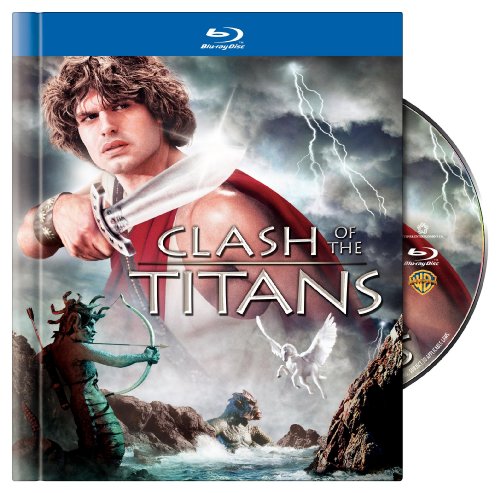
"Perseus and Andromeda will be happy together. Have fine sons... rule wisely... And to perpetuate the story of his courage, I command that from henceforth, he will be set among the stars and constellations. He, Perseus, the lovely Andromeda, the noble Pegasus, and even the vain Cassiopeia. Let the stars be named after then forever. As long as man shall walk the Earth and search the night sky in wonder, they will remember the courage of Perseus forever. Even if we, the gods, are abandoned or forgotten, the stars will never fade. Never. They will burn till the end of the time."

Talk about your perfect storm. You take the master of stop motion technology, Ray Harryhausen, and you combine those creature animation talents with one of the oldest stories surviving today in Perseus and Andromeda. How can the combination not be magical? The story has always been a favorite of mine, likely because I was born on the Summer Solstice, the critical moment of this story. I was preordained to love this film. The truth is that this film never got quite the recognition it so richly deserved. Now, on the cusp of a computer generated remake, it was my unmitigated privilege and joy to watch the original 1981 film in the glory of high definition.

Hellhounds is the tale of Kleitos and Princess Demetria—a “Greek” soldier and his bride to be. When Demetria is poisoned on their wedding day by a jealous friend, Kleitos enlists the help of a witch to travel to Hades and retrieve his bride’s soul. The soldier and his loyal friends—each with their own unidentifiable accents—make their voyage into the underworld only to face the wrath of Hades’ hounds when they arrive. They must escape with Demetria’s soul and reunite it with her physical body before Hades claims her as his bride. All the while, the four-legged beasts are hot on their trail for a taste of blood.

Usually made-for-television movies really aren’t trying to be anything they’re not. Hellhounds often seems like it’s exceeding its grasp due to the script’s melodramatics. You get the feeling director/NYPD Blue actor Ricky Schroeder is trying to tap into that 300 style of storytelling, but it falls short.  If you’re looking for stimulating dialog or even good acting, look elsewhere. Expect plenty of vacant expressions and emotionless delivery from the cast, especially stone-faced lead Scott Elrod.

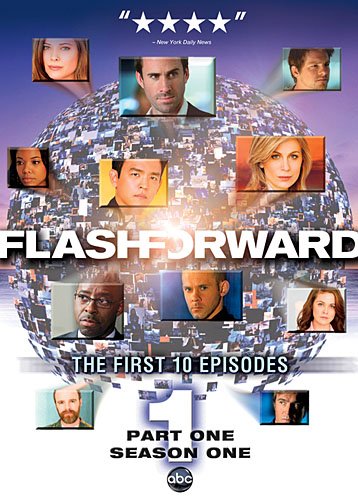
For all intents and purposes, it appears just like any routine Fall day throughout the world. People are busying themselves about their normal concerns. Suddenly everyone on the planet blacks out for exactly 2 minutes and 17 seconds. Just think about that part for a moment. Every human being collapses at the same moment. Think about all of the things that people are doing at any given moment. Driving cars. Flying planes. Performing delicate surgical procedures, or just walking across the street. Pretty much any activity is going to become dangerous as the blackouts occur. 20 million people worldwide die in the event.

Now, what makes this show different from your typical high-casualty disaster series is not the global body count. It's what happens to the folks who don't get killed that sets this series up. During that 2 minutes and 17 seconds, every person has something called a flash forward. It's a vision, if you will. They get a glimpse of the future from their own perspective. Investigation soon reveals that everyone's future vision was the exact same moment in time: April 29th, 2010 at 10:00 PM. Each person experiences that moment in their lives. Further investigation confirms that the visions are accurate and persons that were, or will be as the case may be, together at that time share the same confirmable experiences. Who or what caused these flash forwards, and why? Mark Benford's flash forward finds him looking at an investigation board containing crucial clues to the flash forward investigation. It puts him square in the lead to take the case, because now he's got a sneak peek at what key pieces of evidence will be found. He also has a line on pivotal players in the case. The feds set up a program called MOSAIC, which encourages people to share their flash forwards online. It allows people to make some sense of their visions, while giving the government a working database of flash forwards. Further clues uncover the fact that there were two people who were not effected by the blackouts and were up and around while the rest of the world was knocked out. The images are fuzzy, but their identities are of vital priority.

For ten years we watched Jack O'Neil, Samantha Carter, Dr. Daniel Jackson, and the Jaff'a Tealc' enter the Stargate. Others would join the team over the years. Each week we would follow their adventures, first on Showtime and finally on the Sci-Fi (now Sy Fy) Channel. We watched with awe as they stepped through a portal that was in reality a wormhole transporting them instantly to another world, brought online by dialing the device like an old fashioned telephone. For another five years we traveled not only to another planet, but to the Pegasus Galaxy itself to the Atlantis Base, a bright floating city left behind by the ancients, the people who created the Stargate system millions of years before. On this show we met new friends, new bad guys, and had new adventures. The location might have changed. The faces might have, at first, been unfamiliar, but the missions and the entertainment value didn't let us down. For 15 seasons we enjoyed a spectacular tale to rival the myths of the Greeks and Romans themselves.

I'm told that all good things must come to an end. When Atlantis was finally cancelled, I was made almost immediately aware of the plans to continue the franchise. First reports started coming out that the show was going to be called Stargate Universe. Soon my inside contacts started giving me tidbits about the story. Details began to emerge about the Destiny, an ancient ship abandoned in another universe far away. The ship was on some kind of predetermined course and would sport an unsuspecting crew of humans that would be left stranded on the ship for an indeterminate amount of time. It was starting to sound a lot like Star Trek: Voyager to me. Of course, this is Stargate, so there has to be some gate travel, one would assume. The ship would come with a gate, and the vessel would come out of faster than light travel from time to time and dial up a local planet for exploration. The ship was ancient not only in its origin but in its duration in space. There were going to be a lot of system failures, as the equipment was long past its expiration date. The ship itself would know what resources it needed to continue to operate. Searching its vast planetary database, the ship would locate planets with the essential resources, allowing away teams to get such vital raw materials. Unfortunately, the ship didn't always give a good indication of what to find or where on the planet it might happen to be. Oh, and did I mention the countdown? The ship would decide how much time it would allot for each mission, instituting a countdown. When the clock reached zero, the ship goes back to FTL, and whoever's not back in time gets left behind.

"My old man calls space travel a fool's game. He says human beings are 60 percent water; they eat, sleep, defecate, can't follow directions, and explode like piñata when exposed to the vacuum in space. Lately, I've been wondering if he is right."

Houston, this is Canaveral. Initiating prelaunch checklist. Please respond go/no go:

"Look at yourselves. Unplug from your chairs, get up and look in a mirror. What you see is how God made you. We're not meant to experience the world through a machine."

Since the time we were kids, we were warned that you can't tell a book by its cover. That has never been more true in our modern world of the internet. We play in chat rooms where almost no one is who they pretend to be. We lie about our age, looks, and even our gender, and rationalize it as harmless escapism or merely exaggeration. Everyone does it, or so we believe, so it's actually expected. Police officers often pose as innocent young children to lure pedophiles out of their dark lairs and into a new dark lair, this one with bars and armed guards. So, I guess it's not that large of a leap into the world of Surrogates. Now you can order an entire working body to look like anything you want. You sit in a comfortable pod and live through this artificial skin. You can't feel pain. You can't catch a disease. You can't die ... or, again, so you would very much like to believe. If we can't change the book, we can now at least change the cover.

For five years now, Lost has taken us through mystery after mystery. I’m beginning to think that the show’s title is more a mission statement for where they want to take the viewers. Each time Abrams appears to answer a question and move on, closer examination proves that nothing has actually been revealed. The series has become the poster child for misdirection and script sleight of hand. When I examine the 13 episodes from season 4, I’m left with the inescapable, pun intended, feeling that nothing significant has really happened here at all. But at the same time it’s the most significant event of the series. All the while I find myself compelled to watch episode after episode. Abrams would have been a great drug dealer if that producing gig hadn’t worked out for him. The show started out with enough directions and plot devices to put our brains into overload. From that point on, he’s been cutting each dose a little bit so that we find ourselves drawn to each hour fix chasing the high we got in the beginning. Of course, we already know we’re never going to feel that way again, but we’ll keep coming back for more as long as he continues to make us believe that we will. I’m not saying the show has declined at all. I’m saying that it doesn’t really ever go anywhere. Abrams continues to introduce major plot lines such as the hatch, the others, and now the freighter, with promises of linking it all together into some kind of epiphany, and for a short time he actually does. But hindsight leaves us scratching our heads, because once we come down we can’t really explain what the high was all about. And so, we’ll continue to tune in or buy the DVD’s to see where it’s all headed, even if we already know that we’re doomed to remain lost no matter how it all ends.

I will attempt to relate to you some of the important elements from this season without revealing much in the way of spoilers.

“Every story has a beginning. Every life has meaning and potential…”

Kyle doesn’t really know his story, and he’s beginning to understand his potential. But that was before. This year things are about to come to a conclusion for our adolescent boy without a belly button. For Kyle's fans, this is your classic good news/bad news scenario. The good news is that by picking up this third season release you can complete your collection of the entire series. The bad news is that by picking up this release you can complete your collection of the entire series.

"To everyone's surprise, the ship didn't come to a stop over Manhattan or Washington or Chicago, but instead coasted to a halt directly over the city of Johannesburg. The doors didn't open for months. Nobody could get in. They eventually decided, after much deliberation, that the best thing to do would be to physically cut their way in. We were on the verge of first contact. The whole world was watching, expecting, I don't know, music from Heaven and bright shining lights..."

It all started when Peter Jackson's long anticipated Halo project went belly up. You might recall it was that project which had Jackson deferring directorial duties on the upcoming Hobbit films, electing to act as producer instead. But Halo didn't happen. Jackson was in search of an ambitious project to fill the void. Enter Neil Blomkamp, a native of South Africa, who had come up with the basic imagery for District 9. A short film was the end result, but it would be far from the end for the idea. Blomkamp incorporated his own firsthand experiences as a boy living in the infamous days of South Africa's apartheid. It's completely impossible to see this film in any other light than an allegory to that era. Teaming together, Jackson and Blomkamp have taken these very basic ideas that were at best loosely held together by the concept and worked them into the most provocative science fiction film of the last decade.

"Space...The Final Frontier. These are the voyages of the Starship Enterprise. Its 5-year mission: to explore strange new worlds, to seek out new life and new civilizations, to boldly go where no man has gone before!"

Paramount was bold indeed when they undertook the remaster project of the original series. Not only did they clean up the prints, but they took the decidedly risky option of redoing most of the f/x shots from the original prints. We all know just how cheesy the old work looked when compared to today’s computer abilities. You could see a box around spacecraft that allowed the obvious cutout to maneuver through a cardboard star field. There were often mix-ups where phaser shots would be used for photon torpedo commands and the opposite. The planets often utilized matte paintings that look somewhat ridiculous now. We forgave these flaws with a complete understanding of the limitations the crew had at the time. While Star Trek showed us computers that were remarkably similar to the PC’s we use today, down to the floppy drives of our own yesteryear, the use of computers to create f/x was still many years away. So Paramount decided to “fix” these “flaws” and make much of the show look like it might have had it been produced today. It was a serious risk because of the extreme possessiveness fans have for these kinds of shows. Just ask George Lucas how much fans like their sci-fi tinkered with. The project encompassed a few years, and the results are quite attractive. But how do they stand up for the fans?