Television

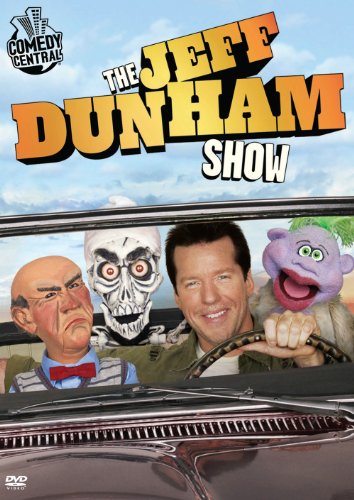
I've seen a lot of shows come and go on Comedy Central over the years. The network really found gold when it began to air the crude animated adventures of Eric Cartman and his pals of South Park. It appears that ever since that day, the network has been searching high and low, mostly low, to catch that kind of lightening in a bottle again. Let's face it. The South Park boys aren't going to last forever. Comedy Central must certainly understand that someday they'll need another solid anchor for their network. One of the most recent attempts has been the Jeff Dunham Show. From what I've seen of this release, Comedy Central had best keep on looking. Of course, the ratings and the audience have already convinced them of that fact. The show is already gone after only 7 episodes. You can find them all on this single disc release.

From the description, it actually sounded like a pretty good idea. It's certainly an original one. The idea of having a ventriloquist act as the centerpiece for a comedy show really sounded like a great idea. I hadn't really heard of Jeff Dunham before this, so I had no idea what kind of show to expect. I only know I expected to laugh. After the first couple of episodes, I hadn't laughed yet. That's okay. I just have to warm up to the unique series. Give the guy time to settle into the format. Now I've watched all 7 episodes, and I'm still waiting.

In this line of work, you have a tendency to see a lot of copycat television shows. These shows emulate a popular type or specific series and are usually content with mediocre ratings. However, out of the fire of the various copycat shows, we sometimes get a diamond in the rough. This is a diamond that people will shrug off and proclaim as anything but worthwhile television viewing. But once they actually sit down and watch a few episodes, they’ll be hooked for good.

When we left season one of Flashpoint, the Strategic Response Unit wasn’t one hundred percent. Jules (played by Amy Jo Johnson) had been shot and her secret boyfriend, Sam Braddock (played by David Paetkau) realizes that Jules might break up with him. The reason for this is that she thinks the relationship is putting a strain on the team which she has put first.

I grew up on the Peanuts creations of Charles M. Schulz. Most of us have, in some way or another. His newspaper comic strip is one of the longest-running and most successful strips of all time. The work has been translated into every language currently spoken on the planet. The images of Charlie Brown, Snoopy, Linus, and the rest of the Peanuts gang have appeared on just about any kind of product imaginable. Our pop culture contains too many references to the strip to mention briefly. For me, it was the television specials starting in the mid 1960s that brought the gang into my life. The classics are running annually, still after nearly 50 years. A Charlie Brown Christmas and It’s The Great Pumpkin, Charlie Brown are the most mentioned and certainly beloved by generations of children and adults. I thought I never missed an airing.

Now Warner Home Video has brought together a special collection of the cartoon specials that started it all. It includes a couple annual greats and a few that I don’t really remember so much. Now we get into the second volume of the 1970’s specials. The two discs include the following Peanuts specials:

It's hard to believe that one of the most popular comedy shows of the 1950's was not really a show at all, at least not in the way that we think of a television series today. The show began its life in 1951 as a segment on the popular Cavalcade of Stars. At that time only Jackie Gleason and Art Carney starred in their familiar roles. Alice was played by Pert Kelton.  The series took its more recognizable look when it became part of The Jackie Gleason Show in 1955. That's also when Joyce Randolph joined the series as Trixie Norton. The series would take up a half hour of the slot. The second half was taken up by a larger variety of pieces, usually a series called Stage Show. The show would come and go, with other cast members coming and going over time. Even Art Carney had left The Jackie Gleason Show at one time, only to return in 1957 to the role. The show's history is a complicated one to which entire books have been devoted over the years. It wasn't until syndication that the series was really a show unto itself. The original 39 episodes were joined with nearly 70 re-edited versions of the other various incarnations of the show have made up what most of us today think of as The Honeymooners. The final original versions of the show ended in 1971; both Audrey Meadows and Joyce Randolph were gone by then, replaced by Sheila MacRae and Jane Kean respectively.

But this show that wasn't really a show had legs. The syndicated versions became hugely popular, and new generations of fans were being indoctrinated with each new package. The show even survived on pay television at Showtime for a while in the 1990's when the 70 newly-formed "Lost Episodes" first aired. But the fever just never died. The show would influence a large number of series that would follow. Even the animated world of cartoons wasn't safe. The Flintstones would come along and become a prehistoric cartoon show that was basically the same down to the characters. Fred and Barney couldn't have been closer to Ralph and Norton if their names had been the same. Today, comedians constantly recall The Honeymooners and Jackie Gleason as their inspiration. To more than one generation of television viewers, Gleason really was "The Great One".

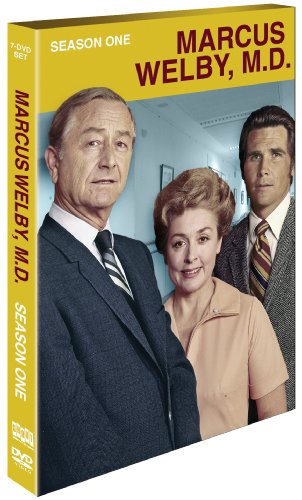
Perry Mason did it for lawyers. Marcus Welby did it for doctors. From 1969 to 1976 and beyond Robert Young was the face of the television doctor. The actor was so identified with his part that he dealt with fans and their medical questions his entire life following his portrayal of Marcus Welby. In those days there wasn't a medical doctor on the planet, real or fictional, who was more recognizable than Welby. The show pretty much wrote the book on the television medical drama. It doesn't matter if your a fan of House, ER, Grey's Anatomy, or any of a hundred other medical dramas that have come and gone since that time, each of those shows owes more than a little of it's existence to Marcus Welby, MD.

In the 1950's Robert Young was that model parent in Father Knows Best. It's likely that audiences first fell in love with his wise and caring style. There was something about both the character and in the man himself that just caused America to trust him. It was no surprise that when the Marcus Welby creators were looking for a doctor that could, above all, exhibit those same qualities that Robert Young would get the call. And it didn't matter that Young considered himself retired from show business for the last 6 years. But Marcus Welby was a role he just couldn't turn down. It was another gentle character with wisdom and common sense beyond his years. The Doc was a general practitioner in California. To him his patients were people. He would treat the individual as well as whatever ailment was proving to be the problem. He took the tough cases, often seeing some slight symptom that others would miss. That's because he paid attention to his patients, and they couldn't help but trust him with their lives. More times than not, that trust was rewarded with a full recovery. But, even when Welby couldn't beat a disease or injury, he always added something to the patient’s life. It might be helping them to come to terms with their own mortality. He might heal a family rift. Sometimes he just offered a kind word at just the right time.

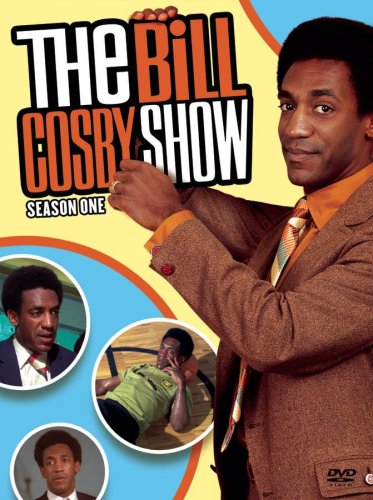
I grew up on Bill Cosby. He was everywhere when I was a kid. Fat Albert And The Cosby Kids were on my television every Saturday morning. My parents had all of his records, and I can remember borrowing them when I finally got a player of my own. I played Chicken Heart so often I think I wore away the grooves on the track. Of course, you youngsters out there have no idea what I'm talking about when I mention grooves and wearing them out. That also means that you remember a very different Bill Cosby show. Most of us think about that huge hit in the 80's. Cosby played a doctor, and he was married to a lawyer and this wealthy family had a ton of kids. The show was an instant hit. But it wasn't the first attempt at situation comedy from Bill Cosby. Back in 1968 he was the star of a very different comedy series on television. It was The Bill Cosby Show.

In this series Cos played Chet Kincaid, a high school gym teacher and athletic coach. It wasn't really a stretch, you see, because The Cos actually studied PE at Temple University with his eye toward just such a possible career. Of course, stardom interfered with those plans, and I don't think anyone has been complaining too much. The series is too eclectic for its own good. While Chet's career should be the focus, many of the episode take him out of the school and place him in oddball situations. Episodes deal with his aunt's will and a missing Abe Lincoln letter, a flood while Chet deals with a neighbor in labor, and Chet leading a group of inner-city kids on a failed attempt to get out and camp in nature. From the start, you can see that Cos is trying to bring a more intimate approach to his comedy, but it usually misses the mark completely. His natural charm and demeanor carry the day, but there's a reason why the series only lasted three seasons. He would hone those skills later to deliver one of the biggest shows in television history.

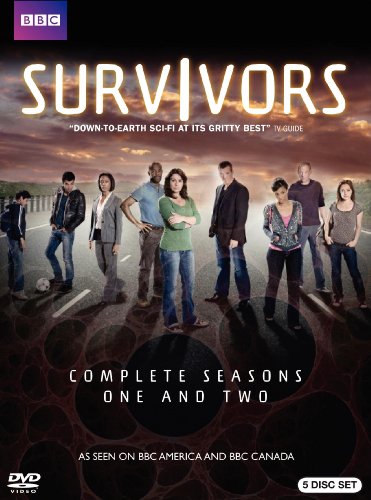
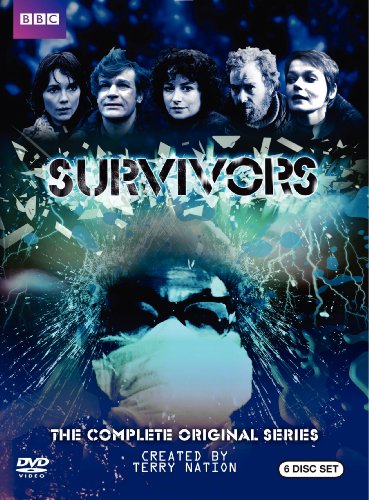
"Most of the world's population has been wiped out by a virus. Civilization, as we know it, has come to an end. For the few survivors, every day is a fight for life. But sinister forces threaten their future."

Right from the opening credits, you can see that a lot has changed since 1975 and the original series. I'm guessing that my watching them back to back allows for even more dramatic notice of the changes. Everything is cleaner here. The production values are light-years away from what they were. Even the disc menus reflect the higher-tech edge of the 21st century production values. The credits claim that this series is not really based on the original show, but more on Terry Nation's novel. I never read the novel, but it appears there is some truth to that statement. The episode titles no longer have individual titles. They are merely listed as Episode One, Two... and so on. Once you begin to watch the show, you will find that you recognize many of the characters by name and, at times, circumstance, but these are not the same people at all. More on that later.

"You know, I never thought what happens to a city ... well ... if it breaks down, all at the same time. There's no power. There's no lighting, or cooking. And food, even if you can get it into the city, you can't distribute it. Then there's water and sewage, things like that. You know, it just never occurred to me when I lived in London. The city's like a great big pampered baby, with thousands of people feeding it and cleaning it, making sure it's all right."

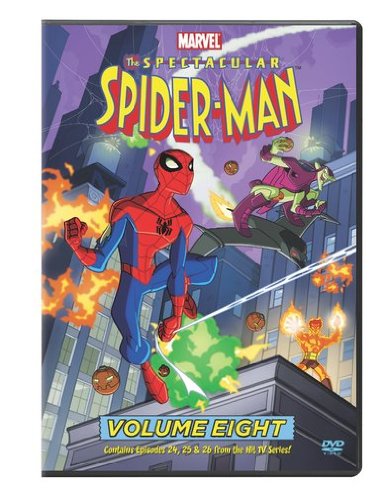
Spectacular Spider-Man is back with his eighth volume and the final one for the 2nd season. As we saw in the last few episodes, it appears that Green Goblin is again rearing his ugly head and looking to get rid of your friendly neighborhood Spider-Man. Furthermore, there are other super villains chomping at the bit to get back at Spider-Man for being put behind bars. Can Spidey survive this onslaught? Let’s find out.

Episode 24 opens up with Spider-Man in a battle with Molten Man at a local pool hall while Liz Allan (Peter Parker’s girlfriend at this point) and Mary Jane Watson are trapped behind the bar. We later find out that Molten Man is Liz’s brother: Mark who has a severe gambling problem. Somehow you know that Green Goblin is the cause of what is going on. Is Spiderman all-in or will he bust?

Lucille Ball was originally a radio personality starring in a popular comedy, My Favorite Husband. It was here that she began to develop the character she would continue to play for decades in television through several shows, all bearing her name in one form or another: I Love Lucy, The Lucy Show, Here's Lucy, and Life With Lucy. See the pattern? Anyone who was a fan of the radio show would instantly recognize the red-haired actress even though they had never actually seen her on the radio. That exaggerated cry was already a staple of her physical comedy, even when she couldn't be seen. She had also toured for many years with her real-life husband Desi Arnaz. When they could not convince a network to film a pilot of a show featuring both of them, they made it on their own dime. CBS was so impressed with the pilot they reimbursed the couple, and in 1951 I Love Lucy hit the airwaves.

Lucy played the character she had already perfected on radio and on the stage. Desi played her husband, a Cuban bandleader who headlined at the Tropicana. Lucy was always trying to find a way to get into Ricky's act. She had no talent, but that never stopped her, usually embarrassing Ricky along the way. The couple lived in an apartment owned by the Mertzes, Fred (Frawley) and Ethel (Vance). They were not only the Ricardo's landlords but also their closest friends. Ethel would often find herself talked into one of Lucy's crazy schemes. The show also found comedy fodder in Ricky's thick Cuban accent. Sometimes his mispronunciations caused hilarious misunderstandings. William Frawley as Fred had the job of playing straight man most of the time. It was a thankless job, to be sure, but he was perfect at it. He didn't talk as much as the others, but he had some golden moments over the show's very successful six year run. During that time the series never once fell below number three for the entire year in ratings.