War

An insubordinate officer (Bo Svenson), an African-American who Has Been Pushed Too Far (Fred Williamson), a thief, a gambler, and a coward are among the prisoners loaded up onto an Allied convoy in 1944. When the trucks come under attack from the Germans, the prisoners escape, and decide to make their way to Switzerland. But their journey is a complicated one, with another firefight around every corner, culminating in a particularly violent case of mistaken identity, which results in their volunteering to tackle a suicidal train-jacking.

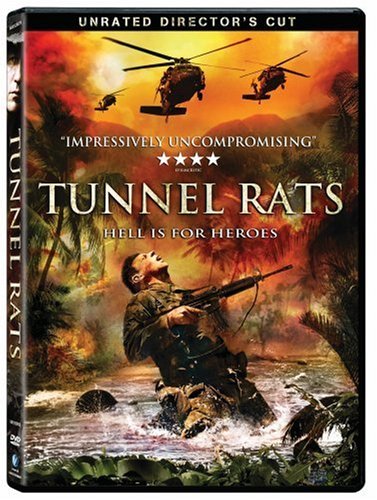
Behind the on-screen title of 1968 Tunnel Rats lurks a vision of Hell. We first get to know a unit of American soldiers tasked with clearing out the networks of underground tunnels constructed by the Viet Cong. Even before the action shifts to the tunnels, the terrible toll of war is on display, with the Lieutenant (Michael Paré) ordering brutal executions and morale very low. Then the operation begins, and everything goes to horribly wrong very quickly.

I haven't noticed the sun turning black or any angels breaking seals today, but the Apocalypse must be upon us, because I have now seen a good Uwe Boll film. The picture succeeds admirably on two fronts. In the first act, as we get to know the troops, Boll turned his cast loose to improvise dialogue and come up with character back stories. While there are no fully rounded characters here, and clichés abound, there is certainly enough here to make these men recognizable human beings. One shot in particular is striking: a prolonged close-up of the sympathetic sergeant breaking down in tears. Then the real lesson about the hellishness of war kicks in, and does so with a vengeance. No character is safe from gruesome demise, and the claustrophobic horror of the setting is milked for all its worth (if you're not reduced to the cold sweats by a scene where a solider finds himself trapped in a tunnel between two corpses, you're already dead). But there are no monsters here – the Viet Cong are not faceless automatons. Instead, we see a group of people, trapped on opposite sides of a ghastly conflict, struggle to stay alive.

“1941: Germany occupies Belorussia. SS death squads and local police round up Jews. Within weeks 50,000 are murdered. 1,000,000 more await deportation and death.”

Tuvia (Craig) and Zus (Schreiber) Bielski are brothers hiding in the forest surrounding after the abovementioned invasion. They are Russian Jews, which means concentration camps or immediate execution if they are caught. They are foraging and surviving on their intimate knowledge of these surroundings they have known since they were children. Before long other Jewish refugees make their way to the Bielski camp. Unable to turn away the suffering hordes, they welcome each arrival, stretching their already limited resources to the limit. The camp eventually becomes a force of freedom fighters. They are looked down upon by the Red Army because Jews weren’t expected to fight. For several seasons the growing number of refugees makes a stand for survival and even answers a call to arms in an ultimate act of defiance. The brothers split. Zus joins the organized army while Tuvia remains to lead the camp.

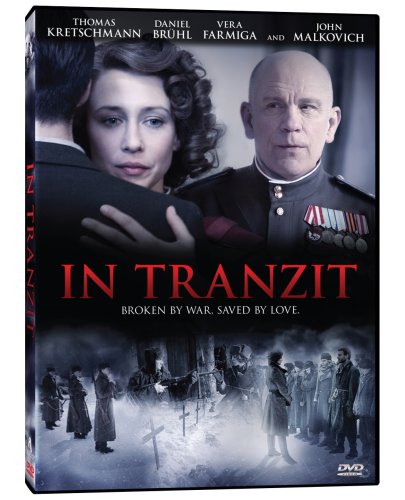
In Tranzit is one of these odd films that you can never quite get a handle on. Even now I’m not exactly sure what kind of a film it was intended to be. While it takes place at the end of World War II and involves some Nazi officers in a Russian POW camp, I’m not sure that the film has all that much to do with the war, or POW camps for that matter. The film remains a kind of abstract art form with a rather loosely told story.

A group of German World War II prisoners arrive in an isolated Russian POW camp that is run by women. At first they are quite harsh in their treatment to their charges. It’s obvious that most, if not all of them, have lost family to the Nazi brutalities of the war. As the prisoners begin to spend more time at the camp the hostilities between the groups begin to soften. The first step is taken by the camp doctor, Natalia (Farmiga) who is married, but her husband has suffered severe head traumas that have made him a mute shell of a man. She falls in love with one of the camp prisoners. Eventually some of the other women form attachments to the men. The camp is often visited by Pavlov (Malkovich) who also begins by appearing quite inhumane but eventually softens as the film progresses. The prisoners are not to be quartered here permanently. The camp is a “Tranzit” camp as the film’s title suggests.

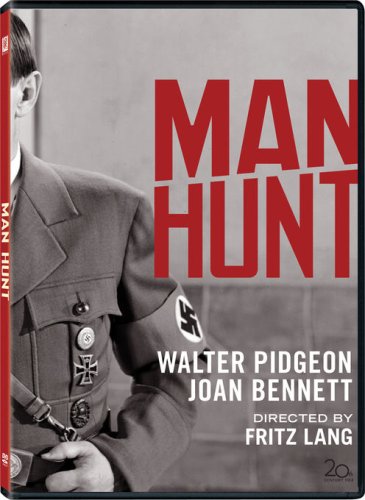
It seems that every studio with a Nazi war film is scrambling to get it released about now. The Tom Cruise film Valkyrie has caused about as much Nazi fever as I’ve seen in recent years. Unfortunately, that means we’re going to see a lot of films that wouldn’t otherwise see the light of day, most for good reason. Fortunately, it also means that some truly classic titles that got hidden away for decades because there is a perceived lack of interest suddenly surface like a German U-Boat about to pounce on an unsuspecting battleship. Man Hunt is absolutely one of the latter. If you haven’t ever seen this Fritz Lang masterpiece or have only experienced it through a bad late night television print, this is one of those rare opportunities that simply must not be missed. Valkyrie might be the reason that Fox has released this movie now on DVD, but it is a far superior movie that deserved a good print back in the early days of the DVD format. Whatever the reason, there is cause to celebrate that Man Hunt is finally here.

The story was originally published as a serial novel called Rogue Male written by Geoffrey Household. Alan Thorndike (Pidgeon) is a world renowned hunter. It’s the peak of Nazi Germany, and Thorndike is on what he describes as a sporting stalk. He wants to see if he could get close enough to Adolph Hitler to bring him down with a shot. He gets into position and dry fires his rifle. A second thought has him loading the weapon, but he is caught before he can bring down his prey. Caught, he is mistreated and asked to sign a full confession that he was sent by England to assassinate Hitler. The statement isn’t true, so Thorndike refuses to sign it. He withstands all manner of torture and persuasion. Finally the Gestapo gives up and tosses him from a cliff, intending to “discover” his body the next day while on a convenient hunt. But Thorndike survives the fall and makes his way back to England, protected by a young boy (McDowall) on a Danish freighter. All is not safe for him back in England. The Gestapo has followed him home, and now the great hunter is the hunted. He befriends a naïve young girl, Jerry (Bennett) but eventually finds himself in a confrontation with his old Gestapo nemesis.

“I swear by God this sacred oath: That I shall render unconditional obedience to Adolph Hitler, Fuhrer of the German Reich and people, Supreme Commander of the armed forces. And that I shall at all times be ready, as a brave soldier, to give my life for this oath.”

Taking a page from Roman history, Adolph Hitler required all of his armed troops to swear this oath, not to their country as most armed forces require, but to him personally. It was a necessary step in his brutal campaign to remake Europe, and eventually the world, in his own image. Loyalty to Hitler did not come in degrees; it was absolute, or it was nothing. Only then could the man commit the acts he eventually did with any support at all. But that support was not absolute.

For many, Saving Private Ryan has been the measure of the perfect war film in the modern era. Without question the Steven Spielberg film is a milestone in depicting battle on the screen. But I’m going to make the possibly unpopular statement that Enemy At The Gates is a better film, and the standard by which war films should now be measured. The movie is at least almost as good technically as Private Ryan. There are battle scenes that offer the same caliber of shocking reality. And even if this movie falls a little short of the technical marvel that Private Ryan was, this movie captures the human element of war time in a way I hadn’t seen before or since. Certainly all of the necessary hallmarks of the war picture formula are intact. There are plenty of battle scenes and enough ultra realistic bloodletting to satisfy the most insatiable aficionado. But Enemy At The Gates refuses to rely on such brutality to make its point. Instead the hazards of war are merely the atmosphere that allows an excellent cast, under brilliant direction, to bring to life an inspired script.

It’s the heart of World War II. Hitler and his Third Reich are marching across Europe spreading their shadow of fascism and tyranny wherever they go. They have now begun their assault on the young Soviet Union. For the Soviets, troops are weary and supplies are scarce. For the beleaguered soldiers of the Red Army, it is a matter of being shot by the enemy or by your own field commanders should you even think about a retreat. Their mission now is to defend the city of Stalingrad, which bears the name of “The Boss” and stands as a symbol of nationalism to the infant nation. But things are not going well at all. Only every other soldier is armed. The unarmed soldier is admonished to wait until the one holding the rifle is killed to take up arms himself. For these Russian men it is not a matter of if they are killed, but merely when. After a heavy day of fighting, a political officer, Danilov (Fiennes) finds himself pinned down with another young soldier, Vassili (Law). Vassili manages to take out the officers who stand in their way of escape. Danilov decides that Vassili could well be the hero that the Soviet soldiers need. He realizes that fear is not as good a motivator as inspiration. Before long he has written news articles that chronicle the exploits of Vassili as he takes his positions in the city and racks up an impressive score of German officers. Unfortunately, it is not only the Soviet soldiers who hear of these adventures. Vassili comes to the attention of the German brass who bring in their own sharpshooter, the decorated officer, Major Konig (Harris). The two play a dangerous game of cat and mouse in the ruins of Stalingrad. Vassili must also contend with his feelings for an intelligence officer, a young woman named Tania (Weisz). The three become engaged in a love triangle of sorts, causing Danilov to attempt to take down the hero he created. He also begins to doubt the figure he has become to the Soviet people. Konig and Vassili will eventually face each other, and only one of them can survive.

“Safety is the greatest risk of all, but safety leaves no room for miracles, and miracles are the only sure thing in life.”

Spike Lee finds a noble cause in the experiences of the Buffalo Soldiers, fighting in Italy during World War II. There’s no question that history hasn’t always dealt fairly with the contributions the black soldiers have made on the battlefields that have, at times, defined our nation. From the American Revolution through to today’s War On Terror, the black soldier has risked and often laid down his life for a country that at least during World War II, didn’t honor his service or humanity. The problem is that Lee lost focus of whatever it was he was trying to say or whoever it was he was attempting to honor here. This movie never is about these particular soldiers or their contributions. There is no history, to speak of here at all. We don’t see the formation of these units, and the film doesn’t go into their overall importance in the war effort. Instead the film is more about the Italian resistance during Nazi occupation and the politics and betrayals of that movement. It’s almost as if these few black soldiers are merely witnesses to a series of events that were never under their control.

So here we are again with a second collection of episodes from The Young Indiana Jones Chronicles television series. This is the middle of a three volume set and concentrates the stories around World War I and II. It can hardly be a surprise that Young Indy kept himself quite busy during these war years in Europe. He was a pilot, secret agent, and even ballet dancer all for the cause. The set has as an appropriate subtitle: The War Years. Except for the bountiful features, the information from the first set is still valid and repeated here for the sake of convenience.

For decades it was the doomsday scenario. Cold War Americans lived in almost constant fear that the Soviets might drop a nuke on us and begin Armageddon. It was unthinkable that a conventional invasion could reach our shores instead. Red Dawn stirred its own mushroom cloud of controversy when it reached theaters in August of 1984. While the Cold War was actually closer to its end than any of us might have suspected, Red Dawn entered our collective consciousness as a shock to a system that had for some time moved beyond the culture of fear those older than myself knew growing up. By the 1970’s the air raid sirens and classroom drills were no longer commonplace in American cities. Growing up in Eastern Pennsylvania, it was Three Mile Island that caused a greater panic than a Soviet threat. We were all drilled to head to the school’s roof where we were told choppers would evacuate us to a safe zone in case of a meltdown. And like the silly duck and cover drills of the 50’s, we bought into it, ignoring the cold hard fact that we simply didn’t have the resources to evacuate every school in Pennsylvania at a moment’s notice. Deep inside I knew that should the emergency arrive, there would be several million school kid skeletons on the top of a lot of schools for the media to put on the rest of the country’s television screens. So along comes Red Dawn and, for a moment, brings the Cold War front and center all over again.