Disc Reviews

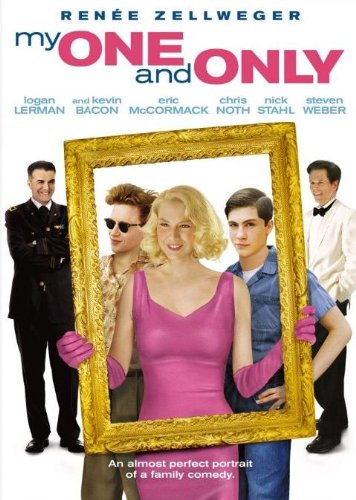
My One And Only is based on a George Hamilton autobiographical story. It’s probably a tale that his fans know well. It wasn’t one I was at all aware of. The screenplay was written by Charlie Peters. Hamilton himself is a producer on the film, so we can assume that the story unfolds in much the same way he intended. Like most autobiographical pieces, it has a limited audience. Fans of the subject are certainly going to be quite interested. Others who consider the subject of some note might also have an interest in the material. Unfortunately, it’s like watching vacation or baby slides.

The day that most of us in the home video review business has been dreading has finally arrived. Anchor Bay has sent me my first Blu-ray screener. For those who might not know, a screener is a disc given to guys like me to write a review of the given film or television series. Unlike what we call Final Product, the disc often comes in a sleeve with no case or box art. The disc itself is usually does not include graphics, containing merely the name of the film and possibly the studio. The contents might or might not reflect what you, the consumer will get should you decide to purchase the disc. DVD screeners have often been single layer DVD-R copies, which look far worse than what the Final Product might look and sound like.

Superman: The Animated Series was made in the same fashion as Batman: The Animated Series. The tone was a little more serious and a lot more action. It was first produced in 1996 and made 54 episodes through the year 2000. The show received high praise for raising the bar but at the same time keeping what was important to the mythos of Superman. In fact, it even received a nomination for an Emmy. Besides Smallville, this probably stands out as the best television adaption of the one known as Superman, the Last Son of Krypton and hero to the planet Earth (and beyond).

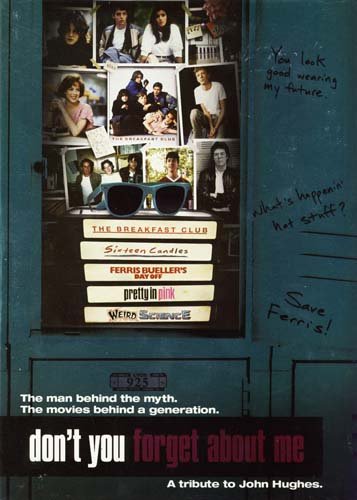
Don’t You Forget about Me is a documentary/tribute to the late John Hughes.  Four amateur filmmakers set out to find answers to the questions, why did you leave? How did you capture adolescence so perfectly in your films? Why do your films remain a fixture in popular culture?  After obtaining interviews with many of the John Hughes alumni such as Ally Sheedy, Judd Nelson, Alan Ruck and Andrew McCarthy, the filmmakers came to the realization that they required an interview with John Hughes to complete the film. The documentary combines the interview footage as well as covers the filmmaker’s road trip from Toronto to Illinois to acquire an interview with the reclusive director. 

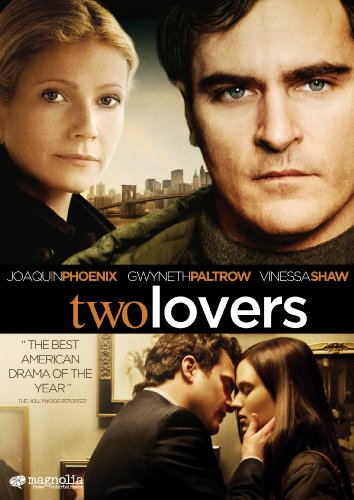
James Gray’s Two Lovers revolves around the troubled Leonard Kraditor (Joaquin Phoenix).  Leonard has moved back into his childhood home to recover from his recent break up. In quick succession, two women enter Leonard’s life: Michelle (Gwyneth Paltrow), an entertaining and peculiar neighbor who transcends Leonard’s world and Sandra (Vinessa Shaw) a classy, traditional woman who is the daughter of a businessman attempting to purchase Leonard’s family business.  Leonard becomes confused between desire and love and the story unfolds from there.

In early-20th-Century Dublin, a winter's musical gathering is being held. The first two-thirds of the film takes us through the course of the evening, from the arrival of the guests, to the musical entertainment, to the dinner and its discussions (and arguments), and finally the departures. During the party, one is aware of a certain tension or distance between one couple: Donal McCann (nephew to the hostesses) and his wife (Anjelica Huston). As they prepare to leave, Huston hears one of the guests sing, and is rooted to the spot. Later, McCann asks her why the song affected her so much, and a painful memory from her past comes out.

“You got everything money can buy, except what it can’t. It’s pride. Pride is what got you here. Losing is what brung you back. But, people like you, they need to be tested. They need a challenge.”

There have been a ton of boxing films. They’ve been popular going back to the Silent Era. Most of them have many of the same themes. But there was always something about Rocky that stood out above all of the rest. That “something” can’t really be described or defined. As the Supreme Court once said about the definition of obscenity: “I can’t define it, but I know it when I see it.” That’s all you can say about Rocky. Some might call it heart. That’s about as good a word for it as anything else.

Do you know what’s worse than watching a bad movie? It has to be watching three bad movies. Worse than that is watching three bad movies where it’s obvious to everyone involved in the films that they know they’re bad movies. It doesn’t take long until you begin to think that you’re the one everyone is really laughing about. You can picture a couple members of the cast sitting with the director all laughing their rear ends off at the poor rube who actually spends good money, and more importantly, their time, watching the piece of crap you just dropped into their DVD or Blu-ray player. It’ll take forever to get that stink out of my home theater.

We are in the late 1920s, and to the family manor comes Ben Barnes, in the company of new wife, Jessica Biel. That this woman is both American and a race car champion does not sit well with the very conservative mother Kristin Scott Thomas. That her nose is out of joint delights husband Colin Firth, a veteran of the Great War who, thoroughly world-weary and disillusioned with just about everything, wants nothing to do with the petty concerns and squabbles of his family. What follows is a clash of cultures and generations, veering between slapstick comedy and something rather darker.

This is the story of an unfortunate underachiever who is left with his niece after his even less fortunate sister abandons them. Unhappy with social services and the places they are forced to live, they take what little money they have to fund an aimless trip across the country until arriving at the home of his abusive father.