Disc Reviews

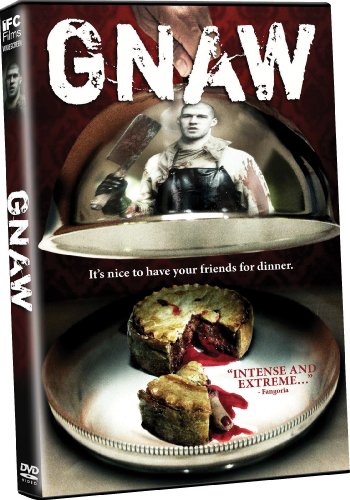
I guess they didn’t tell the producer and director of Wrong Turn that an official remake of the Texas Chainsaw Massacre would be gracing the screens in October of 2003. This movie borrows very heavily from the horror classic in terms of the setup, the killers, and the level of gore. Now that being said, this is an above average horror film with excellent makeup and special effects delivered by one of Hollywood’s greatest – Stan Winston, and a good performance by Buffy and Angel regular Eliza Dushku (although it is kind of weird seeing her scream and run away from villains that would be considered lightweights in the Buffy and Angel universe).

The film follows the ill-fated decision by the main characters to drive on a seldom used dirt road to avoid a lengthy delay on the interstate. Once they discover that a barbed wire trap laid in the middle of the deserted road has incapacitated their cars, four of the group of six leave the vehicles to find help. Well, you don’t have to think too hard to guess what happens next – our two remaining young people are the first to encounter the chromosomally challenged inbred hillbilly cannibal killers. Enter the first of many Hollywood horror clichés that are used in this film. The second cliché happens upon the viewer quickly thereafter as our remaining four young people come across the dilapidated home of the aforementioned chromosomally challenged inbred hillbilly cannibal killers. They first investigate the shack only to find a collection of various items that have been left by the previous victims of the inbred family, and upon further searching then find the remains of the victims on plates, in jars, and of course in the refrigerator. As this grisly find is made, the hillbilly three return home for an early lunch, while our heroes scramble to hide and not become dessert. Of course they are discovered as they make their escape (cliché #3) and spend the rest of the movie being chased, culminating in a showdown back at hillbilly central.

“Yellowstone. Volcanic wonderland. Two million acres in the heart of North America, Yellowstone is deep in the Rocky Mountains, an isolated high plateau defended by rugged peaks; in the middle is the National Park. The park and the surrounding mountains form one of the most important and spectacular wilderness areas on Earth.”

There have been a lot of these nature shows coming to Blu-ray high definition lately. No less than two of them cover the beauty that is Yellowstone National Park. While there is a lot to learn about the natural treasure, more in fact than I suspected, it’s not going to be the facts that will drive you to watching this particular three part feature. It’s the absolutely stunning images that make this all that you could want in a travelogue documentary. You’ll soon find yourself completely mesmerized by images that look almost impossibly brilliant in color and sharpness to be real. If you’ve been to the park, this might serve as the ultimate way to recapture such a personal experience. If, like me, you’ve never witnessed the place with your own eyes, now you have. Everyone knows about Old Faithful, but Yellowstone National Park is about so much more.

“My name is Dylan Hunt. My story begins the day on which I died. My last look at my world was to be from inside a pressure chamber at NASA’s underground laboratory at Carlsbad Caverns. Our goal was the development of a form of suspended animation which would allow our astronauts to make longer voyages through our solar system. It had been my decision that our method was ready to test on a human so, it seemed that any risks should be mine…”

Gene Roddenberry was riding high as Star Trek began to grow more in popularity during syndication than it had as a prime time network series. Suddenly television executives wanted more ideas from The Great Bird Of The Galaxy, as Trek fans began to know him. One of those ideas was Genesis II. It tells the story of a scientist who is conducting a suspended animation experiment. He expects to be under for only a few days, but a cave-in traps him in his chamber, and he is not rediscovered for 154 years. He awakes to find an entirely different world than the one he remembers. Humans live underground as a group called the PAX. They are a peaceful sort and have left behind most of the science that destroyed the world Hunt knew. Their enemies are a group of mutants, identifiable by having two belly buttons, because they have two hearts. They have enslaved humans and live an aristocratic life in the city of Tyranus. Now Hunt (Cord) is being courted by both civilizations. He must choose between them. Attempting to win him over to the Tyranians is Lyra-a (Hartley). She seduces him and tries to taint his opinion of the PAX. But Hunt soon learns from experience which side is the nobler race.

Written by Adrienne Ambush

Romance. Drama. Tragedy and more tragedy. These four words sum up the entire storyline of Jada in a nutshell.

Enzo Castellari, Tarantino fave and director of the original Inglorious Bastards, here gives us a tale of wartime intrigue that sweeps from the retreat of Dunkirk to the Battle of Britain. During the Dunkirk evacuation, a team of Nazi saboteurs don English uniforms and mingle with the embarking troops. Captain Paul Stevens (Frederick Stafford) finds evidence that this has occurred, but no clues to the identities of the saboteurs. Indeed, the second-in-command of the group, Martin (Francisco Rabal) has become his close friend and roommate. The saboteurs target Britain's radar system, a critical part of the island's defense against the Luftwaffe. It's up to Stevens and his specially assigned team to stop the saboteurs before the Battle of Britain is lost.

It's amusing, of course, to watch a film all about England's fate hanging in the balance with not a single English actor in the mix. But the story is a good one, and the action is relentless, ranging from the epic scale (the Dunkirk scenes are quite spectacular) to the more personal (plenty of exciting gunfights around the radar installations). The dogfights are a somewhat less satisfying combination of rather obvious models and stock footage, but Castellari's inventive use of split screen keeps the visual interest high.

“In 1975 The Rockefeller Commission was appointed to investigate covert mind-control programs conducted by the CIA in the 1950’s and 60’s. These programs were known as Project MK-ULTRA. By the time of the investigation, documents relating to MK-ULTRA programs were destroyed. With out these documents, it was impossible to verify whether the MK-ULTRA program had in fact been discontinued.”

You can guess how the film intends to answer that question, can’t you?

I grew up on the Peanuts creations of Charles M. Schulz. Most of us have, in some way or another. His newspaper comic strip is one of the longest running and most successful strips of all time. The work has been translated into every language currently spoken on the planet. The images of Charlie Brown, Snoopy, Linus, and the rest of the Peanuts gang have appeared on just about any kind of product imaginable. Our pop culture contains too many references to the strip to mention briefly. For me, it was the television specials starting in the mid 1960’s that brought the gang into my life. The classics are running annually, still after nearly 50 years. A Charlie Brown Christmas and It’s The Great Pumpkin, Charlie Brown are the most mentioned and certainly beloved by generations of children and adults. I thought I never missed an airing.

Now Warner Home Video has brought together a special collection of the cartoon specials that started it all. It includes those annual greats and a few that I don’t really remember so much. Now we get into the first volume of the 1970’s specials. The two discs include the following Peanuts specials:

In the 1930’s and 40’s MGM was trying to get in on the lucrative animation game. The field was dominated at the time by Warner Brothers with their Loony Tunes shorts, and of course, the iconic cast of animated characters coming out of the Walt Disney Studio. For years they had failed to find the right property to take advantage of the market. It wasn’t until the team of William Hanna and Joseph Barbera approached the studio with their first project that the times did change, at least a little, for the fledgling animation department at MGM. The project was far from an original one even for the time. It was a very basic cat and mouse adventure featuring a cat named Tom and a mouse named Jerry. There would be almost no dialog on the shorts. It certainly didn’t look like much of a hit to the studio brass, but with no better ideas on the way, they went ahead with the new shorts of Tom And Jerry. There’s a reason why the cat and mouse pair is such a classic. It’s because it works. If you can make your characters entertaining and endearing enough, you can have a hit. MGM finally entered the major leagues, and the team of Hanna and Barbera would become one of the most successful animation teams in history. They would go on to create such cherished characters as The Flintstones, Yogi Bear, The Jetsons, and, of course, Scooby Doo.

These were the days of the Golden Age in Hollywood. These shorts were not being produced for television, which hadn’t been invented when they began; rather, they were intended for theater goers. In those days going to the movies was much more of an inclusive experience. You always got a cartoon short along with an adventure serial, the likes of Buck Rogers, Flash Gordon, and The Lone Ranger. These multi-chaptered serials were the forerunners to the modern television series. It kept you coming back to the movies to see what would happen next. Each chapter ended in a cliffhanger. These early serials were the inspiration for such film franchises as Star Wars and Indiana Jones. Finally you got one, sometimes two movies, all for the price of a single admission.

Most of us watch cop shows. The numbers indicate that the viewing public likes the CSI’s, Law & Orders, NYPD Blues, and even older shows like Hill Street Blues. Apparently about the only cop show we don’t like is Cop Rock (and even that show has been re-broadcast on other networks). So, naturally we get some cookie cutter cop shows that try to break the mold. Flashpoint is one such cop drama that focuses on the art of negotiation. Perhaps this one is interesting already.

Sergeant Gregory Parker (played by Enrico Colantoni) is the head of an elite tactical squad known as the Strategic Response Unit. They work in situations that normal police offers can not normally handle from bomb threats to hostage situations to criminals with an extreme amount of firepower. But the response of lethal force is a last resort as they try to use negotiation and alternative methods to bring the various situations back where they belong.

This is like a best-of compilation of the musical acts who were a part of the Secret Policeman's Ball(s) that were put on by famous English comedians and rockstars for the benefit of Amnesty International that plays out like a feature. There is no commentary between the acts, only a fade to black and applause.