2-Disc

Film

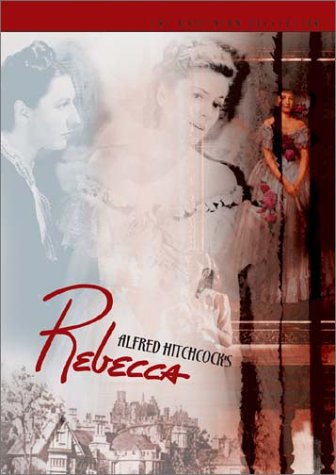
To film fans, the clause “Directed by Alfred Hitchcock” has almost become an adjective in and of itself. It has come to mean suspense created by using the viewer’s imagination and mind as a part of the film, first and foremost. These films didn’t have the freedom of CG, and consequently had to invent ways to achieve visual effects (Watch the documentary on Birds or Rear Window for example). Besides the lack of freedom of creation that digital filmmaking now provides, the filmmak...rs had to tip toe around the Hays code, not only restrictive on sex and sexual undertones, but also on content (as we learn in the featurettes here) and gore. The phrase, and the adjective that bears the director’s name, has grown to include a certain quality of characters and meticulous film crafting in every phase of the production. Rebecca, therefore, can rightfully be called “classic Hitchcock.”

Film

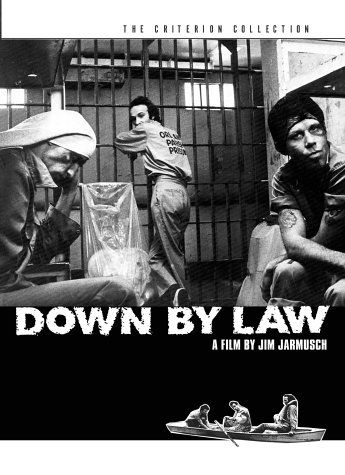
Jack, a pimp, ends up in prison when a competing pimp frames him for child prostitution. Zack, a down-on-his luck deejay, is there because an associate paid him a thousand dollars to drive a car across town, unaware of the contents of the trunk. In the same cell, they bemoan their situation: each man innocent of their crimes, but vaguely guilty of something, we’re never sure what. When a third man shows up, an Italian tourist named “Bob,” he seems to brighten the dour men as much as can ...e expected.. He’s also very up front with them: he isn’t innocent. He’s there because in a barroom fight, he killed a man with a pool ball. He accepts responsibility for his crime, and seems determined not to live in total misery. Even though he’s the only one who is admittedly guilty, Bob seems the most ‘essentially’ innocent of the three.

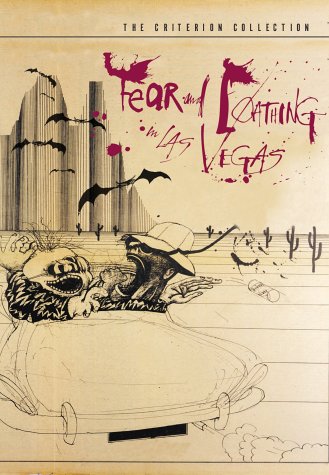
Fear and Loathing in Las Vegas can be and has been described in many ways, but one of the things that this movie isn't is a Cheech and Chong road movie about a couple of whacky buddies on a drug binge in the city of sin. There’s no going to strip clubs, no hilarious misunderstandings that make one of them have to dress in drag and be involved in a stage show, in fact, there isn’t even any gambling. This movie is more accurately described as a scalding epitaph to the counterculture of the sixties, a re...ognition that the “Peace and Love” generation’s collective ideas about changing the world had largely failed. Fear and Loathing is a disdainful look in the rear view mirror at a generation's potential unfulfilled, lying on the side of the road embarrassed and worthless, like a 52 year old groupie trying to fit in with the youngsters, doing balloon hits at a Dead concert. In a more critical sense, I can describe it in a single word: overrated.

The movie has cultivated an impressively large cult following its release in the summer of 1998, and after three viewings, I can’t really put my finger on why. By design, it doesn’t follow any real solid narrative structure. We know we’re watching a couple of totally altered guys try to stumble their way through a weekend in Vegas, but their adventures basically include getting really high on something, freaking out somewhere, then returning to their trashed room to recover. Sure, some things actually happen; Azocar meets and has sex with a minor, Duke goes to the motorcycle race, meets some strange people, quits his assignment, there’s an ironic DA convention in town. None of these events are here to prop up a story structure; they’re true events, so they just sort of happen and move on. It’s never long before he’s just getting whacked out again and the story returns to its strange “stagnant wandering” roots. Usually, I’m pretty good at connecting with the European-style, open-ended, non-traditionally structured films, but this one just left me flat.

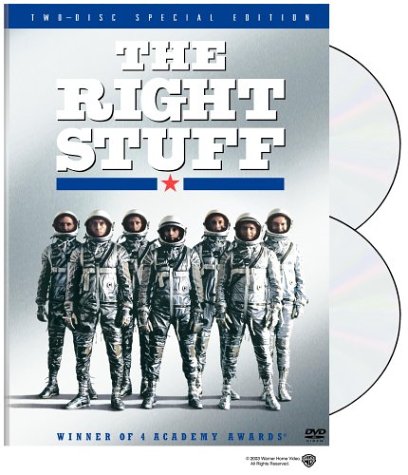
Converting Tom Wolfe’s classic book The Right Stuff was undoubtedly a difficult task. The original 7 Mercury astronauts were epic figures in American history. Perhaps the last of Earth’s true explorers, astronauts are the stuff that every kid’s fantasies are made of. It seems nearly impossible to capture such incredible bravery and charisma in the scope of even a 3 hour movie. Philip Kaufman somehow achieved the impossible. It starts with one of the most dynamic casts since The Godfather. Names like Jeff Goldblume, Dennis Quaid and Ed Harris were all relative unknowns at the time. Kaufman also paid great attention to detail. The crafts and locations brought the audience directly in contact with a world long gone from reality. Chuck Yeager’s technical input provided a solid foundation to the spectacular set designers and location scouts. Many members of this cast have since gone on to become acclaimed actors, a true testament to the casting job done on this film. You simply cannot be an American and not see this film at least once. It should be required viewing in every junior high school in America.

Synopsis

In 1939 Warsaw is invaded by Nazi Germany, Wladyslaw Szpilman is performing live on a radio station as it is dive bombed by the Luftwaffe. He continues to play until he is almost killed. This opening scene sets the tone for the story of a man so driven by his passion for music even in the face of adversary. As the film continues we watch the establishment of the Warsaw ghetto and the beginning of the reign of hate towards the Jews by Nazi Germany.

The Warsaw ghetto is full of stark contrasts we watch as people die in the streets from hunger and others prosper by bribing guards and importing goods, we see Germans helping Jews escape from the ghetto and Jews who join the ghetto police in an attempt to save themselves. At one point in time the ghetto contained over 500,000 people, as the war continues Wladyslaws family and most of the residents of the ghetto are loaded onto trains and shipped off to concentration camps never to be seen again. Those who are left over are formed into work camps by the Germans and start an uprising. Threw all this Wladyslaw survives even when he comes face to face with a Nazi officer who finds him hiding in their headquarters. The officer knows that the war is almost over as the Russian army is fast approaching and brings him food in exchange for listening to him play.

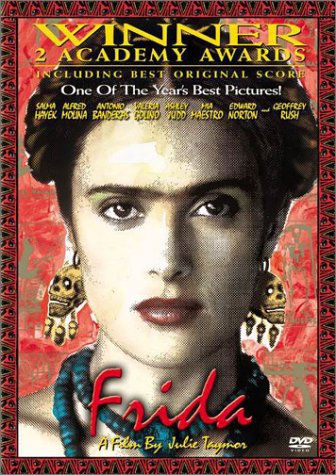
This is the story of Frida Kahlo, now recognized as one of Mexico’s greatest artists. Most particularly, the film is the story of her tempestuous love affair with fellow artist Diego Rivera --their loves, their clashes, their politics, their infidelities, their betrayals, and so on. So much attention is paid to this relationship that Kahlo’s art itself slips into the background, which is too bad. That said, this is a tremendously engaging film, with great performances all round.It is also a spectacular movie to look at. If Kahlo’s art doesn’t take centre stage in the narrative, it does in the look of the film, informing almost every frame. The visual impact is not simply eye candy,however. Every colour is thematically relevant. This is a film made by creators very conscious of the visual possibilities of cinema.

Audio

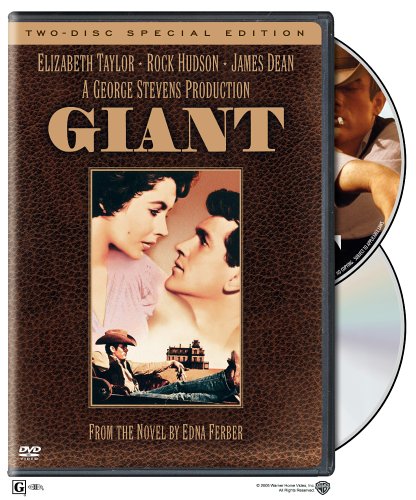
Spanning a good thirty years, Giant tells the tale of the Benedicts, a Texas family on an immense cattle range. The patriarch is Rock Hudson, whom we first meet as a young man visiting Maryland to buy a horse. There he meets Elizabeth Taylor and falls in love. His new bride initially finds Texas difficult to adjust to, and Texas has difficulty adjusting to her, as she does not hold with the local attitudes towards women and, most especially, Mexicans. The third major player is James Dean, a rather sullen ranch hand who winds up changing everybody’s lives when he strikes oil on his small parcel of land.

This is a big film, with big scope, big stars, big performances, big virtues, and big flaws. It is at its best as it works out the family dynamics, with Hudson and Taylor bouncing off each other.James Dean, though he has comparatively little screen time, turns in a remarkable performance,and as the characters move into middle-age, his is the most convincing transformation. The film is at its weakest in its ham-fisted handling of the racial issues. These scenes play out in deeply predictable fashion, and the symbolism of the final scene is so obvious, yet takes itself so seriously, that the film ends on a note of high camp. But even these problems make up part of the charm, and its 201 minutes go by surprisingly quickly. They don’t make ‘em like this anymore,and nor should they, but thank God they did in 1956.

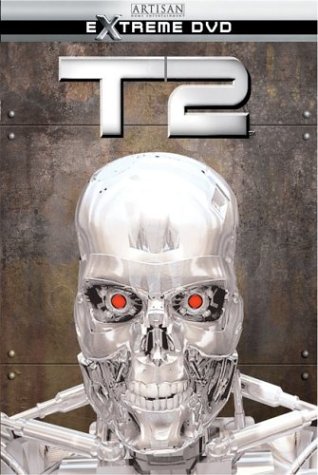
This, the third DVD release of T2, reiterates the genius behind this film. With this disc, we are given the same extended edition and theatrical version as found on the Ultimate Edition release, but the new High Definition transfer found on this Extreme Edition makes this 10+ year old film look brand new.

This disc is set to play the 16-minute extended version of the film. If you prefer the theatrical version, on the main menu, go to Sensory Control, and hit the right arrow on your remote 5 times. After ...ou have done this, you will notice “The future is not set” appear on the right, and the theatrical version is now accessible.

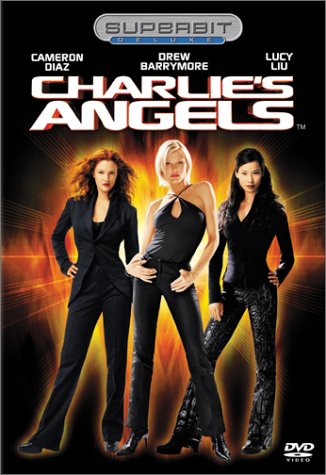
Set to coincide with the theatrical release of Charlie’s Angels: Full Throttle, Columbia-Tristar releases the highly successful Charlie’s Angels as the latest Superbit Deluxe DVD. This film is wildly enjoyable… with a wonderful mix of action and comedy. I cannot imagine another trio pulling this film off as well as Cameron Diaz, Drew Barrymore, and Lucy Liu. Their acting chemistry, along with the direction of McG, has made this a film that can be enjoyed over and over again.

”They're beautiful, th...y're brilliant, and they work for Charlie. In the sexy, high-octane comedy update of the '70s television phenomenon, bookworm Natalie (Diaz), tough girl Dylan (Barrymore) and tech-savvy Alex (Liu), alongside faithful lieutenant Bosley (Bill Murray - Rushmore), must foil an elaborate murder-revenge plot that could not only destroy individual privacy and corporate security worldwide, but spell the end of Charlie and his Angels.” – Columbia-Tristar