2-Disc

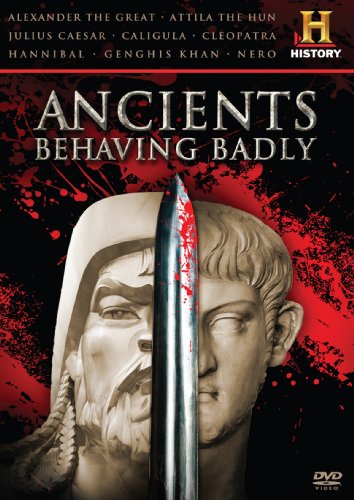
Many people look around today and say we are perhaps going through one of the most corrupt times in the history of the world. Government spending is out of control, rights seem to going by the waste side and human liberties are forgotten in travesties of justice. But what they don't know is that many years ago, life was cheap and rulers often gained absolute power by the most despicable of methods. However, what some people forget, the History Channel does remember Ancients Behaving Badly.

Ancients Behaving Badly is a documentary series on the History Channel that chooses an infamous leader from ancient history and goes into great detail about their rule. Let's take for example, Caligula, the first leader presented and a fairly easy target to spend time on. Caligula, the third Roman emperor who despite living only a shade under four years in power broke all the rules and was famous for debauchery and murder on the grandest scale.

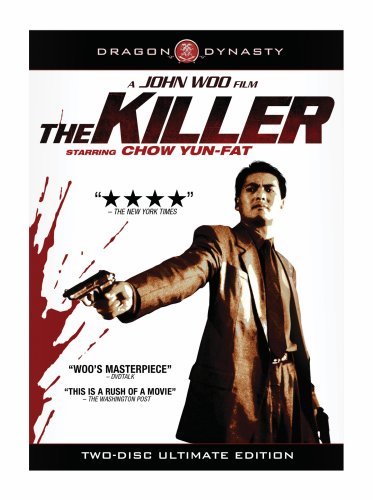
Having accidentally blinded a singer during a contract killing, hit man extraordinaire Chow Yun-Fat, consumed with guilt, becomes the woman's protector, and seeks redemption by finding some way to restore her sight. Meanwhile, Danny Lee is the plays-by-his-own-rules cop on his trail, and inevitably the two men will find themselves as unlikely allies in gigantically operatic gunfights.

I can remember when John Woo was still a name whispered with reverence by cult film fans, and his films were only available on grey market VHS or import laser disc. In fact, I first saw The Killer on one such disc, in Cantonese with Mandarin subtitles, reading a transcription of a translation, desperately trying to grasp the gist of the action. It was worth the effort, though, for I had never seen action sequences like these. Today, of course, the situation is very different. Woo's films are readily available, Hard-Boiled's sequel is a video game (Stranglehold), and his stylistic characteristics have become clichés. The passage of time and over-familiarity have arguably robbed the film of some of its power, while making the OTT sentimentality harder to take, but the fact remains that this is still a seminal moment in action filmmaking.

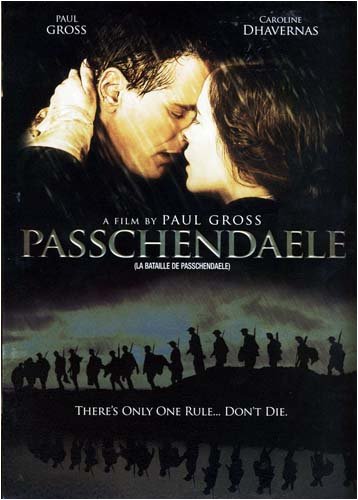
We are in the midst of the Great War. Michael Dunne (Paul Gross) is a Canadian solider recovering from physical and psychological wounds. He falls in love with his nurse (Carline Dhavernas), and when her asthmatic brother enlists, Dunne heads back to the trenches to protect him, and the two men wind up at the gigantic, murderous battle that gives the film its name.

Writer/director/star Gross has an almost messianic commitment to Canadian film and Canadian history, and here he combines his obsessions in a 20-million-dollar effort that is, by the standards of the Canadian film industry, nothing short of gargantuan. And to his credit, the battle scenes are impressive. The editing is frequently startling and brutal, in keeping with the events themselves. On the other hand, the romance is painfully hackneyed, and the naked appeals to national pride can be rather wince-inducing.

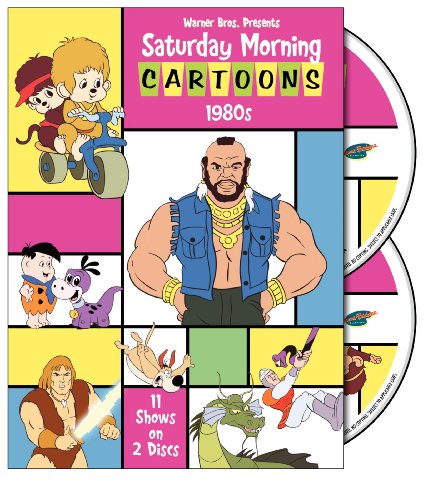
Most of my growing up and living occurred in the 1980’s. From ages five to fifteen, I grew up in an era that was famous to many different types of cartoons. It helped to shape my personality, from bad jokes to that unmistakable sarcasm. So, it was easy to attract me to a cartoon set that showcased odds and ends from that familiar era. Join me as we take a step back in history, a history that hits very close to home.

The first toon we find is one called Goldie Gold & Action Jack. They fight by air, by sea and by the seat of their pants. They aren’t kidding. Goldie is a certified lunatic: she rides a helicopter indoors, jumps out windows and talks to hobos. Doesn’t she know that she is blonde and rich? Jack really isn’t all that Action, he’s just good at being lucky. The show is very gadget heavy and has a little Scooby Doo sleuthing thrown in.

If you're reading this review, you must surely already know what the movie is about. We're talking, after all, about what must surely be the single most celebrated case of mistaken identity in the history of film. Cary Grant stands up in a lounge at just the wrong moment and is mistaken for a man who doesn't exist. That utterly perverse mix of chance and paradox, leading to ever more dangerous situations for Grant, in an ever more complicated tangle of battling conspiracies, is so utterly Hitchcockian, it might just as well be trademarked.


The film is also very funny, as so much of Hitchcock's work is. Of course, much of his humour is black as pitch, and that mordant wit is certainly still present here, but there is also a joviality to the proceedings, due in no small measure to the presence of Cary Grant. Unlike the Jimmy Stewart of Vertigo and Rear Window, whose screen image of fundamental decency makes the deeply flawed, pathological aspects of his characters even more painful and weighty, Grant here keeps things light, as his character is just as aware of the absurdity of his perils as we are, and is just as likely to be amused. But if this is Hitchcock working in a lighter vein, that astounding perversity keeps poking through. What are we to make, for instance, of that creepily close relationship Grant has with his mother?

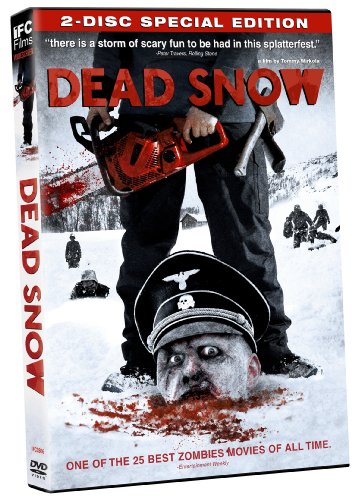
In my lifetime, I’ve really only liked five zombie movies. There is Shaun of the Dead, the three Resident Evil movies, and Zombieland. Most of the other zombie type films either belong in the “Way too Gory” or “Nonsense” designation. So, naturally when I receive a zombie movie like Dead Snow, there is some apprehension. However, in this case I can say that this movie belongs in both of those designations and delightfully so.

The movie opens with a lady (played by Ane Dahl Torp) and she is chased through the snowy mountains of Norway. The creatures ultimately corner her and eat her alive. We notice that the zombies have strange costumes as we fade to black. We re-open with seven medical students who are spending their vacation at a cabin up in what appears to be the same mountains.

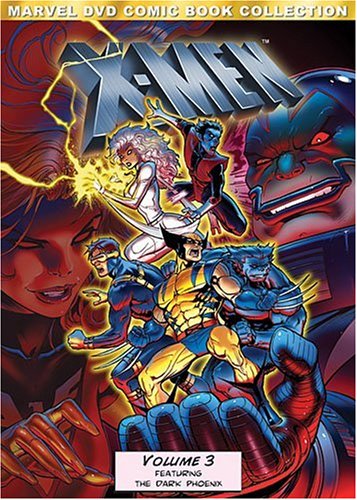
Some of you might remember my review of the first two volumes of X-Men, the Animated Series. After the first thirty plus episodes, I secretly hoped that I would be able to bring you reviews of the rest of the series. Luckily, I was blessed enough to make this a reality when I received volume 3 & 4 at my door just before my fall vacation. How sweet it is.

When we last left the X-Men at the close of the original Phoenix Saga, Jean Grey in the form of the Phoenix had defeated D’Ken and saved the universe from the power of the M’Kraan crystal. In such, the crystal (with D’Ken trapped inside) had to be taken far away and flown directly into the sun. Phoenix accepts this mission and the mind of Jean Grey says goodbye to her fellow X-Men.

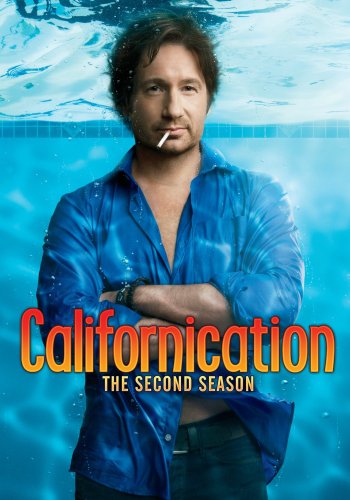
In the first season of Showtime’s Californication, we were introduced to David Duchovny’s character, bitter yet upbeat writer Hank Moody. Hank, after moving to Los Angeles on the heels of his first novel - a critical darling entitled “God Hates Us All” - has recently lost his long-time love and, by extension, his daughter, to a straight-arrow bore who makes his girlfriend Karen (Natascha McElhone) feel safe.

The first season told us the story of Hank’s attempts to win Karen back and his increasingly perilous relationship with a sixteen-year-old Lolita whose inclination for combining sex with a wicked right hook leads to one of television’s all-time great novel titles. Oh yeah, and it also featured lots and lots of raunchy sex between Hank and many gorgeous women. This was a major reason for the show’s notoriety, but what really makes the show work is Duchovny’s portrayal of Hank. He imbues him with a charming kind of good-natured nihilism and, even when he is being a grade-A jackass, we still like him.

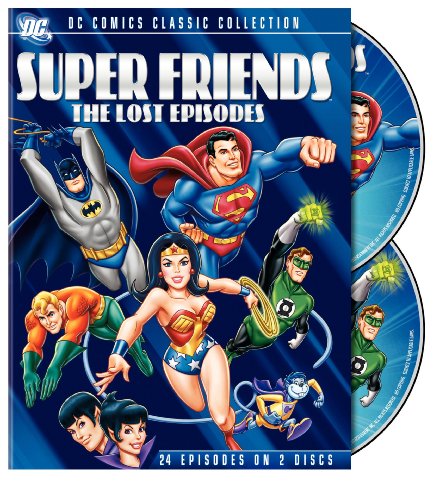
The Super Friends as a cartoon show had a long and sketchy past. It started out in the 1970’s and ran in nearly a dozen different incantations and over a hundred episodes until 1986 when it was put down for the last time. In the 1983-84 season, the series had been cancelled officially for a second time. This was due to the fact that they did not wish to compete with the syndication run of the original episodes that was already on air. Hence, the new episodes were dropped and didn’t appear until many years later. Here, the people at WB have compiled these 8 episodes (24 shorts) into a 2-disc set and dubbed them the “Lost Episodes.”

As mentioned, there are twenty-four shorts for this lost season of Super Friends. They run the gambit of subjects, villains, and heroes. In episodes such as “The Krypton Syndrome”, Superman is thrown into a time warp and has to deal with the impending doom of his home planet: Krypton. However, the decision he makes leads to some rather disturbing consequences.

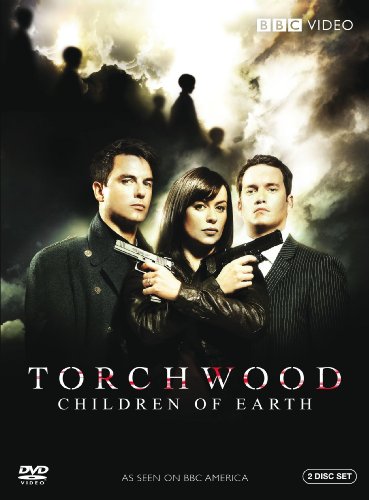
“There’s one thing I always wanted to ask Jack back in the old days. I wanted to know about that Doctor of his, the man who appears out of nowhere and saves the world, except sometimes he doesn’t. All those times in history where there was no sign of him, I wanted to know why not. But I don’t need to ask anymore. I know the answer now. Sometimes The Doctor must look at this planet and turn away in shame.”

It all started some decades ago with the BBC’s immensely popular television series, Dr. Who. The show was a national phenomenon in Great Britain, but in the 1970’s PBS stations here in the States started to pick up the show. Tom Baker was the Doctor at the time, and it became a huge hit, particularly across college campuses. Eventually, like all good things, the series wound down and disappeared from the airwaves. But in 2005 the BBC decided to resurrect the Doctor once again, and lightening did indeed strike twice. The show’s new format and style appeared to pick up right where the old show left off.