Special Category

Synopsis

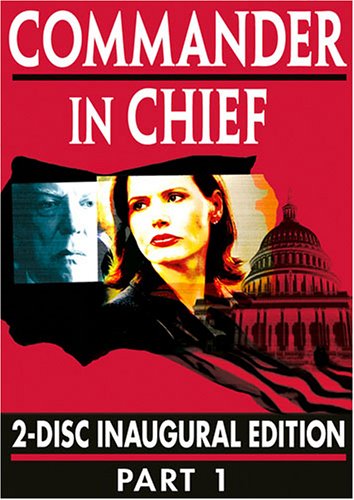
Geena Davis is the Vice-President who was chosen as running mate by the Republican President because she would balance out the ticket (she’s an Independent) and help him with the female voters. When he is felled by a stroke, the possibility that she might become President fills the powers that be with dread, and her resignation is demanded so that the hard-right Speaker of the House (Donald Sutherland) can step in instead. Davis refuses, and the series follows her struggles as the first woma... to be President of the US.

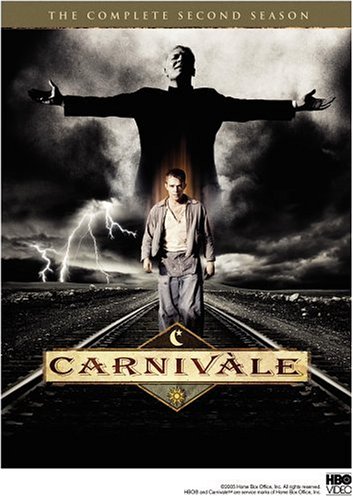
The truth may never come out as to why HBO cancelled Carnivale after the show's second season. They claim that it was a combination of decreased ratings and rising production costs equaling $2 million an episode. What doesn't make sense, however, is that the network also admits that they received as many as 50,000 emails in a single weekend following the cancellation announcement. The facts also show that they followed up this show that was “too expensive to be profitable” with Rome, a show that has been widely recognized as the most expensive television series ever produced.

Several months after the show was cancelled, HBO offered the show's producers the chance to shoot a 2-hour movie to finish up the story which was left hanging. They refused, as they claim that the entire story was planned out for six complete seasons, so a two-hour finale would not even come close to finishing up the story. The show runners then announced plans to finish up the story in comic book form, but nothing has been seen of this plan as of yet.

Synopsis

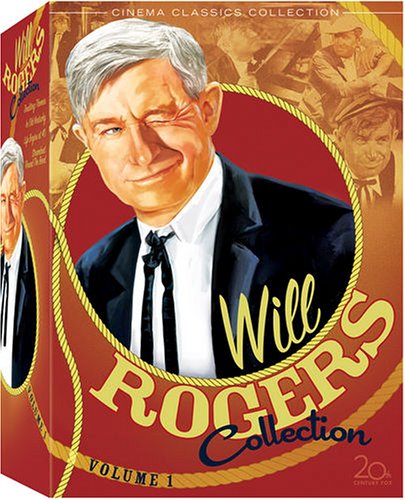
Will Rogers was once the biggest star in Hollywood. Think of any other big name from the late 20's and early 30's, and he outpaced them all. Today, he is little more than a name, and there are plenty of film guides out there that don’t even list his films. Quite the sobering lesson on the evanescent nature of fame. The films in this collection were all made in 1935, the last year of Rogers’ life, before he was killed in a plane crash. These comedies have definitely dated, but Rogers’ charm i... undeniable. He was an inveterate improvisor, but he apparently stuck pretty closely to the script of Doubting Thomas. Dismayed by his wife’s sudden theatrical ambitions, Rogers plots to derail those hopes and keep her in the kitchen, where she belongs (did I mention the films had become a bit dated?). Life Begins at 40 sees Rogers in full aphoristic mode as the crusty, mischievous and independently-minded newspaper editor determined to clear the name of an ex-con employee and triumph over the small town’s evil banker. In Old Kentucky has a feud between two families centred around horse racing. Rogers is the trainer who switches loyalties. Finally, <i <steamboat ‘Round the Bend has con-man Rogers captaining a steamboat as he searches for the half-crazed preacher who can prove that Rogers’ nephew killed a man in self-defense.

Synopsis

In 1985, Steven Spielberg backed this TV anthology series. It took its name from the very first SF magazine (which was briefly revived to coincide with the TV show), but have very little in common with that mag. It was almost purely fantasy-oriented, and its real model was the likes of The Twilight Zone (which itself was revived for TV the same year). Spielberg himself directed the pilot, and plenty of other big names singed on as well. So Harvey Keitel stars in an episode directed by...Clint Eastwood, for instance. Other directors of note include Joe Dante and Martin Scorsese.

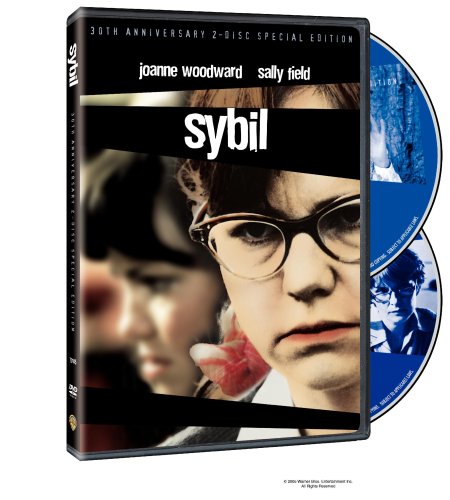
Sybil is one of those movies that has turned into something of a running joke. It certainly didn't start out that way, though. Probably no other made-for-TV movie is as famous as this one, based on a true story about a woman that had an astonishing 13 distinctly different personalities. Looking back on the film now, there are some definite cheesy moments. However, the vast majority of the film is really quite compelling, especially when the viewer reminds themselves that this is a true story.

Sa...ly Field, who plays the nut-job in question, won an Emmy for best actress for her work in the film. She really is extraordinary here, essentially playing thirteen different roles at once, many of them intertwined and overlapping. It is a role that would have made the film nothing more than a glorified After School Special in the hands of a lesser actress. Instead, Field plays the character(s) deftly and flawlessly, making the movie's three-hour running time fly by. This is an amazing film even by today's standards, and I hope this new edition brings an all-new audience to the film.

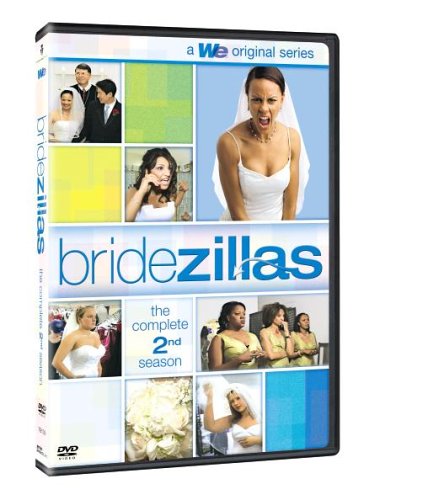
The women on this show are easily the most selfish, self-centered, hateful, wretched wenches that I have ever seen. The fact that they would voluntarily put themselves on this show proves it. Who would ever watch this show (whose sole purpose is to show how horrible a person can be) and think to themselves, “I would really like to be on that show. I want the whole world to see me acting that way.”

Even so, here they are. The second season (!) of this show features eight episodes and eight brides-to-be at thei... absolute worst. It's all here, from flower problems to cake difficulties to the simple fact that somebody isn't paying the bride enough attention 24-hours a day. I can't imagine why anyone would voluntarily purchase this title on DVD. The women here are absolutely horrible people, and it's generally my practice to steer clear of people who act in this way. However, if you are the kind of person that enjoys seeing people make asses out of themselves, then maybe you will enjoy watching this show. I most certainly did not.

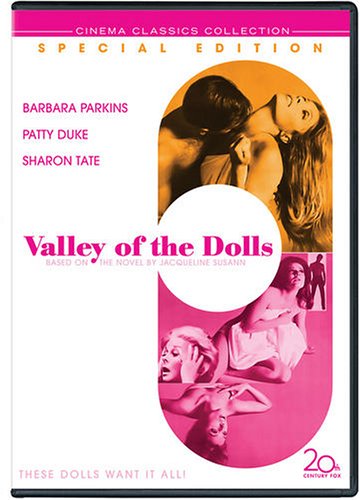
Valley of the Dolls is a musical that way way ahead of its time. Based on the novel by Jacqueline Susann, the film tells the story of three aspiring actresses and their attempts at becoming stars. Sure, this is an age old tale, but it had not been told as bluntly an honestly until now. The film starts Barbara Parkins, Patty Duke and Sharon Tate as the actresses in question. Audiences must have been shocked upon going to the theater, as they were much more used to rags to riches musicals such as A Star is Bo...n instead of the brutally honest vision that Dolls presented.

The actresses in this film are mean-spirited, nasty, drug-addicted women who will stop at nothing to get where they want to be, and they don't care what they have to do or who they have to step on to get there. As horrible as these women are, this Hollywood musical strips away all the glitz and glamor to bring the true story of what it takes to make it in show business. It is a groundbreaking film that was nominated for an Academy Award for its wonderful musical numbers. Both the beauty and the ugliness of the business are shown here, and the film completely took me by surprise.

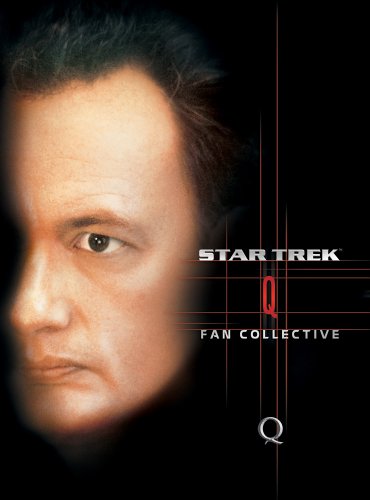
When Star Trek: The Next Generation began, we were introduced to a new crew and a new Enterprise. What I remember most about that first episode, however, was the new villain of sorts: Q. John De Lancie has created one of Star Trek’s most memorable and endearing characters. Some claim the Q character was really introduced in the Original Series episode Squire of Gothos. William Campbell plays the all powerful gamester Trelane who turns out to be a child of omnipotent parents who was merely playing with Kirk and his crew. While I can see the similarities, the Trek gurus have not officially endorsed this connection. I hope it stays that way. I didn’t like that episode. Trelane was quite an annoying character. That leads me back to my feeling that it’s really De Lancie and not necessarily Q that we’re in love with. Let’s face it. While some of the best Next Generation episodes feature Q, some of them are also pretty lame. Still, no matter how bad the episode is, it’s still worth watching Q. I guess I’ve always been a sucker for the clever con artist characters. Sid the Snitch from Hill Street Blues is another of my all-time favorite characters. In case you don’t know, Q is just one part of an omnipotent Q continuum. This omnipotent race or collective usually keeps to themselves. Our Q, however, has found a playmate in Picard and some of his counterparts. He seems intent on being that stone in Picard’s shoe while expressing some sincere interest in the human condition. While most of his appearances have resulted in mere annoyance, we can’t forget that it was Q who brought the Federation in contact with its most powerful and perhaps most popular bad guys, the Borg.

I tend to frown on such multiple dipping, but in the case of these fan collections I think they’re generally a good idea. The entire Trek collection would cost several thousand of your hard earned dollars. If you have most of this stuff on laserdisc like I do, you’ve been reluctant to plunk down the coin again. For me these collections are a good way to upgrade some of the more important stuff.

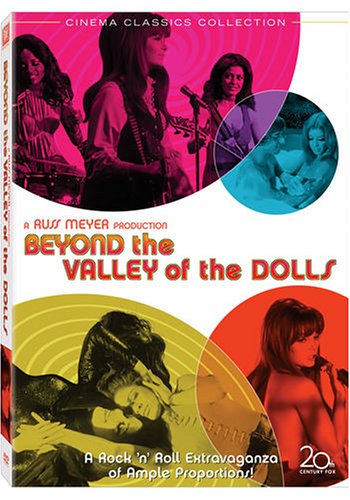
A lot has been said about Roger Ebert and Russ Meyer. Ebert has been called the most famous film critic this side of Pauline Kael (he certainly is the most informative one since I've started becoming a wee critic myself), and Meyer certainly found a niche audience directing and producing films with large-breasted women. So when Fox got the two of them together and had them come up with a script that would be a pseudo-followup to The Valley of the Dolls, one would be interested to see what became of it.

The big misconception about Beyond the Valley of the Dolls is that it's a sequel to the Sharon Tate film before it. It's actually more of an homage to the first film (as the introductory title cards discuss), and goes in a different direction, rather than extending the current storylines. Pet (Marcia McBroom, Jesus Christ Superstar), Casey (Cynthia Myers, They Shoot Horses, Don't They?) and Kelly (Dolly Read, That Tender Touch) comprise a band that comes to Los Angeles looking for stardom. They run into their fair share of unique California characters, including Emerson Thorne (Harrison Page, Lionheart), Lance Rocke (Michael Blodgett, Catalina Caper) and perhaps most uniquely, Ronnie Barzell, a.k.a. the Z Man (John La Zar, Over the Wire).

Synopsis

Paul Gross plays Geoffrey Tennant, a once celebrated actor who had a meltdown during a performance of Hamlet. Now he’s trying to mount The Tempest at the head of a broke company about to be evicted from its premises. Meanwhile, his former mentor, Oliver Welles, has just mounted a dispiriting version of A Midsummer Night’s Dream at the New Burbage Theatre, and very shortly thereafter dies. Tennant is brought in as the new artistic director, and his attempts to stage Ha...let are troubled by the ghost of Tennant, a lunatic director, scheming suits and difficult actors.