Posted in: Disc Reviews by Archive Authors on August 30th, 2006
Written By Jeff Mardo
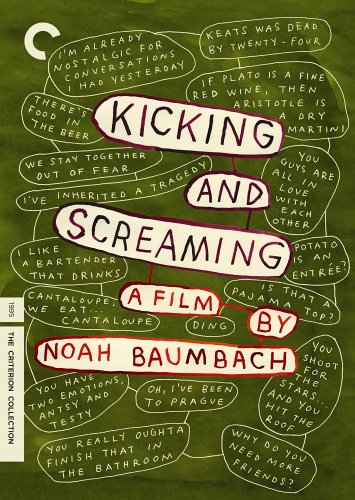
This is a Parker Posey film, which in itself is enough of a reason for me to check this film out. However, I was surprised to find that Josh Hamilton is here as well. While you may not know the name of Josh Hamilton right away, the two of them worked together in a brilliantly satirical film called The House of Yes; one of my personal favorites. In fact, there are several things that tie these two films together in my mind. While both are very funny and disturbing films, the charm in them both is the tension hi...ing just beneath the satire. The tension here is that uneasy feeling of just what to do once you have finished your years at college, and you are forced to go out into the real world. It is that depressing no man's land between knowledge and action.
Posted in: Disc Reviews by Archive Authors on August 23rd, 2006
Synopsis
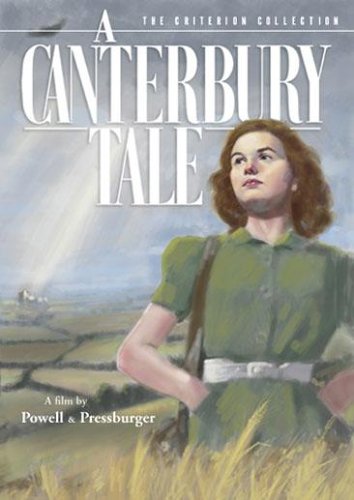
Arriving late one night at a village near Canterbury are an English sergeant (Dennis Price), and American one (Sgt. John Sweet) and a landgirl (Sheila Sim). As they leave the train station, Sim is set upon by a mysterious figure who dumps glue all over her hair. The trio become amateur detectives, determined to unmask the “glue man” and their suspicion first falls on Eric Porter, the local magistrate who is consumed by an enormous love for the countryside.
Posted in: Disc Reviews by Archive Authors on June 29th, 2006
Synopsis
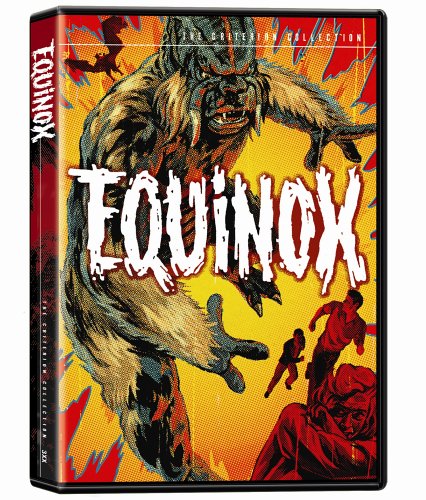
Four teens hit the wilderness, looking for a Professor Waterman (celebrated SF/fantasy/horror writer Fritz Leiber in a non-speaking role). The professor is missing, but they find an ancient time that turns out to provide the secrets of life, death, and the demons beyond. Said demons want the book back, and our heroes are attacked by one monster after another.
Posted in: Disc Reviews by Archive Authors on June 28th, 2006
There was a time when no major groundbreaking events were captured on film. The thing is, it's sometimes hard to know when something of historical significance is going to occur. Major events such as World War II and the fall of the Berlin wall were planned in advance (so to speak), so it was easy to set-up a camera and capture the event. Spontaneous events, however, were mostly passed over. As technology has progressed, however, it has become easier to capture important and notable moments on the fly. September 11, ...001 has taught us that fact in graphic and horrible detail.
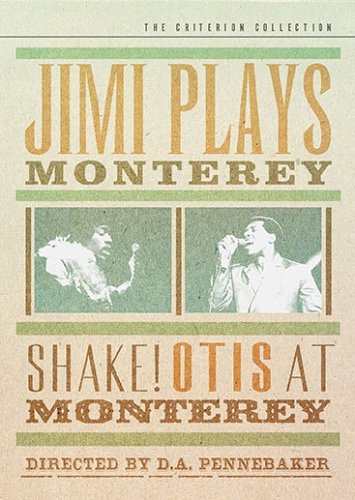
That's part of what makes this disc so very unique. At the time, who would know how popular Otis Redding would become, or that he would die an untimely death in the weeks following his performance? What's more, who could have predicted the unbelievable phenomenon that was Jimi Hendrix? Obviously these men were talented musicians, but the kind of lasting fame they eventually garnered, especially Hendrix, could never have been predicted.
Posted in: Disc Reviews by Archive Authors on June 20th, 2006
The 60's have become something of a caricature of themselves. Take a girl with straight hair and flowers, throw in a “groovy” and a “man”, add some grainy photography, and you're all ready to go. It is sometimes hard to remember that there was a time when this was not a kitchy formula, it was just the way that it was. This film is so authentically steeped in 60's hippie culture that it almost doesn't seem real when the footage starts rolling. Once the film begins to sink in, though, the viewer is completely drawn in ...o this world than many of the modern era may only know from oldies radio, of all things.
The Monterey Pop Festival was a large music festival held in Monterey California in 1967. The bill included not only some of the top acts of the day, such as the Mammas and the Papas, Simon and Garfunkel, Jefferson Airplane and The Who, but it also launched the careers of such legends as Jimi Hendrix, Janis Joplin and Otis Redding. The weekend festival was a defining moment in the history of rock and roll, as well as of the hippie movement.
Posted in: Disc Reviews by Archive Authors on June 11th, 2006
OK, I hope I'm not diving into a review that may fall into the "film scholar" category, and thus rule me out of being taken seriously. When there's a lull in buying new releases, sometimes my wallet gets cabin fever, and so I went out and picked up the Hitchcock set from Criterion, entitled Wrong Men and Notorious Women: Five Hitchcock Thrillers 1935-1946, and includes the previous Criterion releases from Hitchcock, namely Rebecca, Notorious, Spellbound and The Lady Vanishes. I'm tackling the earliest release of the bunch, entitled The 39 Steps. The story very much resembles another of Hitchcock's later works, North by Northwest, in the aspect that the wrong man is thrown into a spy chase. While Cary Grant is taken through New York, a cornfield, and Mount Rushmore in the later film, in The 39 Steps, Richard Hannay, played by Robert Donat, attends a Music Hall production, meets and takes home a women (Annabella Smith, played by Lucie Mannheim), who he later finds out is a spy who is being chased by two men attempting to kill her. In the middle of the night, Annabella comes into Richard's room, and falls over him, dead of a knife in the back. As the police chase him, looking to detain him for the murder, the two men, assuming that Richard has found out about the secret she held, start to pursue him in order to kill him. And whatever he does, some of Anabella's last words to him are not to trust a man missing the tip of his right pinkie (It sounds strange to write the word "pinkie" in a review of Hitchcock, so I hope it looks out of place as you're reading it).
This was one of Hitchcock's last works before coming over to America to wow us with the movies that have become legend. For all of my DVD collecting, I'm still a bit green when it comes to the older stuff. And after seeing The 39 Steps, I now realize what I've been missing. For its time, it's a pretty suspenseful film, with a lot of shots that are still used in movies today, and even the story has been used in some fashion or another over the years, though clearly not to the same effectiveness that Hitchcock has done. Despite the "Born On" date for this film, it's a very good one, and to see many of the same devices used today, both within the story and within Hitchcock's technical realm, make it an easy recommendation to those who are even casual film fans.
Posted in: Disc Reviews by Archive Authors on May 28th, 2006
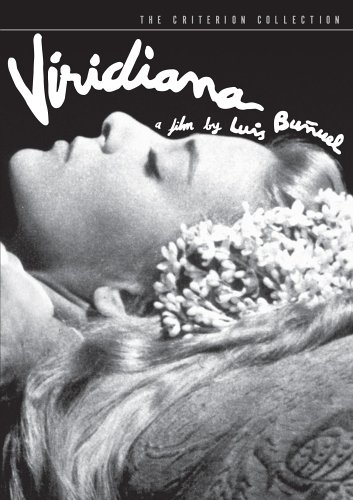
As is the case with many of Criterion's releases, Viridiana is a film that was quite controversial upon its original release, and to some extent, still is today. The film's namesake is a young woman who is just a week away from taking part in the investiture ceremony, her convent receives a letter from her Uncle, who sends his regrets that he will be unable to attend the event. The convent's Mother Superior sends Viridiana to see this Uncle, and that's where the trouble begins.
The Uncle is a single ol... man who lives in self-imposed isolation, save for a servant and the servants daughter. Once Viridiana arrives at his estate, she discovers that the Uncle has some plans for her that will certainly not agree with her faith. While most films see this as enough of a plot to complete a film, this setup is just the tip of the iceberg here.
Posted in: Disc Reviews by Archive Authors on January 30th, 2006
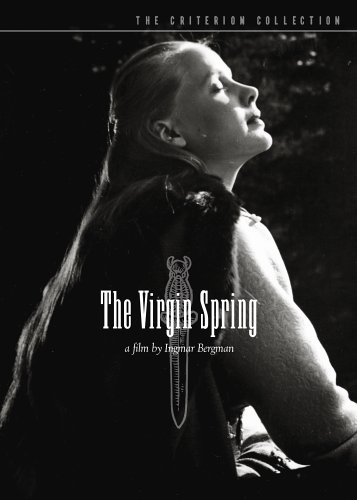
Honestly, I wasn't expecting too much from The Virgin Spring. I know that it's Bergman, but it's based on an ancient Swedish medieval ballad. If your source material is hundreds of years old and only two pages long, surely there can't be much to see from the film, can there?
I could not have been more wrong. Though this may be just under an hour-and-a-half in length, the film is filled with subtext, imagery and several powerful messages. Spring tells the story of a fair maiden who is brutally ...aped and murdered on her way to church, and her father's revenge on those responsible. Bergman has managed to make his morality tale into a complex commentary on both human nature and the nature of Christian faith. By setting his story in the period in Swedish history between paganism and Christianity, he is able to masterfully illustrate the struggle of both the first Christians and Christians today between denying basic impulses and focusing on the will of God.
Posted in: Disc Reviews by Archive Authors on January 7th, 2006
The Bad Sleep Well reminded me a lot of The Godfather. Both films begin with a large wedding, where the story behind the wedding is more fascinating than the event itself. Both films are also about corruption, what it means to be loyal, and what happens if you do favors for the wrong people. The Bad Sleep Well is particularly meaningful to our modern society, as instead of the subject of the film being gangsters, the focus is on the new heavies on the block... corrupt corporate heads. In the wake of the scandals at Tyco, Worldcom, Enron and others, this 1963 film carries new weight for American audiences.
Kurosowa was famous for his samurai films, and this modern film still carries some of those same themes. The Lords have moved from the countryside to the boardroom, but the pressure to perform and protect the organization at all costs remains. Those warriors in the support roles are compelled to defend the actions of the corporation even with their own lives, if it comes to that. This film is part film noir, part corporate drama, and yes, part samurai film.
Posted in: Disc Reviews by Archive Authors on December 18th, 2005
Synopsis
Thankfully, as part of Criterion’s desire to be completists of the Akira Kurosawa collection, they have finally decided to release Ran on DVD. For the sake of time, I’ll include my thoughts of the film based on my review of the Kurosawa boxed set, which included a previous version of Ran: