Fox

I never had a big momma growing up. My mother and each of my grandmothers were never what I would call big. My mom and her mom barely cleared 5 feet tall and my grandma on my dad’s side while pretty tall was very wiry and thin. So I never had the huge momma experience and it was probably for the best. However, I am not foreign to the concept of Martin Lawrence playing a Big Momma as I saw the first movie. Two movies later, does it still have its magic?

Malcolm Turner (played by Martin Lawrence) is a FBI agent who specializes in the art of disguise and witness protection. But today, he is threatening his local mailman (played by Ken Jeong) to pull the postal vehicle over. Eventually he does and then the two get into a fight because the mailman has to deliver the mail. Malcolm gets the letter he was looking for. His son has just been accepted to go to the school he went as young adult, Duke University.

As I have mentioned before on this site, I was married to somebody else before my lovely Sarah. So unfortunately, I know a thing or two about controlling spouses. People who try to force them their loved ones into things they would not normally do and make the least insignificant things into overly important ones. It is a terrible harmful practice and leaves both partners scorned. Thankfully I learned to love again. Let me see what I will think of another controlling drama entitled N-Secure.

A horse carriage rides across the city. We see a young couple, David Alan Washington (played by Cordell Moore) and Robin Joyner (played by Essence Atkins). Later at Chez Philippe, they enjoy some dinner and share some time at their fireplace where David gives Robin a necklace and then we get a romantic night. The next morning, David wakes up and starts his meticulous daily routine before telling Robin to get up and make him breakfast.

When my webmaster asked if I would like to rehash my dvd review for Priscilla: Queen of the Desert for the new blu-ray edition, I jumped at the chance. After all, I did love the movie. But in this blu-ray era, this was strangely the first time I had to do this. I wrote that review almost four years ago to the day. As many would argue, my writing has changed considerably in that time. But without further adieu, let us take a look back at the review.

From the DVD:

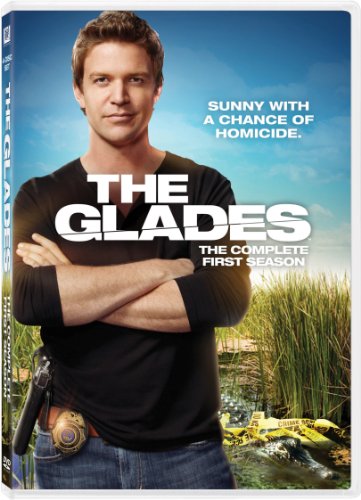
"Some say I don't play well with others. I was a damn good detective in Chicago until a disagreement with my boss encouraged me to pack it up and make a change. So I put The Windy City in my rearview and headed to the Sunshine State. Kick back. Play some golf. Work on my tan. Maybe write the occasional speeding ticket. Yeah... Well... that didn't work out."

"My father said the army makes all men one, but you never know which one."

There have been a lot of movies about Vietnam over the years. Some are quite political, while others try to capture the sheer horror of war...any war. It's been long enough now that there are even lighter works about the conflict. But this might just be the smartest film about the war ever made, because it never actually goes to Vietnam.

Of all the straight-to-video titles I didn't expect to see, Street Kings 2 would be high on the list. The original film was a predictable film with bad pacing. The box office was no better. That film pulled in about $26 million and quickly faded into obscurity. But here we are two years later and the title has been attached to a direct-to-video release from Fox. None of the original characters or actors are found here. The title merely suggests a similar story, this time in the Motor City, Detroit.

The film opens with a drug bust gone horribly wrong. Detective Marty Kingston (Liotta) is injured in the violence and spends his recovery at a desk and playing a department crime dog mascot at elementary schools. When his partner turns up shot and killed, Kingston injects himself into the investigation led by a green detective Sullivan (Hatosy). At each turn the investigation appears to paint an ugly picture of the deceased detective. He was as dirty as they come and mixed up in all sorts of seedy deals. It seems hard to believe that Kingston wasn't aware of his partner's dirt. Then other cops implicated in the corruption end up killed, and soon we understand Kingston's motives for being a part of the case.

"So far every person I've met in this strange place suffers from the most florid delusions, chasing green mists and looking for lost lords. I can only assume that this is the result of poor diet, or they're all just barking mad."

C.S. Lewis created an incredibly imaginative world when he wrote his Chronicles Of Narnia. The stories were an escape, of sorts, from a war-torn Europe. They integrated elements of Christianity in an effort to provide a semblance of hope in the form of a children’s fairy tale. And like all such tales, the world of Narnia was first and foremost a place of magic and bewilderment. It was a place where fantastic creatures of both good and evil thrived, living out epic lives of adventure. It was also a world where only children could enter. The stories became hugely popular, first in England, and eventually around the globe. Since that time we live in a different planet than the one Lewis was attempting to offer a respite from. Still, the images and ideals are remarkably relevant today. With such sweeping grand adventures and marvelous creatures, it’s no surprise that the franchise has found its way into films. The only real mystery is why it took so long. Perhaps it was necessary for the technology to finally catch up, providing a far more realistic and captivating experience. Some credit must also go to the enormous success of the Harry Potter and even the Lord Of The Rings films. With the investment of time and money required to bring such a world into existence on celluloid, there must be some reasonable assurance that, if done correctly, there was a large enough profit to be found. These earlier, and continuing, franchises have overwhelmingly proven that point. It was only a matter of time before the studio that practically invented movie magic would find such a place as Narnia and claim it for their own. When you combine these extraordinary histories together, can there be any question as to the results?

"We all know the story. Virginal girl, pure and sweet, trapped in the body of a swan. She desires freedom, but only true love can break the spell. Her wish is nearly granted in the form of a prince, but before he can declare his love, her lustful twin, the Black Swan, tricks and seduces him. Devastated, the White Swan leaps off a cliff, killing herself, and in death finds freedom."

Darren Aronofsky made a huge name for himself with The Wrestler. That film was a great comeback for Mickey Rourke, who was ripped off at that year's Oscars by the more politically correct Sean Penn. Aronofsky considers The Black Swan to be a companion piece to that film. You will certainly be able to see what he's talking about, but he's missing one important element in this film. He doesn't get near the powerful performance out of Natalie Portman that he did from Rourke. She was also nominated for an Oscar, but unlike Rourke, she didn't deserve to win it. She didn't.

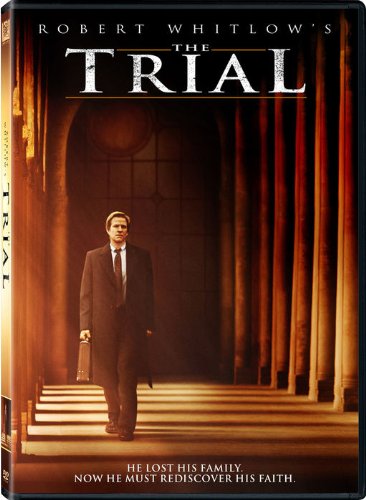
A criminal defense attorney, played by Matthew Modine, has lost all hope after his family dies in an accident. On the brink of suicide, he is called upon for one more case, defending a young man who may face the death penalty on a murder charge.

The story is established very quickly and though each character resists joining forces for the defense, it only takes about a 30 second scene each to convince them otherwise, and then it is straight into the trial (hence the title I suppose).This quick assembly and ever faster exposition makes the story harder to buy. I understand the film only clocks in a bit faster than an episode of Law and Order, but one wonders if it is all necessary if its going to be so hasty.

"In training they give you an F. Out here you get killed."

When was the last time you saw a good train movie? There have been a few classics. Most of the best merely happened on a train with the drama having to do with what was happening on the train. I can't really remember when I saw a good train film where a train itself was the source of the tension. Yes, there have been several films where terrorists hijack a train and threaten something bad if their demands weren't met. But in Unstoppable, the threat really is just the train. There's no political agenda at all going on here. It's really quite a clever threat when you think about it. The train doesn't "want" anything. It's powered by its own laws of "nature" and can't be talked down or reasoned with in any way. There's no emotion to get in the way. It just drives forward at its own pace. It doesn't care what is in front of it or what it's left behind. It merely is. In fact, Unstoppable can be a metaphor for runaway technology, the machine that can't be stopped. What a rather nice old-school device for one of society's deepest philosophical quandaries.