Fox

"Okay, first of all, let me get something straight. This is a journal, not a diary. Yeah, I know what it says on the cover. But, when my mom went out to buy this thing, I specifically told her not to buy one that said 'diary' on it. This just proves that Mom doesn't understand anything about kids my age."

I guess I missed out on the phenomenon. Apparently in 2007 a guy named Jeff Kinney created a sort of crude comic book. The figures are little better than stick men, and the wit is something from the sixth grade. I guess that pretty much matches the book's purpose, which is to cover the life of a smart-aleck from middle school. Of course, when I was young they didn't call it that. They called it junior high. Unless you went to Catholic school where it didn't even exist. Anyway, the comic built what you'd call a cult following. It was inevitable from there that the short little features would find themselves the subject of a motion picture.

USA Network has certainly found a little niche for themselves, milking their "characters wanted" run of television shows. It all started with Monk and has progressed through several successful reincarnations of the quirky character-driven shows. In some cases the quirky nature of the characters gets pretty out of control, and while I liked Monk a ton, his OCD was significantly over the top at times. This tends to draw too much attention and minimize whatever might be happening in the episode itself. That's not the case with White Collar. This series has a ton of potential to be the next big breakaway hit for the cable network. There's just enough style to the main character to make him incredibly interesting, but not so much that the exceptional stories don't get your full attention. I don't get to watch that many television shows these days. I'm too busy keeping you guys from making bad DVD or Blu-ray choices. It's a tough job, but somebody's got to do it. I'm not complaining, really. It just stands to reason that I will miss the occasionally solid new show to hit the airwaves. Such is the case for me and White Collar. Fortunately for both of us, I get the chance to catch up when the shows inevitably reach the home theater market. Fortunate for me because I do eventually get to see them. Fortunate for you because I can let you know when there's something you might have missed that you need to see. This is one of those times.

Neal Caffrey (Bomer) is an elite thief and con artist. He's an expert forger and is doing four years after finally getting caught by FBI agent Peter Burke (DeKay). With just three months remaining on his 4-year stint, Neal breaks out of prison. Now, what would make a guy escape when he's almost finished doing his time? The answer, of course, is a woman. In this case it's Kate (Daddario) who broke up with Neal on her last prison visit. But, Neal is convinced there is more to the story, so he takes a powder from prison, only to be caught again by Peter. Now Neal is facing another four years behind bars. Fortunately, however, Peter is trying to catch one of his most elusive criminals. He calls him The Dutchman because he's like a ghost. Neal offers his arch-rival a deal. Peter releases him into his own custody, and Neal will help him track down the Dutchman. If the case goes well, the deal can be made permanent for the rest of Neal's prison time. So, ala 48 Hours, the duo track down the crook. Neal ends up talking his way into a multi-million-dollar mansion suite for his new digs. While he helps Peter, he is secretly trying to track down Kate, who is mixed up with a mysterious stranger. Neal only knows him by a pinky ring he's seen in a photograph. The stranger wants something he believes Neal stole and has stashed away somewhere. Neal's investigation hits several snags, not the least of which is an ankle bracelet that only allows him to traverse a 2-mile radius of his home when he's not with Peter. To help out with some of the legwork, he has Mozzie (Garson), an old friend and fellow con artist.

There was a time when racial stereotypes on television and in the movies could be very funny. Shows like All In The Family and Sanford And Son brought an entire generation to their knees with laughter. Today audiences are a little more timid when it comes to that kind of humor. This is the kind of movie you end up looking both ways before you think about letting out even the slightest giggle to make sure no one is watching, or worse, training their cell phone camera on you. I don't know about you, but I don't want to feel like my reactions to my entertainment are under a microscope. Our Family Wedding will make you feel exactly that way. It's a combination of the Sydney Poitier and Spencer Tracy classic Guess Who's Coming To Dinner (which happened to also feature  Louise Jefferson herself, Isabel Sanford) and the original Peter Falk and Alan Arkin The In-Laws. Both of those films are superior to Our Family Wedding in every way imaginable.

Marcus (Gross) and Lucia (Ferrera) are a young couple who presumably met in college. In spite of their cultural difference (he's black, she's Mexican) they have decided to get married and move to Laos as volunteers. They are coming back home to L.A. to tell their parents of the impending nuptials. Before they can even make the announcement, the two fathers inadvertently meet. Lucia's father Miguel (Mencia) runs a towing company and he ends up towing the car of Boyd, Marcus's father. Of course, at that moment they are unaware that they will meet under entirely different circumstances, namely the dinner  engagement announcement of their children. It doesn't take long for the clashes to begin. The families are separated by race and economic circumstances. Boyd is a divorcee who raised his son on his own, while Lucia was raised by a large extended family. The film quickly settles into all of the wedding-comedy clichés. There are the father clashes, the arguments over wedding plans, the police station scene, the dysfunctional family dynamic and, of course, the "let's call the whole thing off" moment. Finally, there is the expected disruption at the ceremony itself, in this case mostly caused by a goat on Viagra. Don't ask.

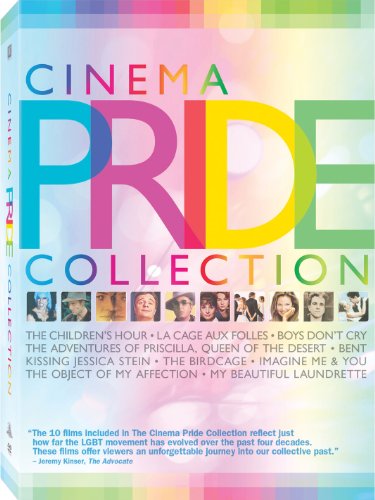
As the name suggests, this is a collection of ten movies on LGBT themes. In chronological order, here's what we have:

The Children's Hour (1961): Shirley MacLaine and Audrey Hepburn are the headmistresses of a girl's school, and their lives are turned upside down when one ghastly little child accuses them of being romantically involved. It is clear, though, the MacLaine would very much like to be. This was director William Wyler's second stab at adapting Lilllian Hellman's play, and this time was able actually to deal with the play's central issue, rather than disguise it as he had to

When I was a kid in the 80’s, Predator was one of those films that you weren’t supposed to watch, but everybody did anyway. Over-the-top action, invincible heroes, cheesy one-liners and big, big explosions made this a film that was a favorite of pre-pubescent boys everywhere. Going into this disc, I found myself wondering if the film would stand up to the harsh tests of time and maturity.

The answer to that question is both “yes”, and “no”. In the “no” column, it is very apparent early on in the film…that there is very little here in the way of plot. Some soldiers are hired to go behind enemy lines to rescue an American politician who has been kidnapped by generic terrorists. Once the team arrives at their location, they discover that they have actually been sent on the mission for different reasons altogether, though those reasons are never really made clear. On their way back to the rendezvous point, they have multiple encounters with an evil and mysterious creature who tries to kill them (and occasionally succeeds). That’s about it. Beyond these basic plot outlines, dialog is basically reserved to screaming profanities and the aforementioned goofy one-liners.

Whenever there is a disaster, there are always the inevitable questions that follow. Where did it all begin? Could it have been avoided? What can we learn from this? No, I'm not talking about the oil leak in the Gulf.  Hollywood is no exception. You have your disaster movies like Earthquake, and you have your movies that are disasters like Waterworld. Of course there are even disaster movies that are also disasters like the recent 2012. Some disasters you never see coming. But, many such events could have been predicted and possibly avoided if only the right folks had been paying attention. This is the story of one such event: Showgirls.

I guess you could say that it all started with Basic Instinct. The film was directed by Paul Verhoeven and scripted by Joe Eszterhas. You remember the movie. It starred an as yet unknown Sharon Stone as the girl who dared Michael Douglas to arrest her for smoking in the interrogation room. There were ice picks, torrid sex scenes, and a few gender- bender moments. The film was a small affair with a budget under $50 million. It took the world by storm and raked in almost $400 million in the worldwide box office. It became that film that everyone talks about. Water cooler conversations were dominated by the thing. It quickly invaded the pop culture, and even if you'd never seen the movie you knew the common references.  So, three years later when the same director and writer team decided to take on the Vegas showgirl world, expectations were high indeed. If Basic Instinct got them talking, Showgirls is going to have them screaming, and so it did ... only not quite in the way everyone had expected. The end result? A mere $20 million at the box office. In less than a few weeks Showgirls had become one of the most disappointing movies in the history of the industry.

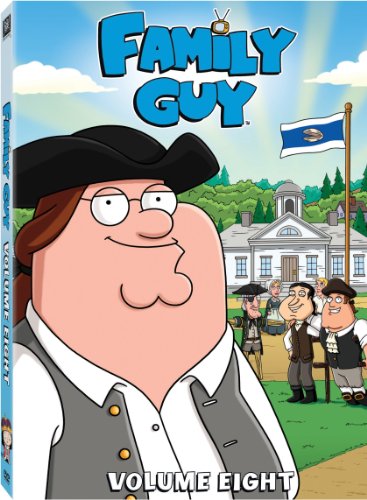
The Griffins, residents of Quahog, Rhode Island, aren’t the standard sitcom familial unit. The patriarch, Peter, a thick-necked, thicker-accented simpleton, has a wonderful grip on eighties television shows and bad musical groups, but lacks in social graces (soiling oneself at a neighbor’s funeral?). His wife, the animated-hot and ever-loving Lois, seems hell-bent on keeping some semblance of normalcy in the household, even if it means burying her feelings and ignoring reality a bit. Their oldest child, Meg, is the very definition of unpopular, but trying. Chris, her thirteen-year-old brother, is a dense lug who fears the evil monkey only he can see. Baby Stewie is a two year old with Rex Harrison’s voice, Howard Cosell’s vocabulary, and Napoleon’s lust for world domination, but his family treats him just like any other two year old. Finally, their dog, Brian, is a well-read, well-spoken hound who’s trusted enough to babysit, even if he’s known to take a martini or two. Family Guy is the almost always hilarious story of their lives and their struggles.

Fox never really knew what to do with Family Guy, even though it premiered right after the Super Bowl. It moved around the schedule like a cartoon Bedouin, never getting a chance to claim a timeslot for its own. Its fans followed it, but newcomers never knew where to find the show after its initial viewing. Its humor also didn’t make it a very easy sell to advertisers; it’s a more gruff version of The Simpsons, with far “bluer” material (sort of like if Homer and Marge were involved in an S&M episode). As a result of these obstacles, and in spite of serious protestations from a very large fan base, Family Guy only lasted three seasons. But never count a good series out for the count. Three years after it left the airwaves, Family Guy was back. Now the show is going into its 9th season. Quite a success story.

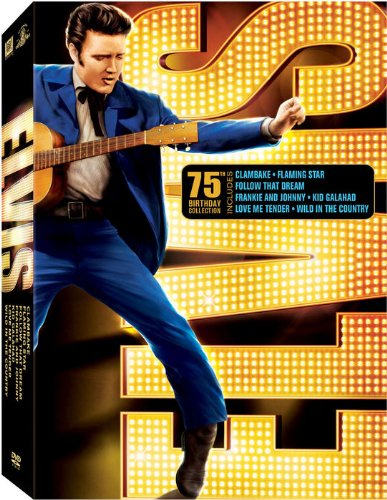
Elvis Presley is often referred to as The King Of Rock And Roll, at least to his fans. There's no denying the impact that he had on the music scene. He was the first rock and roll star, to be sure. Colonel Tom Parker, his long-time manager and partner, created many of the marketing traditions that are commonplace in the industry today. He knew the value of his star, not only as a performer, but as a brand. For the first time, a musician's image and name started to appear on everything from bath towels to women's underwear. Fans are often split on their feelings for the self-styled Colonel, but Elvis would not have become the name brand he still is today, without him.

One of those brand expansions tapped into Elvis's own boyhood fantasy. Elvis had worked as an usher at a local movie theater as a teen. He's often related that he would linger in the auditoriums, watching those movies and fantasizing that he was James Dean or Marlon Brando, two of his idols. With the help if Colonel Parker, Elvis would get to see that dream become a reality. The King was to expand his realm to include the movie business and Hollywood. No experience? No problem. After all, if Elvis could go from failing music in high school to becoming the highest paid musician on the planet, he could certainly tackle the world of acting. And he did just that.

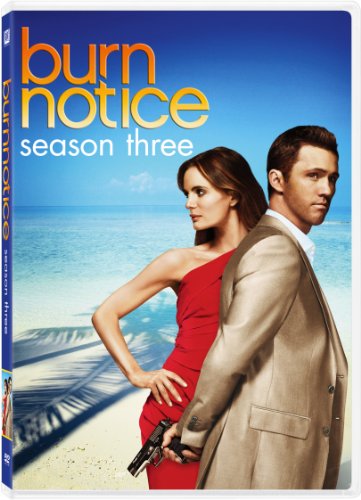
“My name is Michael Weston. I used to be a spy until, ‘you’ve got a burn notice’. When you’re burned, you’ve got nothing. No cash, no credit, no job history. You’re stuck in whatever city they decide to dump you in. You do whatever work comes your way. You rely on anyone who’s still talking to you: a trigger happy ex-girlfriend, an old friend who used to inform on you to the FBI, family too, if you’re desperate. Bottom line: Until you figure out who burned you, you’re not going anywhere.”

Burn Notice has all the earmarks of a really great television series. It has Bruce Campbell, and that alone should make it worth watching. The concept is a clever one and not the usual kind of spy show we’ve already seen too much of. The problem is that it’s not a great show. It’s not even a very good show. Campbell is way too underutilized and would have improved this series if he’d been in the lead role. I can see him as Weston big time. The series is also way too over-stylized. Ever since 24 and those distracting frames, there has been this race to see who can be the most distracting and annoying. Burn Notice wins hands down. There is this incessant need to freeze-frame the image at the most ludicrous moments. Somehow this is intended to up the drama ante. If that’s the ante, I fold. There’s too much annoying narration from Weston. Back in writing school you’re taught over and over again that you need to show, not tell. Here the Weston narration treats us like we’re kindergarten kids who need every little action he takes explained in incredibly boring detail. He then throws in some not very funny moments of wit that just fall flat.

Mel Brooks has often been called the Master of Comedy. The moniker might be a bit too grandiose, but he was certainly the master of the parody. In recent years that has become more evident than ever. Too often I've been forced to sit through something called a comedy. Not only can I do so without ever actually laughing, but there are far too many titles of late that don't even give me the chance to crack a smile. It's not that I've seen so much that it's hard to find anything original. I can still laugh like crazy when I watch a Sanford and Son episode I've seen at least 50 times or an Abbott & Costello routine that was old before they even got their hands on the material. There is a famous quote that states, "Dying is easy. Comedy is hard." Then why does Mel Brooks make it look so dang easy?

While we're on the subject of masters, you really can't avoid the Master of Suspense, Alfred Hitchcock. Perhaps no one understood his audience more than Hitch did. He's influenced a great many of today's filmmaking geniuses. He's been admired by almost anyone who has ever really studied film. Mel Brooks can be counted among his students. On more than one occasion I have seen an interview where Brooks can't say enough flattering things about Alfred Hitchcock. It would have only been a matter of time before Brooks turned his creative mind to one of his own idols. The result is enough to give anyone High Anxiety.