Fox

I’m not a wrestling fan. There is very little about that world that holds any charm for me. I find the grandiose posturing to be rather dull. The characters aren’t all that interesting to me, and I don’t find myself compelled to spend 100 bucks on a “free for all” pay per view event. With that said, this film did bring back a flood of memories for me. When I was a kid, perhaps 11 or 12, I looked at wrestling a little differently. I had an uncle who would watch it from time to time, but the television version never held much for me even then. I grew up in a relatively middle sized town in eastern Pennsylvania. If you play Monopoly, you’ve heard of the Reading Railroad. I grew up in Reading. By the way, it’s pronounced Red not Reed (ing). Nearby in a place called the Hamburg Field House, the regional wrestling federation of the time would film a month’s worth of television episodes in one night. Our parents found out that for about 5 bucks they could drop us off for 5 hours or so and we would be entertained. It didn’t hurt that the place featured 25 cent hotdogs. So my friend David and I would hang out at the joint every second Tuesday and watch live wrestling. To an 11 year old kid, it was as much about being trusted out on our own than it was the event. Still, we did become familiar with the regional names and characters. I even got smacked upside the head by one ranting wrestler’s shoes. It hurt, but it was a bump I wore with some kind of twisted feeling of honor for three days. I don’t even remember the name of the wrestler, but I remember that bump. Times have changed and Championship Wrestling has been gobbled up by the Vince McMahon empire that most of those regional outfits have succumbed to. I haven’t talked to Dave in years, and honestly I haven’t even thought of those summer Tuesday nights at the Field House in a long time, filled up with quarter hotdogs and plenty of soda. Then came The Wrestler.

Randy “The Ram” Robinson (Rourke) is at the end of his career as a superstar wrestler. He’s known for his trademark move, the Ram Jam, where he climbs up on the ropes and leaps down on his helpless opponent. You can feel the pain, not only of his current bout, but the decades of abuse he’s put his body through. In the ring he’s beloved by thousands and respected by his peers. Outside of the ring he’s alone. He seeks comfort in the guise of stripper, Pam (Tomei). Pam is also at the end of her career, finding it harder to compete with the younger girls at the club. She’s drawn to Randy, but resists hooking up with one of her clients. When Randy finally pushes his body over the edge, he has a heart attack. The doctors warn him that he’s got to stop pumping the steroids and growth hormones into his body, and worse, that he has to stop wrestling. Randy tries to acclimate himself to the outside world. He increases his hours at the Acme by working the meat counter and attempts to reconcile with his college age daughter. He even has hopes of breaking through Pam’s resistance. Perhaps it’s too late and he’s too old, but he learns that the only place he was ever really good at anything was in the ring. There he’s accepted and loved for what he is. Randy accepts a rematch, celebrating the 20th anniversary of one of his most famous matches. He’s determined to go through with it and please the crowd, if it kills him.

In 1951 Robert Wise made the Earth stand still. The United States, in fact the entire planet, was in the middle of a frightening cold war. If you believed the media at the time, we were standing just moments from nuclear annihilation. We were given images of a crazy man’s itching trigger-finger poised over a button. School kids were led in air raid drills that promised protection from this powerful menace by the wooden tops of your desks. The government and private sectors were engaged in witch hunts to smoke out “commie” sympathizers. The fear touched every aspect of our lives. Hollywood was no exception. We confronted these atomic fears with giant creatures and post apocalyptic humans, all mutated by radiation fallout. But Robert Wise delivered a morality tale that offered something far different. It offered hope.

I avoided this remake at the box office. This time it wasn’t just because I was too busy. I love the Wise classic and have long considered it off limits for a remake. When I heard about this one, it brought cringes. I had flashbacks to Steven Spielberg’s total rape of War Of The Worlds. Suddenly the new story wasn’t about hope or an interplanetary federation. It was a Captain Al Gore fantasyland come true. I stayed away.

“A dog has no use for fancy cars, or big houses, or designer clothes. A waterlogged stick will do just fine. A dog doesn’t care if you’re rich or poor, clever or dull, smart or dumb. Give ‘em your heart and he’ll give you his. How many people can you say that about? How many people can make you feel rare and pure and special? How many people can make you feel extraordinary?”

In the name of full disclosure, I should probably give you a little background in the circumstances in which I find myself watching and reviewing Marley & Me. If you’re a regular reader of this site and my reviews, you have come to learn that I have a Siberian Husky named Athena. You’ve come to know this because I have, from time to time, allowed her to “review” many of the various dog films that have come my way for this site. You also know that Athena retired recently with her review of Walt Disney’s Bolt. What you don’t know is the reason behind the retirement. About three weeks ago, Athena was diagnosed with bone cancer in her front left shoulder. At 14 years old, there really isn’t much that can be done. She was given anywhere from two weeks to a couple of months, on the outside, to live. We’re able to control any pain she has with medication. In fact, the medication has often given the illusion that she’s getting better. We know she’s not, and that it’s only a matter of time from here on out. It’s a tough situation to be in, as I’m sure any dog owner out there realizes. So far, Athena’s still with us. She’s beaten the lower estimate and continues to avoid too much discomfort. But, the sad reality is that my wife and I are watching our 14 year old companion in her final days. This is not the place you want to be in your life while watching Marley & Me. It might have been the toughest film I’ve had to watch in nearly 10 years of reviewing movies, in one form or another. Enough about my situation.

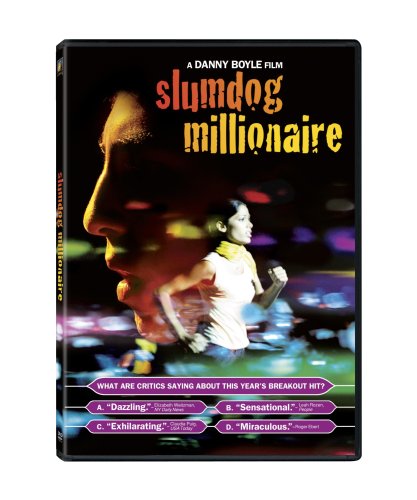
Slumdog Millionaire has become the latest “must see” Best Picture award winner. While I actually liked the film better than I imagined I would, it’s precisely because the movie is not what it appears, or at times claims to be. If I just took the buzz and advertisement campaign to heart, I would expect a Bollywood picture to the extreme. If you’re not really sure what that term means, I can tell you that this movie will not really clarify anything for you. The traditional Bollywood, Indian made films, feature intense tragedy and love stories. They are usually swimming in song and dance numbers.Looking at the film’s television spot, it would seem that that’s exactly what this movie is. The problem? The song and dance that tends to dominate these spots is not even in the film proper. Rather, the only musical number occurs over the closing credits. Now, while all of this may sound like criticism, it’s actually not. I’ve seen Bollywood productions, and they’re just not up to my tastes. I never fidgeted and yawned so much in my life. That doesn’t mean they’re bad, by any means. I’m sure that there are some that are quite good and entertaining for some people. I’m merely not one of those folks. So, when I discovered that Slumdog Millionaire was going to land on my front door to watch and review, I began to sweat a little bit. How, I asked myself, am I going to handle having to blast the darling of the Hollywood circuit? Am I ready for the barrage of hate emails a negative review is likely to elicit? Fortunately, for us all, this is nothing at all like a true Bollywood film, and try as he might, Danny Boyle just can’t escape his own natural tendencies. In fact, I didn’t fidget or fuss at all. It’s a pretty good film, after all.

A few years ago Who Wants To Be A Millionaire was quite a large phenomenon on American television. The original game show, hosted by Regis Philbin, dominated the primetime airwaves. ABC milked that cash cow for all it was worth, and before long it seemed Millionaire was on just about every night. But, like all fads, the luster wore off, and the show began a steady decline. It survives today, but with lesser known hosts and as a half hour syndication show, usually aired pre-primetime. I’m told the show continues to be a hit abroad, and particularly in India. Whether or not that’s true, I can’t confirm. You do need to accept that premise, however, to buy into the movie. It doesn’t hurt to have at least a passing familiarity with the game’s general format. It looks very much like it did here. A new host and, of course, the currency is in local tender. Still, the spirit of the game we know here exists in India, according to the film.

Written by Ken Spivey

“Slumdog Millionaire” grabs you by the lapel and forces you to watch the triumphant resilience of three orphans who thrive amid unbelievable poverty and cruelty which still exists among the lower classes in rapidly industrializing India. “Slumdog Millionaire's” opening sequences employs both English and Hindustani, with English subtitles. The use of subtitles helps to draw the viewer into his this alien world. Slowly, the movie shifts entirely to English. The story is told through flashbacks by a young Indian man, Jamal Malik . An incredibly unlikely winning contestant on India's version of “Who Wants to Be a Millionaire,” Jamal is tortured by the police, who suspect that this mere “slumdog” is cheating.

Posted by Ken Spivey

What follows is a brief, yet accurate, recounting of the canine endowed cinematic masterpiece, “Marley & Me.” Jennifer and John Grogan (Jennifer Aniston & Owen Wilson) are a newly wedded couple who are enjoying their new life together. John is an up-and-coming journalist whose income allows the Grogans an increasingly comfortable lifestyle. John still hangs out with his old guy pals at the bar and holds on to some of the lighter points of bachelorhood while his married life remains rather carefree. This all changes when his wife's biological clock starts ticking. Grogan's best friend suggests that John get his wife a dog. Following this advice, John drives his wife to a farm (which I can only assume was some sort of “puppy farm”) to pick out their family's newest addition. Being the penny wise, upper middle class folks like they are, the Grogans pick out the least expensive “clearance puppy” and name him “Marley.” Things were fine at first, Jennifer's need to spawn was abated and all was at peace in John's world until they both realize that Marley is really the dog from hell. He chews up furniture, scares neighbors, barks all night, is kicked out of obedience school, and makes life miserable for the Grogan clan. Despite his flaws, Marley appears to have woven some sort of love spell upon the couple, for they now love the now massive pup.

“Did you pick your feet in Poughkeepsie?... Have you ever been to Poughkeepsie?... When you were in Poughkeepsie, you sat on the edge of the bed, didn’t you? You put your fingers between your toes and you picked your feet…. If I can’t bust you on this other thing I’m going to bust you for picking your feet in Poughkeepsie.”

There can be no argument on this point. The 1970’s was a golden age for the cinema. When you think about the iconic characters and films the decade produced, it’s hard to contradict the point. Films like The Exorcist, The Godfather (both parts), Jaws, Dirty Harry, Star Wars, Superman The Motion Picture, The Sting, Rocky, Deliverance, Apocalypse Now, Alien, One Flew Over The Cuckoo’s Nest, and yes, The French Connection. They redefined film genres. The slasher film was born in the 1970’s. Their influence is felt on nearly every film today, and inspired nearly every new filmmaker to come along in the years since. Yes, there were golden eras before then, but I’m not sure there’s been one since. Of course, there have been truly great movies since, but can you remember a decade with that kind of a run?

The French Connection had one of the best film endings a show of this kind could ask for. There was absolutely no need for a sequel. Obviously the success of the first film laid the groundwork for another adventure. In reality the case was rather left open, so there was certainly room to follow up the action. The problem is that none of the elements from the first film remain in the second beyond Gene Hackman’s portrayal of Popeye Doyle and the return of Fernando Rey as the villain Charnier. Friedkin would not return to direct, and even though he was replaced by an even greater director in John Frankenheimer, not much of the original crew remained. Neither Egan nor Grosso were used to consult on the film, and of course, Grosso’s character along with the corresponding Roy Scheider were gone from this film. The gritty streets of New York were replaced by the streets of France. Even the Poughkeepsie line used in the film’s early minutes is a throwaway line meant merely as a wink to the audience. The film has none of the police procedural drive and passion that the original had. In short, this sequel lacks almost everything that made the first a great film. But in spite of all it did not have, it managed to at least be a good film.

None of this film occurs in New York. We begin with Doyle (Hackman) arriving in France to track down “Frog #1”, Charnier (Rey). He doesn’t attempt to hide his contempt for the French and so does little to endear himself with the local police here. Instead they’ve invited him merely to be a target to lure Charnier out of hiding. It backfires, and Doyle is captured instead and hooked on heroin so that Charnier can find out what they know. The film becomes far more of a personal journey for Doyle and less about catching the bad guy. Fortunately Hackman is up for the job and puts in a highly emotionally charged performance. He has to play Doyle, first as a forced junkie, then in the throes of detox. Here we find the film’s best moments. He has a rather long interaction with a French detective (Fresson). This scene is priceless and alone worth the price of admission. In the end it’s a film about obsession as large as the great white whale in Moby Dick.

“We need to go back to a time where it all started. When God was getting busy with the creation of the universe, where there was only cosmic goo, God’s play-doh, if you will. While God was messing with this play-doh, creating all living things, he put death into a ceramic jar for safe keeping, until he could figure out what to do with it. One day God gave the jar to a frog and a toad to guard it from harm, while he went off to create something more fantastic. Why he gave it to a frog and a toad I’ll never know, but one thing led to another and the jar shattered, letting death out; and ever since, everything has to die. So, there you have it, the mystery of death finally revealed.”

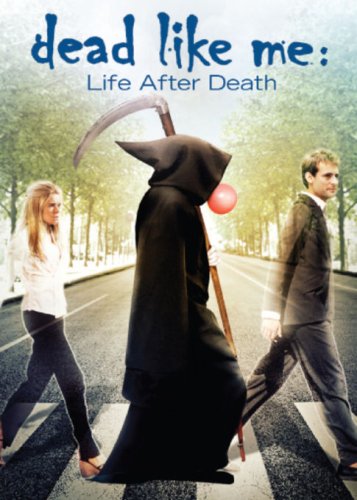
What a fitting way to open up an unexpected new chapter in the story of Dead Like Me, the direct to video film that attempts to resurrect from it’s own death the cult favorite Showtime original series.