Posted in: Disc Reviews by M. W. Phillips on August 2nd, 2011
“Zippedy Doo-Dah. Zippedy Yay. My, oh my, I got a wonderful slave.”
I’ve never really been a big fan of director Gary Marshall’s films. I prefer his work as a producer of classic sitcoms, like The Odd Couple and Happy Days. Marshall’s most popular film, Pretty Woman, plays off the Cinderella cliché a little too much for my taste, with a man ultimately finding and saving a woman by redefining her. Three years before Pretty Woman, Marshall explored these same themes in Overboard, but instead of slick fantasy salvation at the hands of a wealthy Richard Gere, the redemption comes from a misogynistic and cruel Kurt Russell.
Posted in: Disc Reviews by Archive Authors on July 27th, 2011
I’ve got to admit that for a long time, Four Weddings and a Funeral was in a category of movies that I had no intention or curiosity to see because of the title, the cast and the story. Hugh Grant was a significant step down towards the emasculation of man, where we start wearing large sweaters, hang out in pseudo-Starbucks coffee shops and talk about what happened on American Idol or some lame thing along those lines.
Well here I am, years later, apologizing for some of the things I thought about that film. I’d seen it before a couple of times through the years, but in putting my error out there for the world to read, I opened myself up for the scorn that comes with it. But at the end of the day, throwing away Hugh Grant (it was the role that launched him upon American audiences, but still) and Andie MacDowell (who I like to call Mrs. John Elway), the film’s story, written by Richard Curtis (most recently of Love, Actually) was a refreshing breath of air into a fairly dead (subconscious pun unintended) romantic comedy genre. With Mike Newell’s direction (Harry Potter and the Goblet of Fire), the film is funny, with some moments of poignancy and emotion.
Posted in: Disc Reviews by Archive Authors on July 27th, 2011
I’ve got to admit that for a long time, Four Weddings and a Funeral was in a category of movies that I had no intention or curiosity to see because of the title, the cast and the story. Hugh Grant was a significant step down towards the emasculation of man, where we start wearing large sweaters, hang out in pseudo-Starbucks coffee shops and talk about what happened on American Idol or some lame thing along those lines.
Well here I am, years later, apologizing for some of the things I thought about that film. I’d seen it before a couple of times through the years, but in putting my error out there for the world to read, I opened myself up for the scorn that comes with it. But at the end of the day, throwing away Hugh Grant (it was the role that launched him upon American audiences, but still) and Andie MacDowell (who I like to call Mrs. John Elway), the film’s story, written by Richard Curtis (most recently of Love, Actually) was a refreshing breath of air into a fairly dead (subconscious pun unintended) romantic comedy genre. With Mike Newell’s direction (Harry Potter and the Goblet of Fire), the film is funny, with some moments of poignancy and emotion.
Posted in: Disc Reviews by M. W. Phillips on July 25th, 2011
“Give me a head with hair, long beautiful hair, shining gleaming steaming flaxen waxen. Give me it down to there, hair, shoulder length or longer, here, baby, there, mamma, everywhere, daddy, daddy hair! Flow it, show it, long as God can grow it, my hair!”
Born in the late 50s, I was a child of 60s and a teen in the 70s. I believed in the revolution. The Beatles and The Stones would lead the charge against the establishment. I grew my hair to mid back, stayed perpetually high, experimented sexually and washed infrequently. I used my selective service draft card to clean the seeds out of my pot. I was hippy and Hair was our manifesto. Now, I speak of the cult Broadway musical, Hair. The songs were prophecy of the future when the flower power movement finally conquered the squares. The lockstep Nixon youth, Wall Street plutocrats and pickled religious zealots would fall under the spell of free thinking and free love. Jupiter aligned with Mars. Peace would guide the planet and love would steer the stars. It was the dawning Age of Aquarius, man.

Posted in: Disc Reviews by Gino Sassani on July 14th, 2011
The story of Jesse James has been told many times over the years. There isn't a medium in the world that hasn't seen its share of tales concerning the infamous outlaw. You could find radio dramas, plays, television shows, films and even songs that recount his exploits. Some of these have been honest and brutal depictions of a lawless man and his gang of thugs who terrorized the West by robbing trains and banks, leaving corpses in their wake. Then there's the romantic telling that picks up on the folk heroes that Jesse and his boys have become over the years. Even in his day he became somewhat of a hero to a generation of those who read about his daring deeds in the papers and pulps. Of course, they likely didn't include those unlucky enough to have stared down the barrel of Jesse's six-shooter. The Long Riders fits into that later category of romantic folk stories.
The film depicts the final days of the gang. It begins with a bank holdup gone wrong and the excommunication of Ed Miller from the gang for starting a shootout and killing a cooperative teller. The Pinkertons get hot on the James/Younger Gang trail, and a lot of innocent folks get killed in the crossfire. The film finally concludes with the shooting of Jesse by Robert Ford.
Posted in: Disc Reviews by David Annandale on July 11th, 2011
The setting is a comfortably large house in the English countryside. Kin and friends have gathered for the funeral of the family patriarch bringing with them their foibles, eccentricities, and disasters waiting to happen. At the centre are the two brothers, Daniel and Troy (Matthew MacFayden and Rupert Graves). The former struggles under the shadow of his famous brother’s success as a writer, his plight encapsulated by the fact that everyone in attendance is disappointed that Troy will not be giving the eulogy. But his problems are about to become much, much greater, as the funeral descends into a chaos of unwelcome revelations, blackmail, drug freak-outs.
Director Frank Oz here rebounds from the disaster of his Stepford Wives remake with a pure slamming-door farce, and, for the most part, he succeeds. While Dean Craig’s script isn’t exactly bursting with surprises, it does have plenty of fun antics, and there are many “oh boy here comes trouble” anticipatory moments to revel. The cast is strong, with Alan Tudyk (currently essaying yet another accent to fine comic effect in Transformers: Dark of the Moon) and Peter Dinklage turning in particularly funny performances. If the shenanigans are ultimately a little familiar, think of this as the comedy equivalent of comfort food. Shepherd’s Pie may not be enticingly new, but it goes down fine all the same, and so does this.
Posted in: Disc Reviews by Gino Sassani on July 8th, 2011
"As the American Civil War ended, another war was just beginning. The Mexican people were struggling to rid themselves of their foreign emperor - Maximilian. Into this fight rode a handful of Americans, ex-soldiers, adventurers, criminals, all bent on gain. They drifted south in small groups. And some came alone."
Ben Trane (Cooper) was one of those who came alone. He was a southern officer fresh from the defeat of the Confederacy. He's come to Mexico to hire out for the Emperor in fighting the rebellion. Along the way he meets Joe Erin (Lancaster). After a series of unfortunate incidents, he meets up with Joe's gang. Joe figures there's more money to be made by bringing some numbers. The two soon prove themselves to the Mexican government and are hired to escort Countess Marie Duvarre (Darcel) and a wagon filled with gold to the port town of Vera Cruz. There the Countess is expected to go back to Europe and use the money to bring back more soldiers and weapons. Along the way the two men plot with the Countess to steal the money. But the Marquis Henri (Romero) is on to the plan and has laid a trap. The journey is filled with double-crosses and betrayals that will lead to conflict between the two men as their loyalties begin to widen.
Posted in: Disc Reviews by David Annandale on June 24th, 2011
The second version of Cornell Woolrich’s novel “Waltz Into Darkness” (previously filmed as François Truffaut’s Mississippi Mermaid), this is a decidedly steamier version, especially here, in its unrated form.
Cuban plantation owner Antonio Banderas advertises for a wife, and the woman who answers his ad is, he believes, plain but pure. Who shows up, however, is the beautiful but duplicitous Angelina Jolie, who has larceny rather than matrimony on her mind. Her scam runs smoothly at first … but she hasn’t counted on the depth of Banderas’ obsession with her.
Posted in: Disc Reviews by Gino Sassani on June 14th, 2011
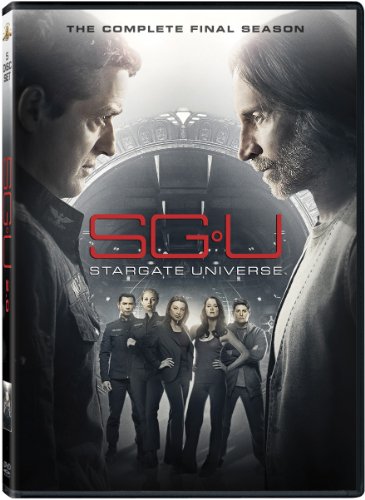
For ten years we watched Jack O'Neil, Samantha Carter, Dr. Daniel Jackson, and the Jaff'a Tealc' enter the Stargate. Others would join the team over the years. Each week we would follow their adventures, first on Showtime and finally on the Sci-Fi (now Sy Fy) Channel. We watched with awe as they stepped through a portal that was in reality a wormhole transporting them instantly to another world, brought online by dialing the device like an old-fashioned telephone. For another five years we traveled not only to another planet, but to the Pegasus Galaxy itself to the Atlantis Base, a bright floating city left behind by the ancients, the people who created the Stargate system millions of years before. On this show we met new friends, new bad guys, and had new adventures. The location might have changed. The faces might have, at first, been unfamiliar, but the missions and the entertainment value didn't let us down. For 15 seasons we enjoyed a spectacular tale to rival the myths of the Greeks and Romans themselves.
I'm told that all good things must come to an end. When Atlantis was finally cancelled, I was made almost immediately aware of the plans to continue the franchise. First reports started coming out that the show was going to be called Stargate Universe. Soon my inside contacts started giving me tidbits about the story. Details began to emerge about the Destiny, an ancient ship abandoned in another universe far away. The ship was on some kind of predetermined course and would sport an unsuspecting crew of humans that would be left stranded on the ship for an indeterminate amount of time. It was starting to sound a lot like Star Trek: Voyager to me. Of course, this is Stargate, so there has to be some gate travel, one would assume. The ship would come with a gate, and the vessel would come out of faster-than-light travel from time to time and dial up a local planet for exploration. The ship was ancient not only in its origin but in its duration in space. There were going to be a lot of system failures, as the equipment was long past its expiration date. The ship itself would know what resources it needed to continue to operate. Searching its vast planetary database, the ship would locate planets with the essential resources, allowing away teams to get such vital raw materials. Unfortunately, the ship didn't always give a good indication of what to find or where on the planet it might happen to be. Oh, and did I mention the countdown? The ship would decide how much time it would allot for each mission, instituting a countdown. When the clock reaches zero, the ship goes back to FTL, and whoever's not back in time gets left behind.
Posted in: Disc Reviews by Archive Authors on June 2nd, 2011
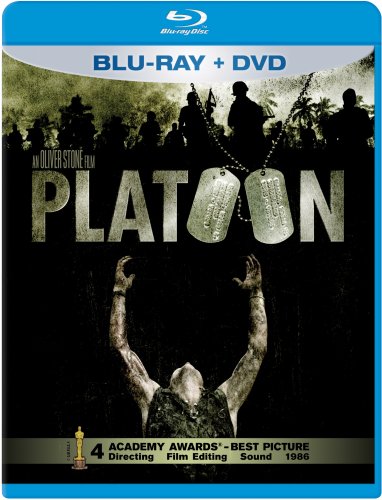
There are a good number of people who have labeled Oliver Stone as a fan of conspiracy theories, out to destroy foundations of conservative ideology, while at the same time re-visiting 60’s nostalgic icons. Despite the jokes and the stereotyping, one has to admit that, as a filmmaker, he has helped bring to screen some of the most talked-about cinematic experiences of our time, including Midnight Express, Scarface, not to mention Conan the Barbarian. As a director, his works, such as The Doors, Nixon, JFK and Natural Born Killers, have generated discussion both within and aside from the technical merits. Platoon was his most personal work, and is widely regarded as one of the defining films of the Vietnam War.
Platoon relates the experiences of Chris Taylor (Charlie Sheen, Major League), who, like Stone, dropped out of college, and volunteered to serve in Vietnam. His battles are everywhere, be it the enemy, with his surroundings, some of his fellow soldiers, or with his identity. He is thrown into a platoon with several characters, each with their own distinguishing characteristics. Sergeant Barnes (Tom Berenger, The Big Chill) is riddled with facial scars, a veteran of many skirmishes in country, perhaps to the point where emotions have dwindled, as he is left a hard-nosed leader. Sergeant Elias (Willem Dafoe, To Live and Die in L.A.) tries to forget the memories and experiences through drugs, but acts as a spiritual center, if one could find that within a war movie. Other actors in this cast include John C. McGinley (Scrubs), Forest Whitaker (Bird), and a very young Johnny Depp (Finding Neverland), among others. They encounter many things during the time there, including ambushes and firefights. They experience the loss of fellow platoon members, either via combat or by other reasons, either wounded or serving their full tour of duty in country. The story and characters are done so well, when watching the movie, their losses are our own. When Taylor leaves his platoon following an injury during combat, the closing shot of the movie is his sobbing on the floor of the chopper taking him out. You could say the sobbing is due to finally being out, or to the friends that he lost, but it is without question that his (and our) experiences leave him a totally different person that when he arrived.