MGM

There have been very few films of this stature that I have not had the chance to see over the years. Even if I don't think I might enjoy a particular movie, there are those titles that have become so well known or a part of the culture that one feels a sense of obligation to take in. For years The Last Tango In Paris was one of those films for me. Thanks to a new Blu-ray release by MGM, I was finally afforded the opportunity.

The plot of the film is almost irrelevant. It's not about a story at all. Marlon Brando plays a man who has just lost his wife to suicide. But we quickly learn that he had lost her really long before she took her life with a razor blade. She was having an affair with a man who lived in the hotel they ran. It was an odd affair. She insisted that her lover take on the habits and appearances of the husband she was running away from. She required that he wear an identical robe and drink the same booze, or at least have the bottle on hand. She went so far as to tear the wallpaper from the bedroom walls with her fingernails so that the room would appear as hers. One gets the impression that this would have been the more compelling story. Alas, that is not meant to be.

"I've always believed that, done properly, armed robbery doesn't have to be a totally unpleasant experience."

You would think that Thelma And Louise would have been a blockbuster film. It's certainly become entrenched in our pop culture. The famous ending has been spoofed to death in other films and television shows, including the latest Star Trek, if you can believe that. You would think, but you'd be completely wrong. This was one of the movies that got a ton of critical attention and even some Academy Award attention. Ridley Scott, Geena Davis and Susan Sarandon all got nominated for statues. The film ended up only taking one for the screenplay. Silence Of The Lambs took the actress and director Oscars that year. The film only pulled in $45 million, hardly a blockbuster but more than enough to cover the $17 million budget. The truth is that 28 films finished with better numbers in 1991, but few of them still have the enduring fame that Thelma And Louise has in 2010.

Charlie Babbitt (Tom Cruise) is a self-centered dealer in exotic cars. He imports high-end sports cars into the states and sells them to the highest bidder. Within the first 10 minutes, we learn that he is not above bribing the EP for the cars to pass emissions, that he treats his girlfriend poorly, and that his father has just passed away. As he goes to the reading of the will, hoping for a big payday, his father leaves him only a car. Charlie is furious to learn that more than $3 million in a trust account has gone to an anonymous person. Turns out the anonymous person is an institutionalized autistic savant named Raymond (Dustin Hoffman).

Since Raymond is a voluntary patient, Charlie organizes his discharge (for his own nefarious reasons) and the two set off on a journey to Los Angeles. Along the way, the cold and calloused Charlie warms up to Raymond, even as the autistic man has more and more difficulty in living life outside of the controlled environment of the institution. So it’s basically a road movie that tracks the change in character of Charlie from a money-hungry bastard to a caring individual. In the end, Charlie becomes less concerned with the potential money he can get from Raymond and more on the health and safety of Raymond himself. It’s a satisfying arc for Charlie. The film is widely credited as an insight into a condition (autism) that previous to 1988 wasn’t very well understood by the masses. The writing is strong, the directing excellent, and the acting top-tier.

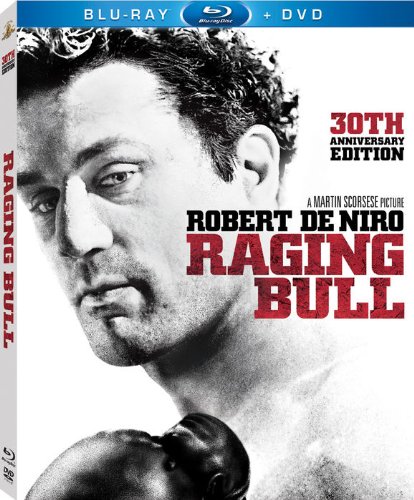
"Give me a stage where this here bull can rage."

Under normal circumstances and certainly under less skillful hands the story of Jake La Motta would not be one worth telling. His life is a story without heroes. It's a life of abusive behavior and an almost unredeemable personality. The only way he was ever capable of expressing himself was in the boxing ring. Even there he was doomed to feel inadequate most of his life. Even as he was rising toward the middleweight championship of the world, he was obsessed by his own small hands and the realization that he was fated to never test himself against the world's very best fighters. He alienated everyone around him. He was utterly and completely self-destructive, and you either left his sphere of influence or you let him drag you down in to his own dark abyss. Why in the world would anyone want to see, let alone make a film based on the life of Jake La Motta?

There’s no doubt that Kevin Costner’s name has been attached to some pretty crappy projects during his career – Waterworld, The Postman, and 3000 Miles to Graceland to name a few – and it’s unfortunate, because the aforementioned dirt loafs have tarnished the fine film that we’re here to discuss, Dances With Wolves. Heck, even I had horrid recollections of the film from viewing it years ago in theaters. However, this review forced me to check the film out again and I actually found myself…enjoying it – and enjoying it immensely. What was going on here? Time has definitely been kind to Dances With Wolves – it has aged like a fine wine. However, it seems that Costner’s later career choices had clouded my memories of the film, and thankfully, I was able to watch it again to find out how wrong I have been. It’s a good thing too, as I might have deprived myself of this film forever had it not been for this review.

For such a “bad” film, it actually racked up during the 1990 Academy Awards ceremony, as Dances With Wolves took home seven Oscars (Director, Adapted Screenplay, Cinematography, Sound, Score, and Editing) and had a worldwide gross of over $300 million when it was all said and done. (Heck, $300 million is a load in today’s dollars.) For a debut director, who before was only thought of as a marginally decent actor, that’s not a bad way to start a career behind the camera.

I always hated Moonstruck, but do not get me wrong, this is a positive review. See, it seemed like, back in my childhood, every time I wanted HBO or Showtime to play The Goonies, they were always in the middle of yet another airing of this Academy Award-winning romance. It was a boring movie about love with that lady Cher, who needed to stick to the radio, and stay off my movie screens. My, how a little age and maturity can alter perceptions. As a seven-year old boy, I just did not have the sensibility for this film. And while many would argue I have not grown up much in the years following, I gauge all such detractors wrong by the simple fact I now enjoy her shining moment thoroughly. I mean, there has to be some growth there. Right?

Moonstruck is a modern film, which uses the model of classical Italian comedies as its primary structure. In fact, some elements are directly lifted from the divine comedies of yore, but Norman Jewison, along with a top-notch script, and a terrific cast, lend a freshness not seen in the romantic by-products of today, which make the film more homage than rip-off. For one, the story centers on a 37-year old widow (Cher) not your common leading lady role whose superstitions dictate her happiness. She agrees to marry an older man, whom she admittedly does not love, just to bring some structure and stability to her life. Then she meets her fiance and his estranged younger brother, and a spark ignites that turns her world upside down in a good way. The eccentricities of her Italian-American family are mined to perfection with both warmth and humor. The film explores how cruel the closest people can be to one another without wrapping viewers up in any negativity. I can finally see what the critics were raving about – a good, solid film.

As a kid who grew up in the 1960's I remember Cher mostly for her musical career and the music and variety show she shared with then-husband Sonny Bono. When they split, it was a big deal in the time. We didn't quite follow celebrities’, lives near as obsessively as is done today, but these guys were a power couple that had gained fame pretty much as a package deal. When they split Sonny wasn't very successful at maintaing the same level as Cher was able to do. It turned out that we took sides in the split. We kept buying Cher's records, and we sent Sonny to Congress. Not sure which was the better idea there.

Cher eventually turned her singing career into a pretty good acting career. Her years in television had given her a lot of experience in front of the camera, so it wasn't as much of a stretch as you might think. The movies she's appeared in have been a bit of a mixed bag of stuff. The same can be said for this collection. There are gems like Moonstruck and Tea With Mussolini, and there are odd tidbits like Chastity and Mermaids.

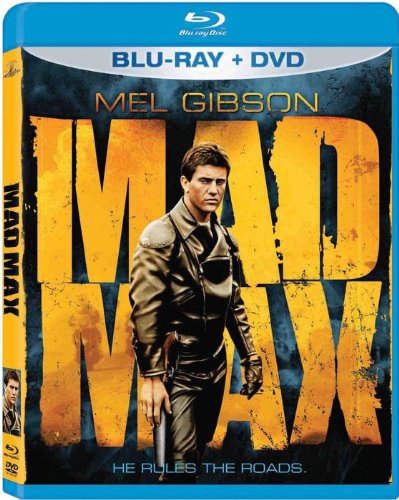
"Born with a steering wheel in his hand and lead in his foot, he is the Nightrider, cruising at the speed of fright! This is the Nightrider, and we ain't never coming back. I'm a fuel-injected suicide machine..."

Long before Mel Gibson's troubles involved real-life police officers and a bad case of "foot-in-mouth disease” that has made him his own worst enemy, Mel had more dramatic enemies to deal with. The unknown Australian actor was only 22 years old when he starred in the Outback production that would put both Mel Gibson and his native Australia on the filmmaking map. The movie was originally a very low-budget film. It was made in an attempt to show the world that America wasn't the only place you could make a non-stop action film. When American audiences got their first glimpse of the unique post-apocalyptic showcase, they still didn't get a real dose of Mel Gibson. All of the Australian actors, including Gibson, had been dubbed to lose the accents. If you saw Mad Max in the cinema in 1979 or 1980, you heard someone else's voice coming out of Mel's mouth. Too bad he didn't have that option a few years back when he was stopped for a DUI and proceeded to offer up a rendition of History of the World according to Mel, only it wasn't Mel Brooks. The anti-Jewish rant and belligerence has thrust the once-superstar into a decade where he hasn't had a real starring role.

For ten years we watched Jack O'Neil, Samantha Carter, Dr. Daniel Jackson, and the Jaff'a Tealc' enter the Stargate. Others would join the team over the years. Each week we would follow their adventures, first on Showtime and finally on the Sci-Fi (now Sy Fy) Channel. We watched with awe as they stepped through a portal that was in reality a wormhole transporting them instantly to another world, brought online by dialing the device like an old fashioned telephone. For another five years we traveled not only to another planet, but to the Pegasus Galaxy itself to the Atlantis Base, a bright floating city left behind by the ancients, the people who created the Stargate system millions of years before. On this show we met new friends, new bad guys, and had new adventures. The location might have changed. The faces might have, at first, been unfamiliar, but the missions and the entertainment value didn't let us down. For 15 seasons we enjoyed a spectacular tale to rival the myths of the Greeks and Romans themselves.

I'm told that all good things must come to an end. When Atlantis was finally cancelled, I was made almost immediately aware of the plans to continue the franchise. First reports started coming out that the show was going to be called Stargate Universe. Soon my inside contacts started giving me tidbits about the story. Details began to emerge about the Destiny, an ancient ship abandoned in another universe far away. The ship was on some kind of predetermined course and would sport an unsuspecting crew of humans that would be left stranded on the ship for an indeterminate amount of time. It was starting to sound a lot like Star Trek: Voyager to me. Of course, this is Stargate, so there has to be some gate travel, one would assume. The ship would come with a gate, and the vessel would come out of faster-than-light travel from time to time and dial up a local planet for exploration. The ship was ancient not only in its origin but in its duration in space. There were going to be a lot of system failures, as the equipment was long past its expiration date. The ship itself would know what resources it needed to continue to operate. Searching its vast planetary database, the ship would locate planets with the essential resources, allowing away teams to get such vital raw materials. Unfortunately, the ship didn't always give a good indication of what to find or where on the planet it might happen to be. Oh, and did I mention the countdown? The ship would decide how much time it would allot for each mission, instituting a countdown. When the clock reached zero, the ship goes back to FTL, and whoever's not back in time gets left behind.

The name says it all. With just those four words, you can pretty much figure out everything you need to know about Hot Tub Time Machine. This is very much a party film in the tradition of the Saturday Night Live alumni movies of the 70's and 80's. With the release of this movie, you no longer need to travel back in time to 1986 to watch a film that relies almost entirely on sex, drugs, and rock ‘n roll for most of its situational comedy. The rest gets filled in with your standard toilet humor. I'm not sure exactly when it happened, or who exactly I should blame, but at some point filmmakers decided that the only way to elicit laughter was to gross you out. Before long a sort of Hollywood arms race had started. Each new film had as its primary mission the objective to out-gross the ones that came before. If you wish to measure success on that axiom, Hot Tub Time Machine is a very successful movie.

Meet four guys who are in a desperate need to get a life. Adam (Cusack) has just lost his live-in girlfriend. It seems she took a lot of the good stuff, including the television, with her. Nick (Robinson) was once a promising local musician with a loving wife. Now his wife is cheating on him, and he works at a doggie spa named Sup Dawg removing crap from rich folks’ constipated dogs. Lou (Corddry) is divorced, broke, and alone. While getting carried away listening to a rock song on the car stereo, Lou almost kills himself in a closed garage with the car running. His friends, who really don't even like him that much, had long since abandoned him. Now that they think he tried to commit suicide, they get guilted into taking him out for a good time. Together with Adam's geek nephew Jacob (Duke), they decide to go back to the location of their glory years of youth, a ski camp. Of course, a lot has changed in 25 years. The place is now a ghost-town dump. On the bright side, their hotel room comes equipped with a hot tub. The four guys party hard and into the night. When they wake up, the place is packed and jumping like it was in the good old days of Winterfest 1986. There's a good reason for the change. The hot tub has transported them back to 1986 into the bodies of their younger selves. Their good times are hampered by the appearance of a cryptic hot tub repairman (Chase) who appears to know what's going on. He warns them that if they change anything, there could be dire consequences. Jacob's worried that he might not even be born.