MGM

Remakes are a fact of life. It might seem now more than ever that we are plagued with this reality, but it's been true for a very long time. It's not so new, as you might expect. Even the lauded Cecil B. Demille The Ten Commandments was a remake of his own silent 1923 film. They've existed almost as long as the movies themselves and will continue to exist for the foreseeable future. So, the question should be: Why should a particular film be remade? Often technology catches up with the content in a film. The ability to create on the screen something that was simply impossible originally is a legitimate reason to tackle an older film. Sometimes the movie is so powerful that it bears retelling for a new generation.

But then there are the reasons why a film should not be remade. There are some classics that simply should be off limits forever. Would anyone even dare attempt to remake The Godfather? There are those films that are just not worth being remade. How many versions of Piranha do we really need? Then there are the films that are remade in title only, like the 1999 version of The Thomas Crown Affair.

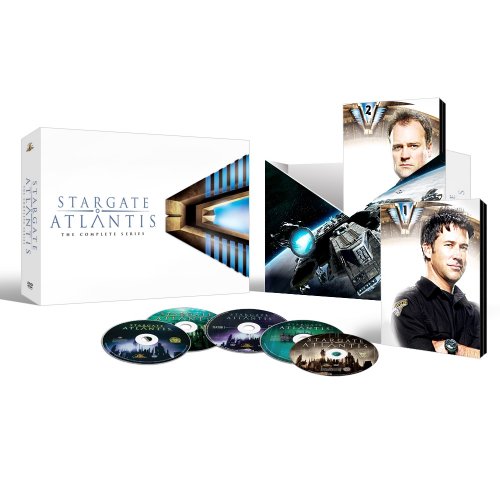
An ancient facility beneath Antarctica becomes the launching platform to the lost city of Atlantis. Atlantis is buried beneath an ocean in another galaxy and can only be reached with an additional symbol on the Stargate. Because of power limitations this trip, at least for the time being, is a one-way adventure. A crew of scientists and military officers from many countries assemble to explore the Pegasus Galaxy from the Atlantis gate. Led by scientist Dr. Weir (Higginson) and Maj. John Sheppard (Flanigan) they take over the Atlantian command center and begin to explore. In their initial investigations they accidentally awaken the area’s top bad guys, The Wraith. These vampire-like beings suck the life-force out of humans.

When Stargate SG-1 was about to enter its ninth year, there was speculation that after season 8 the series would bow out gracefully with the anticipated exit of Richard Dean Anderson. With that plan in mind, the folks at Stargate Command decided it was time to spin off the franchise, and so was born Atlantis. Stargate Atlantis boasts pretty much the same production team as SG-1. The quality of the production and tight storytelling have translated well to this sister series. Stargate Atlantis took a little getting used to. I wasn’t sure the characters had enough chemistry or were even dynamic enough to carry the high expectations for a Stargate series. Those concerns eventually evaporated by the time Atlantis began to live without the SG-1 companion series. These characters really took off, and they’ve developed into nearly as strong a group as SG-1 ever was.

For ten years we watched Jack O'Neil, Samantha Carter, Dr. Daniel Jackson, and the Jaff'a Tealc' enter the Stargate. Others would join the team over the years. Each week we would follow their adventures, first on Showtime and finally on the Sci-Fi (now Sy Fy) Channel. We watched with awe as they stepped through a portal that was in reality a wormhole transporting them instantly to another world, brought online by dialing the device like an old fashioned telephone. For another five years we traveled not only to another planet, but to the Pegasus Galaxy itself to the Atlantis Base, a bright floating city left behind by the ancients, the people who created the Stargate system millions of years before. On this show we met new friends, new bad guys, and had new adventures. The location might have changed. The faces might have, at first, been unfamiliar, but the missions and the entertainment value didn't let us down. For 15 seasons we enjoyed a spectacular tale to rival the myths of the Greeks and Romans themselves.

I'm told that all good things must come to an end. When Atlantis was finally cancelled, I was made almost immediately aware of the plans to continue the franchise. First reports started coming out that the show was going to be called Stargate Universe. Soon my inside contacts started giving me tidbits about the story. Details began to emerge about the Destiny, an ancient ship abandoned in another universe far away. The ship was on some kind of predetermined course and would sport an unsuspecting crew of humans that would be left stranded on the ship for an indeterminate amount of time. It was starting to sound a lot like Star Trek: Voyager to me. Of course, this is Stargate, so there has to be some gate travel, one would assume. The ship would come with a gate, and the vessel would come out of faster than light travel from time to time and dial up a local planet for exploration. The ship was ancient not only in its origin but in its duration in space. There were going to be a lot of system failures, as the equipment was long past its expiration date. The ship itself would know what resources it needed to continue to operate. Searching its vast planetary database, the ship would locate planets with the essential resources, allowing away teams to get such vital raw materials. Unfortunately, the ship didn't always give a good indication of what to find or where on the planet it might happen to be. Oh, and did I mention the countdown? The ship would decide how much time it would allot for each mission, instituting a countdown. When the clock reached zero, the ship goes back to FTL, and whoever's not back in time gets left behind.

The original movie production of Fame came out in 1980 and followed a group of students as they progressed four years through the New York High School of Performing Arts. It was gritty, it was harsh, but it was a very deep portrayal of budding students trying to get into the world of singing, dancing and acting. Nearly 30 years later, somebody gets the bright idea of doing a remake. Let’s find out if it is anywhere close to the original.

It is another year at PA or the New York High School of Performing Arts, there is a brand new crop of students trying their best to get into this elite school. The teachers are professionals at figuring out who has talent and who doesn’t. Teachers like Mrs. Fran Rowan (played by Megan Mullally) who works on vocals, Ms. Lynn Kraft (played by Bebe Neuwrith) on dance, Mr. Alvin Dowd (played by Charles S. Dutton) as drama coach and Mr. Joel Cranston (played by Kelsey Grammer) who takes on music.

Many of the original talents behind the popular Mel Brooks' spoof Spaceballs have not returned for this sort-of sequel, but its spirit of relentless parody and often corny schtick lives on. While it may not hold a candle to the original source material, this animated series has a few shining moments that will hopefully keep the diehard fans from being too offended.

“You got everything money can buy, except what it can’t. It’s pride. Pride is what got you here. Losing is what brung you back. But, people like you, they need to be tested. They need a challenge.”

There have been a ton of boxing films. They’ve been popular going back to the Silent Era. Most of them have many of the same themes. But there was always something about Rocky that stood out above all of the rest. That “something” can’t really be described or defined. As the Supreme Court once said about the definition of obscenity: “I can’t define it, but I know it when I see it.” That’s all you can say about Rocky. Some might call it heart. That’s about as good a word for it as anything else. Rocky himself would call it “stuff in the basement”. It almost demeans it to put a word on it at all. Whatever you call it, you don’t necessarily see it in Rocky … you feel it.

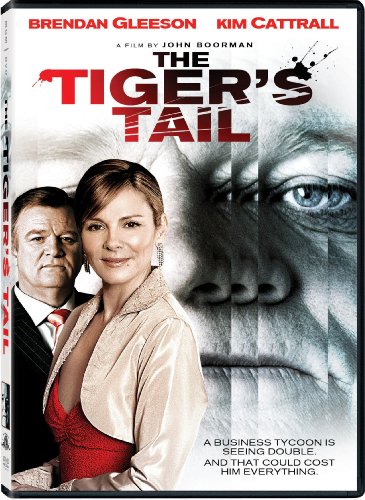
Liam O'Leary (Brendan Gleeson) has done very well in the booming Irish economy. A successful developer, he is in the process of trying to get a massive project approved, one that the future of his firm is riding on. So things are actually rather tough for him right now at work. At home, meanwhile, he and his wife (Kim Cattrall) have reached a rather chilly stage of their marriage, and his son (Briain Gleeson, and yes, Brendan's actual son) is feeling quite alienated, not to mention disgusted with the capitalist excesses that surround him. Stressful as all of this is, things are about to get much worse, as he starts seeing his double (Gleeson again). Is he hallucinating? Is it a supernatural visitation? The answer is both more earth-bound and wild, and before he knows it, his entire existence is turned upside down.

Director John Boorman has given us some pretty memorable films over the years (Deliverance and Excalibur to name but two). He is also drawn to the idea of filming parables (Zardoz being the most bizarre example). He's back in parable area here, crafting a thriller that is in fact a meditation on the human costs of Ireland's rapid economic development. The film's heart is in the right place, the performances (especially Gleeson's) are strong, and there are some nice twists. But the “author's message” neon sign is flashing rather brightly – one is rather more conscious than one should be of hearing a sermon, and the sudden shift from realist thriller to something altogether more outrageous and fantastic can be a bit jarring, if one doesn't see the film in metaphoric terms from the start.

Written by Adrienne Ambush

Before there was American Idol, before there was So, You Think You Can Dance and definitely before there was Dancing with the Stars, there was Fame.

Written by Adrienne Ambush

Before there was American Idol, before there was So, You Think You Can Dance and definitely before there was Dancing with the Stars, there was Fame.

Of the many films based on books by prolific writer Stephen King, Misery ranks near the top. Falling somewhere between the horror and thriller genres, this film about a twisted obsession is frightening because the premise seems very real.

Directed by Rob Reiner (A Few Good Men), who first visited King territory with his 1986 film Stand By Me, Misery tells the story of romance writer Paul Sheldon (James Caan, Elf) and the fan who rescues him after a car accident.