Studio

The House Of Mouse first appeared on television in January of 2001. It took advantage of pretty much every Disney character from nearly every Disney property. Mickey was the host of a nightclub called The House Of Mouse, I guess a riff on The House Of Blues. The standard bearing characters ran the club. In the audience was where you’ll find all of those lovable characters from films like The Lion King, Aladdin, Snow White And The Seven Dwarfs, The Little Mermaid, Peter Pan, Winnie The Pooh, and so many more. The shows were both performances by the characters and the showing of Disney shorts. The series was very much like the Warner 70’s show The Bugs Bunny And Road Runner Show. There too you had an audience and staff of Warner’s entire Loony Tunes library. There was also a rivalry there between Bugs and Daffy Duck. The same kind of relationship exists here between Mickey and Donald. The series only lasted a couple of years and was soon gone from the airwaves.

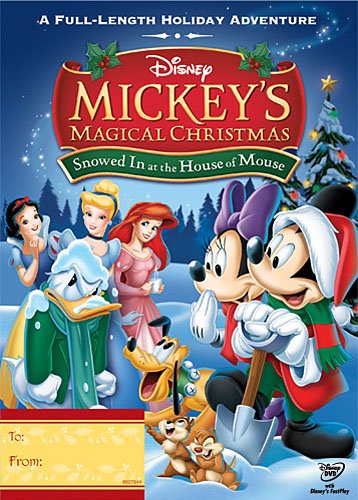
Mickey’s Magical Christmas: Snowed In At The House Of Mouse aired November of 2001. The characters are all snowed in on Christmas Eve and can’t get home to celebrate the holiday. Mickey decides they should all throw a Christmas bash at the club. For the most part they’re all trying to cheer up Donald, who has a case of the humbugs. In between these antics a few shorts are shown. The most notable are a Disney version of The Nutcracker with ultra modern music and a telling of Dickens’ famous A Christmas Carol. Many of the vast cast get at least a couple of lines.

It’s really hard to explain but I feel like I have shared a small lifetime with a director named Bradford May. At first, it was a couple of Darkman sequels that were simply good doses of cult sequel fare. I didn’t expect much and I received back exactly that, so I was satisfied. But then as I continued to review more and more movies, as his films started to pop up in my queue. First there was Ring of Death & then Mask of the Ninja. Both could be described as typical action beat-em up movies. Then Bradford decided to take on direction for The Storm, a mini-series that was shown on NBC and somehow it ended up in my review pile. I’m starting to think that this is no mere coincidence anymore.

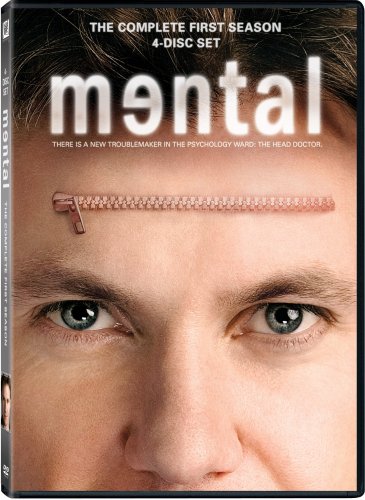
Dr. Jonathon Kirk (played by James Van Der Beek) is a renowned scientist working at the Atmospheric Research Institute. He is aided by his fellow scientist, Dr. Jack Hoffman (played by Rich Sommer) and newcomer Carly Meyers (played by Erin Chambers). They are being funded by the U.S. government to manipulate technology that will allow them to control the weather.

Believe it or not, Robert Langdon did not make his debut in the Da Vinci Code novel. He was actually introduced in an earlier, but far less known novel, Angels & Demons. When Hollywood came a knockin’ they weren’t interested in that earlier work. The Da Vinci Code was tearing up the literary world, and Hollywood wanted a piece of that overstuffed pie. That meant a strange series of circumstances for Dan Brown and Robert Langdon. In print, The Da Vinci Code is the sequel to Angels & Demons, but in the cinema Angels & Demons is now the sequel to The Da Vinci Code. You might consider it a trivial point, but it’s not. If you’ve read The Da Vinci Code, you know that this isn’t Langdon’s first dance with a murder mystery. He’s much more comfortable around the cops and corpses than the film version appears, by necessity. This first film requires him to be quite the novice and led around the ins and outs by the other characters. That creates an almost new character for fans of the novel. Add that to the incredibly complicated world the novel explores, and you are bound to disappoint fans of the original work. And disappoint fans, the film did. But, the film was still a financial success, breaking the necessary $200 million mark. So, even amid some harsh criticism, Howard and the gang now tackle the actual first novel in Brown’s Langdon series.

Robert Langdon (Hanks) has been called in by the Vatican to help solve a crisis. The Pope has died, and the Cardinal College is about to enter Conclave to select the next Holy Father. A radical group using the name of the ancient Illuminati has kidnapped the top four cardinals in line for the job. They have also stolen a canister of antimatter from the CERN collider labs. They plan to use the antimatter to fulfill an ancient threat against the Vatican to destroy it in light. With little time before the kidnapped cardinals are scheduled to be killed one every hour, Langdon must locate the churches where they are to be executed using clues from the Vatican Archives and the taped threat by the radical group. All the while the Vatican is trying to select a leader. If Langdon can’t solve the clues in time, the entire Vatican City will be destroyed in the largest blast the world has yet seen.

“On the 15th of May, in the jungle of Nool, in the heat of the day, in the cool of the pool. He was splashing enjoying the jungle’s great joys, when Horton, the Elephant, heard a small noise. Then he heard it again, just a very faint yelp, as if some tiny person were calling for help…”

If you’re like me, you remember the Dr. Seuss specials from the 1960’s. At this time of the year, The Grinch comes first to mind. In that wonderful span of cartoon specials was the story of the elephant Horton, who hears voices coming from a speck he carries around on a flower. The story revolves around Horton’s attempts to protect the very tiny town of Whoville which exists on that speck. None of his friends believe him, just as none of the Whoville scientist’s friends believe that he has spoken to a giant elephant in the sky. Before long the story plays out, and we all remember the moral that a person’s a person, no matter how small. That Chuck Jones effort is a dear memory for most of us from that generation.

Superman: The Animated Series was made in the same fashion as Batman: The Animated Series. The tone was a little more serious and a lot more action. It was first produced in 1996 and made 54 episodes through the year 2000. The show received high praise for raising the bar but at the same time keeping what was important to the mythos of Superman. In fact, it even received a nomination for an Emmy. Besides Smallville, this probably stands out as the best television adaption of the one known as Superman, the Last Son of Krypton and hero to the planet Earth (and beyond).

Most of us know the story of Superman, but perhaps it is best that we run it over a little bit adapted to the actual animated series. Krypton is approaching devastation but only one scientist believes it to be true, Jor-El. He feeds his information to a computer named Brainiac who is in charge of the planet and all of its major operations. The computer analyzes the information and says the planet is safe. Jor-El knows the computer is lying and can't convince the others of the danger.

Don’t You Forget about Me is a documentary/tribute to the late John Hughes.  Four amateur filmmakers set out to find answers to the questions, why did you leave? How did you capture adolescence so perfectly in your films? Why do your films remain a fixture in popular culture?  After obtaining interviews with many of the John Hughes alumni such as Ally Sheedy, Judd Nelson, Alan Ruck and Andrew McCarthy, the filmmakers came to the realization that they required an interview with John Hughes to complete the film. The documentary combines the interview footage as well as covers the filmmaker’s road trip from Toronto to Illinois to acquire an interview with the reclusive director. 

The marketing potential of this film rose greatly upon John Hughes’ unfortunate passing.  These filmmakers are deeply interested and moved by the works of Hughes and audiences can see that.  However, there is nothing compelling about the filmmakers.  They are not interesting or provocative. I found myself bored with their stories and opinions. What is problematic about this documentary is the forced fusion of two stories; One being the story of John Hughes and the other being the group of filmmakers. In my opinion, the latter should have been jettisoned altogether. Audiences are engaged in these interviews and suddenly the flow is disrupted with the tiresome antics of these four filmmakers.

James Gray’s Two Lovers revolves around the troubled Leonard Kraditor (Joaquin Phoenix).  Leonard has moved back into his childhood home to recover from his recent break up. In quick succession, two women enter Leonard’s life: Michelle (Gwyneth Paltrow), an entertaining and peculiar neighbor who transcends Leonard’s world and Sandra (Vinessa Shaw) a classy, traditional woman who is the daughter of a businessman attempting to purchase Leonard’s family business.  Leonard becomes confused between desire and love and the story unfolds from there.

The performances in this film are what resonate with the audience the most.  Joaquin Phoenix crafts his character from a dark place and displays great emotion in this role.  His complicated past slowly unravels throughout the film and audiences become more and more aware of his emotional instability. Phoenix is truly a great performer; it is unfortunate that he has taken a recent ‘break’ from acting.  Both of the female leads are strong as well.  Vinessa Shaw’s performance is passionate and powerful.  Her scenes with Phoenix are both romantic and realistic as well. Viewers can definitely identify with the dialogue between the two of them.  Gwyneth Paltrow is not breaking new ground with her performance.  However, her scenes are all remarkably interesting.  Her character is deeply conflicted by her current relationship and the growing relationship with Leonard.

In early-20th-Century Dublin, a winter's musical gathering is being held. The first two-thirds of the film takes us through the course of the evening, from the arrival of the guests, to the musical entertainment, to the dinner and its discussions (and arguments), and finally the departures. During the party, one is aware of a certain tension or distance between one couple: Donal McCann (nephew to the hostesses) and his wife (Anjelica Huston). As they prepare to leave, Huston hears one of the guests sing, and is rooted to the spot. Later, McCann asks her why the song affected her so much, and a painful memory from her past comes out.

John Huston's last film is suitably elegiac. Based on the James Joyce's short story of the same name, the movie is itself in short story form, barely clocking in at 73 minutes, and that's including the credits. The running time is just right, though, as this is a compact, moving tale, whose title does not become clear until the closing minutes. Were the film any longer, audiences would likely become restive at the apparent lack of story during the first two acts, but everything is present for good reason, working in unity towards a powerful conclusion. In all of this, the film is deeply faithful to the Joyce story. But the story also presents an enormous challenge: its conclusion relies on the thoughts of its protagonist, not on dialogue or action, the bread and butter of cinema. What to do? Huston takes what is probably the only path open to him, and goes for a voice-over as the camera gazes at mournful scenes of snow falling in the Irish night. The voice-over, having been absent until this very moment, is a bit jarring, even as its necessity is understandable. So the film might not be flawless, but it is a heartbreakingly moving valedictory gesture from one of cinema's greatest directors.

“You got everything money can buy, except what it can’t. It’s pride. Pride is what got you here. Losing is what brung you back. But, people like you, they need to be tested. They need a challenge.”

There have been a ton of boxing films. They’ve been popular going back to the Silent Era. Most of them have many of the same themes. But there was always something about Rocky that stood out above all of the rest. That “something” can’t really be described or defined. As the Supreme Court once said about the definition of obscenity: “I can’t define it, but I know it when I see it.” That’s all you can say about Rocky. Some might call it heart. That’s about as good a word for it as anything else. Rocky himself would call it “stuff in the basement”. It almost demeans it to put a word on it at all. Whatever you call it, you don’t necessarily see it in Rocky … you feel it.

Do you know what’s worse than watching a bad movie? It has to be watching three bad movies. Worse than that is watching three bad movies where it’s obvious to everyone involved in the films that they know they’re bad movies. It doesn’t take long until you begin to think that you’re the one everyone is really laughing about. You can picture a couple members of the cast sitting with the director all laughing their rear ends off at the poor rube who actually spends good money, and more importantly, their time, watching the piece of crap you just dropped into their DVD or Blu-ray player. It’ll take forever to get that stink out of my home theater.

Lately there has been a push to avoid crowds. There’s the whole H1N1 scare out there. Even the Vice-President says he wouldn’t be caught out in a crowd for nothing right now. Way to give us confidence there, Joe. If you too are afraid of crowds, going to a Kevin Smith film is the surest way to avoid them. I have been told by a few, and I do mean very few, Kevin Smith fans I’ve talked to that it’s not at all that the films suck. The problem, so they say, is that I just don’t get it. The idea is that Smith is some kind of artistic genius and a pedestrian reviewer like myself just doesn’t have the sophistication to understand his superior humor. I know that people like Smith likely believe it’s true. But, if I’m the one who just doesn’t get it, I’m not alone. The only folks who are alone are the unfortunate saps that went to see these films at the box office. The numbers don’t lie. These films fared horribly, and that’s being generous. The second Smithite argument is that, while the box office results were indeed pitiful, the films themselves were very low budget, so they did make more than they cost. Another bogus argument. No budget films have taken the world by storm. Look at the recent success of Paranormal Activity. That film cost less than any of these movies, a modest $15,000, and has raked in nearly a $150 million in box. Clerks pulled in just over $3 million. Chasing Amy just about $12 million. Jay And Silent Bob Strike Back broke the bank at just about $30 million. None of the films broke the top 100 for the year in which they were released. Yeah, I don’t get it. Apparently, a lot of people don’t get it.