Studio

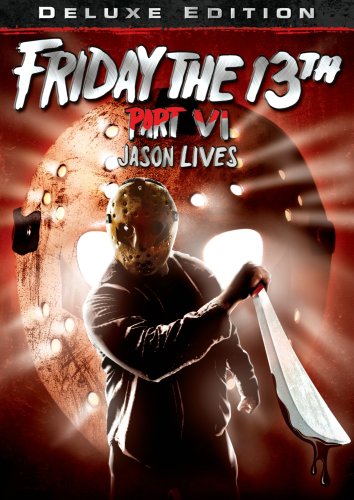
When the cast and crew went about their work on Friday The 13th: The Final Chapter it appears that it really was intended as a sendoff for the popular franchise. There had been a turnover at Paramount, and the powers that be thought the slasher cycle was pretty much over. Now whether any of that is true is anyone’s guess. Everyone associated with the project claims that that was their firm understanding from the beginning. Writer Barney Cohen insists that the Paramount brass made it very clear that he was supposed to kill off Jason with such Hollywood “grammar” that there was little doubt he was dead and gone forever. We, of course, know that Jason might very well be dead, but he’s far from gone.

It’s minutes from the events of the previous film. Police and paramedics are on hand to clean up the mess left by Jason in full 3D glory. Jason’s body is taken to the hospital morgue. Fortunately for Jason, the place is has a couple of teen attendants with those raging hormones that bring out the best in our hockey-masked avenger. After a little play time with the attendant and nurse, Jason is once again on the loose. Meanwhile a group of teens are moving into a remote house out in he woods. The only neighbors are the Jarvis family. There’s single mom (Freeman), daughter Trish (Beck) and young Tommy (Feldman). Tommy is a monster fan who has a Tom Savini-like ability to create killer monster masks and prosethics. He’s a bit introverted and nerdy. Little do they know that Jason is going to crash the new neighbors’ party. It’s left to Tommy and sister to take Jason out, supposedly for good.

“I’m Special Agent Kessel, in charge of the FBI and Department Of Justice’s joint task force on deranged and violent criminals. In the most extreme and violent cases traditional forensic investigations can be inadequate. In these instances, to hunt down the most vicious and elusive killers and psychopaths, we solicit the assistance of civilians with extraordinary gifts. Catherine Deane was one of them… now there’s another.”

That other is Maya (Santiago). It has been quite a few years since I saw The Cell. I was going to go back and watch the original again to get myself prepared for reviewing this direct to video sequel. Time didn’t allow for such conveniences, but in the end it wouldn’t have helped anyway. There are two reasons. The first is that the first film is only available on DVD and not yet out in a high definition release. It would have created quite a disparity, particularly when dealing with such visual exotic worlds as The Cell dealt with, and I assumed the sequel would as well. Unfortunately, there are no such visual stunning abstractions in this film beyond an irrelevant prologue scene. The second reason it would not have helped is that this film obviously has no connection to the original at all. The above introduction is about as close as the two films ever get. Maya does not enter dreams. She’s merely a psychic, with no more power or flair than Johnny Smith from The Dead Zone or Alison from Medium. Yes, she can enter our killers head, but it merely allows her to see what he sees. To feel what he’s feeling. Gone are the imaginative journeys deep inside the subconscious of the disturbed mind. This one is strictly in the mold of tracking down a rather brutal serial killer.

This is one of the best of the series to benefit from the high definition Blu-ray release. You might recall that I had some serious reservations about the 3D work on the last DVD release. That kind of 3D depends entirely on a completely true color reproduction. With unstable reds and blues or greens, the effect becomes somewhat difficult to appreciate and more than a little bit of a strain on the eyes. This release offers you for the first time what was only promised on the DVD. You finally get a print clean and detailed enough to make the effect worth checking out in your own home theater. It still doesn’t fix the fact that most of the effects were obvious and quite gimmicky. Still, it’s the best chance you’re ever going to get in this technology to experience HD at home. There is progress being made on potential 3D capable monitors and a newer process, but let’s be honest. Ralph Kramden was waiting for 3D television for 60 years. There’s still some time to wait, but this release is an inch closer to that reality. So put those campy paper glasses on (2 are included with the disc) and have a little fun with Jason and his Camp Crystal Lake playmates.

It didn’t take the Friday The 13th film series long to reach down into the gimmick bag. The sad thing is that the franchise didn’t really need a gimmick. Steve Miner returned to the director’s chair, and he delivered an important, if not great, entry into the franchise’s history. Jason would, for the first time, don the hockey mask that would make his image the iconic horror visage it remains today. This was also an important film because a young makeup artist from this staff would break out to become one of the best in the business. Stan Winston was an uncredited artist on this film. Of course, I have no way of knowing what was his, but can there be any doubt that he left his mark throughout the film? Winston didn’t often talk about the film at all. It’s almost as if he never considered it a part of his resume, but he’s likely the biggest thing to come out of the movie.

“You may only see it once but that will be enough.”

That was the marketing slogan for the first Friday The 13th film in 1980. Apparently they couldn’t have been more wrong, because most of us have seen the film countless times, and no, it was never enough. The franchise would thrive with over 10 sequels or affiliated films, taking us right up to the present remake/reboot of that very first outing at Camp Crystal Lake. No, my friends, once was never going to be enough.

Back in 1998 there was a very promising television series on the Fox Network. Unfortunately, the network never gave it a fighting chance, and it was soon gone as quickly as it had appeared. It was called Brimstone. The idea was that a dead cop (Horton) went to Hell for killing his wife’s rapists. He gets a second chance when the Devil (Glover) offers him his life back if he would become Hell’s bounty hunter. He would capture souls who had escaped from Hell. I loved the show and even participated in its attempts to be reprieved. I never did get to see the return of Brimstone, but the concept would return in the lighter Reaper. Reaper is like Buffy The Vampire Slayer meets Kids In The Hall.

Sam Oliver (Harrison) is a young guy who works at The Work Bench with many of his high school friends. The Bench is basically a Home Depot clone. One day the Devil (Wise) shows up in his car. It appears that his parents sold Sam’s soul to him, and now that he’s turned 21 it’s time to collect. Sam’s job is now to collect and returned escaped souls back to Hell. For each job he’s given a vessel that is, in some way, appropriate to the soul he’s tracking. The vessel can be a vacuum cleaner or an 8-track tape. Failure is not an option, as the Devil doesn’t take rejection lightly. To help him in his tasks he recruits his two best friends and co-workers. Sock (Labine) looks and acts a lot like Jack Black. He has crazy pointed hair and is basically a slacker. He’s always looking for the easy way out or the scam that will pay off for him, regardless of who gets hurt. He really does have a good heart and comes through just when Sam needs him to come through. Ben (Gonzales) is always coming up with crazy ideas like a self sucking straw. He’s hungry for attention and lacks in self confidence. He’s somewhat of the team tech guy. Sam is in love with Andi (Paregrym) who’s not sure if she can take the whole evil thing. She’ll help out in a pinch, and they have an on again, off again relationship.

Perhaps best known and beloved for his portrayal of Felix Unger in the original Odd Couple film, Jack Lemmon has a long list of credits to his name. He’s appeared in 100 films and many stage and television productions as well. It was also a little known fact that he was an extremely accomplished musician and wrote music for a couple of his films. He was one of those actors who simply loved his job. He was known for uttering the phrase “It’s magic time” before a take on the set of almost all of his films. While primarily known for his comedy, Lemmon was actually not a bad dramatic performer and believed there was no reason the two couldn’t be combined. His role in The China Syndrome was far from a comedic one and showcased his ability to do drama.

Jack Lemmon might not be the most dramatic or even the most acclaimed actor out there. But there was something about him that defined him as an icon all the same. He was a very typically American actor. He brought to life characters that were instantly identifiable, but yet oddly eccentric enough to keep our interest. He always came off as genuine and was literally loved by the plethora of actors who always considered it an honor to work with him. He developed lifelong friendships with many of his co-stars, most notably Walter Matthau. The relationship you saw on the screen was what you got off the screen. Jack’s son Chris referred to him as Uncle Walter and claimed that if Matthau played golf, Jack would have married him. But this was just the kind of guy he was. In a day of angst-filled superstars who make more press outside of their roles, Lemmon is still a breath of fresh air. You might miss the man, but Sony and Chris Lemmon have gotten together to make sure you don’t miss some of the greater films.

I’m not sure that this one benefits tremendously from the high definition treatment of a Blu-ray release. It’s certainly a good looking film, and the level of detail is welcome, but I don’t imagine that’s what fans of this kind of film really care about. It’s an early role for LeBeouf, and I still don’t get what the fuss is all about. Still, he works well for this kind of part. He might have been best to stay in this lane. He appears to be a favorite action/genre actor, but this is his true calling.

When I saw that title on the case my immediate thought was: “How did Disney find out about my 1981 Marathon game of RISK where I took out Mark “Trip Sixes” Shreader in 9 hours of battle? Of course, I soon decided they meant professional sports. This film would be about the Minnesota Viking playoff whoopin’ of the Green Bay Packers at Lambeau Field. Turns out that wasn’t it. Point of fact, not one game of the 1980 World Series victory of the Phillies made the cut. Suddenly it hit me. Disney does ice hockey films. They must have made one about the Tampa Bay Lightning’s Game Seven beat down on some Canadian boys to win the Stanley Cup. Wrong! Apparently long before my boy Abner picked up a bat or Dr. Nesmith was shooting soccer balls into his trashcan, some funny looking fellas in Scotland had come up with their own game. Golf. Don’t get me started. Still ESPN says it’s a sport, so who am I to argue?

U2 was formed in 1976. Back then they were just teenagers figuring out how to play their instruments. But by the mid-80’s, they were one of the best bands in the world. Currently, they have sold more than 145 million albums worldwide and have won 22 Grammy awards. Rolling Stone has them listed as #22 in the greatest artists of all time. They appear frequently at the head of many human rights causes promoting social justice like Bono’s DATA (Debt, AIDS, Trade in Africa) campaign. The Rebirth of Cool: U2 in the Third Millennium takes a look at the band from the failed release of “Pop” to their reborn commercial success in 2000 with “All That You Can’t Leave Behind” and continued superstar greatness in “How to Dismantle an Atomic Bomb” in 2004.

“Pop” was released in March of 1997. It was an attempt at combining techno, dance and eletronica with U2’s traditional hard rock sound. It was unfortunately a failure in the overall scheme of things. It sold the least among any U2 album (1+ million in the US, 2+ million worldwide) and distanced a lot of fans from the band. U2 knew they had to take a different direction. They quite simply had to reapply for the job of the best band in the world.

“One night stands can be murder.”

That’s the tagline for 1987’s Fatal Attraction. Perhaps it’s no coincidence that both Fatal Attraction and the later Indecent Proposal were both directed by Adrian Lyne. Both were quite controversial upon their release. Both dealt in a kind of “what if” scenario that got people talking around their water coolers and watering hole gatherings. While the latter was pretty much a morality or ethics drama, the former was a gut wrenching morality tale with a Grimm’s Fairy Tale twist. Even if you’ve never seen the film you’ve at least heard of the “Bunny Boiler”, a term that’s entered the pop culture lexicon describing a woman who is likely to go psycho on you. The film was almost never made.

“Not like the brazen giant of Greek fame, with conquering limbs astride from land to land; Here at our sea-washed, sunset gates shall stand a mighty woman with a torch, whose flame is the imprisoned lightning, and her name: Mother of Exiles. From her beacon-hand glows world-wide welcome; her mild eyes command the air-bridged harbor that twin cities frame . ‘Keep, ancient lands, your storied pomp!’ cries she with silent lips. Give me your tired, your poor, your huddled masses yearning to breathe free, the wretched refuse of your teeming shore. Send these, the homeless, tempest-tossed to me, I lift my lamp beside the golden door!”

The inscription above can be found inside the pedestal of The Statue Of Liberty, and while it’s not actually printed where most depictions appear to suggest, it has become somewhat of a motto for this country. I certainly have a warm spot in my own heart for this welcoming attitude to immigrants from around the world. I am a product of Italian grandparents who made the journey here in the 1930’s for a better life. But that ideal has been somewhat abused as of late. Those brave ancestors that many of us can be thankful for our American life did so at great personal sacrifice. Without ever giving up their individual cultures, beliefs, and lifestyles, they did manage to blend into the American landscape and took pride in both heritages. They did not demand that America coddle them. They never imposed their language on the already present society. They practiced their beliefs and traditions without requiring others to accommodate them. They worked hard so that their descendents might not have to labor so much. In so many ways they became models not only for their descendants, but for what good citizenship means. They cherished this new country.