Posted in: Disc Reviews by Gino Sassani on June 22nd, 2009
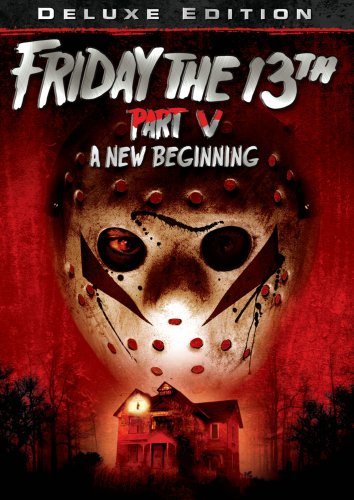
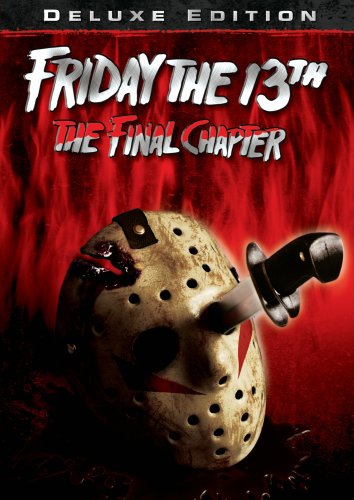
We were all told that the fourth film in the Friday The 13th series was going to be the last. From the cast and crew to the studio execs it was official: Jason was dead and gone. Time to move on. But it took less than a year for a new chapter to be tacked on to that final one. The fifth entry into the franchise would contain one of the more limited budgets. But it wasn’t the budget cuts that has made this one of the most highly criticized films of the series. It’s the total disregard for the tradition of the films and the poor choices that were made in making this film. The movie was filmed with little fanfare. This was in the days before the internet made such things all but impossible. It was made under the name Repetition to hide the true nature of the shoot from anyone who caught wind of the production. Perhaps it wasn’t such a good idea to try and diminish the film’s buzz. It brought in a very disappointing $21 million at the box office. That might have had a better chance of truly killing Jason than anything else.
Director Danny Steinmann’s only real credit was a porno film. You can’t mistake the tendencies in this outing. It certainly contains a greater amount of nudity than any of the other films. The sexual scenes are by far more graphic. It was also the last we'd hear of the troubled director. Meanwhile Jason was relegated to an almost non-existent part in the film. The kills all are very quick and happen mostly outside of camera range. The obvious excuse is that the MPAA had reined down hard on these films, and to an extent that was true. The real problem here was a lack of both imagination and money. Tom Savini was again gone from the scene, and his replacement couldn’t carry Savini’s latex jockstrap. The series went from using barrels of stage blood to a couple of toothpaste tubes’ worth. Finally the killer isn’t even necessarily Jason at all. It’s almost impossible to criticize this kind of a film for being ridiculous, but the series reached a low point with this outing.
Posted in: Disc Reviews by Gino Sassani on June 19th, 2009
When the cast and crew went about their work on Friday The 13th: The Final Chapter it appears that it really was intended as a sendoff for the popular franchise. There had been a turnover at Paramount, and the powers that be thought the slasher cycle was pretty much over. Now whether any of that is true is anyone’s guess. Everyone associated with the project claims that that was their firm understanding from the beginning. Writer Barney Cohen insists that the Paramount brass made it very clear that he was supposed to kill off Jason with such Hollywood “grammar” that there was little doubt he was dead and gone forever. We, of course, know that Jason might very well be dead, but he’s far from gone.
It’s minutes from the events of the previous film. Police and paramedics are on hand to clean up the mess left by Jason in full 3D glory. Jason’s body is taken to the hospital morgue. Fortunately for Jason, the place is has a couple of teen attendants with those raging hormones that bring out the best in our hockey-masked avenger. After a little play time with the attendant and nurse, Jason is once again on the loose. Meanwhile a group of teens are moving into a remote house out in he woods. The only neighbors are the Jarvis family. There’s single mom (Freeman), daughter Trish (Beck) and young Tommy (Feldman). Tommy is a monster fan who has a Tom Savini-like ability to create killer monster masks and prosethics. He’s a bit introverted and nerdy. Little do they know that Jason is going to crash the new neighbors’ party. It’s left to Tommy and sister to take Jason out, supposedly for good.
Posted in: Disc Reviews by Gino Sassani on June 19th, 2009
This is one of the best of the series to benefit from the high definition Blu-ray release. You might recall that I had some serious reservations about the 3D work on the last DVD release. That kind of 3D depends entirely on a completely true color reproduction. With unstable reds and blues or greens, the effect becomes somewhat difficult to appreciate and more than a little bit of a strain on the eyes. This release offers you for the first time what was only promised on the DVD. You finally get a print clean and detailed enough to make the effect worth checking out in your own home theater. It still doesn’t fix the fact that most of the effects were obvious and quite gimmicky. Still, it’s the best chance you’re ever going to get in this technology to experience HD at home. There is progress being made on potential 3D capable monitors and a newer process, but let’s be honest. Ralph Kramden was waiting for 3D television for 60 years. There’s still some time to wait, but this release is an inch closer to that reality. So put those campy paper glasses on (2 are included with the disc) and have a little fun with Jason and his Camp Crystal Lake playmates.
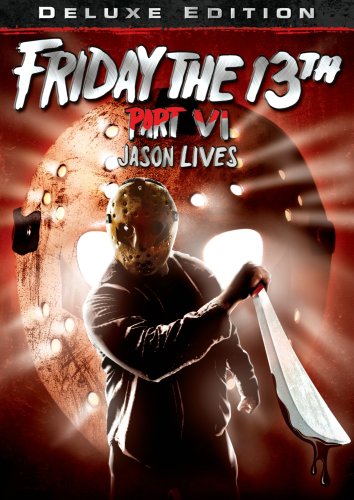
It didn’t take the Friday The 13th film series long to reach down into the gimmick bag. The sad thing is that the franchise didn’t really need a gimmick. Steve Miner returned to the director’s chair, and he delivered an important, if not great, entry into the franchise’s history. Jason would, for the first time, don the hockey mask that would make his image the iconic horror visage it remains today. This was also an important film because a young makeup artist from this staff would break out to become one of the best in the business. Stan Winston was an uncredited artist on this film. Of course, I have no way of knowing what was his, but can there be any doubt that he left his mark throughout the film? Winston didn’t often talk about the film at all. It’s almost as if he never considered it a part of his resume, but he’s likely the biggest thing to come out of the movie.
Posted in: Disc Reviews by Gino Sassani on June 17th, 2009
“You may only see it once but that will be enough.”
That was the marketing slogan for the first Friday The 13th film in 1980. Apparently they couldn’t have been more wrong, because most of us have seen the film countless times, and no, it was never enough. The franchise would thrive with over 10 sequels or affiliated films, taking us right up to the present remake/reboot of that very first outing at Camp Crystal Lake. No, my friends, once was never going to be enough.
Posted in: Disc Reviews by Gino Sassani on June 15th, 2009
“One night stands can be murder.”
That’s the tagline for 1987’s Fatal Attraction. Perhaps it’s no coincidence that both Fatal Attraction and the later Indecent Proposal were both directed by Adrian Lyne. Both were quite controversial upon their release. Both dealt in a kind of “what if” scenario that got people talking around their water coolers and watering hole gatherings. While the latter was pretty much a morality or ethics drama, the former was a gut wrenching morality tale with a Grimm’s Fairy Tale twist. Even if you’ve never seen the film you’ve at least heard of the “Bunny Boiler”, a term that’s entered the pop culture lexicon describing a woman who is likely to go psycho on you. The film was almost never made.
Posted in: Disc Reviews by Gino Sassani on June 15th, 2009
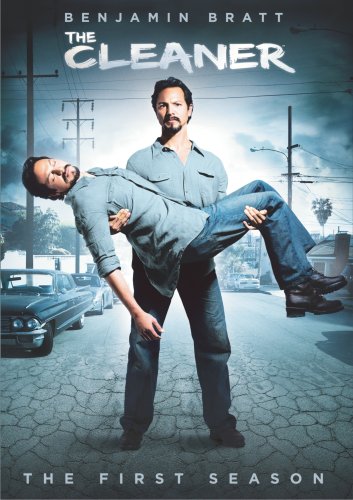
“William Banks has saved 257 people from addiction to drugs, sex, and gambling. He’s not a cop. He’s not a superhero. He’s just a man with a calling. This is his story.”
What he is, is Benjamin Bratt, returning from the thespian dead as William Banks, better known to the show’s fans as The Cleaner. Bratt hasn’t been seen much since he left the gig at Law & Order. I almost didn’t recognize him here. But, he’s returned in style. The Cleaner has all the characteristics of a police procedural series with a lot more excitement. His methods are often harsh. He’s your worst nightmare of an intervention. When Banks is called in, you haven’t hit rock bottom. Rock bottom has just hit you. The character is a recovering addict himself and does this as a kind of making amends. Of course he doesn’t work alone. He’s assembled a kind of Impossible Mission Force style team that helps with each case. Together they form a private company that a family member can call when they tire of a friend or family member’s addiction. The series was based on the real life story of Warren Boyd, who also acts as one of the show’s producers.
Posted in: Disc Reviews by Gino Sassani on June 10th, 2009
“1941: Germany occupies Belorussia. SS death squads and local police round up Jews. Within weeks 50,000 are murdered. 1,000,000 more await deportation and death.”
Tuvia (Craig) and Zus (Schreiber) Bielski are brothers hiding in the forest surrounding after the abovementioned invasion. They are Russian Jews, which means concentration camps or immediate execution if they are caught. They are foraging and surviving on their intimate knowledge of these surroundings they have known since they were children. Before long other Jewish refugees make their way to the Bielski camp. Unable to turn away the suffering hordes, they welcome each arrival, stretching their already limited resources to the limit. The camp eventually becomes a force of freedom fighters. They are looked down upon by the Red Army because Jews weren’t expected to fight. For several seasons the growing number of refugees makes a stand for survival and even answers a call to arms in an ultimate act of defiance. The brothers split. Zus joins the organized army while Tuvia remains to lead the camp.
Posted in: Disc Reviews by Gino Sassani on June 10th, 2009
Back in the 1960’s the Beatles were telling, preaching, “Can’t Buy Me Love”. Of course this wasn’t a novel concept even then, and Lennon and McCartney certainly didn’t invent the phrase. In 1993 Indecent Proposal came along to question the age old expression. The film sparked one of those cultural philosophical debates that Hollywood loves to start. It meant that people would be talking about the film, and talk about it they did. Television and radio talk shows would spend a great deal of time talking about the morality or ethical questions involved. Experts in morality and psychology would earn a living talking about the subject. It caused quite a stir, but in the end Indecent Proposal was a one trick pony. After the debate got old, the film aged quickly. Watching it again now, it seems almost impossible that it’s really only 16 years old. It seems like decades ago that like a frightening tsunami, it made its splash and disappeared almost as quickly as it had arrived.
David (Harrelson) and Diane (Moore) are a young couple very much in love. It’s the kind of ultra-sweet relationship that could send you into insulin shock if you had to watch too much of it. Thankfully the plan here is to put a serious kink into the relationship. David is budding architect, while Diane is a successful real estate broker. Both run into hard times when recession hits and they lose their jobs. Their dreams appear on the brink of disaster. Down to their final cents, David takes a loan of $5000 from his father. As he admits in the film’s narration, it wasn’t nearly enough. They needed 10 times that to get back on their feet. So what do they do? These supposedly educated smart people decide to take the 5 grand to Vegas and turn it into the 50 grand they need. (Why didn’t I think of that?) Bad luck at the tables isn’t the most dangerous thing the couple faces. They meet John Gage (Redford), international billionaire and playboy. Sort of a Bill Gates, if Bill Gates looked like… well… Robert Redford instead of Alfred E. Neuman. Gage notices Diane and is quite taken with her. He befriends the couple to get close to her. After a part one night in his suite, Gage and David are shooting some pool. The conversation turns to wealth and what it can or cannot buy. Diane makes the statement that money can’t buy people or love. Gage proposes to test the concept. He offers the couple one million dollars for one night with Diane. They immediately refuse, but their situation eats at them and they eventually agree. What it does to their lives is predictable and inevitable.
Posted in: Disc Reviews by Gino Sassani on June 8th, 2009
William Conrad was no stranger to audiences when Cannon joined the Quinn Martin stable of television dramas. In fact, most folks knew his voice before they got to know his trademark girth. Conrad was the original Matt Dillon when Gunsmoke was a radio drama. When the drama entered the visual medium of television, even Conrad admitted later that the audience, who thought of him as tall and handsome, would have been disappointed. His voice lent authority to any role he played, and on radio his size was never an issue. He was famous as the voice of the stern narrator in the Rocky and Bullwinkle cartoons who often crossed the laws of the trade and interacted with the title characters. He was also the voice that narrated the struggles of Dr. Richard Kimble on The Fugitive, another Quinn Martin production. He continued to narrate series intros even after his own success. He gave us the informative opening dialog in Buck Rogers In The 25th Century. As a voice, Conrad was one of the best, but when CBS approached Quinn Martin asking for a television vehicle for Conrad, it was a huge gamble. The gamble, of course, paid off… well… huge, and Cannon became an iconic figure in television. Cannon was so popular he was showing up on other shows as well. He appeared on the pilot for Barnaby Jones. The show ran 5 seasons and returned with appropriately enough The Return Of Frank Cannon tele-film in 1980. It is also interesting to note that Conrad, while greatly overweight, lived to be 74.
Frank Cannon was unlike any detective we’d ever seen on television before, or since. He was known as a high priced PI with a taste for the finer things in life, particularly fine food. His appearance was counter to all of the rules about rock-jawed handsome detectives who ran around shooting it out and beating up the bad guys. Cannon was a big man and wasn’t about to do much running and fighting. He wasn’t totally different, however. Cannon had a lead foot and could run a car chase with the best of them. He was smart and often a bit flashy in his technique if not in his appearance. It was also rare for a series to have a lone regular to carry the … um… weight. Conrad was up to the task and made the show and the character a permanent part of our pop culture.
Posted in: Disc Reviews by Gino Sassani on May 28th, 2009
"Space...The Final Frontier. These are the continuing voyages of the Starship Enterprise. Its ongoing mission: to explore strange new worlds, to seek out new life and new civilizations, to boldly go where no one has gone before!"
There sure has been a lot for Star Trek fans to cheer about of late. The new film has proven to be a commercial and critical success. The dawn of high definition has caught up with the original series, and there is the promise of much more before this year is out. Next up from Paramount we get the first 6 Trek theatrical films. This collection covers the original cast era. All of the films have been remastered in high definition, and The Wrath Of Khan has undergone a 4k restoration. Together the six films appear in two separate releases. You can buy all six as this review covers, or you can buy them in two sets of three. Whatever you decide, you are in for a treat. Almost all of the old bonus materials have been included along with new high definition material. It’s a lot of stuff, and that’s why the review has taken so long to get written.