Posted in: Disc Reviews by Gino Sassani on March 11th, 2009
Does the name Quasimodo ring a bell? It should, and he did. The deformed cathedral tower bell ringer first appeared in the famous French language novel by Victor Hugo. The story is one of the more frequently filmed tales, going back as far as 1923 and the silent film starring Lon Chaney. Chaney created the definitive appearance from his own collection of grease paints and handmade appliances. The physical restrictions he placed upon himself then nearly crippled the actor. Charles Laughton put his own stamp on the character in 1939. This would become the defining sound film. Even the Walt Disney Studios put their own unique stamp on the tale. Their animated version brought us a romantic tale alive with music and talking statues. With such a rich history of films to its credit, one might question why a made for television film could add anything more to the story. It was with that attitude that I entered the world of this Hunchback Of Notre Dame.
It turns out that there were actually several elements to be added. The most significant is creating a faithful adaptation of the original story. To date no one has come very close to depicting the likely unfilmable Hugo narrative, at least the English translations that I’ve been exposed to. With that in mind, I must say that this film just might come closest to the original tale. Hugo’s description of Quasimodo fits this presentation rather snugly. The next element to be added was a more complicated portrayal of the man himself. While both Chaney and Laughton brought him effectively to life, I don’t feel that either instilled him with as much humanity as Anthony Hopkins does here. Even beneath plenty of prosthetics, Hopkins brings such an array of emotion that I don’t think you’ll have looked at this character in quite this manner before, nor are you likely to in the future. This is the most complete portrayal I’ve seen. Finally, the story has seldom involved this level of detail to many of the supporting characters. The cast is impressive for any film, doubly so for a made for television release with a limited budget.
Posted in: Disc Reviews by Archive Authors on March 5th, 2009
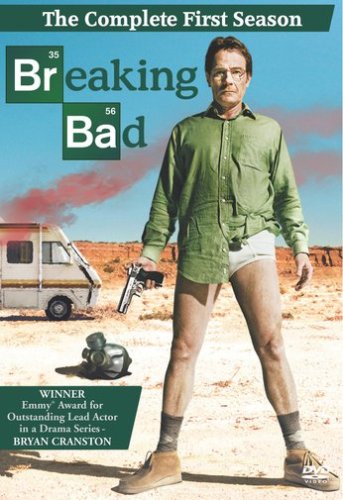
Breaking Bad could be the best show on television. I say “could be” because I haven’t seen enough of its competition to make a fair and adequate comparison. But one look at the beginning of Vince Gilligan and Mark Johnson’s breakthrough new series will have you undeniably hooked.
Posted in: Disc Reviews by Gino Sassani on March 4th, 2009
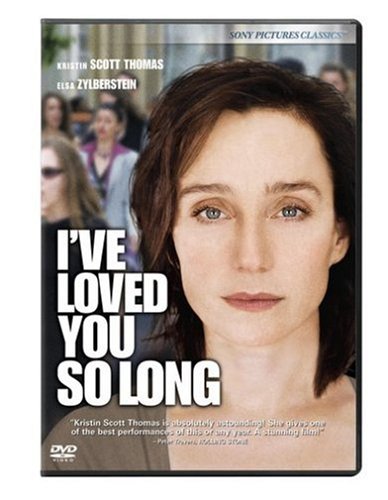
The highpoint of I’ve Loved You So Long is a rather brilliant performance by Kristen Scott Thomas. She is able to inhabit a character in ways I’ve rarely seen. You’ll be hard pressed to find any identifiable boundaries between the actor and the character. Now, usually, that’s the foundation for a solid film. The problem is that her character just isn’t that interesting of a person after a while. Of course, there are nuances to observe, and Thomas serves them up well, but after a short time we’ve really come to know this character pretty well. We just don’t find her all that interesting.
Juliette (Thomas) has spent the last 15 years in prison for the murder of her 6 year old son. She has been expectedly abandoned by her family while locked up. When it is finally time for her to be released, the only one willing to even talk to her is her estranged sister, Lea (Zylberstein) who takes her into her home. Lea has a family of her own now. She is married with two adopted Vietnamese children. The film pretty much follows no plot or story. It’s more or less Juliette’s journey to adapt to the outside world and deal with her own flood of emotions. If the movie is Juliette’s journey, then it is also a journey for Lea. Without revealing the ending, I can safely say the only destination here is understanding.
Posted in: Disc Reviews by Gino Sassani on March 4th, 2009
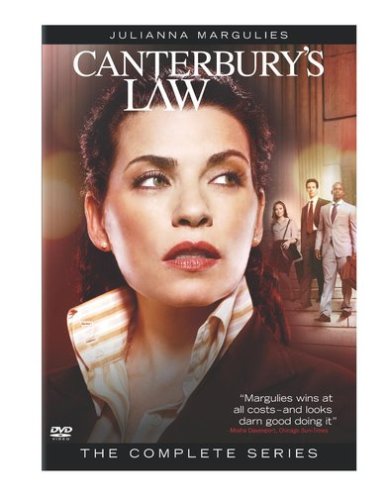
What happens when a television series depends on a title character, but that character is completely uninteresting? The answer is you get a 6 episode run, and then you’re over. That’s exactly the story with Canterbury’s law. I have no doubt that Julianna Margulies is a better actress than she showed on this show. I mean, she has to be, right? Margulies walked through her role as lawyer Liz Canterbury. The character had tons of potential. She was a bit of a rebel. She wasn’t afraid to bend…all right, break … the rules for her client. That kind of a maverick character usually means high ratings. But not if the actress playing the part refuses to invest anything into playing the character. Even when Canterbury is fired up, which, honestly, is most of the time, there’s almost no expression on Margulies’ face. Her voice fails to lift the dialog to the level of passion the material might be calling for. In short, she plays a charismatic character with no charisma. To make matters worse, the team was made up of unknowns, likely to remain such. Not that I really blame the actors. The parts were pretty bad. Ben Shenkman stars as Liz’s partner, Russell. Russell was once on the DA side of things. What makes him decide to partner up with Canterbury is a mystery deeper than any case the show explored. He disagrees with her nearly 100% of the time. He doesn’t appear to be happy most of the time. The firm appears to be struggling, so he’s not in it for the bucks. Liz, for her part, is always waiting for him to cut and run. It seems he’s there only to prove he’s loyal. Her associates are made up of Keith Robinson as Chester. Chester’s dad is running for the Senate and is a powerful man who doesn’t like the idea of his son in such a dead end firm. Chester’s trying to prove he’s got street cred and distances himself from his influential father. Finally you have Trieste Dunn as Molly, the attorney who has yet to pass the bar. She’s the budding idealist who was just beginning to develop somewhat when the show’s bottom fell out. Liz is dealing with a lot in her personal life as well. Her son was abducted three years ago, and it’s caused a strain on her marriage. The infidelities she’s had didn’t help much either. She’s in a pissing contest with one of the DAs who is out to bring her down at any price. She happily assists by doing things like suborning perjury and tampering with a jury. Did I miss anything?
Each episode of Canterbury’s Law is presented in its original broadcast 1.78:1 aspect ratio. I hope this show looked better when it was on the air. This stuff is a mess. Colors are often unnatural and heavy on the reds and yellows. They also run and appear blurred. Flesh tones are hampered by some odd soft focus that makes it look like a kid was running the camera. There’s an excessive amount of grain, particularly in the pilot episode. If it looked this bad in HD broadcast, it likely improved the odds of it not surviving. This is a very bad video presentation.
Posted in: Disc Reviews by Gino Sassani on March 4th, 2009
Juliette (Thomas) has spent the last 15 years in prison for the murder of her 6 year old son. She has been expectedly abandoned by her family while locked up. When it is finally time for her to be released, the only one willing to even talk to her is her estranged sister, Lea (Zylberstein) who takes her into her home. Lea has a family of her own now. She is married with two adopted Vietnamese children. The film pretty much follows no plot or story. It’s more or less Juliette’s journey to adapt to the outside world and deal with her own flood of emotions. If the movie is Juliette’s journey, then it is also a journey for Lea. Without revealing the ending, I can safely say the only destination here is understanding.
The highpoint of I’ve Loved You So Long is a rather brilliant performance by Kristen Scott Thomas. She is able to inhabit a character in ways I’ve rarely seen. You’ll be hard pressed to find any identifiable boundaries between the actor and the character. Now, usually, that’s the foundation for a solid film. The problem is that her character just isn’t that interesting of a person after a while. Of course, there are nuances to observe, and Thomas serves them up well, but after a short time we’ve really come to know this character pretty well. We just don’t find her all that interesting.
Posted in: Disc Reviews by Archive Authors on February 26th, 2009
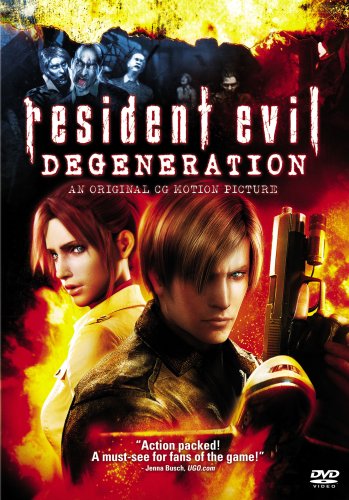
Popular gaming franchise Resident Evil is no stranger to the world of film. With a trilogy already in the bag from writer-producer Paul W.S. Anderson (Death Race), and starring Milla Jovovich, our favourite perfect being from The Fifth Element, audiences are pretty familiar with the RE brand. Well, the ones who go for schlocky zombie-fests, at least.
You can count me in that company. Every once in a while, a junk-food movie like Resident Evil just hits the spot. The question is, does Resident Evil: Degeneration deliver the goods?

Posted in: Disc Reviews by Gino Sassani on February 25th, 2009
Posted in: Disc Reviews by Michael Durr on February 23rd, 2009
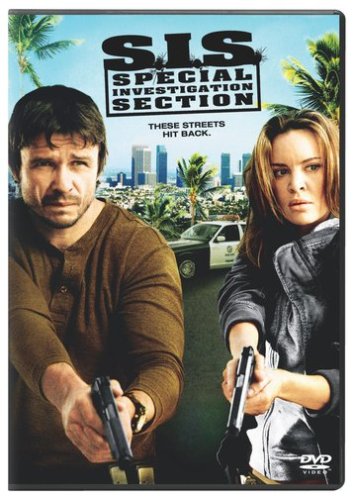
There are many shows out there that never make it past the original pilot episode. Most of them fail because there isn’t anything original about the plot or perhaps the cast chosen isn’t strong enough to bring out a good character. Heck, it could even be as trivial as the locale chosen to whether or not the network executives give it a nod. So the question remains, what exactly happens to these pilots that either fail or haven’t been picked up yet for next season? They get released on dvd. A little publicity never hurts.
Joseph Armstrong (played by Keith David) is the head of the SIS, the Special Investigation Section. The SIS is a secret department of the Los Angeles Police Department that seeks out the worst of the worst habitual offenders and brings them to justice. One way or another. After one of the squad dies in a violent gunfight, Assistant Chief Armstrong needs to find a replacement, one that won’t cause anymore problems and won’t make mistakes.
Posted in: Disc Reviews by Gino Sassani on February 16th, 2009
When a film is successful enough, it’s a relatively natural assumption today that a sequel will follow. In that sequel we expect more of the same and hopefully something new as well. Unfortunately there is a disturbing sideline for the animation sequel. Because the actors aren’t really on camera at all, there is the temptation to replace them so that you can do a much cheaper, often direct to video sequel. The folks who did Madagascar didn’t go that route, but the folks who did Open Season did. Gone are the likes of Martin Lawrence, Gary Sinise, Ashton Kutcher, and Debra Messing. These voices are replaced by Joel McHale, Mike Epps, and Jane Krakowski. Who? You might ask. That’s the problem. In an attempt to bridge the two films, Billy Connolly remains as the voice of McSquizzy. Crispin Glover is the biggest name actor in the new voice cast, playing the somewhat villainous Fifi. The result is a decidedly inferior film that was relegated to the Wal-Mart bins instead of the box office.
Just as Elliot and Giselle are about to get hitched, Weenie is discovered by his former masters and taken away. When Elliot sees the event he decides that Weenie has been captured and is being tortured. So the wedding is suspended and the gang sets off to rescue Weenie. They arrive at a pet campground where pets and their owners are pampered in a resort community for a week or two vacation. There is a prejudice among the domesticated pets against the animals of the wild. Our forest friends must infiltrate the resort compound and face down the domesticated pets in order to pull off their rescue. The pets are led by a conniving poodle named Fifi who is particularly hateful of the wilds. After a few slightly amusing sight gags and a predictable story and outcome, the wilds defeat Fifi and find that they and the pets have more in common than not. “Why can’t we just all get along” is the message of the day.
Posted in: Disc Reviews by Michael Durr on February 16th, 2009
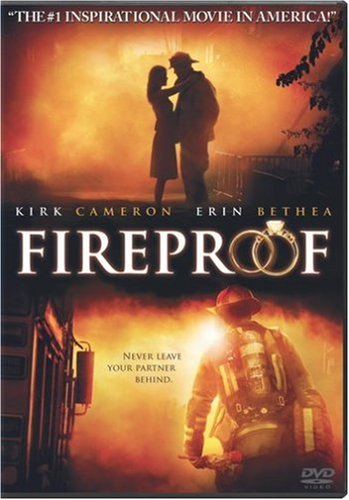
In my life, I have been married and divorced once. Quite simply, I made my share of mistakes and in my opinion, my ex-wife made some mistakes as well. It just never worked like one thinks a marriage should work. Instead, it left me broken but more importantly it left me a lot smarter and a better person. So naturally, I felt some connection to the broken marriage plot of the movie Fireproof. However, would my experience or failure in the art of marriage provide a bias to this film? We will just have to find out.
Caleb Holt (played by Kirk Cameron) works as a fire captain and manages a fire station. He’s a hero among the community and has saved many lives. However, at home he has a troubled marriage with Catherine (played by Erin Bethea) for a number of reasons including internet pornography and simply lack of love. During a particularly heated argument, Caleb gets in Catherine’s face and she declares she wants out of the marriage.