Universal

Synopsis

Young Alex O'Connel accidentally brings the Mummy back to life, and has the manacle of Osiris stuck to his wrist. With the help of his parents, and wielding the power of the manacle, he must find the lost scrolls (scattered hither and yon around the world) in order to defeat the Mummy. The animation is strictly Saturday-morning level, and calling these three episodes a feature at 65 minutes is stretching it a bit.

Synopsis

The film is basically about the four manic days of a Punjabi wedding. We have a plethora of characters, all involved in different kinds of relationships. At the centre we have the reluctant bride (still carrying on an affair with a married man). Sharp, clever, warm, this one's a keeper.

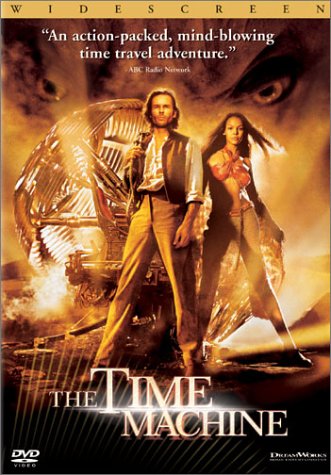
H. G. Wells is often considered the father of science fiction. Tales like The Invisible Man, War of the Worlds, and, of course, The Time Machine, have become classics both in literature and cinematography. The latest version of The Time Machine attempts to satisfy both fans of the George Pal film and readers of the original novel. Having Simon Wells, grandson of the writer, direct the film was no accident. What you end up with is a pretty nice film, but one that might not satisfy fans of the earlier works. The device itself is certainly in homage to the Pal machine. Enough liberties are taken with the story to warrant criticism from the novel’s fans. I rather enjoyed this film for what it was: simply a wonderful time travel story.

Synopsis

Synopsis

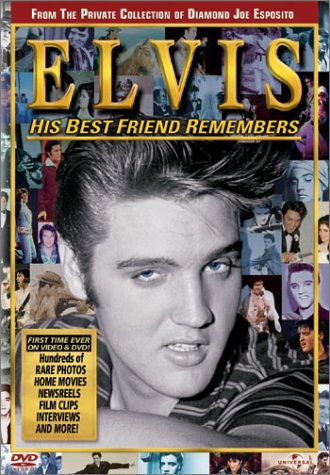
"Diamond Joe" Esposito recalls Elvis Presley's career, from when Esposito first became aware of him, to their shared military service, to the moment he became part of Presley's entourage. The memories go all the way to Presley's death and beyond. The disc's intro is irritatingly self-promotional, and the reverential tone of the piece smacks of an Entertainment Tonight segment stretched to 130 minutes.

Synopsis

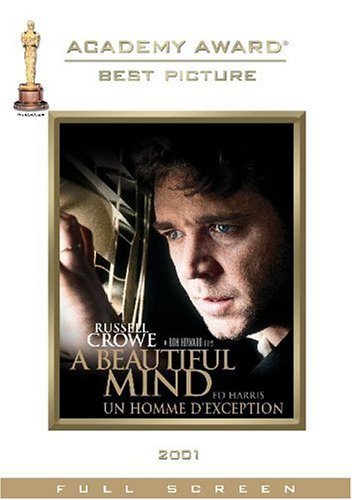
Crowe plays John Nash, schizophrenic genius. The film follows him from his grad student days at Princeton, to his revolutionary formulation of game theory, to his later breakdown, and climaxes in his reception of the Nobel Prize in 1994. Though overlong, often burdened by an excessively emphatic score by James Horner, and following all the usual conventions of Hollywood melodrama, the film also offers stunning cinematography by Roger Deakins, uncharacteristically good dialogue by Akiva Golds...an (can this be the same man who inflicted Batman and Robin and Lost In Space on us?), and excellent performances, especially on the part of Crowe, whose evocation of Nash is spooky.

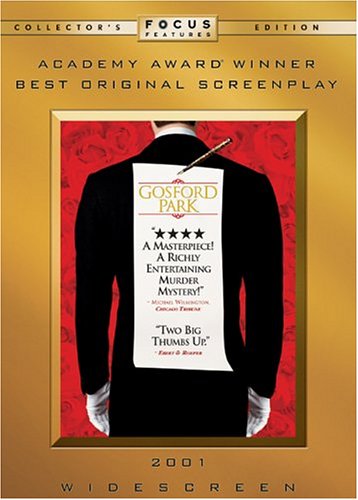
Fresh off of its multiple nominations at the 2001 Academy Awards, and Academy’s winner of the Best Original Screenplay, comes Gosford Park to DVD. Most who have seen this film have fallen in love with it, I on the other hand, felt the story moved far to slow, and my interest waned as the film progressed. Though I was not captivated by the film itself, the acting was superb, and the premise was solid.

“It is November, 1932. Gosford Park is the magnificent country estate to which Sir William McCo...dle and his wife, Lady Sylvia, gather relations and friends for a shooting party. They have invited an eclectic group including a countess, a World War I hero, the British matinee idol Ivor Novello and an American film producer who makes Charlie Chan movies. As the guests assemble in the gilded drawing rooms above, their personal maids and valets swell the ranks of the house servants in the teeming kitchens and corridors below-stairs.But all is not as it seems: neither amongst the bejewelled guests lunching and dining at their considerable leisure, nor in the attic bedrooms and stark work stations where the servants labor for the comfort of their employers. Part comedy of manners and part mystery, the film is finally a moving portrait of events that bridge generations, class, sex, tragic personal history and culminate in a murder. (Or is it two murders?)Ultimately revealing the intricate relations of the above and below-stairs worlds with great clarity, Gosford Park illuminates a society and way of life quickly coming to an end.” – Universal

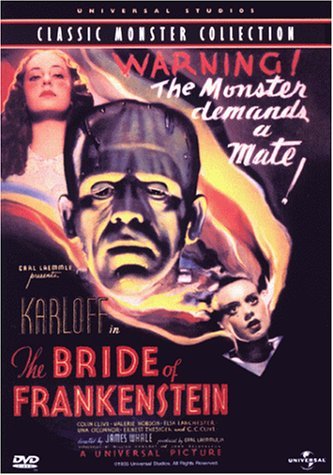
It’s hard to imagine, but in the 1930’s sequels were almost unheard of. If a work was considered to be a franchise, it was released in serial form before the main features. By today’s standards, Bride of Frankenstein would be no surprise. James Whale was reluctant to continue the Frankenstein saga as was the Monster himself, Boris Karloff. Universal was relentless and the world is the benefactor of its greed. Bride of Frankenstein not only lives up to its original but in many ways surpasses it. The sets are far more grand and the story was Universal’s most compelling. Whale would later admit that it was the only story that “had to be told”. Elsa Lanchester would become an icon with a measly 3 minutes of screen time; the image is forever embedded into the pop culture. This is without a doubt one of the best horror films of all time.

Synopsis

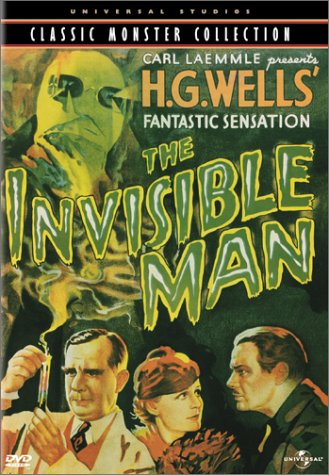
Haven’t we all fantasized about what it would be like to be invisible? Most of the common perks come to mind: spying, getting into movies and amusement parks free, even the baser peeping tom inclinations come to mind. James Whale would pair his Frankenstein masterpieces with this equally trend-setting film. The film is only loosely based on the popular H.G. Wells novel and is played more for chills. Claude Rains does such a wonderful role when you consider that for most of the film he is denied physical presence on the screen.

Synopsis

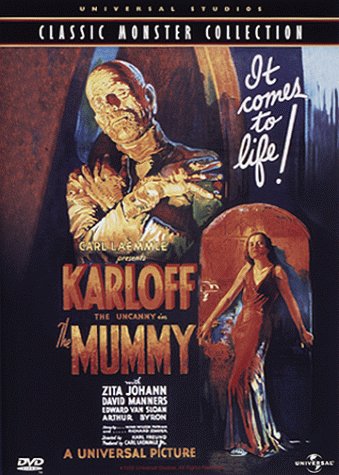
“He’s gone for a little walk.” I’ve never forgotten the first time I saw the mad assistant describe the escape of the Mummy from his tomb and the maniacal laughter that accompanied it. Again it’s the combination of Boris Karloff and makeup genius Jack Pearce that defines a creature for generations to come. When most of us think of a mummy we recall the bandaged creeping terror of Karloff’s portrayal rather than the more mundane rotted corpses found in museums all over the world. With a powerful cast and grand set designs, The Mummy would wrap all of us up in horror for 60 years.

Synopsis

By 1954 it seemed that Universal had run out its string of classic horror icons. Frankenstein’s Monster, The Mummy, and the Wolfman were forever gone from the backlots of Universal Studios. Enter Bud Westmore with a brand new monster design and The Creature soon joined the unholy 3 as the new face of horror. The Creature or Gillman would be the first Universal monster to be a full body suit and played by 2 actors in the same film (Browning for water and Chapman for land). Jack Arnold would bring a newly charged atmosphere and revitalize a genre.

Synopsis