Posted in: Disc Reviews by Gino Sassani on February 3rd, 2010
I grew up on the Peanuts creations of Charles M. Schulz. Most of us have, in one way or another. His newspaper comic strip is one of the longest running and most successful strips of all time. The work has been translated into every language currently spoken on the planet. The images of Charlie Brown, Snoopy, Linus, and the rest of the Peanuts gang have appeared on just about any kind of product imaginable. Our pop culture contains too many references to the strip to mention briefly. For me, it was the television specials starting in the mid 1960’s that brought the gang into my life. The classics are running annually, still after nearly 50 years. A Charlie Brown Christmas and It’s The Great Pumpkin, Charlie Brown are the most mentioned and certainly beloved by generations of children and adults. I thought I never missed an airing.
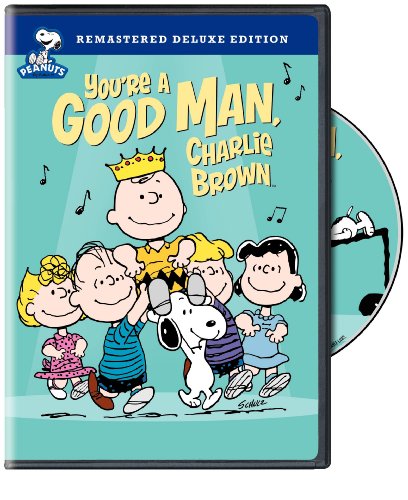
I'd like to be able to say that I'm a fan of all of the cartoons, but that wouldn't exactly be very honest. At some point they lost their innocence and eventually lost their charm. I never did see the live musical production of You're A Good Man Charlie Brown. This is actually the first time that I saw the animated version. I'm going to go out on a limb here and say that this animated cartoon is nothing like the production, at least I hope so. The play appears to be universally beloved. I often hear only the fondest recollections from those who have seen it. That's not the case with this particular version of the material. In cartoon form it plays out quite awkwardly. None of the numbers really combine into anything resembling a plot or story. They are all basically short vignettes with each of the major characters getting at least one moment to themselves. I can see this having far more impact on a stage with actors and sets. The traditional cartoon characters just aren't animated enough, excuse the pun, to pull this kind of thing off.
Posted in: Disc Reviews by Michael Durr on January 20th, 2010
As a kid, I was subjected to all sorts of soap operas whether it be during the day or during the night. During the day, it was a steady stream of Young & The Restless or General Hospital. At night, it was two shows as well. The first was Dynasty, which could better be described as a Joan Collins vs Linda Evans wrestling match. Then there was Dallas: J.R. & Bobby at the forefront of oil, cattle, deceit, and general debauchery. How sweet it is.
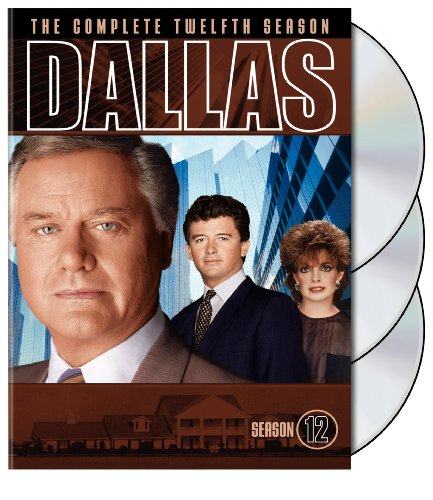
The twelfth season of Dallas starts with the eleventh season cliffhanger. J.R. Ewing (played by Larry Hagman and Nicholas Pierce (played by Jack Scalia) get into a fight in J.R.’s penthouse. Nicholas Pierce happens to be Sue Ellen’s (played by Linda Gray) new boyfriend. Except that she is still married to J.R. Anyhow, in the struggle Nicholas goes over the balcony rail and falls to his death. Sue Ellen then picks up a gun and shoots J.R. several times before phoning the police to call in a double murder.
Posted in: Disc Reviews by Archive Authors on January 19th, 2010
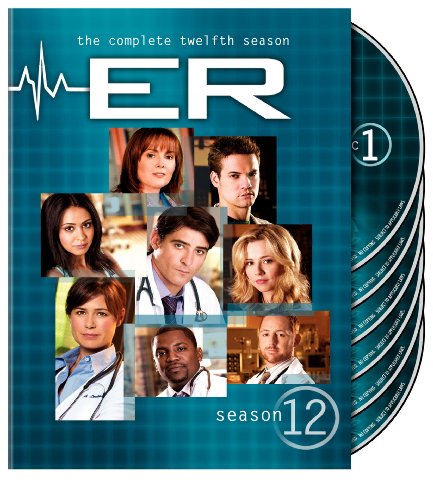
The series premiere of E.R on September 19, 1994 was preceded by the premiere of another medical drama, Chicago Hope, by one day. But one day didn’t seem to make much of a difference in the show’s longevity. E.R.ended after fifteen seasons on NBC in 2009. The show has seen a drastic change in cast members over the years—none of the original cast members were series regulars by the last season. We are, however, reunited with original cast members Dr. John Carter, played by Noah Wyle, Dr. Susan Lewis, played by Sherry Stringfield, and the underutilized Laura Innes as the stone-faced Dr. Kerry Weaver in season 12.
Posted in: Disc Reviews by Gino Sassani on January 19th, 2010
"Nature did not intend for you to survive out here. But here you are, and here I am to teach you how not to die..."
Whiteout has taken about as long and hard a road getting made as the characters in the film find themselves on stuck in the Antarctic. It began life as a crude graphic novel written by Greg Rucka and drawn by Steve Lieber. It developed a rather loyal cult following and was conceived as a film at around 2002. At one point it was intended as the launching point for a franchise featuring the federal marshal played by Kate Beckinsale. She might have been producer Joel Silver's first choice to play the character, as he has been heard to say. But the part was originally created for Reese Witherspoon. There were countless troubles developing a script, and studio support came and went throughout the period. Even when the film was ready to go with a street date, some troubles caused the release itself to delay its opening. Usually all of these development troubles spell disaster for a film in the end. Whiteout is no exception to that steadfast rule. The film scored a disastrous $10 million at the box and only $1 million foreign on a $35 million budget, and disappeared faster than your footprints in an Arctic blizzard.
Posted in: Disc Reviews by Gino Sassani on January 14th, 2010
"Fighting soldiers from the sky. Fearless men who jump and die. Men who mean just what they say, the brave men of the Green Beret. Silver wings upon their chest. These are men, America's best. One hundred men will test today. But only three win the Green Beret."
The Ballad Of The Green Beret has become one of America's most famous marching songs. It has been heavily parodied. The words were written by Staff Sergeant Barry Sadler while he was in the hospital recuperating from a leg wound he received in Vietnam. The music was composed by Robin Moore, who went on to pen the book The Green Berets, on which this film was based.
Posted in: Disc Reviews by Gino Sassani on January 12th, 2010
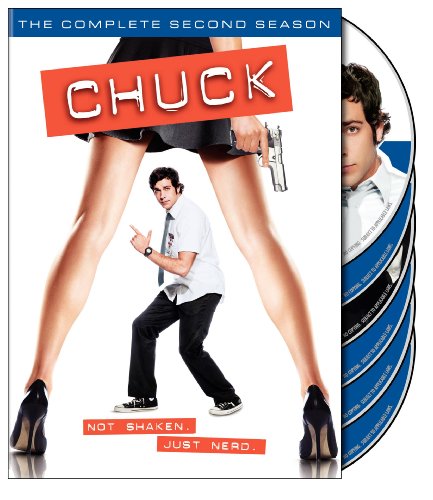
I'll be honest, at first Chuck sounded like a pretty bad idea to me. I expected it to be a kind of modern Get Smart with a reluctant geek hero. And that's pretty much what it turned out to be. Except it turned out to also be pretty darn entertaining as well. It all really starts with a solid cast and tightly written stories. Each episode manages to capture just the right blend of drama and comedy. I resist the trendy word dramedy, but if any series fits the mold, it would have to be Chuck.
In the first season we met Chuck Bartowski (Levi). He was a super smart student at Stanford when his best friend Bryce Larkin (Bomer) set him up to take the fall as a cheater and be kicked out of school in disgrace. The only job he can get now is working at the Buy More (Best Buy) on the Nerd Herd (Geek Squad). But Bryce wasn't done with Chuck yet. Turns out that Bryce is a CIA agent who has been working on the top secret project called Intersect. The Intersect is a computer program that can down load the entire government's database into a person's brain through a series of coded flash images. Not content with getting him kicked out of school, Bryce tricks Chuck into getting the Intersect inside his brain. Now Chuck is an important government asset and in need of protecting. Enter CIA agent Sarah Walker (Strahovski) who is Chuck's CIA handler. Their cover is boyfriend and girlfriend, which confuses Chuck's family and friends who never thought he could get such a hot girlfriend. The muscle for the team is Agent John Casey (Baldwin), who resents being assigned to such a lame mission. Not only do they have to keep Chuck and the Intersect safe, but they must take untrained Chuck on their missions because of the intel stashed in his brain. While Chuck is not consciously aware of the information he carries, when he sees something that triggers a piece of the data, something they call flashing, he is able to access the relevant data. The bad guys are part of an organization called Fulcrum which is this show's Kaos or Spectre.
Posted in: Disc Reviews by Gino Sassani on December 7th, 2009
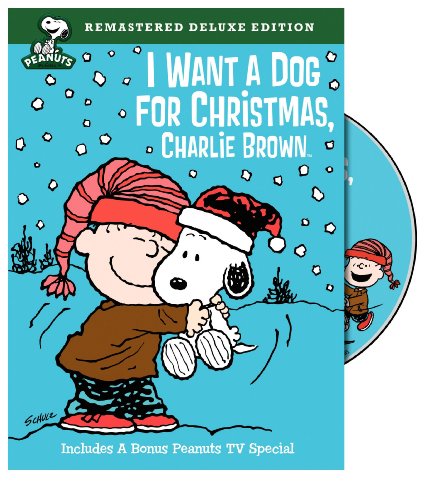
We all know what a classic A Charlie Brown Christmas still is. It's a fact of life that when you have a hit there is a tendency to continue to reach for that lightning in a bottle over and over again. That is certainly the case with the Peanuts specials. The results have been mixed, and while I won't say that these recent specials aren't quality stuff, I doubt there is anyone out there who believes that the same quality of heart and charm has existed in the series since the 1970's. When Charles Schulz died, it was agreed that no new material was to be allowed with these characters. Every special since that time has had to use dialog and stories already published in the cartoon strips. Now, that's not as limiting as you might think when you consider the strip ran for bout 50 years. That leaves a lot of untapped material out there to keep the specials running, and run on they do.
I Want A Dog For Christmas is a unique episode in that it does not really center much on the main Peanuts gang. Charlie Brown himself is reduced to a background character here. The star of this show is Rerun. The character was added as a baby brother to Linus and Lucy back on Mother's Day in 1972. His exposure in the shorts has been limited, to say the least. So, it is actually refreshing to have the character carry the load for this 2003 effort.
Posted in: Disc Reviews by Gino Sassani on December 7th, 2009
"Have you ever been told of that fateful year when Christmas almost didn't happen? It was everyone's worst fear. There was no one to take Santa's big sack of toys and deliver the presents to the world's good girls and boys. But this Christmas season didn't begin with any trouble or fuss. It began with some singing, as all Christmases must."
The 1960's and 1970's saw an entire genre of holiday specials produced by the prolific studio of Rankin and Bass. The most popular of these specials is probably Rudolph The Red Nosed Reindeer. But there were many others that were released in a 10-15 year period. They all had a few things in common. They used stop motion puppets and sets to achieve their animation. Yes, the same magic that sent King Kong up the Empire State Building drove Rudolph on that foggy night to lead Santa's sleigh. There was a decidedly plastic appearance to the characters, and they were certainly distinctive. Within seconds of watching one of these specials you were able to identify it as a Rankin and Bass production. In the years since, stop motion has almost gone the way of the dinosaurs with very few practitioners working in the art form today. Tim Burton has been the most successful of late. And we can't help but owe a huge debt of thanks to Willis O’Brien and Ray Harryhausen for perfecting the craft. And so our childhood was amused by these annual favorites only surviving in chopped up syndicated reruns today.
Posted in: Disc Reviews by Gino Sassani on December 1st, 2009
I went to my player, the one that’s on top. I turned on the TV I bought at the shop. Then I opened my Blu-ray, took it right from its case, and then there on the tray I put it in place. I pushed one or two buttons to bring it up fast. Soon an FBI warning, then my feature at last. I sat the whole time crouched alone in my chair, watching fanciful images that came to me there. I was certain at once that I’d seen this before, but something was different; it was brighter, I’m sure. The Grinch was the same, he hadn’t changed, not a bit. But the image was clearer now, I had to admit. So, I puzzled and puzzled alone in my seat. Why these colors much finer for such a repeat? Then at last I was certain, yes it had to be so. This must be high definition, what a wonderful show. I know when it ended I felt somewhat sad, but these discs last forever, and so I was glad. So, if you’re a fan of the Grinch and his kin, you must hurry now quickly and watch it again. I promise it will be like nothing you’ve known. It’s for kids of all ages, both little and grown.
Boris Karloff was famous for monsters and ghouls, who’d have thought he’d be perfect for books read in schools? He tells quite a story, a marvelous voice. To play the Grinch and reader he was the most perfect choice. The songs are all there, you know them by heart. Nothing is missing, not one little part. Everyone’s back, Cindy Lou Who and Max. But the Grinch is the star. The facts are the facts. You can sing along joyfully. You know every word. You know every scene even before it occurred. Chuck Jones was the talent behind all the art, as he carefully directed each wonderful part. It was made in 1966. It’s been shown every year, from Tampa to London, Paris, Rome, and Tangier. Kids laugh and they snicker. Some kids even wince; for 44 years now we’ve been watching The Grinch.
Posted in: Disc Reviews by Gino Sassani on December 1st, 2009
I grew up on the Peanuts creations of Charles M. Schulz. Most of us have, in some way or another. His newspaper comic strip is one of the longest running and most successful strips of all time. The work has been translated into every language currently spoken on the planet. The images of Charlie Brown, Snoopy, Linus, and the rest of the Peanuts gang have appeared on just about any kind of product imaginable. Our pop culture contains too many references to the strip to mention briefly. For me, it was the television specials starting in the mid 1960’s that brought the gang into my life. The classics are running annually, still after nearly 50 years. A Charlie Brown Christmas and It’s The Great Pumpkin, Charlie Brown are the most mentioned and certainly beloved by generations of children and adults. I thought I never missed an airing.
This is one of the most endearing and enduring of the franchise. It’s loaded with memories too many to mention them all here. Charlie Brown tries to direct the school nativity play. He finds it hard to get the gang’s cooperation. In his own despair he discovers the true meaning of Christmas. Some of those memorable moments that I will never forget include: The scrawny little tree that Charlie Brown picks out, held up by Linus’s blanket. Snoopy wins first prize in a house light decoration competition. Of course the best of the best comes in the end when Linus recites the story of the birth of Christ. Today most people would be shocked to see a public school putting on a nativity play. Watching this one is a sad reminder of how much these basic principles have been swept away by intolerance and misrepresentation of “Jefferson’s Wall”, that First Amendment separation of church and state. This short, more than the others, is truly a product of its time. It depicts an America that no longer exists.