Warner Bros.

If you're reading this review, you must surely already know what the movie is about. We're talking, after all, about what must surely be the single most celebrated case of mistaken identity in the history of film. Cary Grant stands up in a lounge at just the wrong moment and is mistaken for a man who doesn't exist. That utterly perverse mix of chance and paradox, leading to ever more dangerous situations for Grant, in an ever more complicated tangle of battling conspiracies, is so utterly Hitchcockian, it might just as well be trademarked.

The film is also very funny, as so much of Hitchcock's work is. Of course, much of his humour is black as pitch, and that mordant wit is certainly still present here, but there is also a joviality to the proceedings, due in no small measure to the presence of Cary Grant. Unlike the Jimmy Stewart of Vertigo and Rear Window, whose screen image of fundamental decency makes the deeply flawed, pathological aspects of his characters even more painful and weighty, Grant here keeps things light, as his character is just as aware of the absurdity of his perils as we are, and is just as likely to be amused. But if this is Hitchcock working in a lighter vein, that astounding perversity keeps poking through. What are we to make, for instance, of that creepily close relationship Grant has with his mother?

One might have to legitimately ask about the thinking behind this particular children- targeted release. I have to admit that I was a little uncomfortable with the idea of reviewing this film at this particular time. I have two issues that are just unavoidable here:

They both deal with the film's two central stars here. Bindi Irwin is the daughter of famed Crocodile Hunter Steve Irwin. You all remember Steve. He used to approach some of the most dangerous animals on the planet and quite casually tell us just how deadly they were while tempting them to tag him. We all suspected that Steve might one day get a little careless and get himself killed. The truth is that didn't exactly happen. It wasn't a particularly dangerous animal or any carelessness on Irwin's part that led to his rather unexpected death a few years ago. It was a usually harmless stingray that sent a barb through his heart in what can only be described as an unfortunate freak accident. Now, even before his death, the family had been preparing their very young daughter to follow in Daddy's rather unusual footsteps. Bindi's done several documentary films, including her own television show in the wake of her father's death. Here I can't help getting the feeling that the appearance is somewhat exploitive of the whole business. When I look at Bindi's mom in the extra features, I can't shake the feeling that she's cashing in here. I don't know these guys, so I'm not trying to claim that I know their hearts and minds. I can only report the feeling it leaves me with, and it's not a good one.

"It's New Year's Eve on the Poseidon. Partying voyagers toast the future. The future comes in a rush; a 150 foot rogue wave flips the cruise ship over. And a struggle to survive begins."

Poseidon doesn’t waste any time getting to the action, so I won’t waste any time with an introduction to this review. Yes, it’s a remake of the 1972 film, The Poseidon Adventure. Yes, it is chock full of convenient cardboard characters (a former Navy man, a fireman, a nurse, etc…). But we don’t watch movies like Poseidon for character exposition, do we?

The Prisoner was a television show that ran in the UK from September of 1967 to February of 1968. It starred Patrick McGoohan as the Prisoner who was trying to understand what the Village was and how to escape from it. Enter 2009; we have a remake and this time we have Jim Caviezel in the familiar role. However, this time things go just a little bit differently.

Michael (played by Jim Caviezel) just resigned from the corporation Summakor. However, the events that follow are unclear until he awakes in a desert surrounded by nothing but sand. He struggles to get to his feet and walks for a bit until he sees an old man (played by John Whiteley) running. The man is being pursued by armed guards who shoot at him until it appears he is gunned down.

Around Thanksgiving of last year, I started to see trailers of a particular movie that quite literally made me laugh out loud. The reason behind it is because I knew with the title of the movie and the obvious plot, there was no way I was not going to review it when it came to dvd & blu-ray. I have a reputation for certain movies, I guess you could say. That movie was Ninja Assassin. Several months later, I am reviewing it for a mass audience. Funny how that works.

An old man and master of tattoos (played by Randall Duk Kim) is filling in an elaborate tattoo on a young gangster named Hollywood (played by Sung Kang)’s back. A henchman brings Hollywood a sealed envelope. The envelope is opened and out spills black sand. The old man is startled. He starts to spin a tale about ninjas and how he saw an envelope just like that before everybody around him was assassinated.

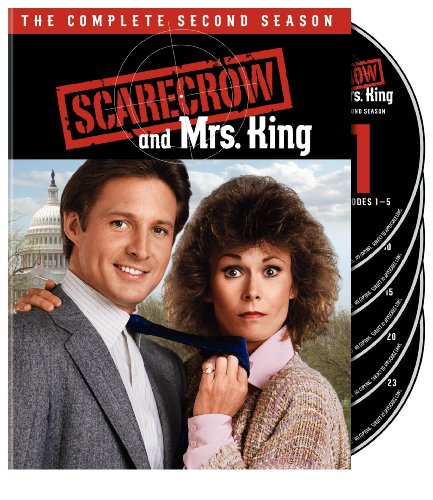
While Scarecrow And Mrs. King first aired in 1983, this show is really one of the last of the 1970's crime dramas. It was an early attempt to bring in more of the female audiences that seemed reluctant to join the popular detective shows of the era. While not really a "detective" show (they were spies), it employed a lot of the 1970's conventions. Even the film footage has that distinct style from those days and type of shows. The idea worked, and the series did bring in a sizeable female audience, but it never really caught on with the guy crowd who found it a bit too relationship-heavy. The two leads were chosen less for their character appeal than for their apparent "easy on the eyes" look. Again more fodder for the chick crowd. The show was always rather lighthearted, even if the material was somewhat serious cold war espionage. The two shared a banter that revealed a kind of love/hate relationship and the expected sexual tension that would eventually lead to the two getting hitched. And while the series only lasted four seasons, the formula would end up being tweaked to bring us the more successful Moonlighting with Bruce Willis and Cybill Shepherd, which took the idea more into the 80's with slicker production values but still a mainly female appeal.

Amanda King (Jackson) was a recent divorcée with two sons and a nosy mother (Garland) who lived with her. She has a boyfriend named Dean who works as a meteorologist at a local Washington DC television station, whom you never actually get to see. While at the train station, she suddenly finds herself embroiled in an espionage plot when a package is handed to her on the platform. Then she meets government agent Lee Stetson (Boxleitner) who works under the codename: Scarecrow. She's intrigued by Scarecrow and agrees to help him in his current case. Of course, she ends up in a more permanent role with "The Agency", taking a job at their cover corporation The International Federal Film Company. Every week we find Amanda trying to balance her new role as a spy with trying to raise her kids, have a normal dating relationship, and keep her cover safe from her particularly prying mother. The results are often quite funny. There is also Scarecrow's partner, Francine (Smith) who is somewhat jealous of Amanda and Lee.

"Perseus and Andromeda will be happy together. Have fine sons... rule wisely... And to perpetuate the story of his courage, I command that from henceforth, he will be set among the stars and constellations. He, Perseus, the lovely Andromeda, the noble Pegasus, and even the vain Cassiopeia. Let the stars be named after then forever. As long as man shall walk the Earth and search the night sky in wonder, they will remember the courage of Perseus forever. Even if we, the gods, are abandoned or forgotten, the stars will never fade. Never. They will burn till the end of the time."

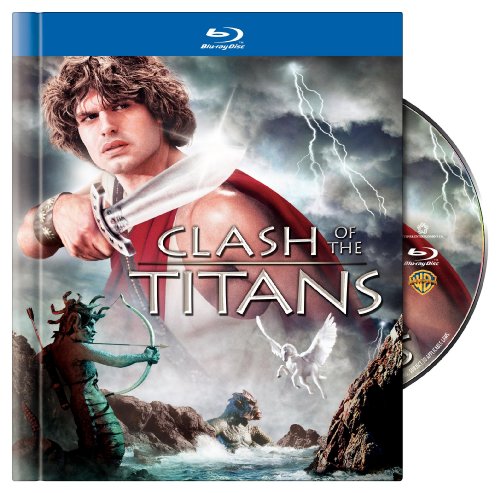
Talk about your perfect storm. You take the master of stop motion technology, Ray Harryhausen, and you combine those creature animation talents with one of the oldest stories surviving today in Perseus and Andromeda. How can the combination not be magical? The story has always been a favorite of mine, likely because I was born on the Summer Solstice, the critical moment of this story. I was preordained to love this film. The truth is that this film never got quite the recognition it so richly deserved. Now, on the cusp of a computer generated remake, it was my unmitigated privilege and joy to watch the original 1981 film in the glory of high definition.

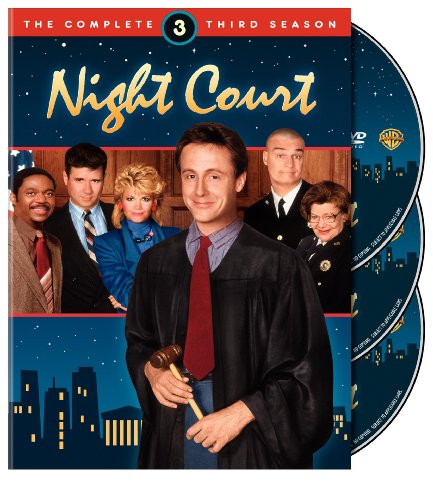
Night Court appeared on the docket at NBC in 1984 and was to last 8 seasons. If you thought it looked and sounded a lot like Barney Miller, you won’t be surprised to learn that a number of key people, including creator Reinhold Weege, came from that classic cop comedy. Several key elements of Miller can be found in Night Court. The themes are almost identical, with both beginning with an easily identifiable bass run. The most important imported element from Miller was the constant parade of the kookiest and craziest criminals this side of the Cuckoo’s Nest. From a hick farmer played by then beginner Brent Spiner to hookers with hearts, Night Court relied heavily on the eccentric character to provide most of its laughs.

Harry Stone (Anderson) is a young hip judge who almost blunders into a judgeship of a Manhattan evening session courtroom. The role appears tailor-fit for Anderson’s style of humor. The character even retained Anderson’s flair for amateur magic. He was always trying to bring levity to even the most dire of circumstances. Joining him in his courtroom was prosecutor Dan Fielding, played by the extremely funny John Larroquette. He was a material man with an overactive lust for the ladies. He was self centered and always looking to gain from someone else’s misfortune. He would often find himself having to suck up to the young judge, who he found too footloose with the law. His groveling always brought the judge a perverse pleasure. The court was presided over by two bailiffs. Bull was played by Richard Moll. He was a mountain of a man with a bald head. While he might look and act like a monster who would eat little babies, he was in fact, a gentle and often childish character with an IQ lower than his shoe size. His partner and mentor was Selma, played by the raspy-voiced Selma Diamond. Selma was a no-nonsense, say what she wanted to, chain smoking authority in the courtroom. Unfortunately, Diamond passed away after the second season. Replacing the gruff character and actress was Florence Halop playing Florence Kleiner, but she would only last this season. Charles Robinson joined the cast in the second year as the court’s new clerk. He was likely the most “normal” member of the cast. Throughout its run there were a rather large number of actresses to play the public defender role in the series. Eventually that role went to Markie Post, who kept it for the longest time. In season two it was Billy Young playing a very awkward Ellen Foley. The character never clicks with any of the others, and she would also be gone at the season’s conclusion.

So what's the Scooby Gang up to this time, you might ask. We meet Velma's younger sister for the first time here. Young Madelyn has been off studying magic at the Whirlin Merlin Magic Academy. It seems a giant mythological griffin has been stalking the halls of the old school. So who ya gonna call? Scooby and the gang conduct the usual investigation, uncovering the usual suspects.

Scooby Doo has spanned generations and over 40 years. Since the 1960’s the name and conventions have become a part of the pop culture. The original cartoon series had a series of conventions. The Scooby Gang would drive around in their green Mystery Machine van and solve ghostly mysteries. Fans of the show quickly grew to learn that these spirits and goblins were usually just normal people using scare tactics to get revenge or make a profit. The cartoon classic spawned music albums, live action movies, and several new shows and animated features.

"Look sharp, act sharp, be sharp. These guys coming out of prison? They're buff, been on drugs. You do what they teach you in the academy, you will die. Knucklehead wants to take your gun. So if it's you or some 300-pound naked guy on PCP, you take his ass down any way you can. You ride with me, you back your badge."

There probably isn't a group of people who have been profiled more than the men and women serving in the LAPD. It doesn't take a rocket scientist to figure out why. It's a large city with an incredibly diverse population. Oh, and it doesn't hurt any that Hollywood's a part of this particular asphalt jungle. So we get to see a lot of L.A. or New York cops on television. Even long before Jack Webb was asking for the facts and only the facts, the cops of L.A. have had more than their fair share of screen time in film and television. With that in mind, it is awfully difficult to do anything new with the LAPD.