Warner Bros.

I went to my player, the one that’s on top. I turned on the TV I bought at the shop. Then I opened my Blu-ray, took it right from its case, and then there on the tray I put it in place. I pushed one or two buttons to bring it up fast. Soon an FBI warning, then my feature at last. I sat the whole time crouched alone in my chair, watching fanciful images that came to me there. I was certain at once that I’d seen this before, but something was different; it was brighter, I’m sure. The Grinch was the same, he hadn’t changed, not a bit. But the image was clearer now, I had to admit. So, I puzzled and puzzled alone in my seat. Why these colors much finer for such a repeat? Then at last I was certain, yes it had to be so. This must be high definition, what a wonderful show. I know when it ended I felt somewhat sad, but these discs last forever, and so I was glad. So, if you’re a fan of the Grinch and his kin, you must hurry now quickly and watch it again. I promise it will be like nothing you’ve known. It’s for kids of all ages, both little and grown.

Boris Karloff was famous for monsters and ghouls, who’d have thought he’d be perfect for books read in schools? He tells quite a story, a marvelous voice. To play the Grinch and reader he was the most perfect choice. The songs are all there, you know them by heart. Nothing is missing, not one little part. Everyone’s back, Cindy Lou Who and Max. But the Grinch is the star. The facts are the facts. You can sing along joyfully. You know every word. You know every scene even before it occurred. Chuck Jones was the talent behind all the art, as he carefully directed each wonderful part. It was made in 1966. It’s been shown every year, from Tampa to London, Paris, Rome, and Tangier. Kids laugh and they snicker. Some kids even wince; for 44 years now we’ve been watching The Grinch.

I grew up on the Peanuts creations of Charles M. Schulz. Most of us have, in some way or another. His newspaper comic strip is one of the longest running and most successful strips of all time. The work has been translated into every language currently spoken on the planet. The images of Charlie Brown, Snoopy, Linus, and the rest of the Peanuts gang have appeared on just about any kind of product imaginable. Our pop culture contains too many references to the strip to mention briefly. For me, it was the television specials starting in the mid 1960’s that brought the gang into my life. The classics are running annually, still after nearly 50 years. A Charlie Brown Christmas and It’s The Great Pumpkin, Charlie Brown are the most mentioned and certainly beloved by generations of children and adults. I thought I never missed an airing.

This is one of the most endearing and enduring of the franchise. It’s loaded with memories too many to mention them all here. Charlie Brown tries to direct the school nativity play. He finds it hard to get the gang’s cooperation. In his own despair he discovers the true meaning of Christmas. Some of those memorable moments that I will never forget include: The scrawny little tree that Charlie Brown picks out, held up by Linus’s blanket. Snoopy wins first prize in a house light decoration competition. Of course the best of the best comes in the end when Linus recites the story of the birth of Christ. Today most people would be shocked to see a public school putting on a nativity play. Watching this one is a sad reminder of how much these basic principles have been swept away by intolerance and misrepresentation of “Jefferson’s Wall”, that First Amendment separation of church and state. This short, more than the others, is truly a product of its time. It depicts an America that no longer exists.

“On the 15th of May, in the jungle of Nool, in the heat of the day, in the cool of the pool. He was splashing enjoying the jungle’s great joys, when Horton, the Elephant, heard a small noise. Then he heard it again, just a very faint yelp, as if some tiny person were calling for help…”

If you’re like me, you remember the Dr. Seuss specials from the 1960’s. At this time of the year, The Grinch comes first to mind. In that wonderful span of cartoon specials was the story of the elephant Horton, who hears voices coming from a speck he carries around on a flower. The story revolves around Horton’s attempts to protect the very tiny town of Whoville which exists on that speck. None of his friends believe him, just as none of the Whoville scientist’s friends believe that he has spoken to a giant elephant in the sky. Before long the story plays out, and we all remember the moral that a person’s a person, no matter how small. That Chuck Jones effort is a dear memory for most of us from that generation.

Superman: The Animated Series was made in the same fashion as Batman: The Animated Series. The tone was a little more serious and a lot more action. It was first produced in 1996 and made 54 episodes through the year 2000. The show received high praise for raising the bar but at the same time keeping what was important to the mythos of Superman. In fact, it even received a nomination for an Emmy. Besides Smallville, this probably stands out as the best television adaption of the one known as Superman, the Last Son of Krypton and hero to the planet Earth (and beyond).

Most of us know the story of Superman, but perhaps it is best that we run it over a little bit adapted to the actual animated series. Krypton is approaching devastation but only one scientist believes it to be true, Jor-El. He feeds his information to a computer named Brainiac who is in charge of the planet and all of its major operations. The computer analyzes the information and says the planet is safe. Jor-El knows the computer is lying and can't convince the others of the danger.

“Sometime in the 23rd Century the survivors of war, overpopulation, and pollution are living in a great domed city, sealed away from the forgotten world outside. Here in an ecologically balanced world, mankind lives only for pleasure, freed by the servo-mechanisms which provide everything. There’s just one catch. Life must end at thirty unless reborn in the fiery ritual of Carousel.”

Logan’s Run started life as a pretty successful novel by William F. Nolan and George Clayton Johnson. The source material was really quite dark and more like Ridley Scott’s Bladerunner than the 1976 film based on the work. For some reason it was decided that this dark reflection of the future wasn’t as marketable. So, the decision was made to make this a very bright film with only hints at the nefarious realities of this future world.

“The perpetrator is an expert marksman. He’s an expert in explosives and tactics. Gentlemen, play this one by the numbers. Maintain your fields of fire… We’re blind and he’s seeing in 20/20… We have not contained him. He’s contained himself.”

“He” is Samuel L Jackson in the 1998 action thriller The Negotiator. Jackson stars as Danny Roman. He’s a Chicago Metro hostage negotiator. As the film opens we get to see him in action saving a little girl from a tight hostage situation. He’s obviously good at his job and he has the respect and admiration of his fellow officers and commanders. Roman’s partner Nathan Roenick (Guilfoyle) has gotten a hot tip from an informant. Someone inside the department has been skimming money from the union’s retirement fund. He’s about to blow the case wide open when he’s killed. Roman discovers his friend and partner just as other cops arrive to see him leaning over the dead body. He becomes the prime suspect not only in his partner’s death but the missing money as well. Someone has gone to great lengths to frame him for the crimes. When evidence of his guilt is found at his house, not even Roman’s friends believe he’s innocent. With everyone turning their backs on him, Roman goes to Inspector Niebaum (Walsh), an internal affairs cop that Roenick mentioned as a part of the embezzlement scam. The confrontation quickly gets out of control, and before anyone knows what’s happened, Roman has taken the internal affairs department hostage. He demands that Lt. Chris Sabian (Spacey), another hostage negotiator that Roman trusts, be put in charge of the operation. Sabian takes over, but he’s dealing with a perp who knows all of the rules of engagement. To make matters worse, the book doesn’t cover this kind of negotiation. Roman isn’t asking for money and a plane full of fuel at the airport. He wants someone to get to the bottom of the frame job, or else.

The names of the characters are hardly consequential, as they are used to further storylines more than develop character. But Pacino plays a cop who is tracking a group of robbers, among them Val Kilmer (Wonderland) and Tom Sizemore (Saving Private Ryan), a group headed by DeNiro. The group receives offers for work from Jon Voight (Runaway Train), and they rob anything from gold, to coins, to bearer bonds. They are all ex-cons, and know all the ropes. They are a highly professional crew, which you see in the opening moments of the movie, despite the addition of a new man to the crew. What also helps to differentiate this from a usual cops and robbers movie are the secondary plotlines of the families involved. Pacino’s is clearly distant and breaking (played by Diane Venora and Natalie Portman), while DeNiro doesn’t have one to speak of, despite an emerging romance with Edy (Amy Brenneman, Judging Amy). At 3 hours, there are some unnecessary scenes involving a banker (played by William Fichtner), but the underlying message is that almost all of the actions in the movie do not involve just the primary characters, but also friends and loved ones of those characters. Kilmer’s wife in the film, played by Ashley Judd, desperately wants to get him out of his line of work, as she wants to start a new life for her family. An ex-con (Dennis Haysbert, 24) is stumbled upon working in a greasy spoon, and offered a chance to work by DeNiro. Haysbert’s character wants to be right, but runs into so many obstacles from it that he takes the job, only to wind up perishing in what results in a massive gunfight in the heart of Los Angeles while a bank robbery is being pulled.

With other solid supporting performances by Ted Levine (Monk), Mykelti Williamson (Forrest Gump), and appearances by Bud Cort (Harold and Maude), Jeremy Piven (PCU), Hank Azaria (The Simpsons) and Henry Rollins (The Chase), the movie is certainly not without its star power. The director behind this work is Michael Mann, who also wrote a much better than expected story. The man responsible for such striking visuals in films such as Manhunter, Ali and The Insider contributes more outstanding work here, and while it’s been out for awhile now, Warner Brothers finally gives it a high definition Blu-ray release

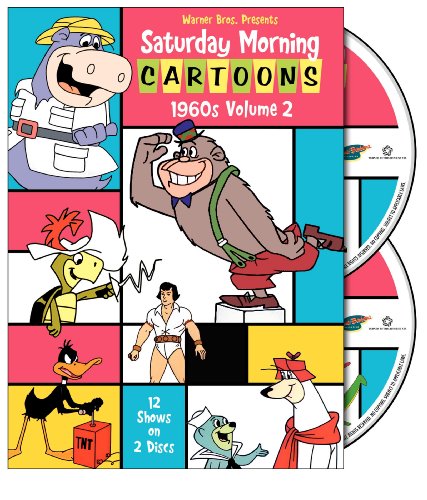
As a child growing up in the 1970’s I remember quite vividly the Saturday morning cartoon experience. It’s what we all lived for. We’d wake up early and pour out a bowl of sugar and milk, reaching for some cheap toy that was buried in the cereal box like Blackbeard’s own chest of gold. Then we would entertain ourselves with zany characters, superheroes, and action filled adventures until the noon news programs would begin and it was time to take our playtime outside. It was a far more innocent age, and we didn’t have video games to play. These were our video games. If they appear simple and at times crude, perhaps they were. But these were something of our very own. Watching them today, they don’t hold the same kind of magic they did then. That doesn’t mean it isn’t fun to revisit those days from time to time. It wasn’t the cartoons that were always special. But, Saturday morning … man, that was something special.

These cartoons are mostly Hanna Barbera shows which dominated the Warner archive from that era. No question this group contains some of the most recognizable characters from my childhood. Certainly, there some of the very well known titles from Bugs to The Roadrunner. I’m glad to see a few other characters added here like El Kabong and Atom Ant. It’s a very eclectic collection, to be sure, so you should find a little something for everyone.

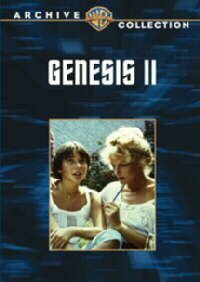
“My name is Dylan Hunt. My story begins the day on which I died. My last look at my world was to be from inside a pressure chamber at NASA’s underground laboratory at Carlsbad Caverns. Our goal was the development of a form of suspended animation which would allow our astronauts to make longer voyages through our solar system. It had been my decision that our method was ready to test on a human so, it seemed that any risks should be mine…”

Gene Roddenberry was riding high as Star Trek began to grow more in popularity during syndication than it had as a prime time network series. Suddenly television executives wanted more ideas from The Great Bird Of The Galaxy, as Trek fans began to know him. One of those ideas was Genesis II. It tells the story of a scientist who is conducting a suspended animation experiment. He expects to be under for only a few days, but a cave-in traps him in his chamber, and he is not rediscovered for 154 years. He awakes to find an entirely different world than the one he remembers. Humans live underground as a group called the PAX. They are a peaceful sort and have left behind most of the science that destroyed the world Hunt knew. Their enemies are a group of mutants, identifiable by having two belly buttons, because they have two hearts. They have enslaved humans and live an aristocratic life in the city of Tyranus. Now Hunt (Cord) is being courted by both civilizations. He must choose between them. Attempting to win him over to the Tyranians is Lyra-a (Hartley). She seduces him and tries to taint his opinion of the PAX. But Hunt soon learns from experience which side is the nobler race.

I grew up on the Peanuts creations of Charles M. Schulz. Most of us have, in some way or another. His newspaper comic strip is one of the longest running and most successful strips of all time. The work has been translated into every language currently spoken on the planet. The images of Charlie Brown, Snoopy, Linus, and the rest of the Peanuts gang have appeared on just about any kind of product imaginable. Our pop culture contains too many references to the strip to mention briefly. For me, it was the television specials starting in the mid 1960’s that brought the gang into my life. The classics are running annually, still after nearly 50 years. A Charlie Brown Christmas and It’s The Great Pumpkin, Charlie Brown are the most mentioned and certainly beloved by generations of children and adults. I thought I never missed an airing.

Now Warner Home Video has brought together a special collection of the cartoon specials that started it all. It includes those annual greats and a few that I don’t really remember so much. Now we get into the first volume of the 1970’s specials. The two discs include the following Peanuts specials: