1.33:1 Fullscreen

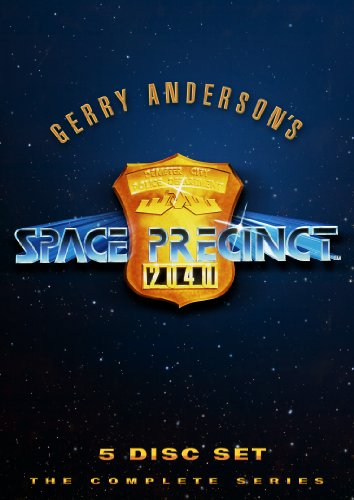
“The name's Brogan, Lieutenant Brogan. For 20 years I was with the NYPD. Now? Well ... let's just say I'm transferring to another precinct.”

That Precinct is the 88th, which serves Demeter City from an orbiting station around the planet Altor. Demeter City is one of the toughest cities in the universe. There's tons of slums and every kind of scumbag criminal you could ever expect to find in the worst of Earth's hoods. The planet is primarily populated by three species, although there are literally hundreds of known species that might be found in one of the darkest corners of the city. Humans make up about a third of the dominant population. The Tarns are a species with a third eye that grants them varying degrees of telepathy and telekinesis. The Creons are the dominant species. They look a little like hammerhead sharks with their bulging eyes extended outward on either side of their face. This species is high on ritual and tradition. The three species are well represented in the officers who serve at the 88th.

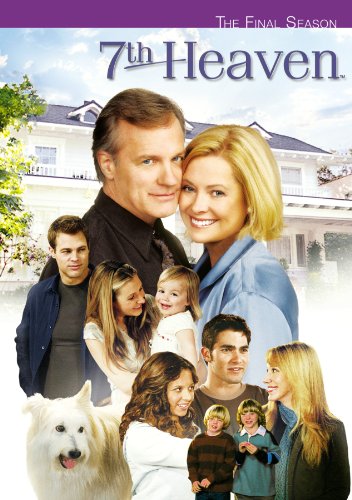
7th heaven reaches its 11th and final season of rampant political correctness and lessons of family togetherness through Christian love. Yes, that was a mildly passive aggressive summary of this show, but I feel sometimes one strong bias deserves another to challenge it. This show, the story of a very large family lead by a Minister (and don't deny it, he leads them) as they convey their socially and politically conservative Protestant Christian point of view of “real-life” situations.

To be a fair reviewer, I shall put aside my personal objections to critique how the show works just as a family drama for a moment. The 11th season is quite hard to get into as there are countless references and relationships that have been building up for a very long time. I'm not asking it to be like a Law and Order brand of storytelling, where a viewer can jump in at any episode to enjoy a fully encapsulated story, but this show becomes an undeniable challenge to watch if you are seeing it without any background knowledge of the characters and their previous stories.

The Haunting of Sorority Row has one of those titles that, when you first hear it, you immediately make assumptions about. My initial assumption was that the movie might very well feature a house full of hot young girls in various stages of undress, acting all catty between pillow fights and being menaced by a supernatural entity of some kind. And then I looked down to the bottom of the dvd case and noted that this was produced by Lifetime. Wait, I thought, isn’t a horror movie by the Lifetime Network akin to Spike TV producing a Jane Austen film festival? Or Comedy Central hosting a David Cronenberg retrospective? Or Arts & Entertainment producing a reality show about a guy who traps raccoons….? Oh. Wait.

Never mind.

I grew up on the Peanuts creations of Charles M. Schulz. Most of us have, in some way or another. His newspaper comic strip is one of the longest running and most successful strips of all time. The work has been translated into every language currently spoken on the planet. The images of Charlie Brown, Snoopy, Linus, and the rest of the Peanuts gang have appeared on just about any kind of product imaginable. Our pop culture contains too many references to the strip to mention briefly. For me, it was the television specials starting in the mid 1960’s that brought the gang into my life. The classics are running annually, still after nearly 50 years. A Charlie Brown Christmas, A Charlie Brown Thanksgiving and It’s The Great Pumpkin, Charlie Brown are the most mentioned and certainly beloved by generations of children and adults. I thought I never missed an airing.

A Charlie Brown Christmas

This single DVD contains 9 Christmas episodes of CBS’s most endearing comedies. All were influential to those that came after. These weekly shows offered that much-needed relief from the pressures of whatever decade they appeared in. The stars are names that everybody knows, even those that appeared 50 years or more ago. Celebrate Christmas with these classic moments in television history.

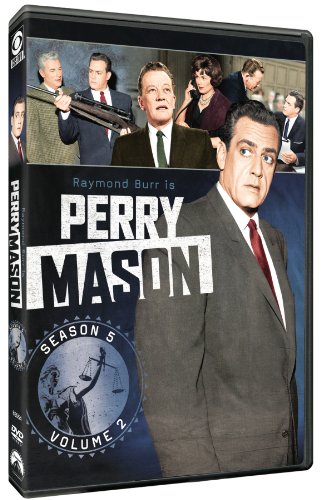
Erle Stanley Gardner wrote crime fiction, and while many of his 100 or so works are unknown to most of us, he created a character that has become as identified with criminal lawyers as any other in fiction. It was in these crime novels that Perry Mason first faced a courtroom. He developed a style where he would investigate these terrible crimes his clients were on trial for. He would find the real killer, and in what has become a Hollywood cliché, reveal his findings in a crucial moment during the trial. While we may not remember the novels, we all remember the man in the persona of Raymond Burr.  Burr had a commanding presence on our screens and enjoyed a well deserved 11-year run as the clever lawyer. What makes this run so amazing is that the show followed pretty much the same pattern the entire time. We always know what’s going to happen, but we wait eagerly for that gotcha moment when Perry faces the witness on the stand. We know when he’s got the guy squarely in his sights, and we can’t sit still waiting for him to pull the trigger. OK, so maybe that’s a little over the top, but so was Perry Mason. From the moment you heard that distinctive theme, the stage was set. To say that Perry Mason defined the lawyer show for decades would be an understatement. Folks like Matlock and shows like The Practice are strikingly similar to Perry Mason. If you haven’t checked this show out, this is your chance. See where it all began.

At this rate, it’s going to be quite some time before you complete your collection. I’m not even sure that DVD will still be a viable format before the end of the series on DVD. It’s another half season, and the episodes continue to fly at us at a snail’s pace. But slow and steady wins the race, and as long as the quality episodes continue to deliver that classic Mason charm and style, I guess folks like us will continue to come back for more.

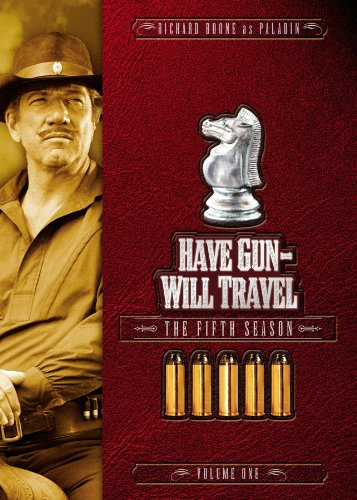
’Have gun, will travel’ reads the card of a man. A knight without armor in a savage land…”. Those words ended every episode of Have Gun Will Travel, sung by Johnny Western in a time that such words could be sung without irony. Outside of Richard Boone’s black-clad, craggy Rhett Butler gone-to-seed gunfighter, that song was all I could really recall about this venerable Western from television’s golden age. Would it, like so many revisited shows from my youth, ultimately disappoint? Or would it hold up fifty years after it was originally broadcast, viewed as it would be by the far more jaded, cynical man I’ve grown into?

The verdict? It’s pretty darn good.

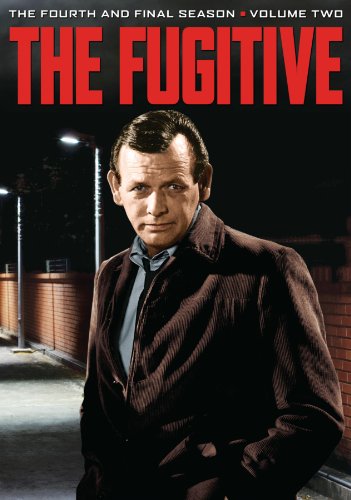
“The man is Richard Kimble and, not surprisingly, the man is tired. Tired of looking over his shoulder, the ready lie of the buses and freight trains. Richard Kimble is tired of running…”

The elusive “one-armed man” is one of the best known television icons of all time. The plight of Dr. Richard Kimball has been the subject of numerous imitations and even a feature film staring Harrison Ford as Kimball and Tommy Lee Jones as his pursuer. Tim Daly left the ranks of comedy to fill the shoes of Kimball in a very short-lived revival series. While some of these efforts managed to capture the essence of The Fugitive, none can truly compare to the real thing.

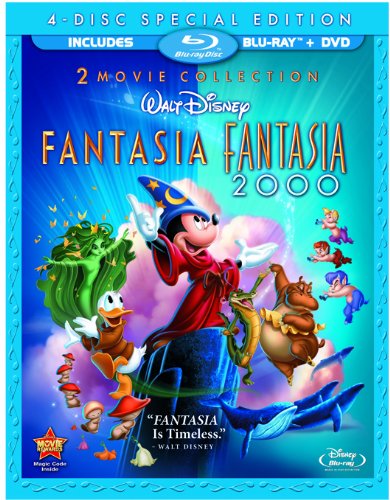
"How do you do? My name is Deems Taylor, and it's my very pleasant duty to welcome you here on behalf of Walt Disney, Leopold Stokowski, and all the other artists and musicians whose combined talents went into the creation of this new form of entertainment, Fantasia. What you're going to see are the designs and pictures and stories that music inspired in the minds and imaginations of a group of artists. In other words, these are not going to be the interpretations of trained musicians, which I think is all to the good."

Just three years after Walt Disney introduced the world to the animated feature in 1937, Uncle Walt was already experimenting with the idea. The man was always fascinated with music as much as he was with animation and the wonderful fairy tales that would become his studio's trademark. It was inevitable that he would come up with the idea of blending music with animation to create something quite unique in the world of entertainment. You have to remember that not only had there only been three years since the first animated feature, but that sound itself in motion pictures was still only a couple of decades old. By 1940 Walt Disney had combined both elements to create something truly magical.

Written by Diane Tillis

One hundred writers gathered together at the PEN World Voices Festival in New York to discuss faith and reason. PEN is a literary and humanitarian organization that is composed of poets, essayists, and novelists. Its chief concern at the festival was the threat to freedom of speech and conscience from religious extremism. Writers from diverse backgrounds and perspectives came together in an open forum to discuss their experiences with faith and reason. Bill Moyers: on Faith & Religion is a collection of interviews with twelve renowned authors who were among the speakers at the PEN World Voices Festival. Bill Moyers interviewed them on their background, literary works, how they related to faith and religion, and what they hoped to see for the future.