Posted in: Disc Reviews by Gino Sassani on February 15th, 2011
"You're traveling through another dimension, a dimension not only of sight and sound but of mind; a journey into a wondrous land whose boundaries are that of imagination. That's the signpost up ahead your next stop, the Twilight Zone."
Posted in: Disc Reviews by Gino Sassani on February 7th, 2011
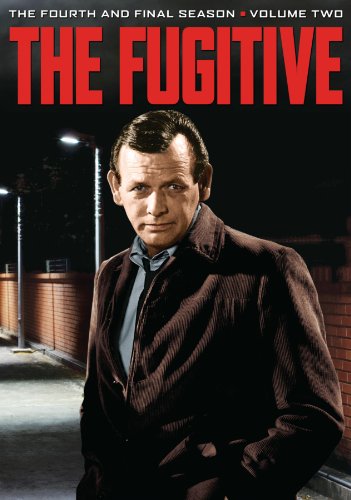
“The man is Richard Kimble, and, not surprisingly, the man is tired. Tired of looking over his shoulder, the ready lie of the buses and freight trains. Richard Kimble is tired of running…”
The elusive “one-armed man” is one of the best-known television icons of all time. The plight of Dr. Richard Kimball has been the subject of numerous imitations and even a feature film staring Harrison Ford as Kimball and Tommy Lee Jones as his pursuer. Tim Daly left the ranks of comedy to fill the shoes of Kimball in a very short-lived revival series. While some of these efforts managed to capture the essence of The Fugitive, none can truly compare to the real thing.
Posted in: Disc Reviews by Michael Durr on February 3rd, 2011
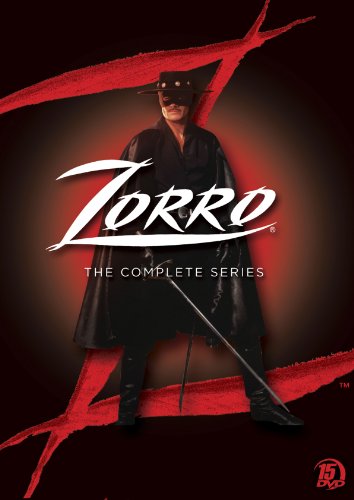
My teenage years were set firmly in the 80’s and early 90’s. As a result, I watched my fair share of cheesy television shows and loved every minute of it. Shows like Sledge Hammer, Silk Stalkings, and Alf. But alas, some shows even escaped my cheese-dar until well into my adult years. One such show is Zorro, yes that Duncan Regehr vehicle where he wore a mask and carved Z into various objects while wooing the ladies. How could I ever miss that one?
Since, I’m dealing with a box set that covers a ton of episodes, I will do my best to break this down season by season with major changes between them. To be honest, from what I’ve seen, the show’s story is the same from start to finish. Even though some of the actors do change, it’s still Duncan Regehr running around in a mask with a sword. Too frank you say? Ha, ha (in best evil guy’s laughing voice)!
Posted in: Disc Reviews by Gino Sassani on February 2nd, 2011
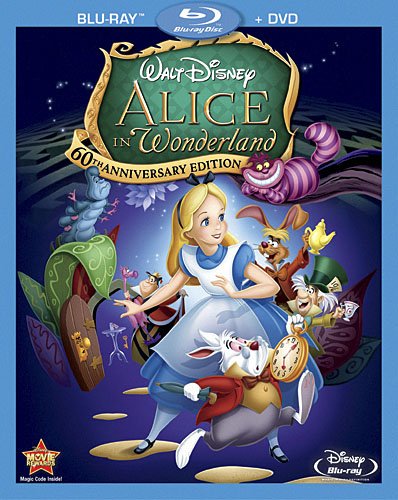
"If I had a world of my own, everything would be nonsense. Nothing would be what it is because everything would be what it isn't. And contrariwise what it is, it wouldn't be. And what it wouldn't be, it would be, you see?"
To be perfectly honest with you, I have never read either of the two Lewis Carroll books on which this film has been based. Under ordinary circumstances, that would put me at a decided disadvantage in both watching the film and certainly in providing an insightful review of the movie. But these are not ordinary circumstances. The characters and their stories, originally told in both Alice's Adventures In Wonderland and Through The Looking Glass And What Alice Found There, have become an indelible part of our culture. One need not have read a word to be intimately familiar with Alice and her fanciful friends and rivals from Underland, which Alice herself interprets for us as Wonderland. There have been animated features as well as other live action attempts. The characters have become iconic and have appeared in advertising campaigns and even an episode of Star Trek. The surprise isn't that I feel like I know this story without having read the source material. The real surprise would be if there was anyone out in the civilized world who wasn't familiar with these characters. They were originally oral stories told to a group of sisters, one of which was Alice Little, the inspiration for the tales. They would only end up in book form at the insistence of the young Alice.

Posted in: Disc Reviews by Gino Sassani on February 2nd, 2011
This series from Comedy Central began as a low-budget film hosting show in a small television station in Minnesota. It was the brainchild of Joel Hodgson. It ended up running for 11 years and a feature film version.
Mystery Science Theatre is an acquired taste. For me, I’ve really got to be in that certain mood to watch it. That’s the beauty of these DVDs. You pop them in when you’re ready. The idea is pretty whacked. Depending on the season you’ve got, Joel or Mike is trapped in space on the “Satellite of Love”. Doomed to spend his life watching very bad films, our hero makes the best of a bad situation. He uses his resources to construct a couple of robot pals. There's Crow T. Robot (Beaulieu), Tom Servo (Murphy), and Gypsy (Mallon). Part of an experiment together, they watch the films from the front row, constantly ranting throughout. If you’re like me, you’ve invited a few friends over to watch a schlock festival. The movies weren’t as important as the banter you created while watching. That’s exactly what you see here. The silhouettes of our host and his robots dominate the lower portion of the screen, where they provide alternative dialog and sometimes witty commentary on the action. The two evil station owners/mad scientists send them a new bad film each week to observe their reactions to the bombs. The films are broken up by off-the-wall skits and fake commercials to alleviate the tedium. This DVD collection is better than some because it includes films from four different seasons to give you a good sample of the overall series.
Posted in: Disc Reviews by Archive Authors on January 19th, 2011
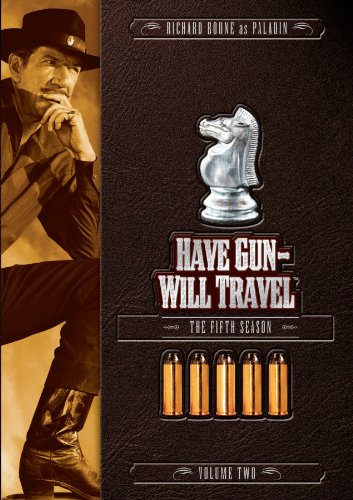
“’Have gun, will travel’ reads the card of a man. A knight without armor in a savage land…”
Those words ended every episode of Have Gun Will Travel, sung by Johnny Western in a time that such words could be sung without irony. Outside of Richard Boone’s black-clad, craggy Rhett Butler gone-to-seed gunfighter, that song was all I could really recall about this venerable Western from television’s golden age. Would it, like so many revisited shows from my youth, ultimately disappoint? Or would it hold up fifty years after it was originally broadcast, viewed as it would be by the far more jaded, cynical man I’ve grown into?
Posted in: Disc Reviews by Archive Authors on January 19th, 2011
Written by Diane Tillis
Magic is a source of great debate. From the great magicians like Harry Houdini to the modern magicians like David Blaine, they continue to force their audiences to pick a side of the debate. Should you believe the truth of the trick? On the other hand, you could forget the truth and believe in the magic. Which side would you choose?
Posted in: Disc Reviews by David Annandale on January 15th, 2011
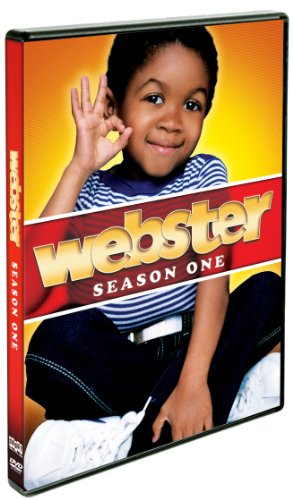
George Papdapolis (Alex Karras) and Katherine Calder-Young (Susan Clark) meet on a Greek cruise, and, after a whirlwind romance, return to Chicago. They're a bit of an odd couple – she's a blue-blood, complete with male secretary, and he's an ex-football player. The cross-class romance is barely underway, however, when they suddenly find themselves the guardians of the unspeakably adorable seven-year-old Webster (played by twelve-year-old Emmanuel Lewis) after his parents die (George had agreed to be his godfather back in the day). All sorts of cute misunderstandings, cute heart-warming lessons and cute sentimentality then ensues.
There is no denying diabetic-shock-inducing cuteness of Lewis, though there is also something a little bit creepy about the way the camera presents him, shamelessly exploiting that cuteness for all its worth, offering up Lewis for the audience to cluck over as if he were some kind of ambulatory teddy bear. The humour, meanwhile, is typical of an 80s sitcom – banal jokes in tandem with a Serious Message. And some of the gags are, to put mildly, antediluvian. Oh, look! Katherine is a woman who can't cook! Hilarious! For those with fond memories of the show, however, none of this will matter. But those who have no such memories are probably better off not forming them.
Posted in: Disc Reviews by David Annandale on January 15th, 2011
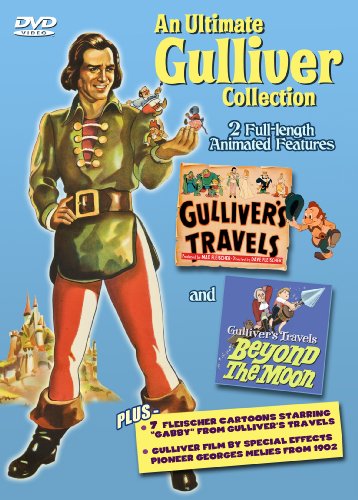
Johnathan Swift's Gulliver's Travels was never meant to be a children's tale. It is one of the most corrosive satires in the English language, one that has lost none of its brilliant venom over the passage of centuries. But endless bowdlerizations have given its first two sections (the voyages to Lilliput and Brobdingag) the reputation for being children's classics. Obviously, references to people being “the most pernicious race of little odious vermin that nature ever suffered to crawl upon the surface of the earth” are usually left out. At any rate, said bowdlerizations inevitably resulted in various anodyne film adaptations. And so, as Jack Black galumphs across the screen to box office disaster, here is a collection of animated takes on Swift's work.
Gulliver's Travels: (76 mins.) This 1939 effort is the main attraction here, the second feature-length animated film ever made. It limits itself to Gulliver's journey to Lilliput, where, in this version, he must bring about the end of a war between Lilliput and Blefuscu so that bland princess and prince of the respective nations can marry. The Fleischer brothers are best remembered for Betty Boop and their excellent Superman cartoons. Gulliver's Travels, on the other hand, is far from their best work. The animation is fluid, though the backgrounds are lifeless and still, a far cry from what Disney had just done with Snow White. The pace is slack, meandering along through rather tired slapstick. The cartoonish Lilliputians are charming enough, but the more realistic characters are expressionless waxworks, or, in the case of the rotoscoped Gulliver, dip alarmingly toward the uncanny valley. The piece is a historical curiosity, but is no classic. Still, it's much, much better than...
Posted in: Disc Reviews by Archive Authors on January 12th, 2011
I have never watched Little House on the Prairie, so I admit to having no frame of reference when I approached this set, which actually contains two separate made for television movies: Beyond The Prairie: The True Story of Laura Ingalls Wilder, and Beyond The Prairie: The True Story of Laura Ingalls Wilder Continues. Now, since I’ve used up a large portion of my review space just mentioning the titles of these two films, I will try to be as succinct as possible. Suffice to say that, while I was aware of the show, all I really know about the lady is that she grew up on the prairies in a small house of some kind, and that she is beloved by a certain portion of the population. Also, if memory serves, she may or may not have been friends with NFL Hall of Famer Merlin Olsen.
The two films chronicle the life of Ingalls Wilder, from her days as a teenager growing into womanhood on the 19th century Dakota frontier to her eventual marriage to Almanzo Wilder and their emigration to Missouri. The films are quite authentic in their depiction of the harsh realities of frontier life, particularly the Dakota winters, and show death and loss as a constant danger, even when the focus is on wholesome family drama. Blizzards, hail storms, starvation, and disease are among the constant threats that loom over these characters, and the films do a pretty good job making these things real.