1.33:1 Fullscreen

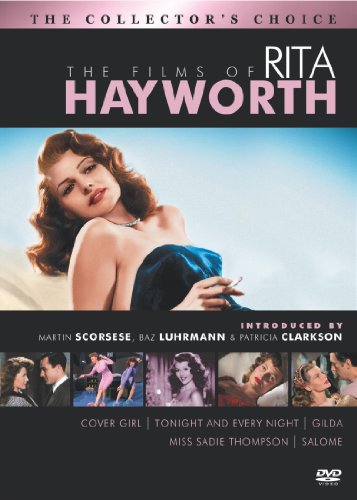
In one of Stephen King's most popular stories, at least of those translated into films, a prison inmate sits in his cell and dreams of escape. His fantasy is to escape into the welcoming arms of Rita Hayworth. While that particular element wasn't to be found in the film, it was important enough in the original story to warrant mention in the original title, which was Rita Hayworth And The Shawshank Redemption. It was a nod to the pin-up status that the actress had in early younger days. In my generation it was Farrah, but for most adolescent boys and World War II soldiers it was the red-headed come-hither smile of Rita Hayworth.

Hayworth first trained as a dancer. The instruction would certainly pay off in her film career where she would trade steps with some of the great dancers in cinema history including Fred Astaire. She was just a young teenager when she managed to be cast in Dante's Inferno and five other films that year. She left films at the peak of her popularity in a Grace Kelly-like marriage to foreign royalty. She wedded the Prince Aly Kahn, who would also die in a car accident, much as Kelly did. Fortunately for the movie-going public, Hayworth had divorced the prince 7 years earlier in 1953 and returned to the silver screen.

Dateline: September 13, 1999

Mankind has been storing all of our nuclear waste on the far side of the moon. On the other side of the lunar surface was Alpha Base. Here mankind had a research station which also served as a launching point for deep-space missions. An unfortunate chain of events led to the unthinkable. The nuclear waste pile was ignited, and the whole dump exploded with a force so powerful that it tore the moon out of Earth's orbit and sent it hurtling through space. The 311 inhabitants of Alpha were swept along for this uncontrolled flight into uncharted space.

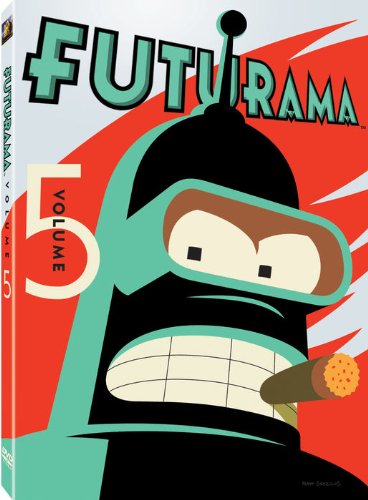
Futurama was the brainchild of Simpson veterans Matt Groening and David X Cohen. With the growing popularity of their iconic cartoon, it was no surprise that Fox would tap the team to bring another show to the network. When Futurama premiered in 1999, it was a combination of The Jetsons and The Simpsons. That would be ironic for those of us who think the Simpsons theme is a direct knock off of The Jetsons. It was 1000 years in the future, and the joke was that no matter how much things changed, they hadn’t really changed at all. The space-age series would use many of the writing and art team from The Simpsons. That meant the character designs, at least the humans, would look exactly like the people in the other show. The writing would include that same subtle wit that implanted tons of references for the adults who were watching. The show never seemed to click with the kids, but it was not really meant to. The subject matter was considerably more adult in nature, and there really weren’t any cuddly characters. All of this likely led to Fox’s decision to cancel the show after four years. It wasn’t a quick and painless demise, either. The show suffered through months of purgatory. It was on, then off again. The final episodes were moved around and often rescheduled. In the end it was an uphill battle, and Futurama lost.

But the cancellation was not to be permanent. The show found new legs on cable and finally with a handful of home video movies. Interest was once again high, and Futurama was back from the grave. Now the episodes can also continue on home video. Here you'll find a collection of 13 episodes on 2 discs.

From beginning to end, the emotional impact of Prayers for Bobby will leave you reaching for a tissue.

The screenplay for Prayers for Bobby is from the biographical novel by Leroy Aarons about the Griffith family. Sigourney Weaver plays her role as the matriarch Mary Griffith perfectly. Mary Griffith (Sigourney Weaver) is a devout Christian who believes that by the power of God and of prayer, all problems have a solution. Mary and her husband, Robert Griffith (Henry Czerny), raise their children under a conservative religious perspective. Their young son, Bobby (Ryan Kelley), believes he is gay. For years, Bobby has dealt with confusion, inner turmoil, and shame. Naturally, he is terrified to tell his family. Bobby knows his secret will change the way his parents and siblings look at him forever.

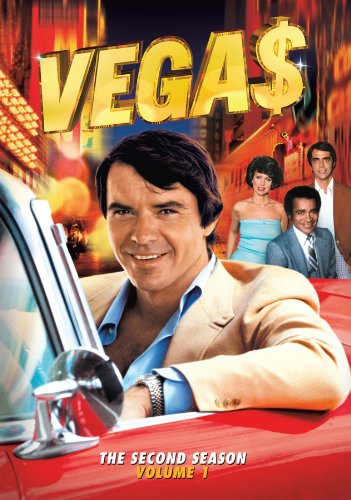
By 1978 the television detective model had been nearly complete and possibly already a cliché. Dan Tanna might have well been the complete model as far as the formula goes. It was almost as if you could go down a checklist and, like Dr. Frankenstein creating a monster, check off the necessary elements. The scripts could then almost write themselves, and you let the show fly on autopilot for three seasons or so until someone decides to look behind the curtain.

So let’s go down that checklist, shall we?

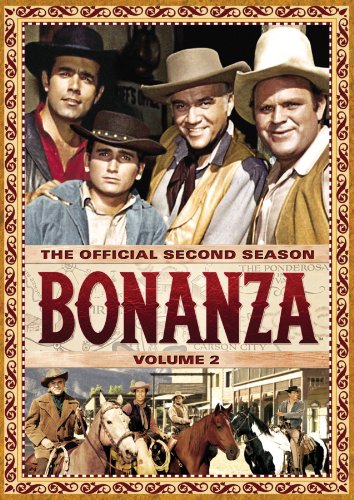
Three-time widower Ben Cartwright  (Greene) runs his famous Ponderosa Ranch with the aid of his three grown sons from three different mothers. There’s Little Joe (Landon), Adam (Roberts) and Hoss (Blocker). Set some time in the mid 1800’s, this long-running series followed the family’s many exploits. In the late 1950’s westerns accounted for six of the top ten programs on TV. Only Gunsmoke had a longer run than Bonanza. From 1959 to 1973, Ben Cartwright and his boys rode across the small screen. Years later in syndication the series re-emerged as Ponderosa, and a handful of TV movies continued the tale into the 90’s.We never have grown tired of the genre that gave us such heroes as John Wayne and Clint Eastwood.

You get the first half of the second season in this 5-disc release complete with 18 episodes. The set is highlighted by some great guest appearances. Jack Lambert, Ben Cooper, The Werewolf Of London himself Henry Hull, James Hong, Dan Duryea, Claude Atkins, Khan himself Ricardo Montalban, Bob Hopkins, Star Trek's Spock Leonard Nimoy, The Creature's favorite babe Julie Adams, and even Holy Guest Star Batman Adam West.

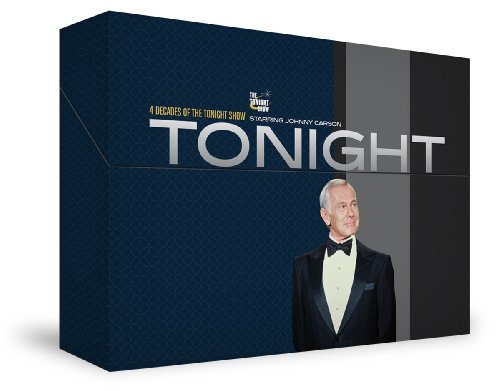
He's been called the King Of Late-Night. Today when there are so many talk shows on at pretty much every hour of the day, that might not appear to be such a huge distinction. There were talk shows on before Johnny Carson, but there can be no doubt that he invented the modern late-night show. For 30 years Johnny Carson was like a member of the family for millions of Americans. He was a friendly face at the end of a long, stressful day. He was that dependable routine that you could set your biological clock by. You would lie back in bed and let Johnny bring the world to you. You could count on a wide assortment of entertainment experiences. Johnny would deliver a monolog that often touched on the hot topics of the day. The news programs might be depressing, but Johnny always gave you a reason to crack a smile at the worst of times. There were characters like Aunt Blabby and Carnac who became comfortable old friends. The top names in show business competed for precious minutes on his stage, and if you were very lucky you spent some time on the couch and some face time with Johnny and his faithful sidekick Ed McMahon. Johnny could make or break your career in three minutes. He brought you the best of the new comics and musicians while delivering the big stars just as well. When you made it to The Tonight Show, you really made it.

There will never be a complete season or complete series set for Johnny Carson. There are several problems that present themselves almost immediately. Johnny was on nearly every night for thirty years. Do the math and you'll realize there have been thousands of episodes. The sad fact is that many of these moments are lost forever. Footage has either been lost completely or is in such bad shape as to be almost unwatchable. The was so much variety that having a full season would be a logistic nightmare to find those favorite moments. No, there just isn't ever going to be a complete anything when it comes to Johnny Carson. But Respond2 Entertainment has come about as close as I would have believed possible with the extraordinary release of 4 Decades Of The Tonight Show. Now, I hesitate to even call this a comprehensive collection. Again, I'm just convinced that wouldn't be possible. This comes as close as it gets.

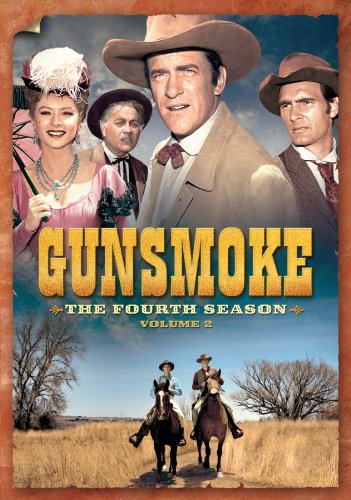
The setting for Gunsmoke was the by-now-famous Dodge City, circa 1870’s. Phrases like “get out of Dodge” would enter the popular lexicon as a result of this resilient series. Marshall Dillon (Arness) was charged with keeping the peace in Dodge City. The only other character to see the entire 20-year run was kindly Doc Adams (Stone). Star Trek’s own Doc, Leonard McCoy, took many of his traits from Doc Adams. He was the humanitarian of the city, always looking to help someone. Like McCoy, he had a taste for bourbon and a soft heart underneath a rather gruff exterior and was always ready with free advice. Dillon’s love interest throughout most of the series was Miss Kitty Russell (Blake). While there were certainly a few romantic undercurrents, the romance never came to fruition. Miss Kitty was a prostitute on the radio and was likely one here as well, but CBS chose to underplay that aspect of her character as a “saloon girl”. Finally Dillon’s faithful sidekick deputy was Chester (Weaver). Chester often found himself in trouble and was the naïve son figure to Dillon.

Gunsmoke is the longest running scripted live action television show in history. The series ran from 1955 to 1975. At first it was a half-hour black-and-white show that evolved into a color hour by 1967. It actually started before the days of television, premiering on radio in 1952. Then it was William Conrad as the tough-as-nails Marshall Matt Dillon. When television came into its own, Gunsmoke made the jump to the bright living room box and made history. Westerns would ride across our small square screens for the next three decades, making it the most successful genre of that time, and it was Gunsmoke that started it all. The television version of Gunsmoke was originally conceived as a vehicle for John Wayne, who opted to remain in movies. Yet it was Wayne himself who suggested James Arness, and it turned out to be a career for the one-time “carrot” monster from The Thing. Gunsmoke started before all of the big westerns and was around when most of them had departed.

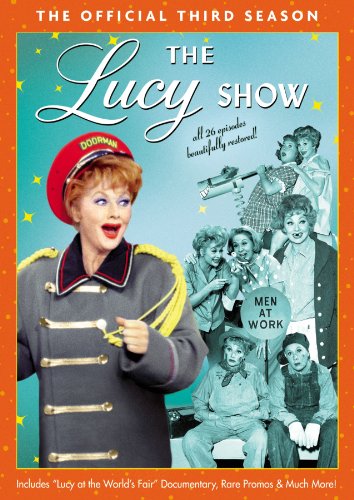
This was Lucille Ball’s follow-up to I Love Lucy. Here Ball is a widowed mother of two, sharing her home with best friend Vivian Vance, who is a divorced mother of one. All the other members of household are, of course, faced with the disasters triggered by Lucy. I screened this set immediately after viewing its close contemporary, Petticoat Junction, and the difference between the two was instructive. There are plenty of hokey gags and situations on The Lucy Show, but there is an enormous difference between the shows, thanks to the comic genius of Lucille Ball. Her energy fills each episode, her timing is spot-on, but there is also her commitment to a type of physical comedy that to this day remains pretty much the exclusive domain of male performers. Not only does she make this style her own, she grounds it in a female reality. There is a reason she was so beloved a performer, and why her work still stands up today.

The third season offers up even more laughs. Some highlights of the season include:

Who doesn’t have a soft spot in their heart, if not their DVD collection, for The Andy Griffith Show? The denizens of Mayberry have been with many of us our entire lives. For most of America, The Andy Griffith Show has become the template for any small rural town. The characters stand as prerequisite citizens in any said town. The town drunk, the local barber, the motherly little old lady, and the corner mechanic all look like Otis, Floyd, Aunt Bee, and Goober to most of us now. Griffith himself brought fine qualities to his role of Sheriff Andy Taylor, but it was Don Knotts as the incompetent but lovable deputy Barney Fife who stole the show. And who was that sweet little boy? He grew up to be a first class filmmaker with plenty of Oscars on the shelf. No question that The Andy Griffith Show started something back in 1960.

Sheriff Taylor (Griffith) is a widower with a young son, Opie (Howard). His extended family includes lovable doting Aunt Bee (Bavier). His deputy, Barney (Knotts) appears to be a few trout short of a stocked creek. They live in the small southern town of Mayberry.