1.33:1 Fullscreen

Who would have believed that you could do a situation comedy based on Nazi Germany and a group of POW’s in World War II? It wasn’t an easy sell. When Albert S. Ruddy first came up with the idea, it was a contemporary story about a group of guys in a normal U.S. prison. There were a lot of problems, mostly with the idea of making your main characters criminals. Of course, that’s not so much the problem today. But this was the 1960’s, and those kinds of “heroes” were not quite as accepted. Eventually the concept developed to put the characters in a prisoner of war camp in Nazi Germany during the World War II.

I went to my player, the one that’s on top. I turned on the TV I bought at the shop. Then I opened my Blu-ray, took it right from its case, and then there on the tray I put it in place. I pushed one or two buttons to bring it up fast. Soon an FBI warning, then my feature at last. I sat the whole time crouched alone in my chair, watching fanciful images that came to me there. I was certain at once that I’d seen this before, but something was different; it was brighter, I’m sure. The Grinch was the same, he hadn’t changed, not a bit. But the image was clearer now, I had to admit.

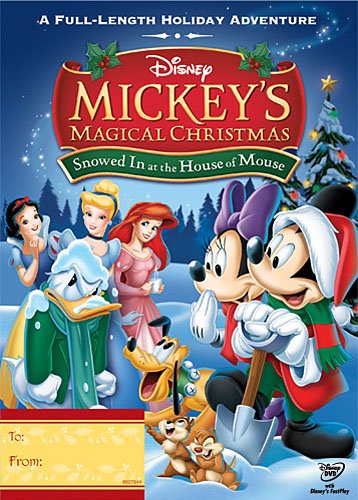
The House Of Mouse first appeared on television in January of 2001. It took advantage of pretty much every Disney character from nearly every Disney property. Mickey was the host of a nightclub called The House Of Mouse, I guess a riff on The House Of Blues. The standard bearing characters ran the club. In the audience was where you’ll find all of those lovable characters from films like The Lion King, Aladdin, Snow White And The Seven Dwarfs, The Little Mermaid, Peter Pan, Winnie The Pooh, and so many more.

“On the 15th of May, in the jungle of Nool, in the heat of the day, in the cool of the pool. He was splashing enjoying the jungle’s great joys, when Horton, the Elephant, heard a small noise. Then he heard it again, just a very faint yelp, as if some tiny person were calling for help…”

If you’re like me, you remember the Dr. Seuss specials from the 1960’s. At this time of the year, The Grinch comes first to mind. In that wonderful span of cartoon specials was the story of the elephant Horton, who hears voices coming from a speck he carries around on a flower.


Superman: The Animated Series was made in the same fashion as Batman: The Animated Series. The tone was a little more serious and a lot more action. It was first produced in 1996 and made 54 episodes through the year 2000. The show received high praise for raising the bar but at the same time keeping what was important to the mythos of Superman. In fact, it even received a nomination for an Emmy. Besides Smallville, this probably stands out as the best television adaption of the one known as Superman, the Last Son of Krypton and hero to the planet Earth (and beyond).

This is the story of an unfortunate underachiever who is left with his niece after his even less fortunate sister abandons them. Unhappy with social services and the places they are forced to live, they take what little money they have to fund an aimless trip across the country until arriving at the home of his abusive father.

The title pretty much speaks for itself. Here are four episodes of the sequel that surpassed its inspiration in television longevity. They are as follows: “Relics” (which sees Scotty revived in this brave new world, and finding himself redundant), “The Inner Light” (an amnesiac Picard lives out an entire lifetime on a strange planet), “Cause and Effect” (the Enterprise and crew wind up stuck in a time loop, and must struggle to escape their repeated collisions with another ship) and “Tapestry” (where Picard winds up in the afterlife, which is certainly more than Kirk could say). It's a bit trickier yanking episodes of ST:TNG out of their season contexts than with the original show, given the former's greater emphasis on continuity, but these stories here are all good standalone adventures.

Here is a rather strange fish. Imagine a series of very economical Blair Witch-style mockumentaries, featuring a different creature each week (giant lizards, giant snakes, werewolves, you name it). The “found footage” is interrupted every few minutes by actual footage of real animals related to the supposed monster while factoids parade on the screen. Most peculiar. Individual episodes have a certain ripe-cheese entertainment value, but you'll want to watch them in widely separated screenings, as the mockumentary approach feels repetitious and tiresome quite quickly. Viewers expecting to get their monster fix in will also likely be disappointed by the brief and unconvincing FX.

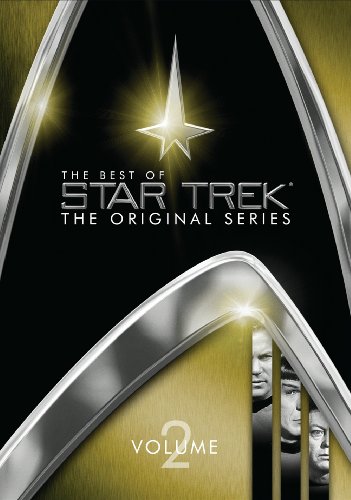
For those Star Trek fans who can't afford the complete season box sets, here's an economical alternative: a single-disc collection of four popular episodes from various seasons. Present here are “Where No Man Has Gone Before” (a propulsion expert's change to the Enterprise's engines propels the crew to the edge of the universe), “Space Seed” (the episode, it need hardly be said, that brought us Khan), “A Piece of the Action” (wherein our gang gets to dress up like 20s gangsters) and “Journey to Babel” (a diplomatic mission turns into a disaster when, among other things, Kirk is stabbed and Spock's father has a heart attack). Strong episodes from a strong series.

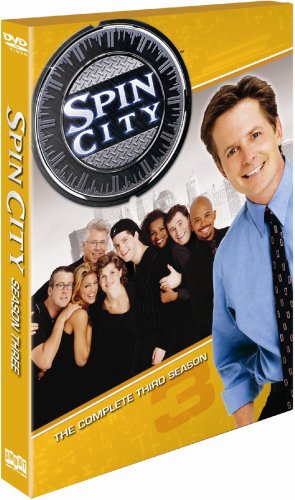
So here we are for the third season of the farcical political adventures of NYC Deputy Mayor Mike Flaherty (Michael J. Fox) and his crew. We follow them work to keep the buffoonish mayor (Barry Bostwick) in power and out of trouble, while finding plenty of time to get themselves into all sorts of predicaments. This is one of those shows that, back when it aired, struck me as clever, but not as clever as it could be, and that impression remains. The cast is a crack team of wits, and they bounce off each other with great energy and snap. There are numerous situations and plenty of lines that are funny indeed. And yet, there is a certain laziness to the humour, too. This is a comedy set in a the world of politicos and spin doctors, for crying out loud.